Publications

Over the years, HCSS has built up an extensive archive of reports, monitors, papers and other publications. We disseminate the results of our research as broadly as possible to benefit the public good. Use the advanced search functions below to browse through our research library, most of which is available as free PDF downloads.

9 Feb 2022
The world has grown more dangerous but also less open to arms control measures that could limit some of the dangers. What can be done? Steven E. Miller (Belfer Center for Science and International Affairs) offers a tour de force overview of both dismal and hopeful trends within arms control over the past decades, in this first paper of a new HCSS series on Arms Control.
31 Jan 2022
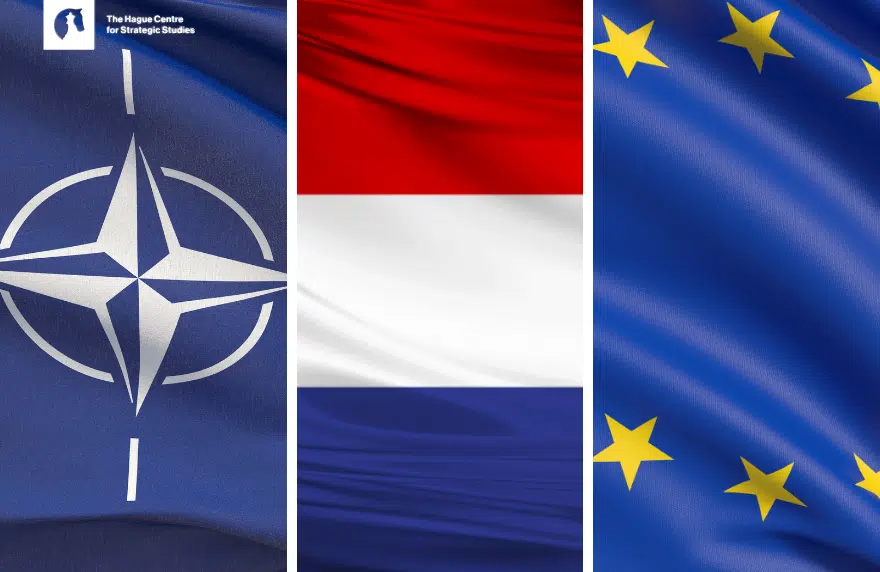
Dat geopolitieke veranderingen een koerswijziging eisen wordt inmiddels breed erkend. Maar hoe die koerswijzigingen eruit moet zien, en welke rol de NAVO en de EU daarin moeten spelen is minder duidelijk. Deze HCSS paper levert een bijdrage aan de discussie door aan te geven hoe de NAVO en de EU zich tot elkaar kunnen verhouden en welke initiatieven kunnen worden genomen die de Nederlandse belangen dienen.
26 Jan 2022
In het kader van de krijgsmachtontwikkeling heeft Defensie behoefte aan inzicht in hoe de invulling van de tweede hoofdtaak er de komende 15 jaar uit zal zien. Daarbij wordt gekeken naar wat deze hoofdtaak feitelijk is, de gewijzigde context waarin deze moet worden uitgevoerd en de toekomstige zwaartepunten voor de inzet.
20 Jan 2022
European and Asian allies of the US are increasingly under pressure from Russia and China. In both regions, small and middle powers face a revisionist and assertive nuclear-armed military power in possession of regional power projection capabilities. What could lead to a breakdown of deterrence between the US and small and middle powers in Europe and Asia?
18 Jan 2022
Deterrence scholars stress military imbalances as a major cause of interstate war. According to Dr. Jeffrey H. Michaels they underplay the complex motives for why states decide to go to war or are self-deterred from it. Deterrence effectiveness requires more understanding of these motives.
18 Jan 2022
During the Expo 2020 in Dubai, young participants of the Water Energy Food (WEF) game developed by HCSS will discuss practical solutions for water, energy and food challenges with governmental leaders. Read their recommendations now.
13 Jan 2022
How NATO can deter Russia from provoking a military confrontation with the Alliance? Wojciech Lorenz (Polish Institute of International Affairs) covers deterrence in the Baltic Sea Region from a Polish view. This is the 4th short paper in a new HCSS series on deterrence.
12 Jan 2022
HCSS Director of Research Tim Sweijs and Professor Dr. Frans Osinga, Special Chair in War Studies, Leiden University, have contributed a chapter to RUSI’s Whitehall Paper publication “Future NATO”. In their chapter, the authors note that maintaining NATO’s technological edge requires much higher investments in areas such as cyber defense, artificial intelligence, unmanned systems and space capabilities.
11 Jan 2022
In contrast to a few of the other papers in the series, Jyun-yi Lee (INDSR) concludes that China’s threat to Taiwan is primarily political in nature. The deterrence posture cannot simply be viewed from a military lens, though an advantageous geographic position and US security commitment play a role. China seeks political reunification, not conquest.
24 Dec 2021
What strategies are available to small and middle powers in Europe and Asia to deter the increasing threat from Russia and China? According to Paul van Hooft, Nora Nijboer and Tim Sweijs, investing in conventional deterrence, specifically active denial strategies, is the more feasible route for these states. This is the 2nd paper of a new HCSS series on deterrence.
23 Dec 2021
As we find ourselves on the threshold of 2022, it is time to assess some of the transitions that are reshaping our geopolitical order. This Annual Report contains food for thought, as we focus on some of 2021’s highlights and on future developments in the world. This can help us to look ahead to a brighter future beyond the gloom of the daily headlines.
22 Dec 2021
How do the challenges to deterrence in Europe and Asia compare? Eric Heginbotham and Dick Samuels summarize the problems these regions face in the first short paper of a new HCSS series on deterrence.
21 Dec 2021
In recent years it seems Russian attempts to undermine Western political, economic and societal structures. How does Russia think that the West tries to influence Russia through proxies? And who are the perpetrators according to Russia? In other words, who is ‘the West’?
16 Dec 2021
The creation of AUKUS has brought to the surface a worrying rift between Europe and the US. What does this mean for the future of transatlantic cooperation? This snapshot by Benedetta Girardi and Paul van Hooft explores the many ways in which the creation of AUKUS affected European engagement in one of the most important regions in the world, the Indo-Pacific.
15 Dec 2021
Europe’s geopolitical environment is evolving. In response, the EU is inclined to pursue a more independent and assertive international role, but many questions remain about the future of European strategy. In this forum, thirteen scholars, from a wide variety of national and disciplinary backgrounds, address key challenges for European strategy, including in the areas of defense, trade, international norms, energy diversification, and relations with other major powers.
9 Dec 2021
Since the release of the final GCSC report in November 2019, the concept of cyberstability has continued to evolve. A number of new ‘conditions’ are emerging: new agreements on norms, capacity building and other stability measures have solidified. The constellation of cyber initiatives is expanding, underlining the need to connect the traditional state-led dialogues with those of the Internet communities. Gaps continue to close, not only between the global north and south and between technology and policy, but also between the stability in and the stability of cyberspace.
9 Dec 2021
The Global Commission on the Stability of Cyberspace (GCSC) and The Hague Centre for Strategic Studies is pleased to announce the launch of the first Cyberstability Paper Series.
9 Dec 2021
The Global Commission on the Stability of Cyberspace (GCSC) and The Hague Centre for Strategic Studies is pleased to announce the launch of the first Cyberstability Paper Series.
9 Dec 2021
The Global Commission on the Stability of Cyberspace (GCSC) and The Hague Centre for Strategic Studies is pleased to announce the launch of the first Cyberstability Paper Series.
9 Dec 2021
The Global Commission on the Stability of Cyberspace (GCSC) and The Hague Centre for Strategic Studies is pleased to announce the launch of the first Cyberstability Paper Series.
9 Dec 2021
The Global Commission on the Stability of Cyberspace (GCSC) and The Hague Centre for Strategic Studies is pleased to announce the launch of the first Cyberstability Paper Series.
9 Dec 2021
The Global Commission on the Stability of Cyberspace (GCSC) and The Hague Centre for Strategic Studies is pleased to announce the launch of the first Cyberstability Paper Series. Since the release of the final GCSC report in November 2019, the concept of cyberstability has continued to evolve. A number of new ‘conditions’ are emerging: new […]
8 Dec 2021
What new security risks does climate change bring? And what opportunities does the Dutch government have for international cooperation when addressing the issue? Laura Birkman and Dorith Kool come up with conclusions and recommendations for the most relevant and feasible opportunities for international cooperation on climate-related security.
2 Dec 2021
The pandemic has motivated states to move away from liberal trade policy and engage in advanced contracts or introduce legislation that prioritises the domestic market. It also made companies realise that they do not have a full grasp of their production chain – leaving many in sudden supply shortages, when a seemingly irrelevant market introduced a lockdown affecting the industrial output.

© The Hague Centre for Strategic Studies