Publications

Over the years, HCSS has built up an extensive archive of reports, monitors, papers and other publications. We disseminate the results of our research as broadly as possible to benefit the public good. Use the advanced search functions below to browse through our research library, most of which is available as free PDF downloads.
2 Jun 2026
Non-profit cybersecurity organisations are essential to global cyber resilience, public safety, and the continuity of the digital economy, this new HCSS report by Hans Horan, Ron Stoop and Jan Feldhusen shows. Despite protecting critical infrastructure, supporting SMEs, and preventing billions in potential losses, these organisations remain structurally underfunded and under-recognised. The report calls for governments and industry to provide sustained, long-term support for the sector.
28 May 2026
Since the project’s inception in 2011, tensions surrounding the Grand Ethiopian Renaissance Dam have heightening the risk of conflict and instability in regions of vital strategic importance for the European Union. However, the EU’s ability to ease transboundary tensions in the Nile River Basin remains limited. This snapshot by assistant analyst Michelle Reitano explores how the EU can become a more effective player in the GERD dispute and proposes three strategic outlooks.
27 May 2026
Migratie wordt structureel door veel Nederlanders als de belangrijkste maatschappelijke dreiging gezien; belangrijker dan oorlog, economische afhankelijkheid of geopolitieke spanningen. In de nieuwe HCSS Focus analyseren Gerben Bakker en Jesse Kommandeur hoe migratiebezorgdheid samenhangt met gevoelens van controleverlies, politieke stagnatie en afnemend vertrouwen in de overheid. De analyse laat zien waarom het migratiedossier steeds meer een stresstest wordt voor bestuurlijke legitimiteit en maatschappelijke stabiliteit.
6 May 2026
Wat is de strategische waarde van een AI-Gigafabriek (AIGF) voor Nederland? In deze nieuwe HCSS-paper analyseren Ron Stoop, Clarice van der Paardt, Jesse Kommandeur en Sofia Romansky hoe grootschalige AI-infrastructuur kan bijdragen aan digitale autonomie, economische groei en maatschappelijke doelen. De studie laat zien dat succes niet vanzelfsprekend is: alleen met scherpe keuzes in governance, energie en toegang kan een AIGF daadwerkelijk waarde creëren.
23 Apr 2026
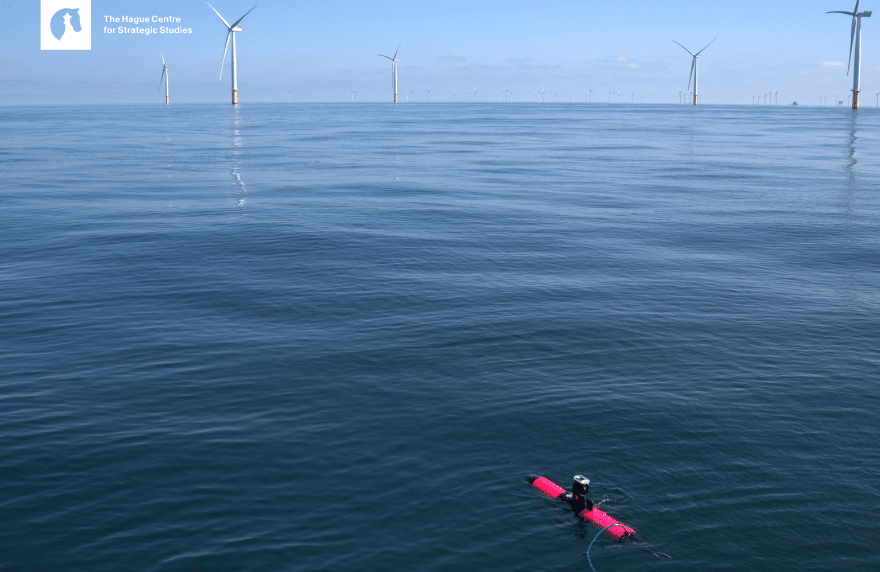
Nieuwe HCSS-verkenning: Hoe kunnen veiligheid en natuur op de Noordzee elkaar versterken? Het nieuwe HCSS rapport “Twee agenda’s, één zee” door Frank Bekkers en Pieter-Jan Vandoren laat zien dat betere afstemming tussen maritieme veiligheid en ecologie concrete voordelen oplevert. Van dual-use sensoren tot gezamenlijke monitoring en handhaving: de studie identificeert praktische kansen én schetst hoe deze via gerichte pilots gerealiseerd kunnen worden.
22 Apr 2026
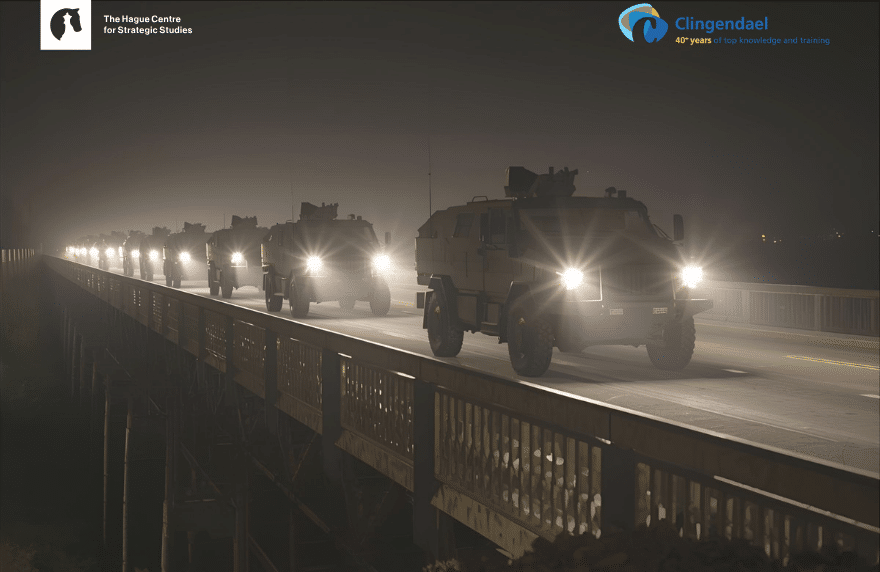
HCSS’s new joint report with Clingendael maps and explores the challenging issues of the European Defence Technological and Industrial Base (EDTIB). Authors Floor Stoelinga, Karen van Loon, Davis Ellison, Ron Stoop and Dick Zandee offer a menu for policymakers to use when considering pressing decisions on long-term investments and capabilities. The study also identifies necessary reforms—including ensuring transparency and preventing waste and fraud, grouping projects more efficiently, and managing demand signals.
21 Apr 2026
Hoe stabiel is Nederland volgens Nederlanders zelf? De nieuwste HCSS Publieksmonitor laat een stabiel rapportcijfer zien, maar ook groeiende zorgen over externe dreigingen, interne spanningen en bestuurlijke slagkracht. Wat zegt dit over de veerkracht van onze samenleving en de uitdagingen voor beleid? “De stabiliteit van Nederland oogt solide, maar onder dat oppervlak zien we een duidelijke stapeling van zorgen. Vooral de snelheid waarmee externe dreigingen weer zwaarder wegen, is opvallend en relevant voor beleid,” aldus hoofdauteur Jesse Kommandeur.
16 Apr 2026
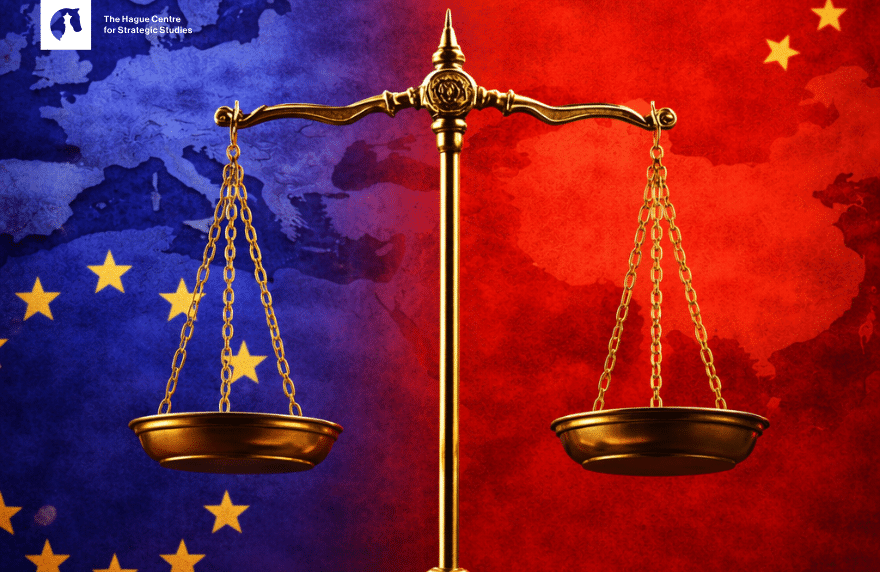
A new HCSS report examines how China uses lawfare to reshape the international legal order from within. By reinterpreting norms, building parallel institutions, and leveraging legal asymmetries, Beijing is expanding its influence across trade, technology, and maritime governance. The report outlines what this means for Europe and how policymakers can strengthen resilience and maintain normative influence in an increasingly contested legal landscape.
14 Apr 2026
Nieuwe HCSS Focus: hoe veilig voelen vrouwen zich in Nederland? Een kwart van de vrouwen ervaart frequent onveiligheid, vooral jongvolwassenen. Deze verkenning laat zien hoe ervaringen, maatschappelijke normen en verantwoordelijkheidsgevoel samenkomen in een structureel veiligheidsvraagstuk. Met nieuwe data en analyse biedt HCSS inzicht in de aard van vrouwelijke onveiligheidservaring én aanknopingspunten voor beleid en maatschappelijk debat.
31 Mar 2026
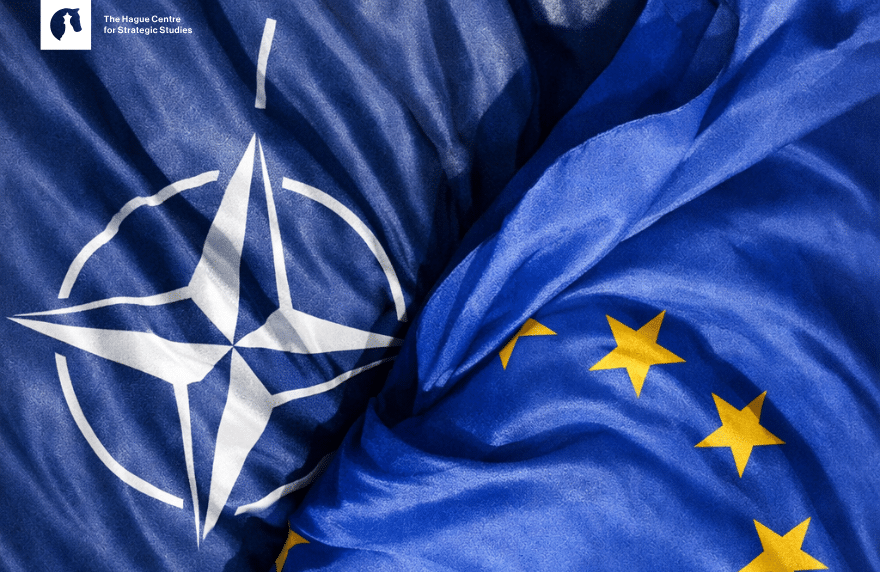
HCSS’s new report explores the complex relationship between the EU and NATO in European defence. Authors Davis Ellison and Daniel Fiott offer a roadmap for policymakers navigating this pivotal moment in European defence. Despite persistent tensions, both institutions remain central to European security. The study identifies practical reforms - ranging from Berlin Plus updates to closer political coordination - that can strengthen cooperation, enhance Europe’s self-sufficiency, and reduce reliance on the United States.
30 Mar 2026
A new HCSS guest paper by Dr. Iskander Rehman examines the war in Ukraine through the lens of an oft-cited but seldom explored analogy: the Spanish Civil War. It shows how protracted proxy wars often become global testing grounds for military training and innovation, and why democracies risk falling behind if they misread or underreact. The paper outlines key lessons on escalation, military learning, and the global nature of contemporary conflict.
26 Mar 2026
Russia’s hybrid war is expanding, exploiting NATO’s reluctance to escalate. Alexander Mattelaer’s latest HCSS paper argues that defensive resilience alone cannot stop Moscow. NATO must undermine the Kremlin’s confidence by demonstrating credible escalation options and reinforcing political will. “If NATO wants Moscow to back down, Russian leaders must fear escalation again,” Mattelaer warns. The paper lays out how Europe can restore strategic restraint and counter Russia’s confidence-driven hybrid strategy.
16 Mar 2026
Hoe blijft de Nederlandse rechtsorde weerbaar in een tijd van geopolitieke spanning, digitale ontwrichting en maatschappelijke polarisatie? De Strategische Monitor Politie 2026 van HCSS analyseert de toenemende systemische druk op Nederland en vertaalt die naar strategische richtpunten voor de Nederlandse politie.
4 Mar 2026
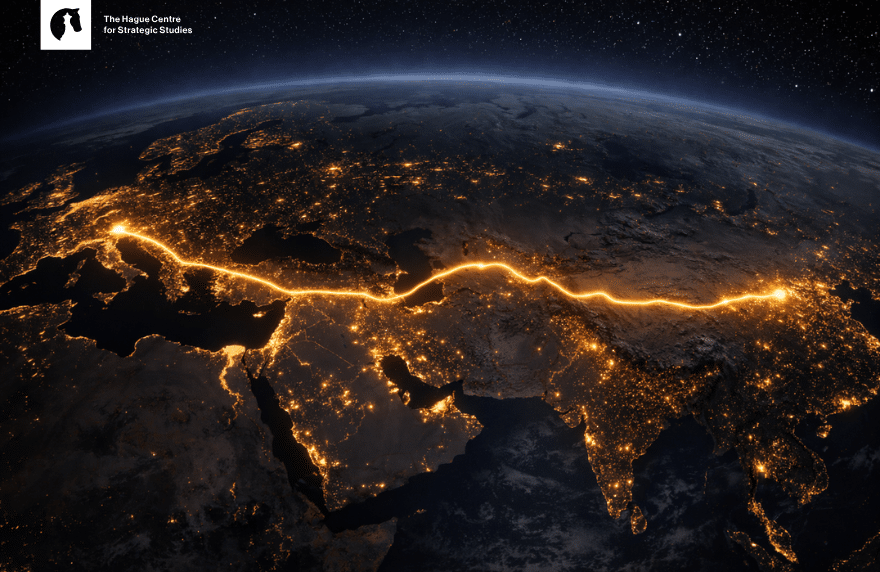
Reweaving Silk Roads examines the Middle Corridor as a strategic lifeline for EU economic security. Stretching from China through the South Caucasus and across the Caspian Sea to Central Asia and Turkey, this route offers a vital alternative to traditional trade corridors amid geopolitical tensions. The study analyzes economic, political, infrastructure, and security dimensions, assessing risks from regional instability and China’s Belt and Road Initiative, and explores how the EU can strengthen resilience, diversify supply chains, and foster sustainable regional partnerships.
20 Feb 2026
As global competition over critical raw materials intensifies, the EU’s challenge lies not merely in securing supply, but in strengthening its position within the global minerals value chain. A new HCSS Snapshot by Laurence Krakow explores how Saudi Arabia rapidly transformed itself into a major mining power after launching Vision 2030 in 2016 to diversify its economy beyond oil. What can the EU learn from Saudi Arabia's approach to strengthen its own mineral strategy?
17 Feb 2026
Europe lacks a shared theory of victory in Ukraine - and that absence is now shaping the war’s outcome. As long as Europe fails to define its own end state, others will shape the outcome - in Moscow, and potentially in Washington. In this new HCSS report, Markus Iven and Tim Sweijs show how Europe can compel Russia to end the war by altering the Kremlin’s cost–benefit calculus under nuclear escalation constraints. The report identifies five conclusions Russia must reach simultaneously - and the concrete European actions required to make them unavoidable.
30 Jan 2026
Europe’s reliance on American deterrence is no longer assured. This HCSS report outlines a European-led “shield and spear” posture that strengthens conventional deterrence, reduces escalation risks, and adapts to US retrenchment and Russian military modernisation. Authors Davis Ellison and Tim Sweijs set out concrete political, military, and industrial pathways for a more independent European deterrence architecture.
30 Jan 2026
This new HCSS research paper addresses a central challenge facing Europe today: How to build more secure CRM supply chains while supporting sustainable and responsible practices in partner countries? Focusing on the Dutch and European engagement with West Africa, the report explores how “win-win” partnerships can align European strategic interest with the ambitions of mineral producing states.
13 Jan 2026
The new HCSS report ‘Responding to China’s Hybrid Threats: Strategic Postures for Small and Middle Powers’ analyses how the People’s Republic of China deploys hybrid threats against small and middle powers in Europe and the Asia-Pacific. Based on an original database, it shows why ad-hoc responses are insufficient and introduces a framework to help states develop more coherent strategic postures towards Chinese hybrid pressure.
9 Jan 2026
How can countries strengthen economic security without sacrificing openness? This new HCSS–KIEP edited volume by Benedetta Girardi and Young-ook Jang examines how South Korea and the Netherlands can advance open strategic autonomy through cooperation in high-tech innovation and supply-chain security. Focusing on semiconductors, quantum technology, energy, and critical raw materials, the edited volume shows how middle powers can build resilience through partnership—not decoupling.
17 Dec 2025
In a new report ‘Bridging Waters: Strengthening Europe’s Maritime Security Engagement Through Partnerships with Rising Middle Powers,’ Benedetta Girardi and Pieter-Jan Vandoren explore how Europe can strengthen maritime security in the South China Sea and Red Sea through cooperation with rising middle powers. The study outlines urgent threats, identifies high-value preventive and responsive measures, and presents an actionable agenda for European policymakers.
17 Dec 2025
We hereby proudly present the HCSS Annual Report 2025! Our Team’s output has been nothing short of exceptional: we published over 100 reports and articles; we provided over 2000 commentaries for national and international media; we strengthened partnerships with leading institutions worldwide and hosted policymakers from Europe, the Indo-Pacific and beyond; and we welcomed over 2,200 participants at more than 35 events. On behalf of the entire HCSS Team, we wish you a very Merry Christmas and a Happy New Year!
15 Dec 2025
In a new HCSS guest paper, Sumathy Permal examines how strategic competition in Southeast Asia is increasingly playing out through soft blockades and grey-zone tactics in critical maritime chokepoints such as the Straits of Malacca and the South China Sea. As these practices raise risks to freedom of navigation, regional stability, and global trade, the paper outlines how Malaysia’s national responses — alongside targeted EU–Malaysia cooperation in capacity building, maritime domain awareness, and legal support — can strengthen chokepoint resilience while upholding a rules-based maritime order.
15 Dec 2025
In a new HCSS guest paper, Eleanora Ardemagni examines how the Red Sea is entering a more dangerous phase as the Houthis extend their weapons range, enhance capabilities, and deepen ties with armed groups. With rising risks to Saudi Arabia’s ports, Vision 2030 projects, undersea cables, and oil routes — and with weak regional cooperation frameworks — the paper outlines why closer Saudi-European engagement is increasingly necessary. It highlights practical avenues for joint action, from coordinated support for the Yemeni Coast Guard to enhanced intelligence sharing, offering a targeted path to strengthening maritime resilience and stabilising a vital waterway for regional security and global trade.

© The Hague Centre for Strategic Studies