Publications

Over the years, HCSS has built up an extensive archive of reports, monitors, papers and other publications. We disseminate the results of our research as broadly as possible to benefit the public good. Use the advanced search functions below to browse through our research library, most of which is available as free PDF downloads.

4 Mar 2026
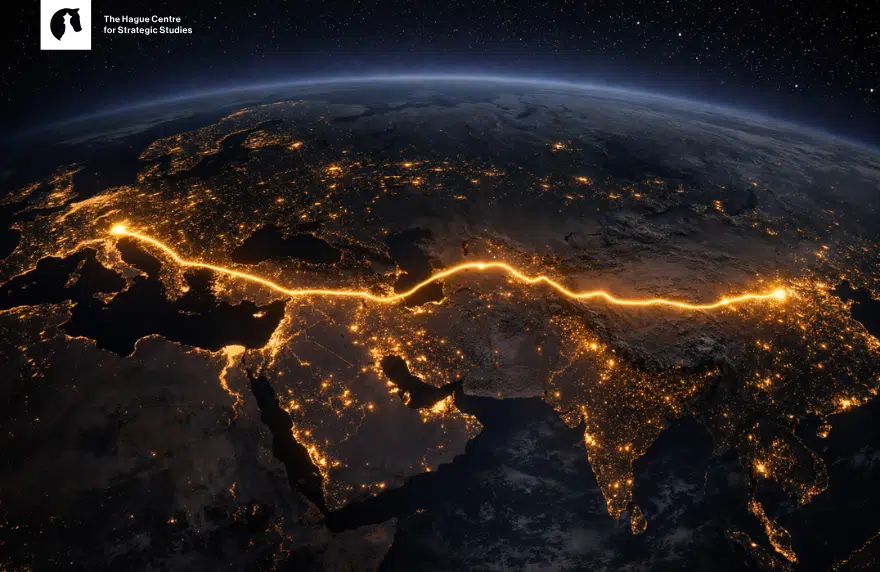
Reweaving Silk Roads examines the Middle Corridor as a strategic lifeline for EU economic security. Stretching from China through the South Caucasus and across the Caspian Sea to Central Asia and Turkey, this route offers a vital alternative to traditional trade corridors amid geopolitical tensions. The study analyzes economic, political, infrastructure, and security dimensions, assessing risks from regional instability and China’s Belt and Road Initiative, and explores how the EU can strengthen resilience, diversify supply chains, and foster sustainable regional partnerships.
20 Feb 2026
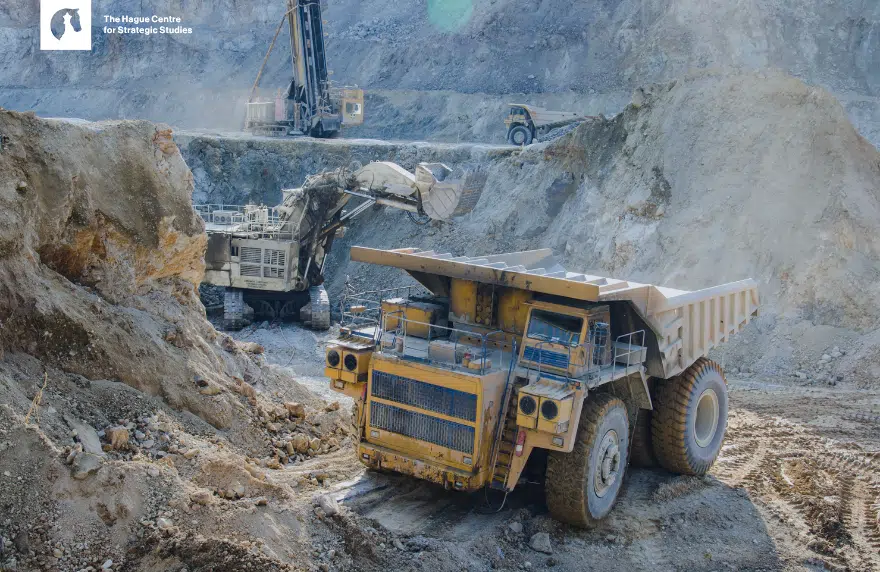
As global competition over critical raw materials intensifies, the EU’s challenge lies not merely in securing supply, but in strengthening its position within the global minerals value chain. A new HCSS Snapshot by Laurence Krakow explores how Saudi Arabia rapidly transformed itself into a major mining power after launching Vision 2030 in 2016 to diversify its economy beyond oil. What can the EU learn from Saudi Arabia's approach to strengthen its own mineral strategy?
18 Feb 2026
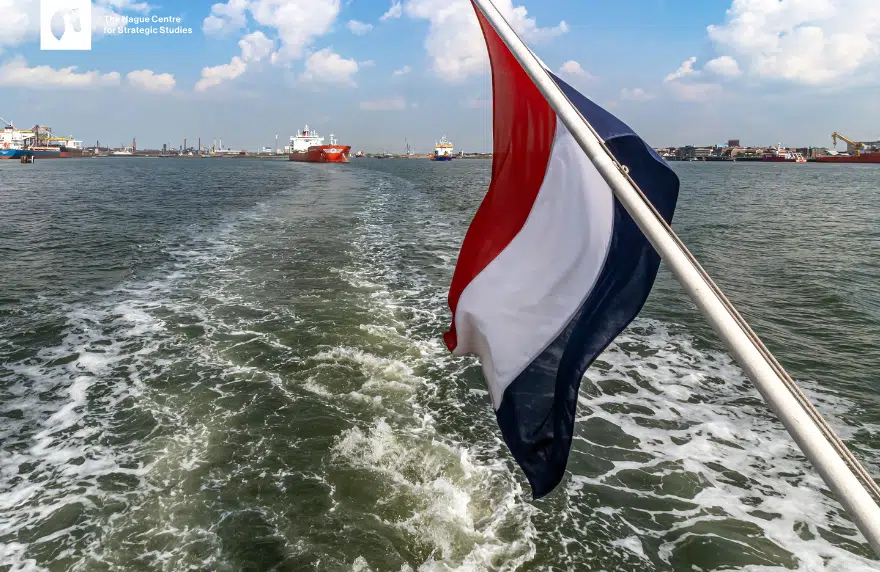
Een verbod op het woonlandbeginsel kan ertoe leiden dat 50–70% van de Nederlands gevlagde vloot kiest voor een buitenlandse vlag, met grote economische en strategische gevolgen. Dit HCSS–Deloitte-onderzoek toont aan dat de Nederlandse concurrentiepositie, werkgelegenheid, maritieme veiligheid, strategische autonomie en internationale invloed daardoor substantieel onder druk komen te staan.
17 Feb 2026
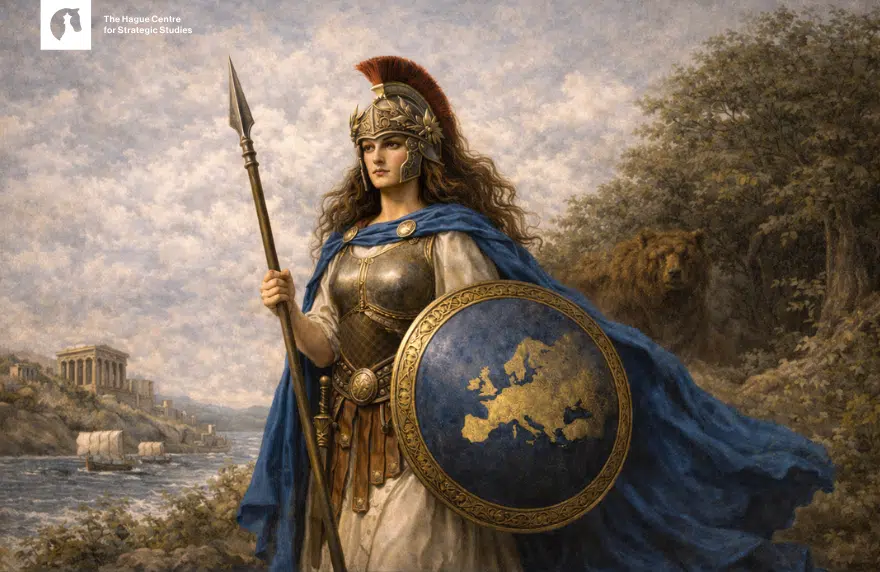
Europe lacks a shared theory of victory in Ukraine - and that absence is now shaping the war’s outcome. As long as Europe fails to define its own end state, others will shape the outcome - in Moscow, and potentially in Washington. In this new HCSS report, Markus Iven and Tim Sweijs show how Europe can compel Russia to end the war by altering the Kremlin’s cost–benefit calculus under nuclear escalation constraints. The report identifies five conclusions Russia must reach simultaneously - and the concrete European actions required to make them unavoidable.
5 Feb 2026
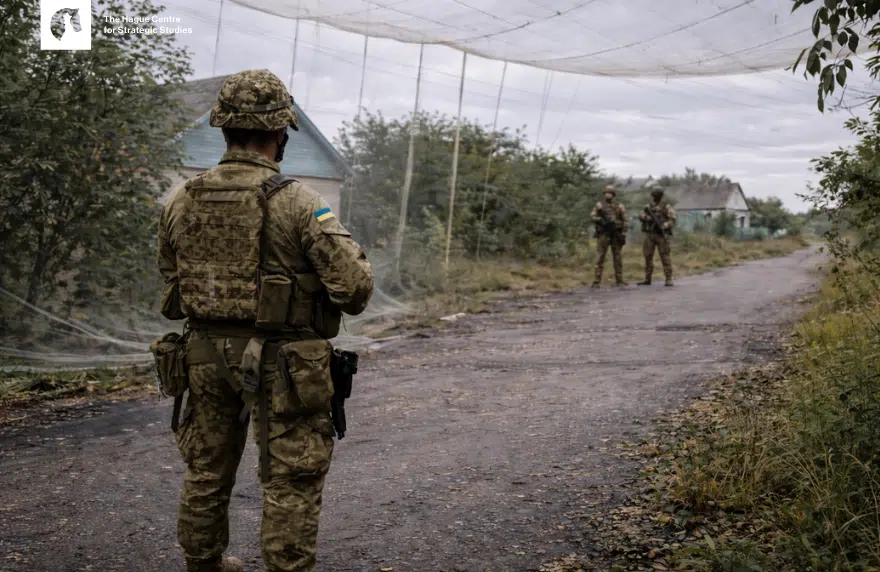
HCSS research director Tim Sweijs visited Kyiv in 2025 to study Ukraine’s battlefield adaptations, industrial resilience, and societal mobilisation. This new HCSS report, co-written by Elie Tenenbaum and Jan Feldhusen, shows that supporting Ukraine is essential not only to uphold sovereignty but also to strengthen Europe’s defence capabilities. Key recommendations focus on closing battlefield gaps, fostering joint European-Ukrainian industrial partnerships, and institutionalising lessons to accelerate Western adaptation for a more secure Europe.
30 Jan 2026
Europe’s reliance on American deterrence is no longer assured. This HCSS report outlines a European-led “shield and spear” posture that strengthens conventional deterrence, reduces escalation risks, and adapts to US retrenchment and Russian military modernisation. Authors Davis Ellison and Tim Sweijs set out concrete political, military, and industrial pathways for a more independent European deterrence architecture.
30 Jan 2026
This new HCSS research paper addresses a central challenge facing Europe today: How to build more secure CRM supply chains while supporting sustainable and responsible practices in partner countries? Focusing on the Dutch and European engagement with West Africa, the report explores how “win-win” partnerships can align European strategic interest with the ambitions of mineral producing states.
13 Jan 2026
The new HCSS report ‘Responding to China’s Hybrid Threats: Strategic Postures for Small and Middle Powers’ analyses how the People’s Republic of China deploys hybrid threats against small and middle powers in Europe and the Asia-Pacific. Based on an original database, it shows why ad-hoc responses are insufficient and introduces a framework to help states develop more coherent strategic postures towards Chinese hybrid pressure.
9 Jan 2026
How can countries strengthen economic security without sacrificing openness? This new HCSS–KIEP edited volume by Benedetta Girardi and Young-ook Jang examines how South Korea and the Netherlands can advance open strategic autonomy through cooperation in high-tech innovation and supply-chain security. Focusing on semiconductors, quantum technology, energy, and critical raw materials, the edited volume shows how middle powers can build resilience through partnership—not decoupling.
8 Jan 2026
De Kennisregio aan Zee — bestaande uit Den Haag, Delft, Leiden en Zoetermeer, aangevuld met stedelijk Rotterdam — heeft een sterke basis in Life Sciences, hightech maakindustrie, AI, veiligheid en landbouw. HCSS onderzocht welke ecosystemen en kruisbestuivingen de regio het meeste toekomstig verdienvermogen bieden. De grootste kansen liggen in kennisintensieve, exportgerichte sectoren en zeven strategische ecosysteemcombinaties die maatschappelijke missies versterken. Het rapport biedt concrete aanbevelingen voor regionale en gemeentelijke strategieën richting 2050 en daarna.
17 Dec 2025
In a new report ‘Bridging Waters: Strengthening Europe’s Maritime Security Engagement Through Partnerships with Rising Middle Powers,’ Benedetta Girardi and Pieter-Jan Vandoren explore how Europe can strengthen maritime security in the South China Sea and Red Sea through cooperation with rising middle powers. The study outlines urgent threats, identifies high-value preventive and responsive measures, and presents an actionable agenda for European policymakers.
17 Dec 2025
We hereby proudly present the HCSS Annual Report 2025! Our Team’s output has been nothing short of exceptional: we published over 100 reports and articles; we provided over 2000 commentaries for national and international media; we strengthened partnerships with leading institutions worldwide and hosted policymakers from Europe, the Indo-Pacific and beyond; and we welcomed over 2,200 participants at more than 35 events. On behalf of the entire HCSS Team, we wish you a very Merry Christmas and a Happy New Year!
15 Dec 2025
In a new HCSS guest paper, Sumathy Permal examines how strategic competition in Southeast Asia is increasingly playing out through soft blockades and grey-zone tactics in critical maritime chokepoints such as the Straits of Malacca and the South China Sea. As these practices raise risks to freedom of navigation, regional stability, and global trade, the paper outlines how Malaysia’s national responses — alongside targeted EU–Malaysia cooperation in capacity building, maritime domain awareness, and legal support — can strengthen chokepoint resilience while upholding a rules-based maritime order.
15 Dec 2025
In a new HCSS guest paper, Eleanora Ardemagni examines how the Red Sea is entering a more dangerous phase as the Houthis extend their weapons range, enhance capabilities, and deepen ties with armed groups. With rising risks to Saudi Arabia’s ports, Vision 2030 projects, undersea cables, and oil routes — and with weak regional cooperation frameworks — the paper outlines why closer Saudi-European engagement is increasingly necessary. It highlights practical avenues for joint action, from coordinated support for the Yemeni Coast Guard to enhanced intelligence sharing, offering a targeted path to strengthening maritime resilience and stabilising a vital waterway for regional security and global trade.
15 Dec 2025
In a new HCSS guest paper, Yara Ahmed and Saskia van Genugten examine how instability in the Red Sea — from Houthi attacks and piracy to intensifying great-power rivalries — is disrupting global shipping and sharply impacting Egypt, especially through declining Suez Canal revenues. The paper outlines practical avenues for Egypt–EU cooperation, including strengthening Suez Canal resilience, enhancing maritime situational awareness, improving coordination between naval missions, and protecting undersea cables. It also highlights the need for joint diplomatic efforts in regional conflicts, offering a pathway to reinforce the stability of a corridor vital to both regional and European security.
12 Dec 2025
In a new HCSS guest paper, Pham Ngoc Minh Trang examines how Vietnam’s long-running EU IUU “yellow card” — driven by gaps in vessel monitoring, enforcement, and traceability — continues to carry economic and reputational costs despite significant post-2017 legal reforms. As key shortcomings persist, especially in monitoring small-scale vessels and ensuring continuous VMS transmission, the paper outlines where EU–Vietnam cooperation remains essential. It highlights how European expertise and joint initiatives — from legal dialogue and VMS anomaly training to pilot tracking programmes — can help close remaining capacity gaps, support sustainable fisheries governance, and advance Vietnam’s compliance efforts in the South China Sea context.
12 Dec 2025
In a new HCSS guest paper, Shafiah F. Muhibat explores how great power rivalry and daily grey zone encounters are reshaping security dynamics in the South China Sea, putting Indonesia on the frontline and challenging Europe’s ability to uphold the rules-based order. As the EU navigates limited geopolitical bandwidth, the paper outlines a focused, non-escalatory approach to maritime cooperation — from targeted joint training and legal capacity-building to enhanced maritime domain awareness — offering a realistic path to mitigating grey zone tensions without amplifying great power competition.
12 Dec 2025
In a new HCSS guest paper, Charmaine Misalucha-Willoughby examines how the South China Sea’s highly contested maritime space is becoming more complex as geopolitical tensions rise and environmental pressures deepen. As Europe and the Philippines expand cooperation in information sharing, capacity building, and maritime domain awareness, the paper highlights remaining challenges and shows how dual-use technologies can help close the gap between existing commitments and operational needs.
11 Dec 2025
HCSS and RSIS have released a new joint report analysing threats to critical undersea infrastructure in Europe and Asia. The study highlights the results of a workshop held in Singapore in cooperation with the Embassy of the Kingdom of the Netherlands and outlines key vulnerabilities, highlights legal and monitoring gaps, and proposes a shared Singapore–Netherlands agenda to strengthen detection, resilience, and international cooperation.
9 Dec 2025
Deze HCSS Focus onderzoekt hoe Nederlanders alternatieve verklaringen (of, negatief geformuleerd: ‘complottheorieën') voor maatschappelijke gebeurtenissen beoordelen. We kijken naar psychologische en sociaal-economische factoren, digitale platformdynamieken en de manier waarop mensen informatiebronnen gebruiken. Het rapport maakt onderscheid tussen verschillende soorten narratieven en meerdere plausibiliteitsniveaus. Het biedt geen beleidsrichtingen, maar laat zien hoe divers en gelaagd dit landschap is — en hoe belangrijk transparantie, mediageletterdheid en institutionele kwaliteit zijn voor maatschappelijke stabiliteit.
3 Dec 2025
Volgens de Winterpeiling van de HCSS Publieksmonitor krijgt de maatschappelijke stabiliteit in Nederland een krappe voldoende (6.1) . Binnenlandse spanningen, dalend vertrouwen in de overheid en groeiende zorgen over extremisme domineren het beeld. Tegelijkertijd blijkt de sociale samenhang de belangrijkste bron van veerkracht. Lees nu de nieuwste analyse van wat Nederlanders zien als grootste dreigingen én sterkste fundamenten van onze samenleving.
2 Dec 2025
Europe’s resilience is still situational, not systemic, concludes a new joint HCSS and CSDS report. The report finds that Europe’s ability to withstand hybrid shocks remains uneven, with civil–military cooperation and military mobility emerging as critical vulnerabilities. The authors propose concrete EU–NATO and Dutch recommendations to strengthen energy, transport and digital resilience, and argue that true deterrence now depends on treating resilience as a core strategic capability.
28 Nov 2025
Op 13 november organiseerden The Hague Centre for Strategic Studies en The Clingendael Institute in samenwerking met het Ministerie van Buitenlandse Zaken en Ministerie van Defensie de jaarlijkse Dag van Progress. Het centrale thema van de dag stond in het teken Europese soevereiniteit in tijden van veranderende trans-Atlantische verhoudingen, en wat hierin de kansen en uitdagingen zijn voor Nederland en Europa. Samen met onderzoekers, beleidsmakers en strategische denkers verkenden we wat dit betekent voor Europa’s strategische autonomie, defensie-industrie en technologische weerbaarheid.
26 Nov 2025
What does the energy transition in the military look like? The use of alternative fuels in the military brings challenges and opportunities, but while fossil fuels are slowly phased out, advanced and sustainable biofuels as well as synthetic fuels – are introduced. This report analyses the energy transition for military fuel readiness across the air, land and maritime domains as of 2025. Relating fuel properties and infrastructure to the operational needs of the military and providing 5 takeaways.

© The Hague Centre for Strategic Studies