Research
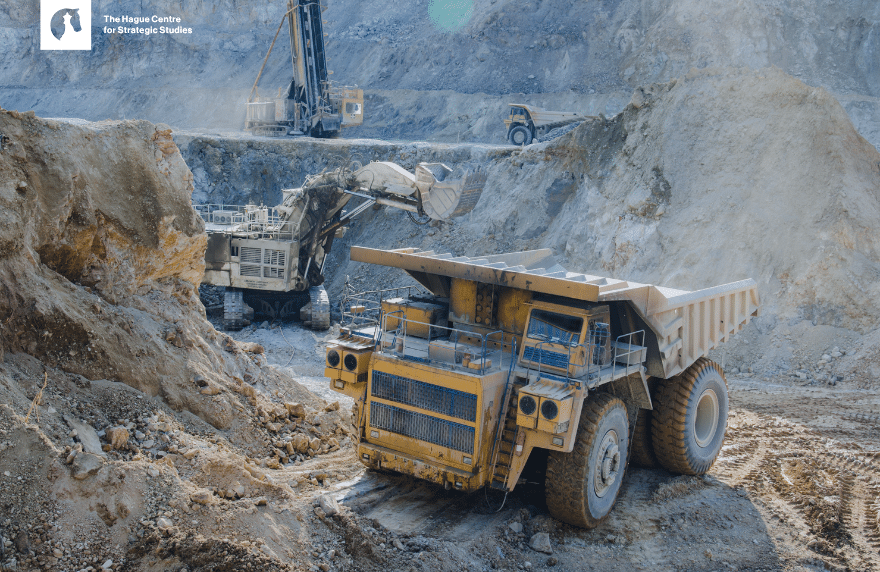
Global mineral supply chains are increasingly vulnerable to geopolitical tensions, primarily due to China’s quasi-monopolistic position in the supply and processing of several critical minerals essential to European industries. It is therefore timely for Europe to create new critical minerals partnerships while upholding its standards for sustainable and responsible mining.
This new HCSS paper addresses a central challenge facing Europe today: How to build more secure CRM supply chains while supporting sustainable and responsible practices in partner countries? Focusing on the Dutch and European engagement with West Africa, the report explores how “win-win” partnerships can align European strategic interest with the ambitions of mineral producing states.
The study by Irina Patrahau, Thijs van Aken, and Laurence Krakow maps potential partnerships between the Netherlands and Ghana, Senegal, Nigeria and Côte d’Ivoire. In line with the principles of benefit sharing, the report examines each country’s mining sector and development ambitions, seeking to identify areas where shared objectives could serve as entry points for mutually beneficial cooperation in the mineral industry.
The report identifies three key recommendations for the Netherlands, as part of Team Europe, to engage with West Africa:
1. Strengthen the Dutch approach to CRM partnerships by enhancing the coherence of external action, leveraging collective European strengths and responding to African ambitions in emerging CRM value chains.
2. Pursue partnerships with Ghana, Senegal, Nigeria, and Côte d’Ivoire in developing their CRM industries in the short term, while the Netherlands and the EU can still play a meaningful role.
3. Support regional cooperation in West Africa to increase collective bargaining power, reduce duplication and enable more efficient regional value-chain development.
As lead author Irina Patrahau notes:
“The question is no longer whether West Africa’s critical raw materials sectors will grow, but whether Europe will engage in time and ensure partnerships that genuinely benefit both sides.”
Authors: Irina Patrahau, Thijs van Aken, Laurence Krakow
Reviewers: Peter Handley, Robert Pijpers, Titus Sauerwein
Quality Assurance: Tim Sweijs
The research for and production of this report has been conducted within the PROGRESS research framework agreement. Responsibility for the contents and for the opinions expressed, rests solely with the authors and does not constitute, nor should be construed as, an endorsement by the Netherlands Ministries of Foreign Affairs and Defence.




Related Content