Research
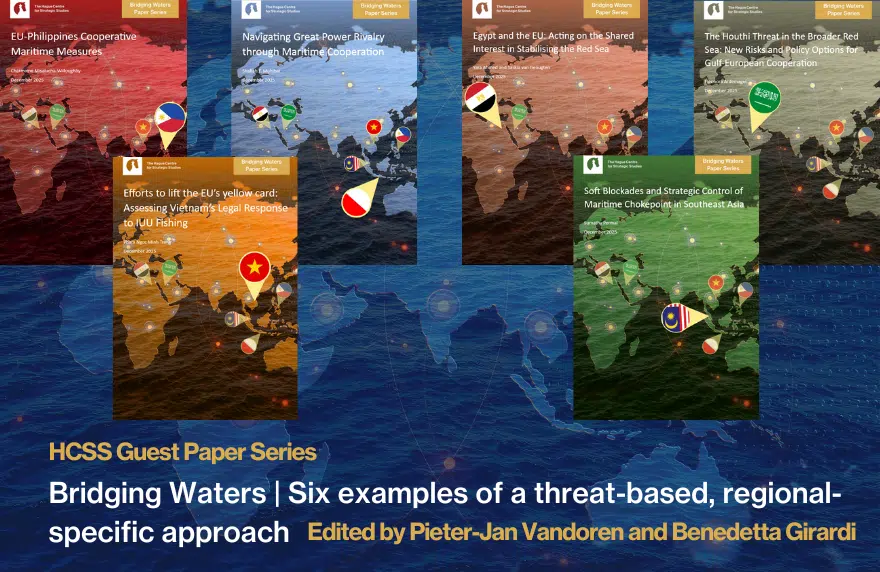
For a new paper series, six guest authors explore key aspects of maritime security cooperation between Europe and rising middle powers. Each author presents the perspective of a different littoral state, specifically Egypt and Saudi Arabia in the Red Sea region, and Indonesia, Malaysia, the Philippines and Vietnam in the South China Sea. The series builds on insights from the report ‘Bridging Waters: Strengthening Europe’s Maritime Security Engagement Through Partnerships with Rising Middle Powers’ and the webinar Bridging Waters: Middle Powers’ Cooperation on Maritime Security, held on 18 November, which brought together maritime experts from both regions to discuss avenues for further collaboration. The discussion highlighted the need for strengthened partnerships to address growing instability and to safeguard maritime routes that are vital for international trade.
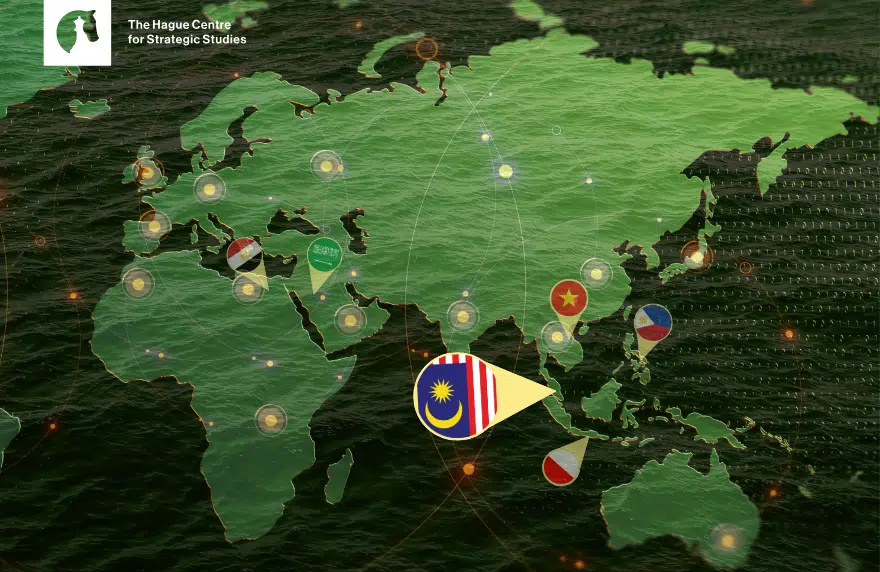
Maritime chokepoints in Southeast Asia are becoming increasingly exposed as strategic competition shifts away from overt military confrontation towards subtler forms of coercion. Instead of relying on formal naval blockades, states are making greater use of soft blockades and grey-zone tactics, including regulatory pressure, selective enforcement, maritime militia activity, and persistent law-enforcement presence at sea. In heavily trafficked waterways such as the Straits of Malacca and the South China Sea, these practices raise the risk of congestion, miscalculation, and gradual constraints on freedom of navigation, with serious implications for regional stability and global trade
This HCSS guest paper by Sumathy Permal examines how soft and hybrid blockade dynamics are reshaping the governance and security of Southeast Asia’s strategic maritime chokepoints. The paper places these developments in a broader global context, drawing comparisons with other contested straits, while highlighting the particular challenges created by overlapping maritime claims, dense vessel traffic, and limited coordination mechanisms in the South China Sea. Focusing on Malaysia’s national responses, the paper shows how enhanced coast guard capabilities, legal and institutional reform, and sustained participation in multilateral frameworks can help manage seemingly coercive practices without escalating tensions. It further argues that targeted EU–Malaysia cooperation, focused on capacity building, maritime domain awareness, legal support, and preparedness for grey-zone scenarios, offers a realistic pathway to strengthening chokepoint resilience while upholding a rules-based maritime order.
Author: Dr. Sumathy Permal, Senior Fellow, Maritime Institute of Malaysia
Editors: Pieter-Jan Vandoren and Benedetta Girardi
Quality Assurance: Paul Sinning
The research for and production of this report has been conducted within the PROGRESS research framework agreement. Responsibility for the contents and for the opinions expressed, rests solely with the authors and does not constitute, nor should be construed as, an endorsement by the Netherlands Ministries of Foreign Affairs and Defence.



Related Content