Publications

Over the years, HCSS has built up an extensive archive of reports, monitors, papers and other publications. We disseminate the results of our research as broadly as possible to benefit the public good. Use the advanced search functions below to browse through our research library, most of which is available as free PDF downloads.

16 Jun 2026
What lessons from the Russo-Ukrainian war will remain relevant in future NATO land operations? In a new HCSS paper, Tim Sweijs, Jan Feldhusen, Markus Iven and Björn de Heer identify four tactical developments reshaping European land warfare: persistent battlefield transparency, AI-enabled intelligence fusion, the human factor and mass precision effects. Their findings highlight urgent priorities for force design, doctrine and military adaptation over the next three to five years.
15 Jun 2026
Nieuwe tanks, fregatten en F-35’s versterken de Nederlandse krijgsmacht, maar zijn niet voldoende voor duurzame gevechtskracht. In een nieuw HCSS-paper laat gastauteur Leo van der Meiden zien waarom defensieplanning voorbij de traditionele platformlogica moet kijken. De sleutel ligt in samenhangende ketens, voortzettingsvermogen, regeneratie en aanpassingsvermogen. Wat betekent dat voor de komende Defensienota?
2 Jun 2026
Non-profit cybersecurity organisations are essential to global cyber resilience, public safety, and the continuity of the digital economy, this new HCSS report by Hans Horan, Ron Stoop and Jan Feldhusen shows. Despite protecting critical infrastructure, supporting SMEs, and preventing billions in potential losses, these organisations remain structurally underfunded and under-recognised. The report calls for governments and industry to provide sustained, long-term support for the sector.
27 May 2026
Migratie wordt structureel door veel Nederlanders als de belangrijkste maatschappelijke dreiging gezien; belangrijker dan oorlog, economische afhankelijkheid of geopolitieke spanningen. In de nieuwe HCSS Focus analyseren Gerben Bakker en Jesse Kommandeur hoe migratiebezorgdheid samenhangt met gevoelens van controleverlies, politieke stagnatie en afnemend vertrouwen in de overheid. De analyse laat zien waarom het migratiedossier steeds meer een stresstest wordt voor bestuurlijke legitimiteit en maatschappelijke stabiliteit.
26 May 2026
Climate change is reshaping global power, security, and economic stability. In Intersecting Futures, Thijs van Aken and Laura Birkman examine how climate impacts will interact with geopolitical, economic, and societal trends through 2100. The paper shows why adaptation capacity will determine future winners and losers – and why faster, coordinated action is essential. “Climate change will define not just environmental outcomes, but the balance of power in the 21st century,” Van Aken and Birkman warn. “Policymakers must treat adaptation as a strategic priority now, not a future concern.”
19 May 2026
A new HCSS report warns that Europe’s military fuel readiness is increasingly vulnerable to supply disruptions and underinvestment in alternative fuels. The study argues that SAF, HVO and synthetic fuels can strengthen resilience, but only if governments treat fuel production as a strategic defence capability and accelerate coordinated civil-military investment.
12 May 2026
Europe’s fuel system is not ready for war, new HCSS report by Irina Patrahau, Ron Stoop and Lucia van Geuns warns. Declining refining capacity and rising import dependence are creating a structural gap between supply and demand. In a conflict scenario, aviation fuel deficits in the EU could reach 24%, with even larger shortfalls in the Netherlands. The report outlines five priorities to strengthen fuel resilience across the EU and NATO.
23 Apr 2026
Nieuwe HCSS-verkenning: Hoe kunnen veiligheid en natuur op de Noordzee elkaar versterken? Het nieuwe HCSS rapport “Twee agenda’s, één zee” door Frank Bekkers en Pieter-Jan Vandoren laat zien dat betere afstemming tussen maritieme veiligheid en ecologie concrete voordelen oplevert. Van dual-use sensoren tot gezamenlijke monitoring en handhaving: de studie identificeert praktische kansen én schetst hoe deze via gerichte pilots gerealiseerd kunnen worden.
22 Apr 2026
HCSS’s new joint report with Clingendael maps and explores the challenging issues of the European Defence Technological and Industrial Base (EDTIB). Authors Floor Stoelinga, Karen van Loon, Davis Ellison, Ron Stoop and Dick Zandee offer a menu for policymakers to use when considering pressing decisions on long-term investments and capabilities. The study also identifies necessary reforms—including ensuring transparency and preventing waste and fraud, grouping projects more efficiently, and managing demand signals.
21 Apr 2026
Hoe stabiel is Nederland volgens Nederlanders zelf? De nieuwste HCSS Publieksmonitor laat een stabiel rapportcijfer zien, maar ook groeiende zorgen over externe dreigingen, interne spanningen en bestuurlijke slagkracht. Wat zegt dit over de veerkracht van onze samenleving en de uitdagingen voor beleid? “De stabiliteit van Nederland oogt solide, maar onder dat oppervlak zien we een duidelijke stapeling van zorgen. Vooral de snelheid waarmee externe dreigingen weer zwaarder wegen, is opvallend en relevant voor beleid,” aldus hoofdauteur Jesse Kommandeur.
16 Apr 2026
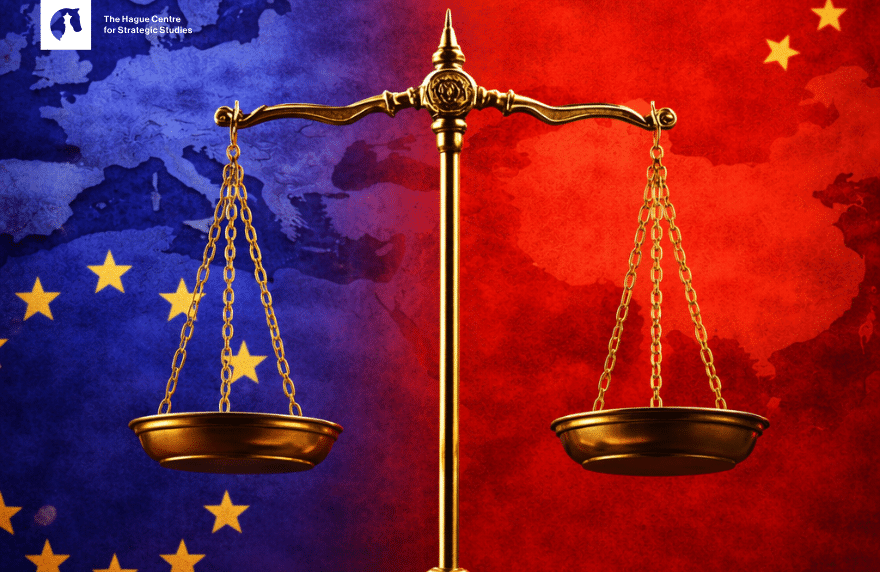
A new HCSS report examines how China uses lawfare to reshape the international legal order from within. By reinterpreting norms, building parallel institutions, and leveraging legal asymmetries, Beijing is expanding its influence across trade, technology, and maritime governance. The report outlines what this means for Europe and how policymakers can strengthen resilience and maintain normative influence in an increasingly contested legal landscape.
14 Apr 2026
Nieuwe HCSS Focus: hoe veilig voelen vrouwen zich in Nederland? Een kwart van de vrouwen ervaart frequent onveiligheid, vooral jongvolwassenen. Deze verkenning laat zien hoe ervaringen, maatschappelijke normen en verantwoordelijkheidsgevoel samenkomen in een structureel veiligheidsvraagstuk. Met nieuwe data en analyse biedt HCSS inzicht in de aard van vrouwelijke onveiligheidservaring én aanknopingspunten voor beleid en maatschappelijk debat.
31 Mar 2026
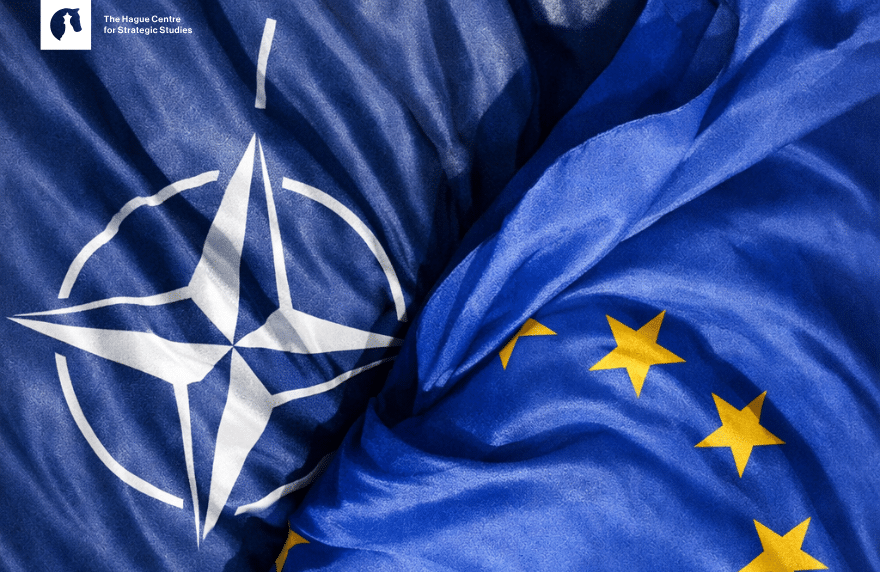
HCSS’s new report explores the complex relationship between the EU and NATO in European defence. Authors Davis Ellison and Daniel Fiott offer a roadmap for policymakers navigating this pivotal moment in European defence. Despite persistent tensions, both institutions remain central to European security. The study identifies practical reforms - ranging from Berlin Plus updates to closer political coordination - that can strengthen cooperation, enhance Europe’s self-sufficiency, and reduce reliance on the United States.
30 Mar 2026
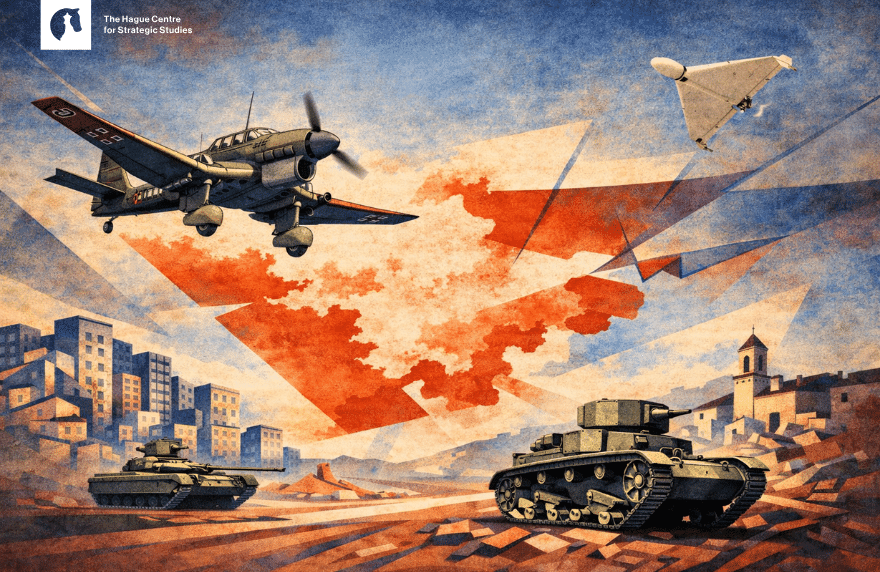
A new HCSS guest paper by Dr. Iskander Rehman examines the war in Ukraine through the lens of an oft-cited but seldom explored analogy: the Spanish Civil War. It shows how protracted proxy wars often become global testing grounds for military training and innovation, and why democracies risk falling behind if they misread or underreact. The paper outlines key lessons on escalation, military learning, and the global nature of contemporary conflict.
26 Mar 2026
Russia’s hybrid war is expanding, exploiting NATO’s reluctance to escalate. Alexander Mattelaer’s latest HCSS paper argues that defensive resilience alone cannot stop Moscow. NATO must undermine the Kremlin’s confidence by demonstrating credible escalation options and reinforcing political will. “If NATO wants Moscow to back down, Russian leaders must fear escalation again,” Mattelaer warns. The paper lays out how Europe can restore strategic restraint and counter Russia’s confidence-driven hybrid strategy.
24 Mar 2026
While heat, drought and wildfires disproportionately affect Southern and Southeastern Europe, flooding increasingly impacts Central and Northern regions. This new HCSS report by Ron Stoop and Laura Birkman shows how uneven climate impacts risk straining EU cohesion and decision-making. As climate hazards intensify, diverging national interests could weaken Europe’s collective response capacity. The report argues that targeted adaptation, including in agriculture, infrastructure and coastal resilience, can reduce these tensions and strengthen the EU’s economic security and political stability.
18 Mar 2026
The report Frontiers of Influence analyses Foreign Information Manipulation and Interference (FIMI) across Europe’s Eastern borders. The study highlights a shift toward "whole-of-society" models, noting that high-capacity states like Estonia treat information defense as a "continuous governmental task."Recommendation: To move beyond reactive measures, states must implement a proactive, layered defense integrating strategic communication, regulatory enforcement, and deep societal resilience. Safeguarding democracy requires "not only technical tools but also sustained political will and societal cohesion."
16 Mar 2026
Hoe blijft de Nederlandse rechtsorde weerbaar in een tijd van geopolitieke spanning, digitale ontwrichting en maatschappelijke polarisatie? De Strategische Monitor Politie 2026 van HCSS analyseert de toenemende systemische druk op Nederland en vertaalt die naar strategische richtpunten voor de Nederlandse politie.
10 Mar 2026
Het Com-netwerk in kaart: nieuwe HCSS Focus roept op tot sterkere preventie en betere digitale bevoegdheden. Een nieuwe publicatie van het Den Haag Centrum voor Strategische Studies (HCSS) analyseert het zogenoemde Com-netwerk, een online ecosysteem waarin vooral jongeren betrokken raken bij cybercrime, sextortion en geweld. Op basis van openbronnenonderzoek laat het rapport zien dat ook Nederlandse jongeren onderdeel zijn van deze internationale netwerken. De studie analyseert de veiligheidsdreiging, de complexe verwevenheid van dader- en slachtofferschap, en bespreekt beleidsrichtingen rond preventie, wettelijke kaders en versterking van OSINT-capaciteit.
17 Feb 2026
Europe lacks a shared theory of victory in Ukraine - and that absence is now shaping the war’s outcome. As long as Europe fails to define its own end state, others will shape the outcome - in Moscow, and potentially in Washington. In this new HCSS report, Markus Iven and Tim Sweijs show how Europe can compel Russia to end the war by altering the Kremlin’s cost–benefit calculus under nuclear escalation constraints. The report identifies five conclusions Russia must reach simultaneously - and the concrete European actions required to make them unavoidable.
5 Feb 2026
HCSS research director Tim Sweijs visited Kyiv in 2025 to study Ukraine’s battlefield adaptations, industrial resilience, and societal mobilisation. This new HCSS report, co-written by Elie Tenenbaum and Jan Feldhusen, shows that supporting Ukraine is essential not only to uphold sovereignty but also to strengthen Europe’s defence capabilities. Key recommendations focus on closing battlefield gaps, fostering joint European-Ukrainian industrial partnerships, and institutionalising lessons to accelerate Western adaptation for a more secure Europe.
30 Jan 2026
Europe’s reliance on American deterrence is no longer assured. This HCSS report outlines a European-led “shield and spear” posture that strengthens conventional deterrence, reduces escalation risks, and adapts to US retrenchment and Russian military modernisation. Authors Davis Ellison and Tim Sweijs set out concrete political, military, and industrial pathways for a more independent European deterrence architecture.
17 Dec 2025
We hereby proudly present the HCSS Annual Report 2025! Our Team’s output has been nothing short of exceptional: we published over 100 reports and articles; we provided over 2000 commentaries for national and international media; we strengthened partnerships with leading institutions worldwide and hosted policymakers from Europe, the Indo-Pacific and beyond; and we welcomed over 2,200 participants at more than 35 events. On behalf of the entire HCSS Team, we wish you a very Merry Christmas and a Happy New Year!
9 Dec 2025
Deze HCSS Focus onderzoekt hoe Nederlanders alternatieve verklaringen (of, negatief geformuleerd: ‘complottheorieën') voor maatschappelijke gebeurtenissen beoordelen. We kijken naar psychologische en sociaal-economische factoren, digitale platformdynamieken en de manier waarop mensen informatiebronnen gebruiken. Het rapport maakt onderscheid tussen verschillende soorten narratieven en meerdere plausibiliteitsniveaus. Het biedt geen beleidsrichtingen, maar laat zien hoe divers en gelaagd dit landschap is — en hoe belangrijk transparantie, mediageletterdheid en institutionele kwaliteit zijn voor maatschappelijke stabiliteit.

© The Hague Centre for Strategic Studies