Publications

Over the years, HCSS has built up an extensive archive of reports, monitors, papers and other publications. We disseminate the results of our research as broadly as possible to benefit the public good. Use the advanced search functions below to browse through our research library, most of which is available as free PDF downloads.
20 Nov 2023
What are the core factors that drive semiconductor supply chains amid the current geopolitical climate post-pandemic, and into the near future by 2030? Will there be a secure supply and if so, why or why not? In a new HCSS guest paper, June Park, PhD, analyses the chip supply chain in the context of multiple geopolitical risks, reflecting the industry and government perspectives of countries involved in the supply chain.
20 Nov 2023
In a world subject to increasing geopolitical competition, global value chains have become significantly vulnerable. Geopolitical threats related to great power competition, political rivalry, and maritime disputes pose serious risks to supply chains worldwide. To avoid the consequences of competition for global trade and supply chains, Jagannath Panda argues that like-minded partners in the Indo-Pacific must work together to anticipate risk, minimise exposure, and help each other resist and adapt to sudden shocks brought along by geopolitical threats.
20 Nov 2023
Gas supply security stands at the forefront of global energy concerns, particularly for Europe and Asia. Guest author Philip Geurts highlights the challenges posed by the inflexibility of gas supplies due to long lead times for production projects, exacerbated by the limited versatility of gas exports, whether in the form of liquefied natural gas (LNG) or through pipelines.
20 Nov 2023
In this paper, guest author Philip Geurts explores the ever-growing global demand for oil and the challenges it poses for policymakers in Asia and Europe. Despite the ongoing discourse on transitioning away from fossil fuels, the relentless demographic growth in developing nations and industrial development continue to propel oil demand upwards, projected to hover around 100 million barrels per day into the 2030s.
20 Nov 2023
In the dynamic landscape of global geopolitics, Taiwan has emerged as a pivotal player in the U.S.-China technology war, particularly in the realm of semiconductor production. With a remarkable contribution of over 60% of advanced chips, Taiwan has positioned itself as a critical hub for technologies driving artificial intelligence, 5G, and advanced military weaponry. This paper by Jiann-Chyuan Wang, delves into the intricate interplay between the U.S.-China trade and technology war, the Chips & Science Act, and Taiwan's semiconductor industry.
20 Nov 2023
In a rapidly evolving global landscape, securing a resilient supply chain for critical commodities is a paramount concern for the European Union (EU) and major Asian economies, including Japan, South Korea, China, and Taiwan. In this paper, Arnold Tukker sheds light on this critical issue in his paper, drawing insights from a workshop organized by HCSS in The Hague on the 7th of March 2023.
14 Nov 2023
In the September Observer, the experts surveyed share their thoughts on the most pressing developments in international relations during the month of September. For this version of the survey topics included the likelihood of the Russia-Ukraine war escalating into a Russia-NATO conflict, what a future U.S. Republican presidency might mean for multilateralism and how Europe should navigate a potential China-Taiwan conflict.
14 Nov 2023
Throughout history, targeting the cognitive environment in order to influence the physical behaviour has been an important factor in deciding the outcome of war, on and off the battlefield. However, carrying out the measurements to determine effectiveness of such operations remains an empty spot in most influencing operations. This HCSS paper aims to provide an overview of methods to measure the effect of behavioural influencing operations in a military context.
8 Nov 2023
What are the challenges and opportunities for Dutch companies to expand their presence in the CRM sector and contribute to diversified and resilient supply chains? This new HCSS report by Irina Patrahau, Michel Rademaker, Lucia van Geuns and Jeff Amrish Ritoe builds on first-hand insights from industry representatives and offers recommendations on how the Dutch government can support companies in diversifying CRM supply chains.
7 Nov 2023
In een tijd waarin veel aandacht wordt besteed aan de ontwikkeling van het nieuwe energiesysteem, richt deze studie door HCSS energie analisten Jilles van den Beukel en Lucia van Geuns zich op de vraag hoe het afscheid van het oude, fossiele systeem er uit gaat zien. De Europese Unie (EU) consumeert nog veel olie en gas, maar produceert deze nauwelijks meer. Men is slecht voorbereid op de risico’s die dat met zich meebrengt. Een snelle energietransitie is wenselijk, maar het zou niet de enige strategie moeten zijn om met deze risico’s om te gaan.
6 Nov 2023
On 27 September 2023, HCSS, in partnership with NATO Headquarters Supreme Allied Command Transformation (HQ SACT), held a day-long symposium in The Hague to discuss the topic “Rethinking Fire and Manoeuvre across physical and non-physical aspects of domains.” This conference report by Davis Ellison and Tim Sweijs offers a consolidated review of the discussions held during the seminar.
6 Nov 2023
How can individual planning methods improve efficiency in land force operations? Why are large HQs and lengthy orders a problem in modern land force command? Dr. Jim Storr delves into these topics for a new HCSS guest paper, emphasising the vulnerabilities of large HQs and the impracticality of protracted orders in modern warfare.
6 Nov 2023
What are the implications of incorporating Emerging Disruptive Technologies (EDTs) into Multi-Domain Operations (MDO)? How does a critical and skeptical approach aid in evaluating the ethical and strategic aspects of merging EDTs with MDO? Find out in a new HCSS paper by guest author Dr. Nina Kollars
6 Nov 2023
How did Multi-Domain Operations (MDO) emerge as a concept in the military world, and what were the catalysts that drove its development? What factors have influenced the evolution of MDO, and how does it parallel the historical development of concepts like AirLand Battle? Find out more in this guest paper by Dr. Buzz Phillips.
1 Nov 2023
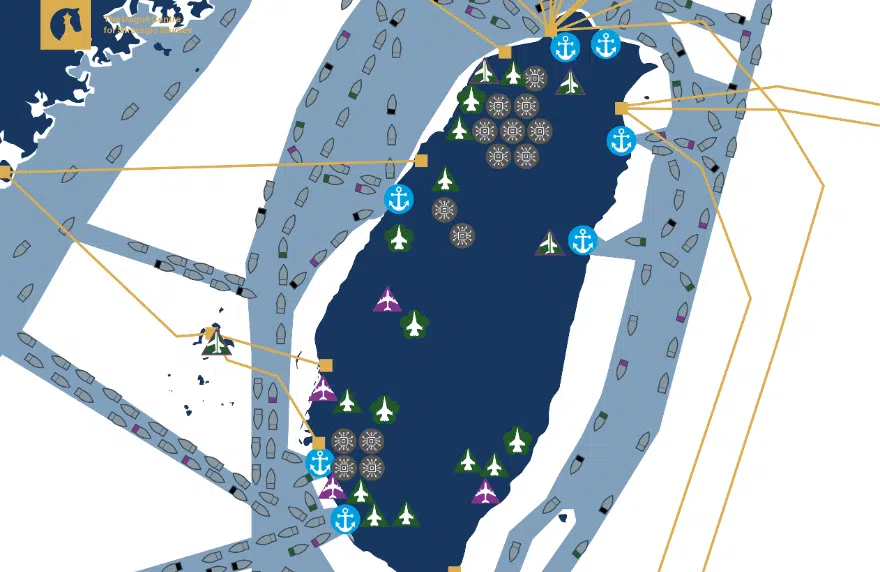
Policymakers and business leaders should pay attention to the multiple ways in which access to key economic inputs can be disrupted, whether through control over supplies or threats to transport, specifically maritime transport routes. Even in optimistic high access scenarios where there is increased supply and more suppliers, much of the world’s trade will still take place over a limited set of maritime transport routes and through very few maritime chokepoints. This new HCSS report assesses the supply of key economic resources along global supply chains from the Indo-Pacific, the stability of access to them in the future, as well as potential vulnerabilities.
1 Nov 2023
Recent technological developments have been a driving force in enhancing the possibilities and scope for military operations in the information environment. With that comes a renewed discussion on the applicable ethical and legal frameworks of behavioural influencing (BI) in the military context. But even more so, where the ethical and legal boundaries lie, and which possible dilemmas arise on these boundaries. This HCSS paper aims to facilitate the discussion on this topic and to highlight when, where, and why these dilemmas may occur.
31 Oct 2023
In reaction to the Russian invasion of Ukraine, the Ukrainian government stood up a variety of digital services and volunteer groups to counter Russia’s aggression in and through cyberspace. This guest paper by Stefan Soesanto, Senior Researcher at the Center for Security Studies (CSS) at ETH Zurich, focuses on two of these Ukrainian hybrid warfare creations and their activities within the period from February 2022 to July 2023: the IT Army of Ukraine, which are conducting DDoS and destructive cyber operations in and through the cyber domain, and the Internet Force of Ukraine, who are active on the information warfare front.
31 Oct 2023
This paper by Sean Monaghan (CSIS) and Tim McDonald (RAND) examines grey zone competition as a complex adaptive system, offering a fresh perspective on military planning. The paper provides practical principles for campaigns in the 'grey zone' between peace and war, emphasizing understanding, action, and adaptation. Real-world examples illustrate this innovative approach to updating conventional military doctrine using systems thinking to address complex hybrid threats.
31 Oct 2023
Moldova's counter-hybrid measures against Russian hybrid threats have been a “learning by doing exercise”, writes Anastasia Pociumban (German Council on Foreign Relations (DGAP)). In a new HCSS guest paper, Pociumban provides an empirical review of Moldova’s response to hybrid threats, which significantly increased following Russia’s war against Ukraine.
26 Oct 2023
Wat is de economische betekenis van de Nederlandse maritieme maakindustrie? Wat zijn de sterktes, zwaktes, kansen en bedreigingen van en voor de maritieme sector? Op verzoek van het Ministerie van Economische Zaken en Klimaat heeft HCSS onderzoek gedaan naar de strategische belangen van de maritieme maakindustrie (MMI), in het kader van de wens van diverse Tweede Kamermoties om te komen tot een meer integraal nationaal maritiem industriebeleid, inclusief marinebouw.
26 Sep 2023
Today the dominant concept within NATO and other technologically advanced militaries is multi-domain operations (MDO). MDO aim to combine and coordinate effects from across military and sometimes non-military actions. This new HCSS study by Davis Ellison and Tim Sweijs examines how the adoption of MDO concepts can help armed forces achieve military success. The report argues that MDO could break away from the worst patterns of past conceptual work, though this will require concerted changes in prevailing approaches.
21 Sep 2023
Welke mogelijke toekomstscenario’s zijn er voor de Nederlandse gasproductie? En wat is de impact op de betaalbaarheid en leveringszekerheid? Energie specialisten Jilles van den Beukel en Lucia van Geuns kijken in deze nieuwe HCSS studie naar twee opties: een scenario waarin het huidige suboptimale investeringsklimaat wordt voortgezet, en een scenario dat uitgaat van een aanzienlijke verbetering van het investeringsklimaat, met name door snellere en beter voorspelbare procedures.
13 Sep 2023
This paper argues that Europeans need to more clearly formulate their objectives and develop policies based on a realistic view of their capabilities before embarking on a long-term commitment in the Indo-Pacific. This paper examines three distinctive objectives 1. upholding the maritime order, 2. ensure that Europe maintains access to key Asian economies, and 3. support for U.S. hegemony.
3 Aug 2023
Great powers, that is states with exceptional political, economic and military power, are embroiled in an intensifying geopolitical competition. A geopolitical crisis in East Asia is likely to have an even greater impact on Dutch prosperity, well-being and security than the war in Ukraine, warns HCSS.

© The Hague Centre for Strategic Studies