Publications

Over the years, HCSS has built up an extensive archive of reports, monitors, papers and other publications. We disseminate the results of our research as broadly as possible to benefit the public good. Use the advanced search functions below to browse through our research library, most of which is available as free PDF downloads.
Russische Desinformatie FI
9 Mar 2017
De inzet van desinformatie en nepnieuws van Russische zijde is aan de orde van de dag. Afgelopen jaar intervenieerde Rusland in de Amerikaanse presidentiële verkiezingscampagne om de kandidatuur van Hillary Clinton te verzwakken. Begin dit jaar verspreidden Russische trollen valse berichten over de seksuele geaardheid van de Franse presidentskandidaat Emmanuel Macron. Ook Nederland is niet […]
Dutch Investments in Cyberspace
8 Mar 2017
Digitalization has taken a predominant role in the Netherlands. The Netherlands considers itself one of the leading ICT countries, promotes itself as ‘a safe place to do business’ and aspires to be the digital gateway of Europe. This report will first estimate the current and prospective size of the Dutch digital economy and the ICT […]
StratMon 2017
20 Feb 2017
Events unfolded once again at a swirling pace in 2016. Terrorists hit Europe’s capital in March. The British population voted for Brexit in June. Turkish armed forces failed to topple Erdoğan in July. A resurgent Russia flexed its military muscles again in the Middle East and actively interfered in American elections, in which the American […]
Turkey Pivot West
20 Feb 2017
Still in dangerous waters since the shock of the attempted military coup in July 2016, the behavior of The Republic of Turkey – long considered an important strategic partner for the West – has become increasingly unpredictable. Could Turkey really bid “adieu” to the West in coming years, or perhaps even months? What kinds of […]
Conflict and Cooperation
20 Feb 2017
HCSS has tracked overall trends in global cooperation and conflict as part of its contribution to the Strategic Monitor of the Dutch government. Our study takes into consideration two overarching questions: “Will state or non-state actors be most dominant in the future world?” and “Will whoever becomes most dominant be more cooperative, or more conflictual?” […]
Nowcasting Geodynamic Trends
20 Feb 2017
HCSS’ original term “nowcasting” – as opposed to forecasting – describes the process of monitoring, depicting, and analyzing ongoing developments in international relations as they occur. Once again, our study “Nowcasting Geodynamics” uses a rich base of quantitative data to move beyond the anecdotal, and towards the systematic. We intend our empirical approach to add […]
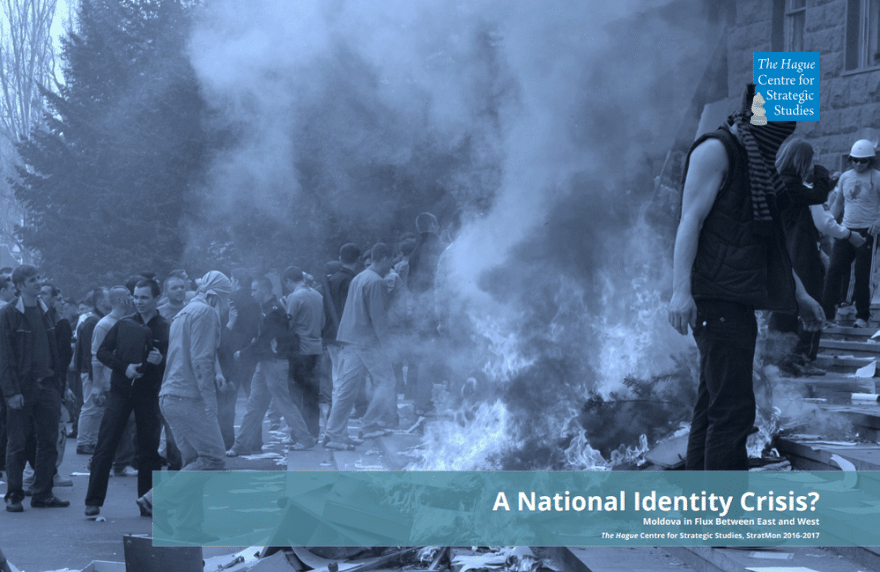
Moldova Identity Crisis
20 Feb 2017
Corruption and the perceived partiality of the justice system and state administration of Moldova have long frustrated efforts – both internal and external – to improve its domestic politics. It nevertheless remains an important partner for both the European Union and Russia, however its strategic positioning between these two powers have left its citizens stretched […]
Many Faces Political Violence FI
20 Feb 2017
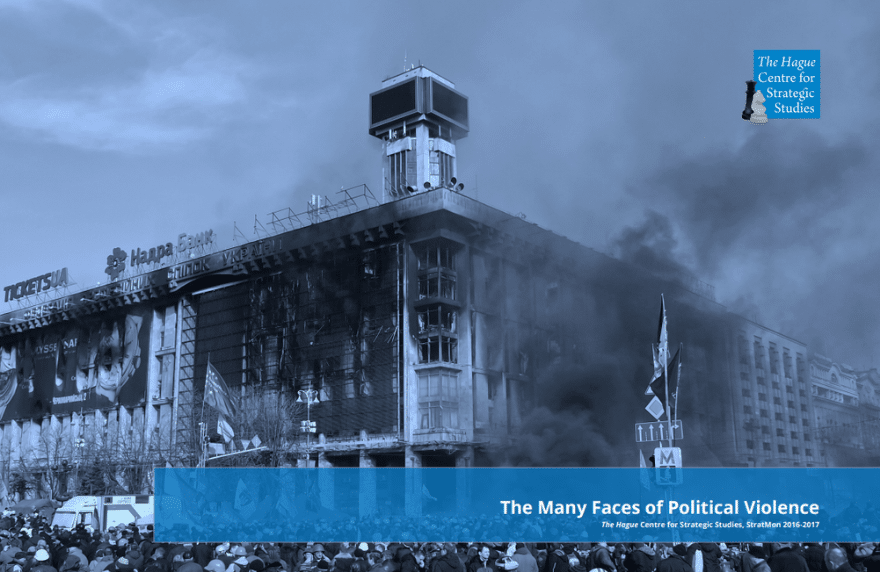
The modern era’s Great Power Peace has come under severe strain in recent years. The seams of the western-based world political order have stretched to the point of breaking, with non-state actors rising in response to exploit the global climate of paralysis and uncertainty. Indeed, violence levels are at historically high levels that haven’t been […]
Fall of ISIS
20 Feb 2017
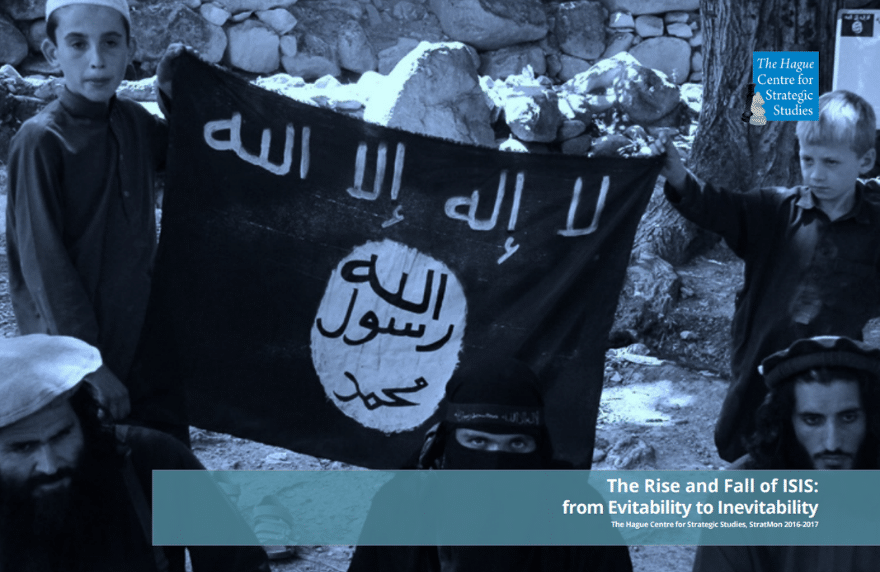
Appearing seemingly out of nowhere over the course of 2013-14, the Islamic State, or Daesh, captured the attention of international audiences through widely broadcast acts of barbarity, followed by the proclamation of its own state and upending state borders in the process. The rise of the terror organization has prompted many questions: where did it […]
20 Feb 2017
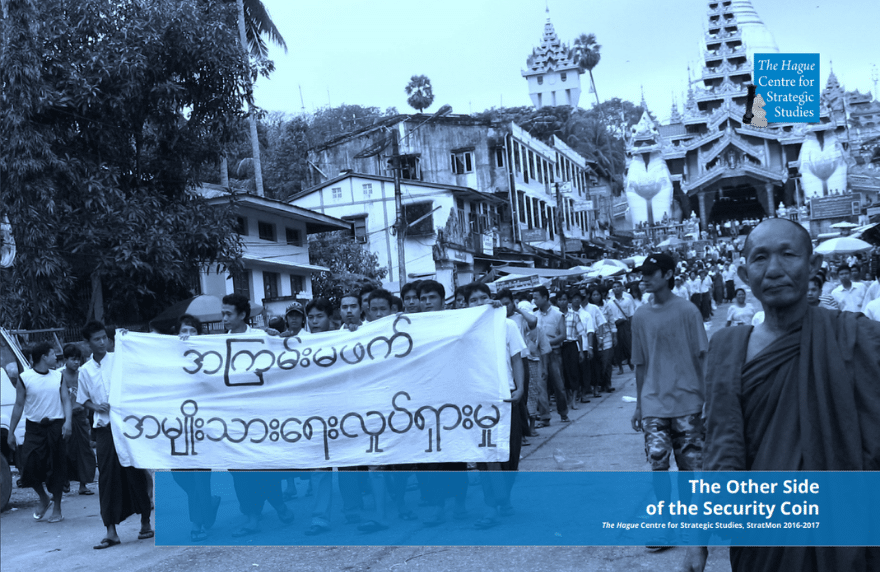
The presence of peace is more than the absence of conflict. Analyses and evaluations of the state of the international security environment often focus solely on the most concerning developments and tend to fall back on various conflict-centric metrics when providing assessments of a given security landscape. This chapter, entitled “The Other Side of the […]
Bio Weapons Threat
20 Feb 2017
With the World Health Organization (WHO), the North Atlantic Treaty Organization (NATO), and the U.S. Blue Ribbon panel publishing reports on the emerging risks of biological weaponry in past months, there is a new sense of urgency regarding biological weapons. In August 2016, the United Nations Secretary General Ban Ki Moon told the Security Council […]
Wereld in Beweging
15 Feb 2017
HCSS studie voor het ministerie van Buitenlandse Zaken: Geopolitieke veranderingen eist een revolutie in het denken over het Nederlandse buitenlandbeleid. Drastische veranderingen in de wereld ondermijnen de grondslagen van het Nederlands buitenlandbeleid. Geopolitieke veranderingen tasten het multilateralisme van sterke internationale instituties, internationaal recht, handelsverdragen en een door waarden gedreven buitenlandsbeleid aan. De Brexit en de […]
31 Jan 2017
De veiligheidsuitdagingen in de wereld zijn complex en talrijk en het ziet er niet naar uit dat de situatie binnenkort verbetert. Crises die instabiliteit in en om Europa veroorzaken nemen in aantal toe, ontwikkelen zich snel en zijn vaak complex van aard. Het is van groot belang dat Europese landen die samenwerken in NAVO en/of […]
Economics of Planetary Security
13 Dec 2016
In the face of a rapidly-changing geopolitical landscape, contemporary perspectives on security have drastically changed in reaction to new conflict factors that have arisen out of, and are related to, unpredictable patterns of climate change. Already, in both the short and long term future, it is increasingly likely that conflict will result from a multitude […]
Food Systems FI
22 Nov 2016
This study addressed the question of future food challenges and how these may play out. Part of the analysis focused on the question as to how we may enhance our understanding of the effects of climate change, increased population growth and rising incomes worldwide on future food systems. The worldwide food system is vulnerable to […]
Great power Assertivitis
8 Sep 2016
HCSS has been monitoring Great Power Assertiveness (GPA) since 2014 using a variety of different datasets and -tools – see our Assessing Assertions of Assertiveness: The Chinese and Russian Cases (2014); From Assertiveness to Aggression. 2014 As a Watershed Year for Russian Foreign and Security Policy (2015). This study presents the GPA story of five great powers: China, ‘Europe’, India, Russia and […]
Circular Economy Dev Countries FI
21 Jul 2016
A transition towards a ‘circular economy’ – in which redundant consumer goods are viewed as input rather than waste – offers great potential for societies to reduce their environmental footprint. Once products reach the end of their lifespan new value can be generated by re-using valuable resources. In today’s globalized world, widely used (consumer) goods […]
21 Jul 2016
A new HCSS report “Better Together” is about cooperation, the way it is changing, and what this means for our national defense organizations (NDOs). Cooperation is the foundation of any human society. The scale and extent of cooperation is what distinguishes humans from other species. In recent years, the digital revolution has drastically reduced the […]
Vleugels voor Nederland
21 Jul 2016
De luchtmacht heeft behoefte aan een sterke lucht en ruimtevaartsector. Steeds meer nieuwe technologische ontwikkelingen lijken een paradigma shift te kunnen gaan veroorzaken voor zowel de industrie als de luchtmacht: • afnemende houdbaarheid van technologie en accelererende innovatiecyclus; • verschuiving van het belang van wapensystemen naar verbeterde informatiepositie; • afnemend belang van materieel in eigen […]
Strategic Monitor 2015 2016
24 Jun 2016
Nationale veiligheid begint bij strategische anticipatie: wat zijn de risico’s voor de Nederlandse nationale veiligheid? Hoe kan Nederland zich daar tegen beschermen? En welke keuzes én investeringen zijn daarvoor noodzakelijk? De HCSS Strategische Monitor analyseert mondiale trends in coöperatie, confrontatie en conflict en brengt de belangrijkste veiligheidsrisico’s in beeld voor Nederland.
Strategic Monitor 2015 2016
24 Jun 2016
National security starts with strategic anticipation: what are the risks for the Dutch national security? How can the Netherlands prepare for this, and what choices and investments are needed in order to do so?
Fossiele Dilemma Rotterdam
20 Apr 2016
Onlangs startte Minister Kamp een ‘maatschappelijke energiedialoog’. De Nederlandse energievoorziening staat immers voor belangrijke keuzes om de noodzakelijke emissiereductie te bereiken en verdergaande vergroening in de toekomst vorm te geven. Rotterdam speelt daarin met zijn raffinaderijen, doorvoer van kolen en chemische industrie een centrale rol. De haven bereidt zich voor op zowel groei van fossiel, die mogelijk wordt door afvang en opslag van CO2, als van groene opties. Dat lijkt op dit moment een verstandige strategie, want de concurrentievoordelen van Rotterdam met name bij fossiel zijn groot. Maar als de vraag naar fossiele energiebronnen sneller afneemt dan verwacht, dan kan Rotterdam met deze ‘én-én strategie’ in een zelfde situatie terecht komen als eerder Detroit of Kodak.
Back to the Brink
31 Mar 2016
Onrust domineert het wereldtoneel. Sinds de Krim Crisis zijn Rusland en het Westen in een politiek steekspel verwikkeld. Recent kwamen daar hoog oplopende spanningen bij tussen Turkije en Rusland en tussen Saoedi-Arabië en Iran. Deze conflicten kunnen niet los van elkaar worden gezien, maar maken deel uit van een trend: de terugkeer van interstatelijke crisis. Een grondig begrip van crisis-management en crisisbeheersing is vandaag de dag opnieuw onmisbaar.
Back to the Brink
10 Mar 2016
High-stakes crises between states are dotting the world map. The annexation of Crimea locked Russia and the West into a standoff, while recent months witnessed flaring tensions between Turkey and Russia as well as between Saudi Arabia and Iran. Rather than isolated incidents, these events mark a larger trend: the comeback of interstate crisis. For decision makers, who have largely shifted attention to the unconventional threats of terrorists and failed states, now is the time to return to the lessons of crisis management of the past. It is time to reacquire crisis literacy.

© The Hague Centre for Strategic Studies