Publications

Over the years, HCSS has built up an extensive archive of reports, monitors, papers and other publications. We disseminate the results of our research as broadly as possible to benefit the public good. Use the advanced search functions below to browse through our research library, most of which is available as free PDF downloads.

1 Dec 2021
European states are facing an increasing threat from missiles and aircraft. Interacting geopolitical and technological trends have both made these weapons more effective and increased the scenarios in which aggressors could find use for them. This underlines the need for better and more integrated air and missile defence (IAMD), conclude Lotje Boswinkel and Paul van Hooft in their latest report.
25 Nov 2021
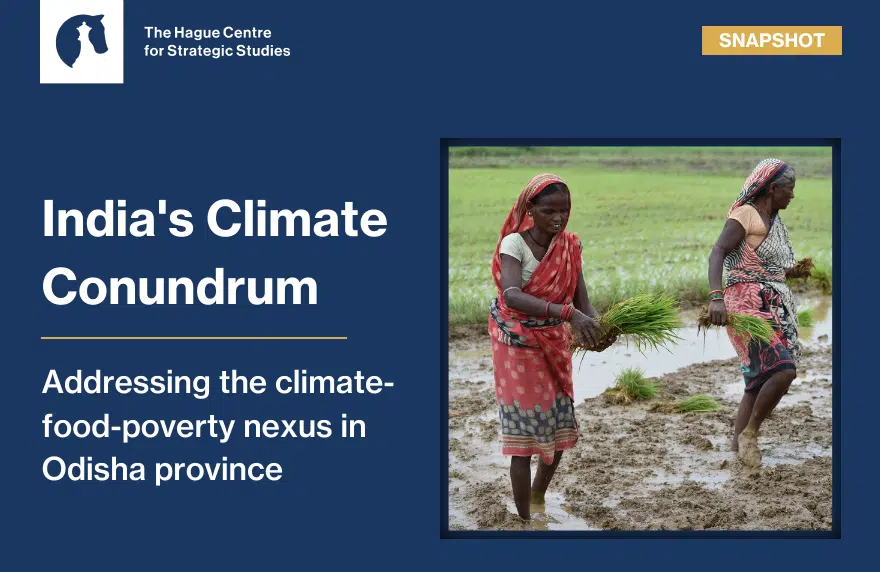
In order to prevent, mitigate, and respond to the devastating impacts of climate change, India must come to better grips with the actions it can take at regional and district level. Early warning and early action will be essential. This snapshot by assistant analyst Sneha Mahapatra and senior strategic analyst Laura Birkman explains how the climate-food-poverty nexus in Odisha, one of India’s poorest and most agriculture-dependent regions, may be better managed to build resilience and avert disaster.
18 Nov 2021
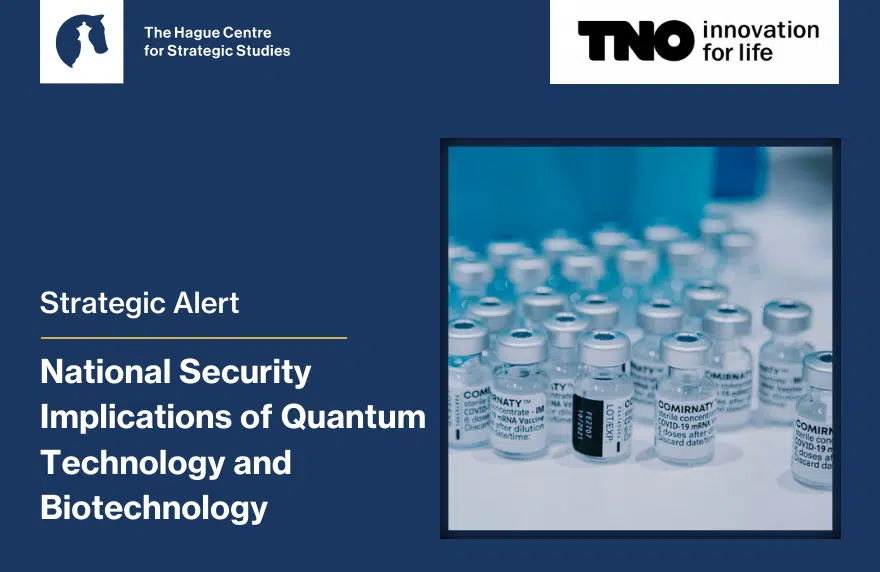
What effects do biotechnology and quantum technology have on national security? And how can the Netherlands and the EU leverage emerging technologies to strengthen (inter)national security? Carolina van Weerd and Deborah Lassche (TNO) assess the possible impact of these developing technologies in our latest Strategic Alert.
10 Nov 2021
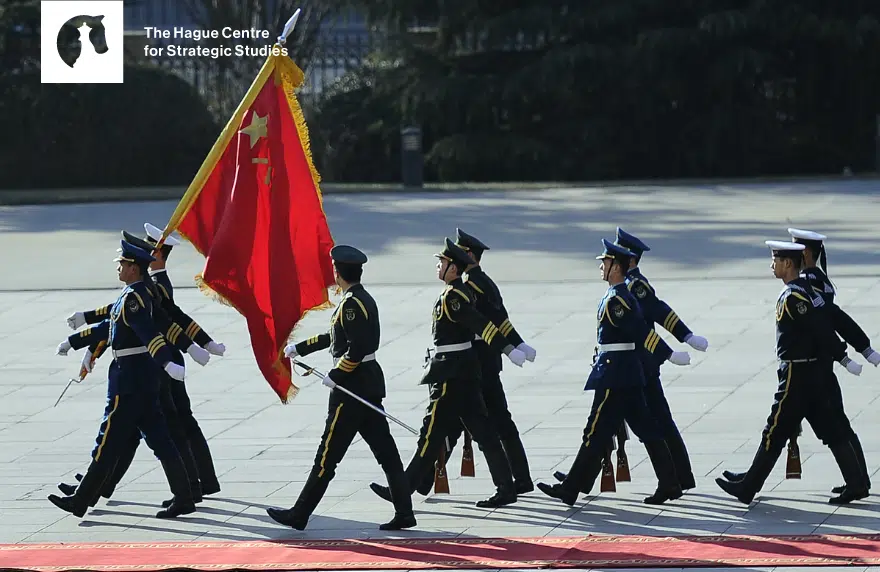
China is following a typical trajectory for rising great powers in terms of its increasing willingness and ability to project power outside its region. What is the People's Liberation Army capable of today and what will likely be its capabilities by 2035? This new HCSS report makes a broad assessment of China’s military modernization and the implications for the security of European states. The authors provide 20+ policy recommendations to deal with China's military rise both within and beyond the defense realm.
8 Nov 2021
As the size, diversity and importance of sea-based assets and activities increase, whether it’s windmills, undersea cables or offshore rigs , so do the entry points for criminal and terrorist actions, and for disturbances and attacks by state actors. As ‘sea’ becomes more like ‘land’, guaranteeing the security of structures and processes in the North Sea warrants more attention, and could potentially necessitate new approaches.
1 Nov 2021
The Cyber Peace Institute has published this report elaborated in partnership with GEODE and The Hague Center for Strategic Studies as part of Working Group 5 of the Paris Call for Trust and Security in Cyberspace.
21 Oct 2021
How can the Nagorno-Karabakh conflict be peacefully resolved? This report analyzes the conflict through the lens of conflict theory. In the absence of conflict ripeness, resolution of the dispute remains very unlikely. However, steps can be taken by parties directly and indirectly involved to manage the conflict.
14 Oct 2021
Looking back: after another Western intervention failure in Afghanistan, the question we may ask is: who actually won America’s Longest War? What lessons did the West learn? And how should these be applied in future security challenges such as the great power competition with China? Read the latest paper by Friso Stevens as he reflects on the Afghan war.
11 Oct 2021
Disinformation continues to exacerbate existing political polarizations with effects ranging from discrediting measures against the COVID-19 pandemic to inciting mass violence against the very institutions of democracy itself.
5 Oct 2021
Met het wegvallen van Groningen is leveringszekerheid van gas geen gegeven meer, met name tijdens krappe gasmarkten. Jilles van den Beukel en Lucia van Geuns doen in deze nieuwe HCSS studie een aantal aanbevelingen hoe de overheid hierop zou kunnen reageren.
30 Sep 2021
The Global Commission on the Stability of Cyberspace (GCSC) and The Hague Centre for Strategic Studies is pleased to announce the launch of the first Cyberstability Paper Series. Since the release of the final GCSC report in November 2019, the concept of cyberstability has continued to evolve. A number of new ‘conditions’ are emerging: new […]
30 Sep 2021
The Global Commission on the Stability of Cyberspace (GCSC) and The Hague Centre for Strategic Studies is pleased to announce the launch of the first Cyberstability Paper Series. Since the release of the final GCSC report in November 2019, the concept of cyberstability has continued to evolve. A number of new ‘conditions’ are emerging: new […]
30 Sep 2021
The Global Commission on the Stability of Cyberspace (GCSC) and The Hague Centre for Strategic Studies is pleased to announce the launch of the first Cyberstability Paper Series. Since the release of the final GCSC report in November 2019, the concept of cyberstability has continued to evolve. A number of new ‘conditions’ are emerging: new […]
30 Sep 2021
The Global Commission on the Stability of Cyberspace (GCSC) and The Hague Centre for Strategic Studies is pleased to announce the launch of the first Cyberstability Paper Series. Since the release of the final GCSC report in November 2019, the concept of cyberstability has continued to evolve. A number of new ‘conditions’ are emerging: new […]
23 Sep 2021
Sensitive technologies are growing to be more and more closely associated with “European strategic autonomy”. But how do techno-nationalists operate, what can the Netherlands do to protect its sizeable R&D infrastructure from their advances, and to what degree should The Hague look to Brussels for guidance and support?
7 Sep 2021
What impact will the macro-economic and geopolitical shifts brought on by the energy transition have on the future viability of the Dutch and European tank storage sector? Find out in our latest paper for VOTOB on the future of the tank storage sector.
6 Sep 2021
Wat hebben de agro-economische en politieke ontwikkelingen in de afgelopen jaren voor de Nederlandse agri-food sector betekend? In nauwe samenwerking met het ministerie van LNV heeft HCSS een tweetal ronde tafels georganiseerd over de relatie tussen de Nederlandse agri-food business en China. De resultaten van de gevoerde discussie zijn geanonimiseerd in deze paper verwerkt.
27 Aug 2021
Sven Biscop (Egmont Institute) writes European strategy should be moderate when possible: pursuing interests by working w/others. But Europe must stand up for its interests when others act as rivals.
27 Aug 2021
David Criekemans contends decarbonization & energy transition will have impact far beyond climate change. It should play key role in debate about strategic autonomy & European strategy.
27 Aug 2021
Henrik Larsen writes success in tech arena must be cornerstone of European strategic autonomy but Europe faces big challenge esp. from China in developing tech norms & competitive tech industries.
27 Aug 2021
Michiel Foulon argues European trade strategy should strike balance between accommodating legitimate concerns of economic nationalists & maintaining benefits of rules-based international trade.
20 Aug 2021
European strategic autonomy is necessary as US shifts focus to Indo-Pacific, Paul van Hooft writes. Europe should do more for its own security in ways bolstering transatlantic alliance e.g. investing in conventional deterrence vis-à-vis Russia.
20 Aug 2021
When it comes to the transatlantic relationship Europe will need to be ambidextrous, Jack Thompson contends: cooperating with the US where possible but also developing the ability and political will to act independently where necessary.
20 Aug 2021
Trineke Palm argues that normative power is an essential instrument in the EU’s foreign policy toolbox and should play a central role in debates about strategic autonomy.

© The Hague Centre for Strategic Studies