The events of this year have made that abundantly clear. The war in the Middle East and the renewed risk of disruption to the Strait of Hormuz, a critical chokepoint for global fuel supplies, demonstrated how quickly geopolitical crises can threaten Europe’s energy security. While the immediate disruption proved limited in European countries, the episode exposed the strategic vulnerabilities that arise when defence readiness depends on fragile global supply chains.
Against this backdrop, HCSS has placed fuel security at the centre of the European defence debate through a series of reports published as part of the HCSS Energy Security Initiative, chaired by Irina Patrahau.
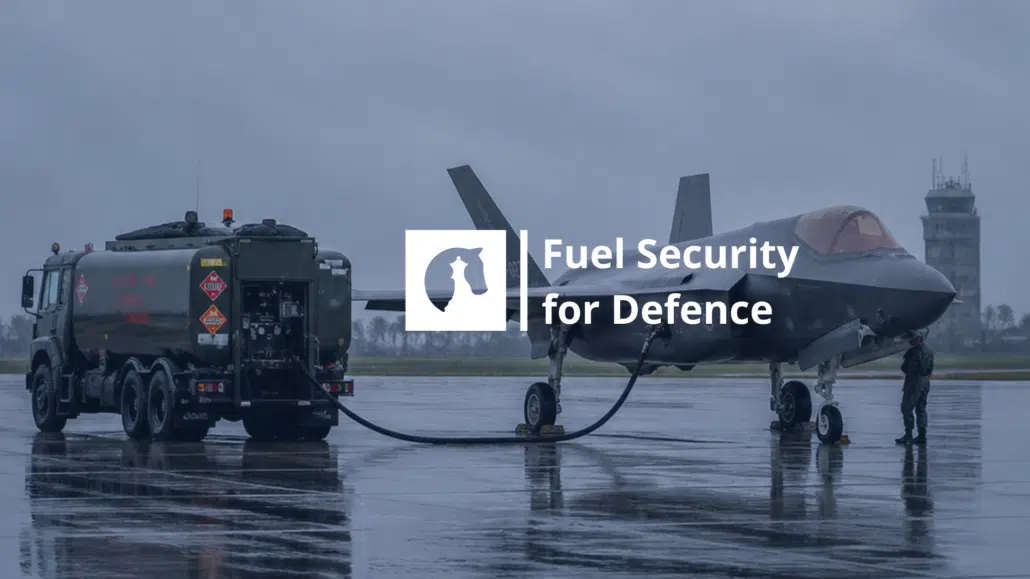
Our research starts from a simple premise: without fuel, there is no fight. Military readiness depends not only on platforms and personnel, but also on resilient fuel supply chains that can withstand crisis and conflict.
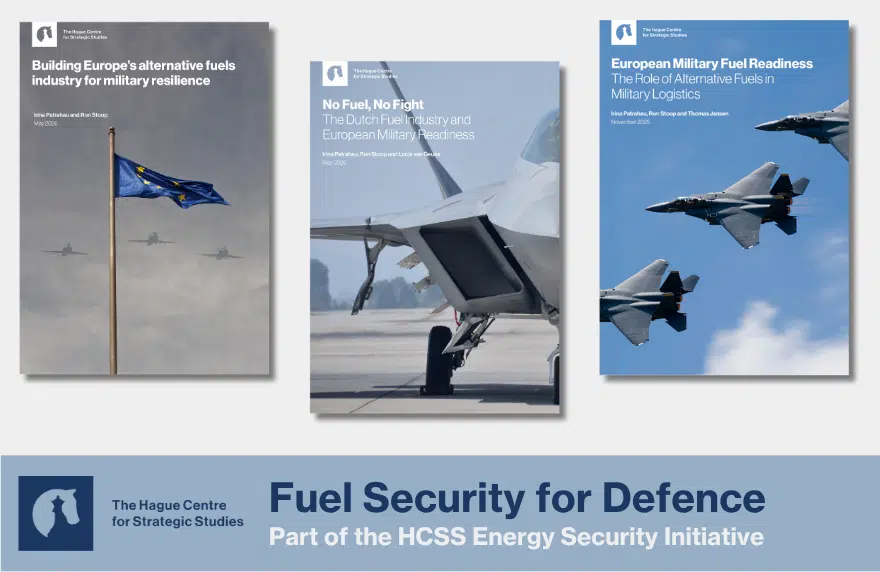
Across three reports, we examined how Europe’s changing energy landscape is reshaping defence readiness.
🔹 European Military Fuel Readiness: The Role of Alternative Fuels in Military Logistics assessed the opportunities and limitations of alternative fuels for military use. While operational performance must remain the priority, domestically produced drop-in fuels such as SAF, HVO and e-fuels can strengthen resilience and reduce dependence on imported oil.
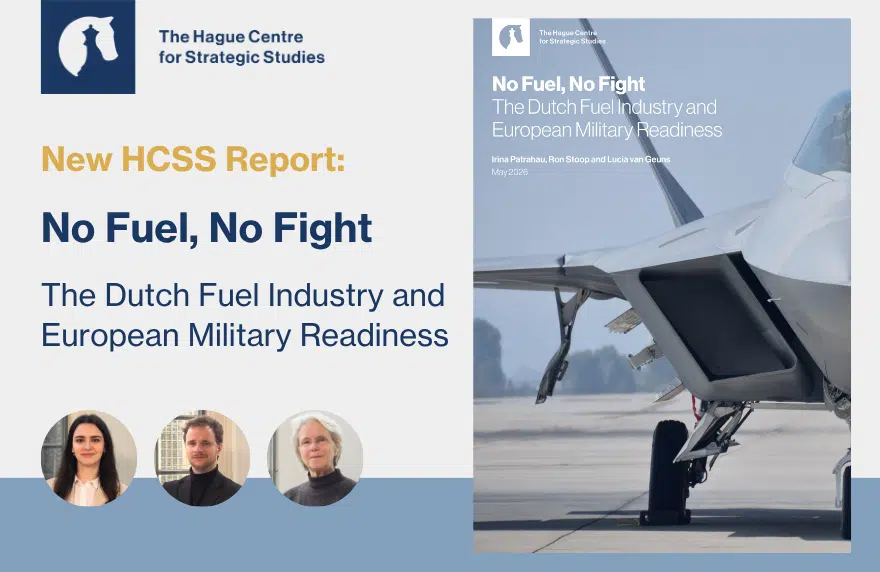
🔹 No Fuel, No Fight: The Dutch Fuel Industry and European Military Readiness demonstrated that Europe’s fuel system is optimised for peacetime efficiency rather than wartime resilience. Declining refining capacity, growing import dependence and limited surge capacity could leave both European armed forces and civilian economies vulnerable during a major conflict. The report argues that fuel security should be treated as a core element of defence planning nationally, in the EU and in NATO.
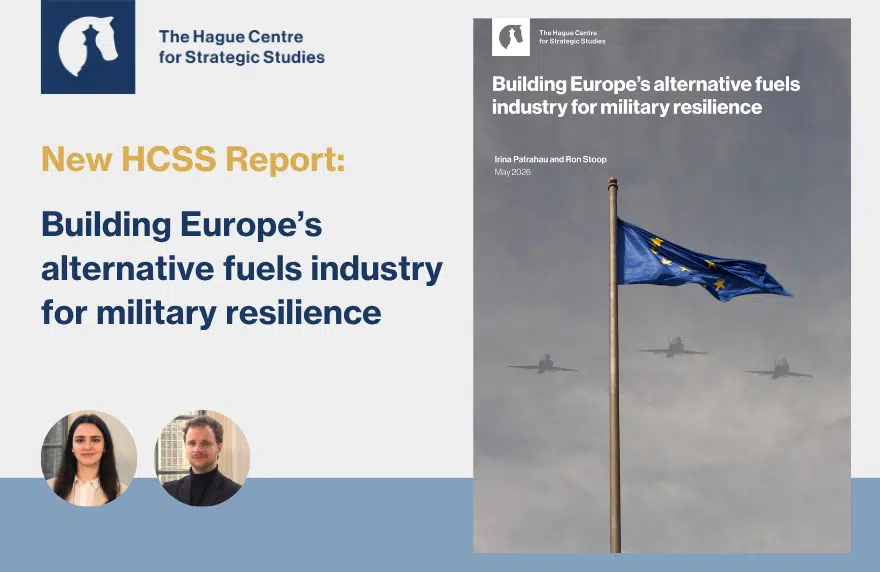
🔹 Building Europe’s Alternative Fuels Industry for Military Resilience examined how alternative fuels could be scaled for military consumption in the EU. It concludes that scaling up domestic production of military-compatible alternative fuels requires coordinated civil-military planning, strategic investment and long-term policy commitments. Alternative fuel production should be recognised as dual-use strategic infrastructure essential to European resilience.
To mark the publication of the ‘No Fuel, No Fight’ report, HCSS hosted a launch event on 12 May, bringing together government, defence and industry leaders to discuss the future of military fuel resilience. State Secretary for Defence Derk Boswijk delivered the keynote address, stressing that while the energy transition is essential for reducing strategic dependencies, ensuring fuel availability today remains fundamental to military effectiveness. The event reinforced a key message emerging from the research: strengthening fuel security requires closer civil-military cooperation, strategic investment and political ownership.
Taken together, these reports show that fuel readiness can no longer be separated from the energy transition or from Europe’s wider security strategy. Recent tensions in the Middle East underscored how vulnerable Europe remains to external supply shocks. Building resilient fuel supply chains is therefore not only an energy challenge, but a strategic imperative for European defence and deterrence.
Read the reports and learn more about HCSS’ Fuel Security for Defence work on our website:




Related Content