HCSS
  • News
    • BNR | De Strateeg
    • Columns
    • Events
    • HCSS Newsletter
    • Podcasts
  • Publications
    • Publications
      • All Projects
      • All Publications
    • Geopolitics & Governance
      • Transatlantic Relations
      • Russia & Eurasia
      • Europe in the Indo-Pacific
      • AI in the Military Domain
      • PROGRESS / Strategic Monitor
    • Economics & Technology
      • Emerging Technologies
      • Critical Materials
      • Energy Security
    • Defence & Security
      • On Future War
      • Deterrence and Arms Control
      • Hybrid Threats
      • Cyber Security
    • Society & Resilience
      • Nationale Veiligheid en Weerbaarheid
      • Publieksmonitor Maatschappelijke Stabiliteit
      • Transnational Organised Crime
      • Strategic Monitor Dutch Police
    • Climate, Water & Food
      • Climate Security
      • Water, Peace & Security (WPS)
      • Food Security
  • Dashboards
    • Dashboards
      • All Tools
        • GINA
        • SARA
    • Geopolitics & Governance
      • DFRI
      • GINA | Diplomatic
      • GINA | Information
      • CLARIS
    • Economics & Technology
      • DOMINO
      • GATRI
      • GINA | Economic
      • Cyber Arms Watch
      • Cyber Comparator
      • Cyber Norms Observatory
      • Cyber Transparency
    • Defence & Security
      • GINA | Military
      • Nuclear Timeline
    • Society & Resilience
      • DAMON
    • Climate, Water & Food
      • Agrifood Monitor
      • CARMEN
      • CRM Dashboard
  • Leadership Practice
    • HCSS Leadership Practice
    • HCSS Boardroom
    • Strategic Negotiations Course
    • Serious Gaming
    • IDCSS | Indo-Dutch Cyber Security School
    • SANCS | Southern Africa-Netherlands Cyber Security School
  • About HCSS
    • Contact Us
    • HCSS Datalab
    • Our People
    • Funding & Transparency
    • Internship Programme
    • Press & Media Inquiries
    • Studio HCSS
    • Working at HCSS
    • Global Futures Foundation
  • Click to open the search input field Click to open the search input field Search
  • Menu Menu

News

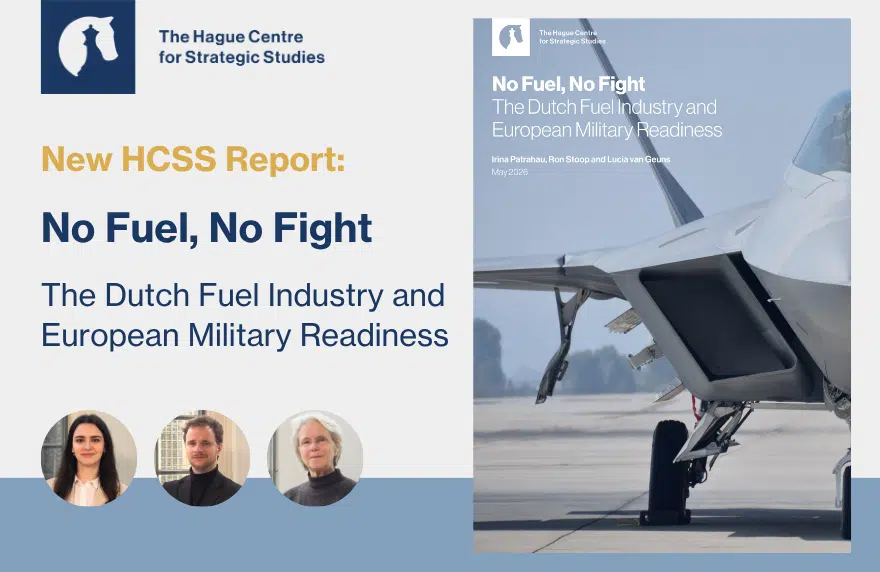
Europe risks fuel shortages in wartime, new HCSS report warns

May 12, 2026

The Hague, May 12 2026 | Europe faces wartime fuel shortages as refining capacity declines, a new HCSS report warns.

Europe risks significant fuel shortages in the event of a large-scale conflict, as its energy system is increasingly misaligned with military needs. A new report by Dutch thinktank The Hague Centre for Strategic Studies (HCSS) finds that Europe’s fuel system is designed for peacetime efficiency, not the demands of crisis or war.

The study by Irina Patrahau, Ron Stoop and Lucia van Geuns highlights a structural mismatch between supply and demand. Declining domestic refining capacity, combined with the slow development of alternative fuels, is reducing Europe’s ability to respond to sudden surges in military consumption. At the same time, dependence on imported fuels is increasing exposure to global disruptions and geopolitical shocks.

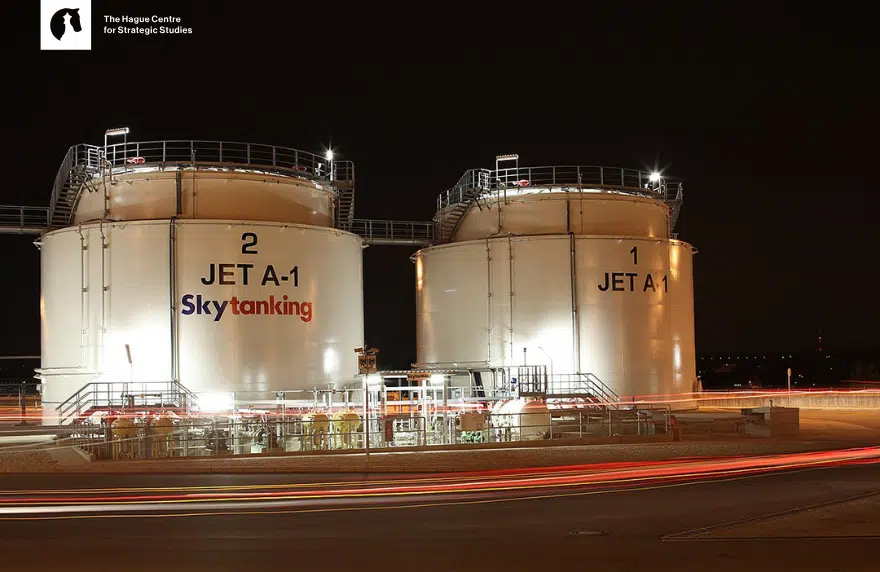
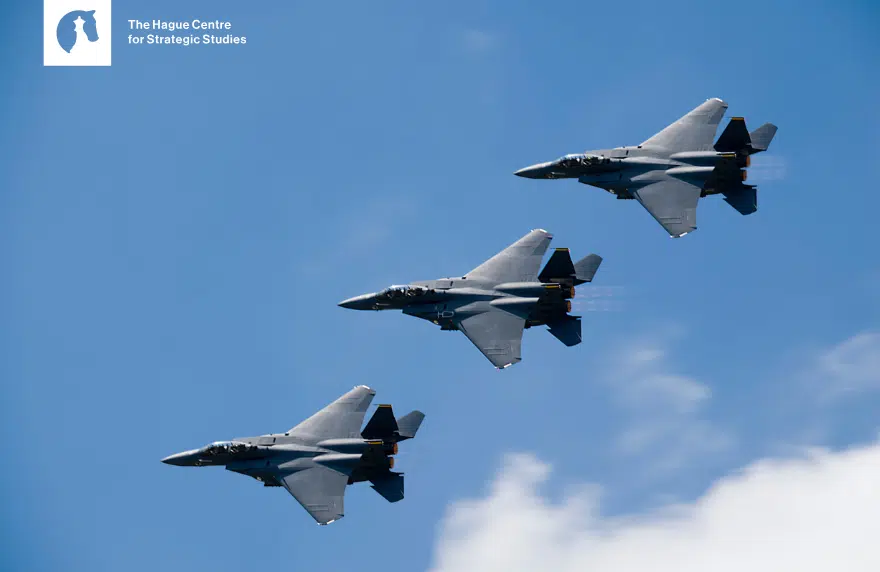
The most severe pressure points are in aviation fuel, a critical input for air forces and widely used under NATO’s Single Fuel Concept. In the conflict scenario assessed, the EU could face an aviation fuel deficit of up to 24 percent.

The Netherlands faces even greater strain due to its central role in Europe’s fuel system. As a key NATO Host Nation and part of the Amsterdam-Rotterdam-Antwerp (ARA) hub, it is expected to support both national defence and the movement of allied forces across Europe. In a full-scale conflict, up to 35 percent of Dutch aviation fuel demand and 13% of road fuel demand could remain unmet.

At the same time, Europe’s growing reliance on imports deepens vulnerability. By 2040, the EU could depend on imports for up to 72% of its fuel in a crisis, tying supply security to maritime routes and external suppliers that may be disrupted in wartime.

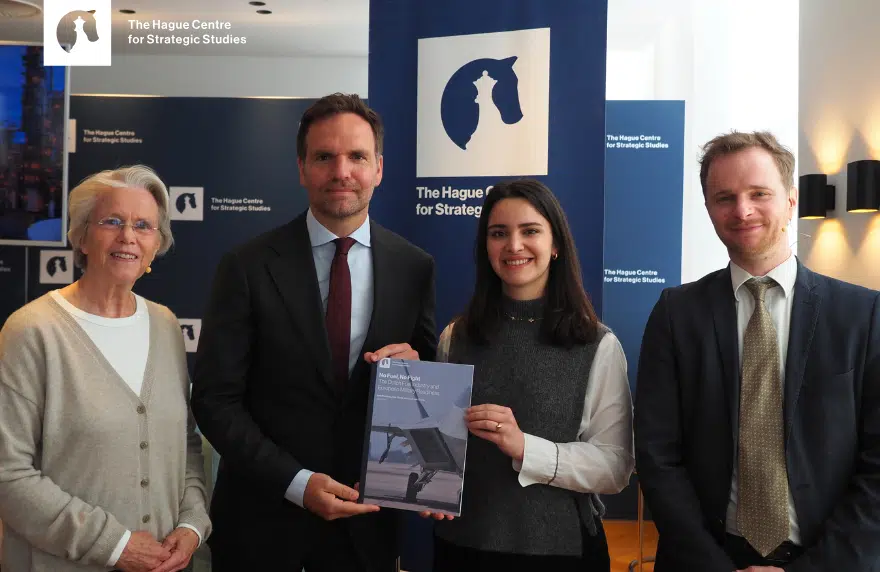
“Europe cannot assume that fuel will remain available, affordable, and easy to move in times of crisis,” said lead author Irina Patrahau. “Without structural changes, fuel logistics risk becoming a limiting factor in European defence.”

To address these risks, the report identifies five priorities: strengthening national leadership on fuel security, preserving critical refining capacity, building resilient alternative fuel supply chains, improving protection of fuel infrastructure, and deepening EU-NATO coordination on strategic reserves and fuel resilience.

“Fuel security must be treated as a core security task,” said co-author Ron Stoop. “Policymakers need to act now to ensure Europe can sustain both its military operations and its economies under pressure.”

Download PDF
  • Authors: Irina Patrahau, Ron Stoop and Lucia van Geuns
  • Contributors: Michel Rademaker, Nico Tak, Tom Middendorp, and Marit Weurding.
  • Data analytics: Maria-Antigone Rumpf, Energex Partners

The research was commissioned by VEMOBIN, the Association Energy for Mobility and Industry, and executed by The Hague Centre for Strategic Studies (HCSS). Responsibility for the contents and for the opinions expressed, rests solely with the authors.
  • Share on Facebook
  • Share on X
  • Share on WhatsApp
  • Share on LinkedIn
  • Share by Mail

Experts

Irina Patrahau
Ron Stoop
Lucia van Geuns
Michel Rademaker
Nico Tak
Tom Middendorp

Related News

Related Content

New Report | Securing European Military Fuels in a Tense Security Environment: Supply, Distribution and Storage
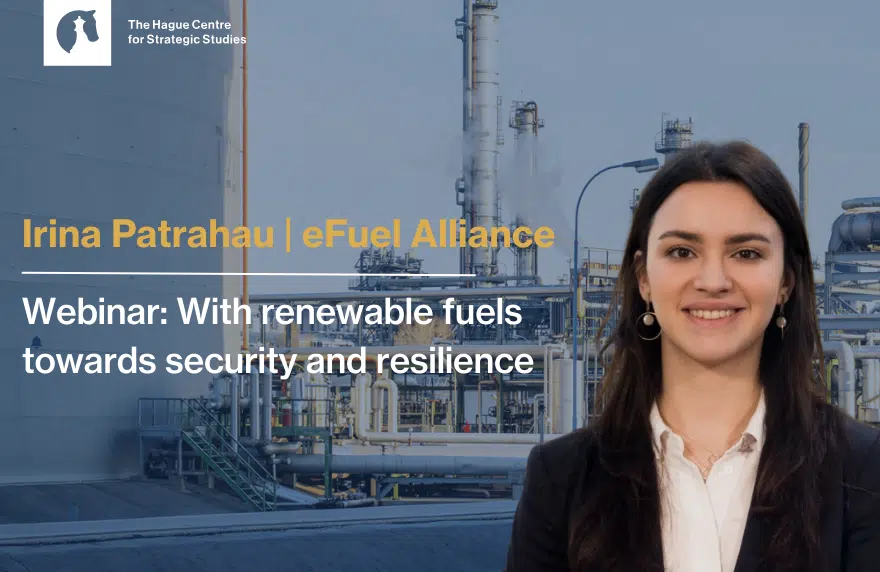
eFuel Alliance | With renewable fuels towards security and resilience
New report | European Military Fuel Readiness: The Role of Alternative Fuels in Military Logistics 

Office Address

  • The Hague Centre for Strategic Studies
  • Lange Voorhout 1
  • 2514 EA The Hague
  • The Netherlands

Contact Us

  • Telephone: +31(70) 318 48 40
  • E-mail: info@hcss.nl
  • IBAN NL10INGB0666328730
  • BIC INGBNL2A
  • VAT NL.8101.32.436.B01
  • Contact

Legal & Privacy

  • Disclaimer & Privacy
  • Algemene Voorwaarden 2024 (NL) 
  • Terms & Conditions 2024 (ENG) 
  • Algemene Voorwaarden 2026 (NL) 
  • Terns & Conditions 2026 (EN) 
  • Coordinated Vulnerability Disclosure
  • Ethical Standards
  • Manual for Responsible Use of AI

Follow us

© The Hague Centre for Strategic Studies
    Link to: Nieuw HCSS-rapport waarschuwt: Europa en Nederland niet voorbereid op brandstofschaarste in oorlogssituatie Link to: Nieuw HCSS-rapport waarschuwt: Europa en Nederland niet voorbereid op brandstofschaarste in oorlogssituatie Nieuw HCSS-rapport waarschuwt: Europa en Nederland niet voorbereid op brandstofschaarste...
    Scroll to top Scroll to top Scroll to top

    GDPR Consent

    Your privacy is important to us. Here you can set which consent you are allowing us with regards to the collection of general information, the placing of cookies of the collection of personal information. You can click 'Forget my settings' at the bottom of this form to revoke all given consents.

    Privacy policy | Close
    Settings

    GDPR Consent Settings

    Your privacy is important to us. Here you can set which consent you are allowing us with regards to the collection of general information, the placing of cookies of the collection of personal information. You can click 'Forget my settings' at the bottom of this form to revoke all given consents.

    Website statistics collect anonymized information about how the site is used. This information is used to optimize the website and to ensure an optimal user experience.

    View details

    Functional cookies are used to ensure the website works properly and are neccessary to make the site function. These cookies do not collect any personal data.  

    View details
    Forget my settings Deleted!