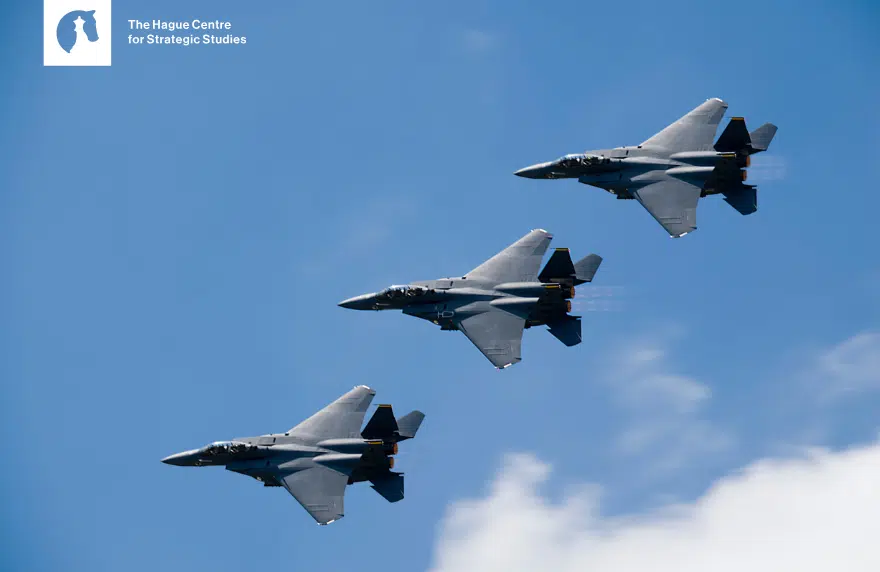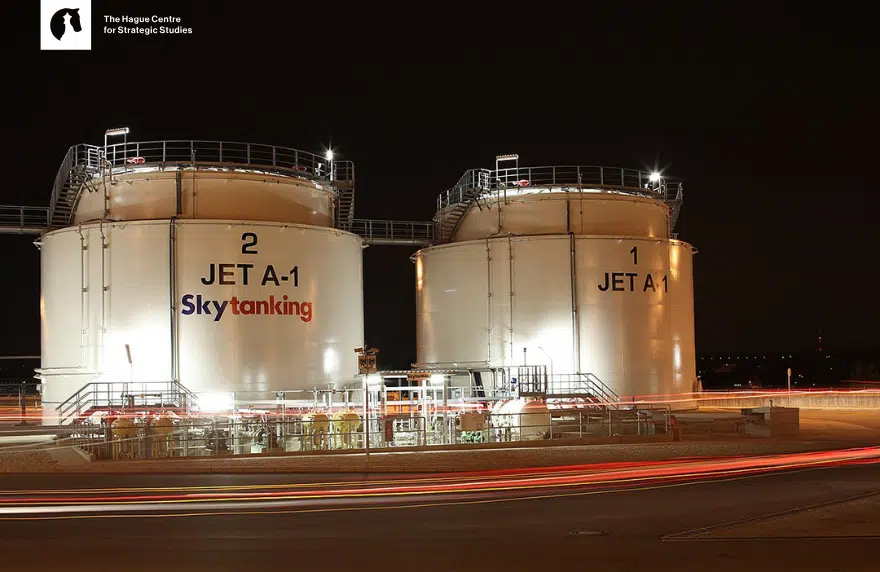
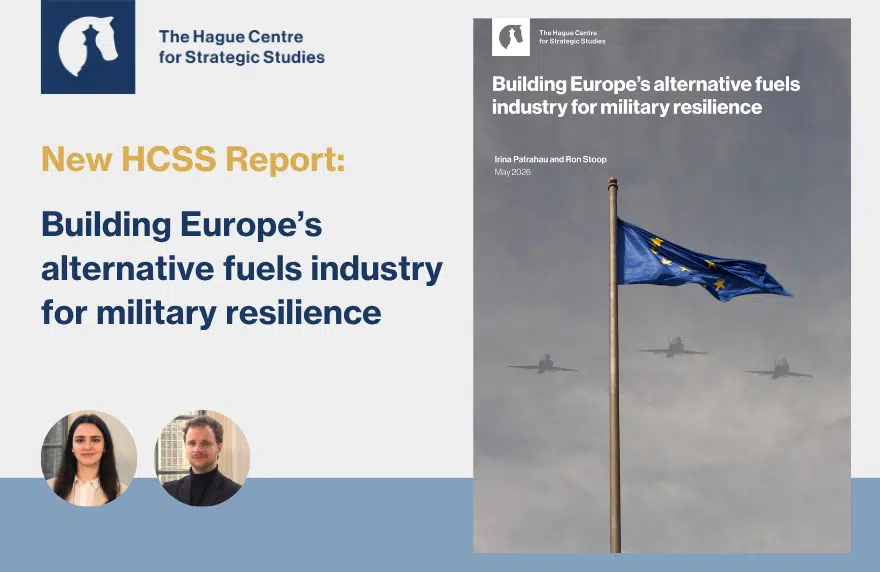
Europe’s military readiness is increasingly tied to the resilience of its fuel supply chains. A new report by The Hague Centre for Strategic Studies (HCSS), Building Europe’s Alternative Fuels Industry for Military Resilience, warns that Europe risks replacing one strategic dependency with another unless it scales up domestic production of alternative fuels for defence.
The report, authored by Irina Patrahau and Ron Stoop, examines how the 2026 Middle East oil disruption exposed Europe’s vulnerability to fuel supply shocks. Around half of the EU’s jet fuel imports originate from the Middle East, while military operations remain heavily dependent on liquid fuels such as jet fuel and diesel.
The authors argue that “drop-in” fuels such as sustainable aviation fuel (SAF), hydrotreated vegetable oil (HVO), e-SAF and e-diesel offer the most viable pathway to strengthen resilience in the short to medium term because they can be integrated into existing military infrastructure without technical modifications.
However, the study finds that current production levels remain far too limited to support military needs during crisis scenarios. Existing civilian-driven expansion plans would cover only a fraction of potential wartime demand, leaving armed forces exposed to shortages and competition with civilian consumers.
“Fuel readiness can no longer be treated as separate from the energy transition,” says Irina Patrahau. “European militaries need to secure access to alternative fuels while the market is still taking shape, otherwise they risk becoming residual consumers during future crises.”
The report identifies three priorities for policymakers:
- develop a coordinated civil-military strategy for alternative fuel scale-up;
- treat alternative fuel plants as dual-use strategic infrastructure eligible for defence and EU funding;
- establish minimum domestic production benchmarks for fuels critical to defence readiness.
“Europe cannot assume that market forces alone will deliver fuel security for defence,” says Ron Stoop. “Governments and NATO allies need to create long-term demand signals, invest in production capacity and ensure that fuel resilience becomes part of defence planning.”
The report concludes that a phased adoption strategy focused first on strategic military nodes would provide the best balance between operational readiness, interoperability and long-term resilience.
Authors: Irina Patrahau and Ron Stoop
Contributors: Thomas Jansen and Michel Rademaker
The research was commissioned by Topsoe and executed by The Hague Centre for Strategic Studies (HCSS). Responsibility for the contents and for the opinions expressed, rests solely with the authors.



Related Content