Water, Peace & Security (WPS)

Water insecurity is increasing worldwide. In response to these threats the Water, Peace and Security (WPS) partnership develops innovative tools and services that help identify water-related security risks, and allow stakeholders to take action at an early stage.

Our process depends on global data collection and validation, and on understanding how water shortage can translate into social consequences locally. Our participatory approach understands that dialogue between different parties is crucial to solving conflict, increases joint understanding of the water system, and broadens the scope of actions that can be taken.

The Problem: Water Insecurity Is on the Rise

A third of the world’s people now live in water-scarce regions. On average, droughts affect over 50 million people annually and cause more than $5 billion of damage. These numbers are set to increase, due to population growth, rapid urbanisation, and growing economic demands for water. Climate change further intensifies these pressures in many regions.

In most cases, these threats are not just the result of weather variability, but are also related to inadequate water management and governance issues. These multiple interacting factors render vulnerable communities more susceptible to short-term water scarcity and longer-term droughts, while directly affecting local economies and social relations.

In response to these threats, the Water, Peace and Security partnership is designing innovative tools and services that identify water shortage-related security risks. These tools and services demonstrate changes in short term water availability and their impacts on societies, and link them to both hydrological as well as social, economic and political factors. Based on this information, evidence-based actions can be triggered to prevent or mitigate human security risks.

Early Warning Tools:

WPS works to provide data, analyze risks, propose solutions and support the prevention of conflicts over water by enabling investors, policymakers and communities to take coordinated action at an early stage. Data is fundamental to understanding how water shortages translate into social consequences, where water-related risks are highest, what drives these risks and what solutions exist. Awareness and capacity to act enable decision-makers at all levels to implement these solutions.

Our Global Early Warning Tool provides the initial step in a multi-step process, employing machine learning to predict conflict 12 months ahead in Africa, the Middle East, and South and Southeast Asia. So far it has captured 86% of future conflicts, successfully forecasting more than 9 in 10 “ongoing conflicts” and 6 in 10 “emerging conflicts”.

In addition to the Global Early Warning Tool, WPS is developing country-specific tools and approaches to more deeply analyze local drivers of conflict and underlying issues and to support conflict sensitive interventions that can address or mitigate the threats. This will help national and local stakeholders offer direct interventions that can more quickly avert violence, and act in a timely and adequate manner to address water-related security threats.

Training Modules:

The Water, Peace, & Security Partnership (WPS) offers a variety of training modules as part of its innovative tools and services that help identify, understand and respond to water-related security risks. WPS’s tailored learning programmes provide a versatile and hands-on experience relevant to the professional or personal environment of participants. Our trainings can be enriched through online courses, webinars, coaching and/or individual exercises that can be adapted in depth, length and methods. Find out more about WPS training options here.

Do you want to learn more about how water-related risks link to conflict and how such conflict can be prevented or mitigated? WPS also has a bespoke e-learning course. The course is free, open to anyone interested, and available to complete on your own time. If you want to learn more about Water Security you can learn here.
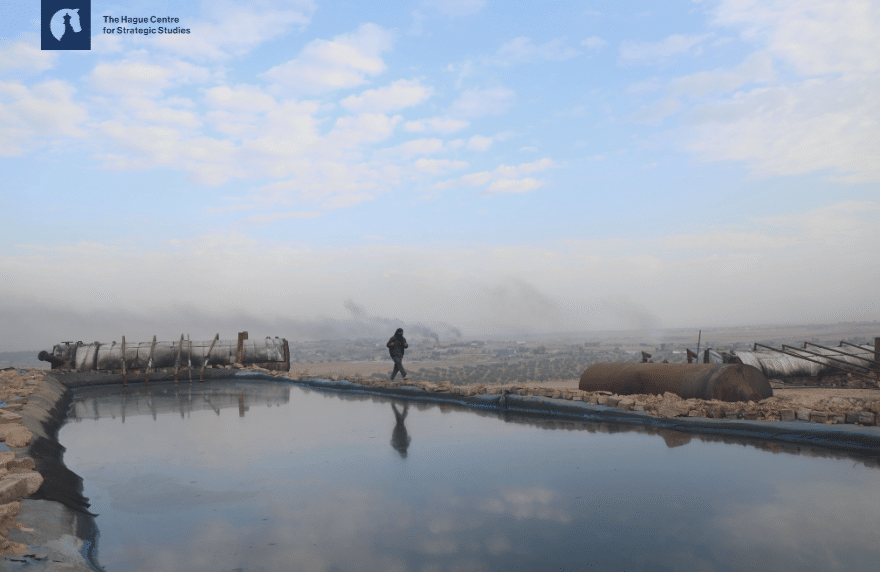
WPS was founded in 2018 with the support of the Ministry of Foreign Affairs. The aim of this partnership is to help identify and address water-related security risks to achieve both water security and peace-building.

The inclusive nature of this partnership enhances its impact, as it brings together various members of the 4D communities (diplomacy, defence, development and disaster-response experts), as well as stakeholders from the public, private sector and from the civil society. 

WPS Research

WPS News

About WPS:

“Through the WPS partnership we hope to prevent conflicts over water by enabling communities to take action at an early stage.”

I would say we can’t leave climate change just to environment ministries. It is a whole-of-society problem, requiring whole-of-society answers. We need everybody to act, to rise above political and national agendas, and to look further ahead than the next quarterly journal or the next election period. Because our success lies in our collective ability to act.

“The WPS allows policy- and decision makers to better understand the complex nexus between scarce resources such as water and arable land, climate change, and political and social instability. Enhancing possibilities for predictive analyses are growing by the day and enable us to better prepare for and prevent future catastrophes regarding water, peace and security.”

“Data is fundamental to understanding where the risks are highest, what’s driving these risks, and they suggest what possible solutions might be, in order to mitigate these risks.”

“It’s important to know why conflict is happening, what the role of water is, and what factors you can influence either as a policy maker in the respective region, or as an external partner, to solve the conflict”

Our Partners:

The WPS partnership is comprised of six organizations who specialize in environment, development and international security:

IHE Delft, World Resources Institute, DeltaresThe Hague Centre for Strategic Studies, Wetlands International and International Alert, funded by the Netherlands Ministry of Foreign Affairs.

The initiative is intended to become an open network that can bring together knowledge, capacities and activities directed at speeding up and scaling up preventative action in the context of water stress-induced conflict, migration, or other forms of social destabilization. Hence, the consortium collaborates with a growing number of other institutions, including Oregon State University, Pacific Institute, New America and Clingendael-Netherlands Institute of Foreign Relations.

IHE Delft Institute for Water Education

IHE Delft Institute for Water Education is the consortium lead for this project. IHE Delft is the largest international graduate water education facility in the world and is based in Delft, the Netherlands. IHE Delft, a non-profit organisation, has a signed partnership agreement with UNESCO. At IHE, over 200 staff members focus on education, research and capacity in the broad fields of water engineering, water management, environment, sanitation and governance. A large part of this work is done across the world with partner stakeholders from the water sector.

World Resources Institute

World Resources Institute (WRI) is a global research non-profit organisation that spans more than 60 countries, with offices in Africa, Brazil, China, Europe, India, Indonesia, Mexico and the United States. Over 1,000 experts and staff turn big ideas into action at the nexus of environment, economic opportunity and human well-being. It works towards practical solutions and global impact based on rigorous analysis and long-term engagement with decision-makers from governments, corporations, city governments and communities. WRI has become a leader in the use of new technologies and big data.

Deltares

Deltares is a leading (not-for-profit) and internationally operating consultancy and applied research institute in the field of water and subsurface resources. Based in the Netherlands and operating around the world, Deltares works on innovative solutions and applications for people, environment and society. More than 800 Deltares specialists have expertise in the policy, science and engineering disciplines to address sustainability issues. Deltares has a wide network of international cooperation, both with government and private organisations. Deltares works with major knowledge institutes around the world, and at the same time is involved in many social responsibility projects, particularly for major international financial organisations, like the World Bank.

The Hague Centre for Strategic Studies

The Hague Centre for Strategic Studies (HCSS) is an independent think tank. HCSS creates models and monitors for public and private organisations to improve their situational awareness, providing them with a better understanding of their strategic environment. It also compiles, collates and generates new datasets, designs tailor-made analytical frameworks and builds fully interactive web interfaces. HCSS’s in-house competencies include predictive modelling using both structural and dynamic data, web scraping, text mining, advanced internet search techniques and data visualisation. HCSS works with clients from both the public and private sectors.

Wetlands International

Wetlands International is a global not-for-profit organisation dedicated to the conservation and restoration of wetlands for people and biodiversity. With its headquarters in the Netherlands and 20 country and network offices around the world, the organisation is currently working in over 100 countries. Wetlands International’s work ranges from research and community-based projects to engagement with governments and private sector entities, to advocacy in international policy. To achieve long-term and sustainable positive change, it works through partnerships across landscapes and ecosystems and is supported by contributions from an extensive specialist network.

International Alert

International Alert is an international peacebuilding organisation. Approximately 250 experts and staff work on programmes to build positive peace and reduce violence, working across conflict lines and with all parties to the conflict. Alert’s peacebuilding programming works in three main ways: dialogue, influencing and partnerships underpinned by research and analysis to identify the root causes of violence and long-term solutions to conflict. Central to Alert’s peacebuilding is championing gender- and conflict-sensitive approaches to work in fragile and conflict-affected contexts. This approach is mainstreamed across all of Alert’s work and also central to its efforts  with external stakeholders at the project, strategy and policy levels.

HCSS Experts

© The Hague Centre for Strategic Studies