Publications

Over the years, HCSS has built up an extensive archive of reports, monitors, papers and other publications. We disseminate the results of our research as broadly as possible to benefit the public good. Use the advanced search functions below to browse through our research library, most of which is available as free PDF downloads.
6 Mar 2025
How has Russia’s invasion of Ukraine opened up new spaces for organised crime to become weaponised across Europe and thereby risking security across the continent? This report by Laura Jasper, Ana Dadu, and Davis Ellison examines how the Russian invasion of Ukraine has enabled criminal networks to exploit wartime instability, adapt to shifting markets, and expand their operations across Eastern Europe. Key findings reveal a significant link between organised crime, kleptocracy, and stability, highlighting their particularly destabilising impact on Eastern Europe. Understanding these dynamics is crucial to addressing the hidden criminal dimensions of war.
28 Feb 2025
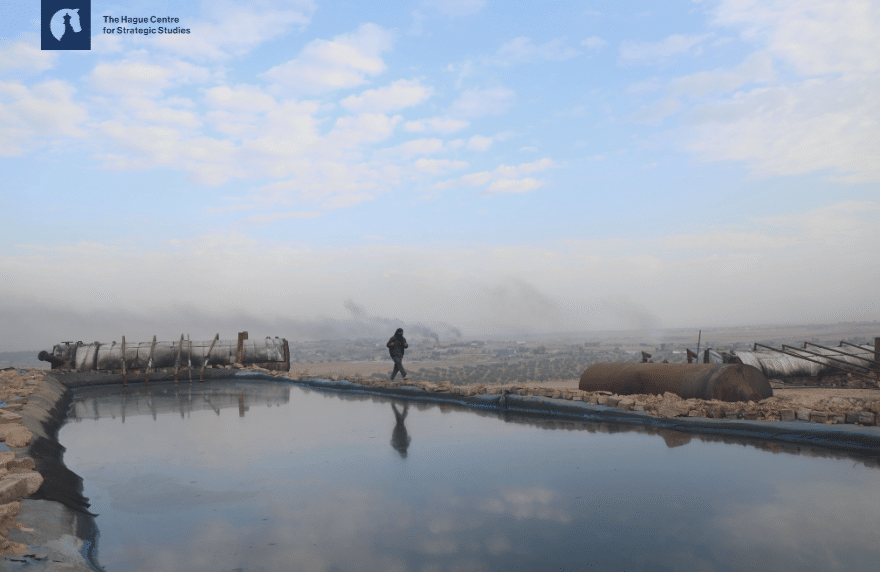
Control over water has become an entrenched part of strategic considerations for groups governing Syria, both due to the role played by water infrastructure in projecting power across the Syrian territory, and the fact that irrigation is currently the ‘sine qua non’ of food self-sufficiency ambitions. As Syria enters a reconstruction phase, how can the HTS-led transitional government use water governance to contribute to peace and stability in Syria? Our newest snapshot by Benedetta Benzoni tries to answer this question.
9 Oct 2024
Organized Crime groups in Mexico have been steadily integrating Unmanned Aerial Vehicles, aka drones, into their criminal operations. This new HCSS snapshot by Giulio Damiani and Laura Jasper analyses how UAVs have impacted three operational dimensions: trafficking of illicit goods, the surveillance of rival territory, and the coercion of groups who attempt to resist OCG violence. The snapshot also looks at the inherent risks of this emerging phenomenon in a European context: what can European states and law enforcement learn from understanding the criminal use of drones by organised crime groups in Mexico for the security of our own airspace?
13 Jun 2023
Hoe gezond is de Nederlandse rechtsstaat? De Nederlandse rechtsstaat scoort consistent hoog in internationale metingen, maar het vertrouwen in onze rechtsstaat is historisch laag. In dit nieuwe HCSS rapport onderzoeken we de problematische trends achter dit verschijnsel en verkennen we scenario's voor de toekomst.
15 May 2023
As organised crime groups play increasingly significant roles as agents of influence and political change, the subject should receive more attention from international relations, international security, and strategic studies, this new HCSS report warns.
19 Oct 2020
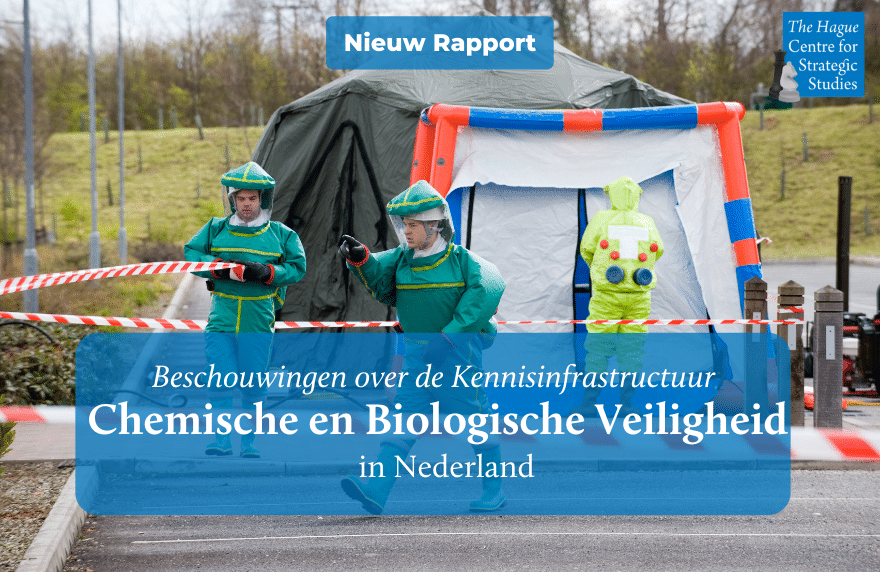
“The world is badly under-prepared for even modest biological threats, leaving us vulnerable to potentially huge impacts on individual lives, societal well-being, economic activity and national security. Revolutionary new biotechnologies promise miraculous advances, but also create daunting challenges of oversight and control.” – World Economic Forum De moordaanslag op Navalny, het meervoudige gebruik van chemische […]
30 Sep 2020
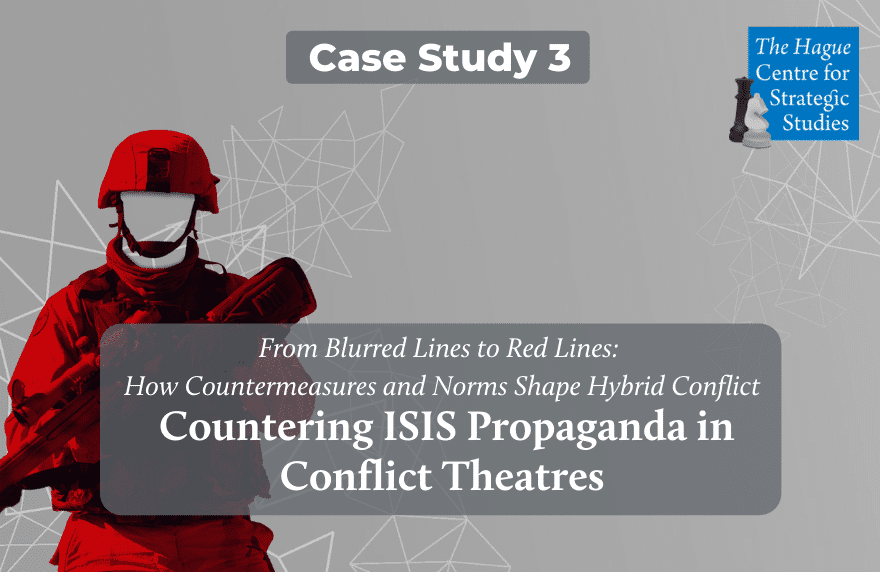
Conflicts between states have taken on new forms and hybrid operations play an increasingly important role in this volatile environment. Belligerent powers introduce a new model of conflict fought by proxy, across domains, and below the conventional war threshold to advance their foreign policy goals while limiting decisive responsiveness of their victim.   Given these hybrid […]
22 Jun 2020
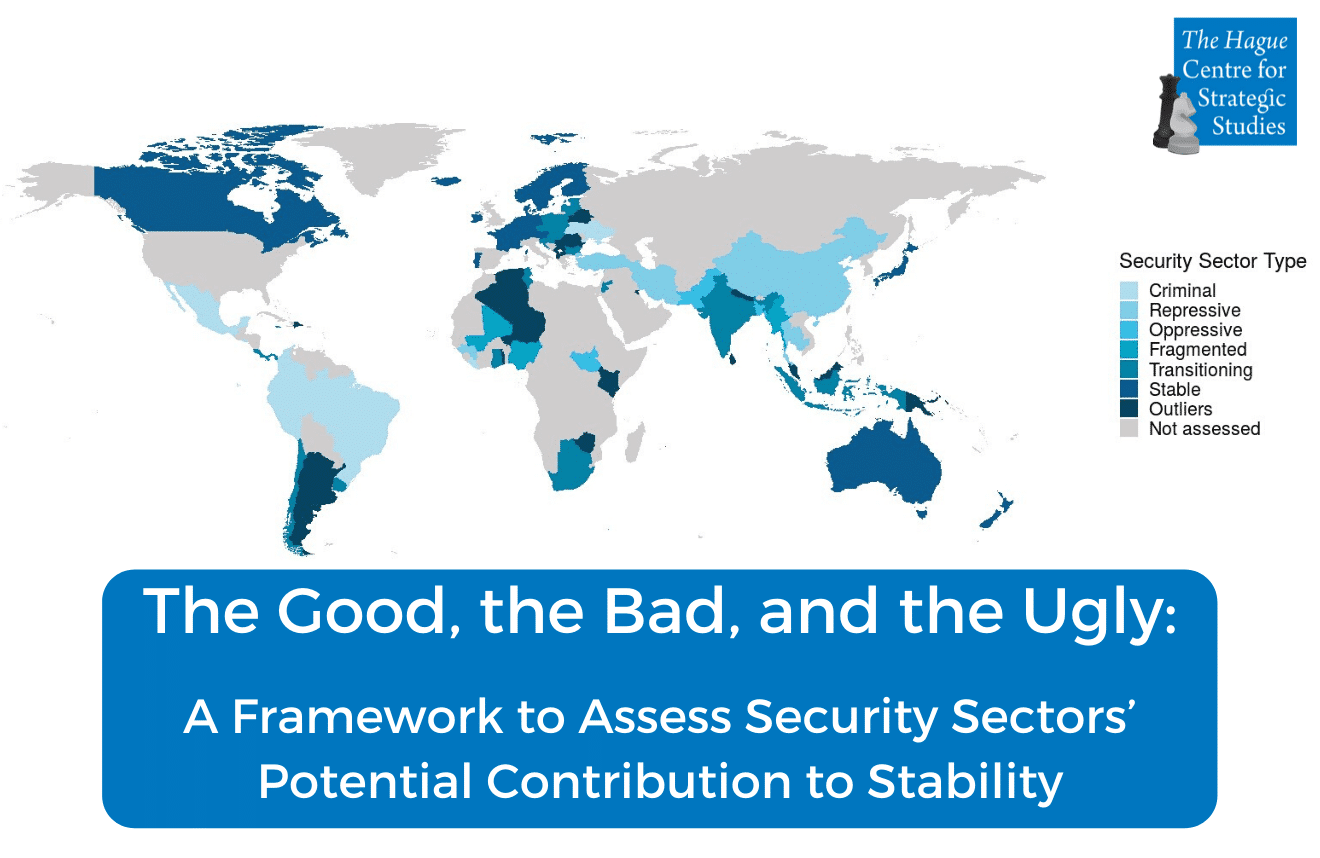
State fragility presents an increasing global security threat, but security sector reform (SSR) missions have met with mixed results. A new HCSS report by Dorith Kool and Tim Sweijs lays out a framework to assess security sectors’ potential contribution to stability.
13 May 2020
This policy brief discusses the methodology for assessing the impact of the lifestory approach on preventing and countering violent extremism. It recommends a mixed-methods approach of qualitative and quantitative elements including interviews, ethnographic observations, questionnaires, and project activities reception. Using these methods to explore the impact of the lifestories on violent extremists, directly affected individuals, […]
12 May 2020
Lifestory videos, which are the personal stories of affected individuals, can be very persuasive in changing attitudes and thus reducing violent extremist sentiments. However, it is important to be able to gauge how effective lifestories have been as an approach to reducing extremism in a community. Therefore, this report lays out a methodology for assessing […]
5 May 2020
This report lays out guidelines for creating lifestory videos to assist in producing high-quality, consistent media with a coherent message. It specifies ideal script/video structure and other technical aspects, such as video shooting, filming locations, imagery, clothing, video length, language and subtitles, music, audio, and translations. The audiovisual format of lifestories can be highly informative […]
30 Apr 2020
This policy brief discusses how to design strategic communications campaigns to prevent and counter violent extremism using lifestory narratives. It focuses on the most effective choices to make when producing and disseminating lifestories in regard to audience, goals, media, and typology. It recommends treating the whole society as the audience, aiming to reduce tensions in […]
29 Apr 2020
Lifestory narratives can be a highly effective tool in efforts to prevent and counter violent extremism. These narratives are authentic personal stories told by those whose lives have been touched by extremism, and through sharing them it is possible to promote understanding and empathy among different members of the affected community, thus building resilience and […]
24 Apr 2020
This policy brief outlines some of the challenges researchers face in the field when working to counter and prevent (non)violent extremism. It focuses on five problematic areas: accessing the targeted communities, security risks, politicization of violent extremism, collaboration with local and international actors, and work-life balance and trauma. It offers suggestions for mitigating these risks.
22 Jan 2020
Terrorism from the far-right is gradually increasing, but effective and adequate legal tools for holding perpetrators accountable are lacking, whereas Islamist terrorism is framed and prosecuted in a much more extensive way. Politicized double standards must be overcome in order to hold perpetrators of terrorist violence accountable – irrespective of any specific ideology.
Geopolitics Western Balkans
7 Oct 2019
Based on our recent report by the same name, this Policy Brief by Dr. LLM Arlinda Rrustemi & Professor Rob de Wijk sheds a light on the consequences of foreign influences in the Western Balkans. Furthermore, the Policy Brief highlights challenges and opportunities for Western actors in the region, including setting out a coherent accession plan […]
Political Violence Europe
20 Dec 2018
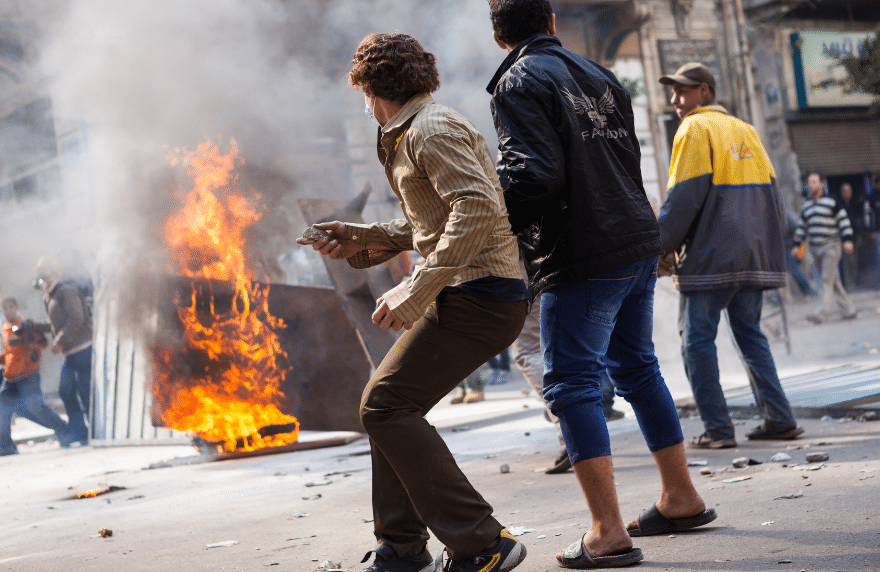
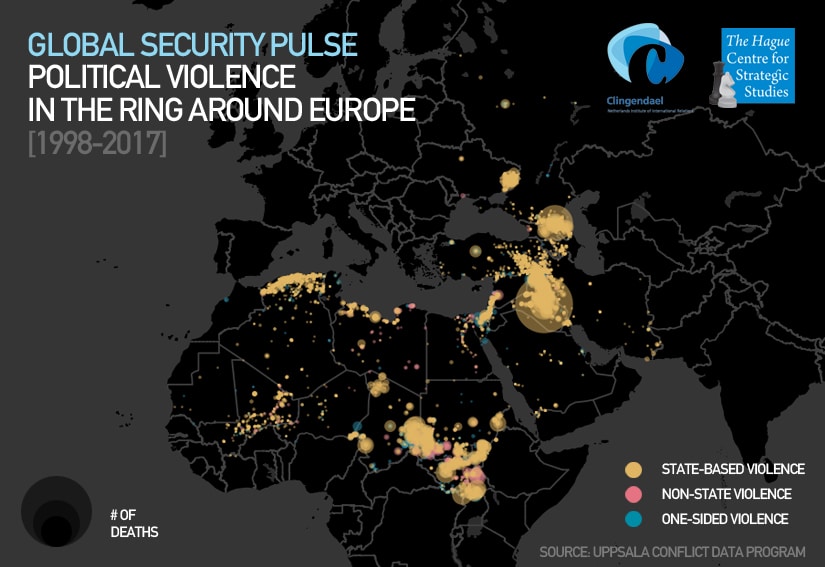
The European periphery sometimes appears to present an unending series of violent events and sudden upheavals. For policy-makers, this raises questions about what to expect in terms of trends in political violence, their impact on the international order, and how to tackle the underlying causes. In this paper, we analyze trends in political violence and […]
25 Oct 2018
The Global Security Pulse tracks emerging security trends and risks worldwide. This month’s edition explores trends identified within the realm of political violence. This Pulse presents new and underappreciated developments regarding the effects of large-scale foreign infrastructure projects, the premature repatriation of refugees, and resource mismanagement on the prevalence of political violence, as well as […]
27 Sep 2018
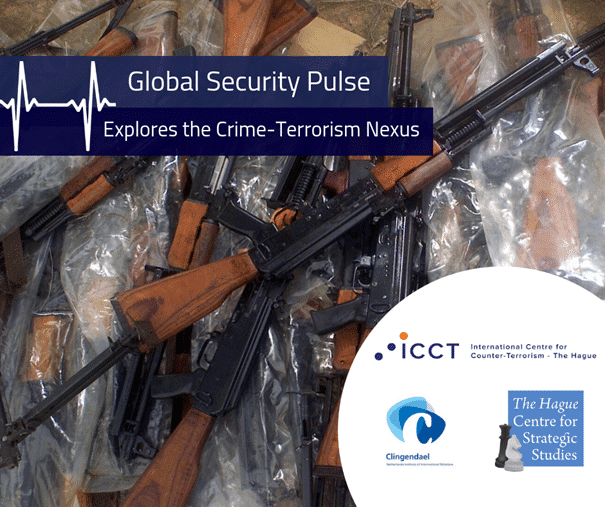
The Global Security Pulse tracks emerging security trends and risks worldwide. This month’s edition explores trends connected to the existing nexus between crime and terrorism, and presents new and underappreciated developments regarding European disengagement strategies, rising right-wing extremism, countering FinTech abuse, and the effects on the international order. The Global Security Pulse (GSP) makes use […]
Strategische Monitor 2017-2018
13 Apr 2018
In de monitor 2017-2018 hebben HCSS en Instituut Clingendael wederom door middel van verscheidene methodes de ontwikkelingen in de internationale orde gemonitord en geduid. Deze orde blijkt weerbaarder voor spanningen dan vaak wordt gedacht, en Nederland blijft goed gepositioneerd in dit internationale krachtenveld. De afgelopen vijf jaar gedroegen de grote mogendheden zich assertiever, echter in 2017 was […]
StratMon 2017
20 Feb 2017
Events unfolded once again at a swirling pace in 2016. Terrorists hit Europe’s capital in March. The British population voted for Brexit in June. Turkish armed forces failed to topple Erdoğan in July. A resurgent Russia flexed its military muscles again in the Middle East and actively interfered in American elections, in which the American […]
Many Faces Political Violence FI
20 Feb 2017
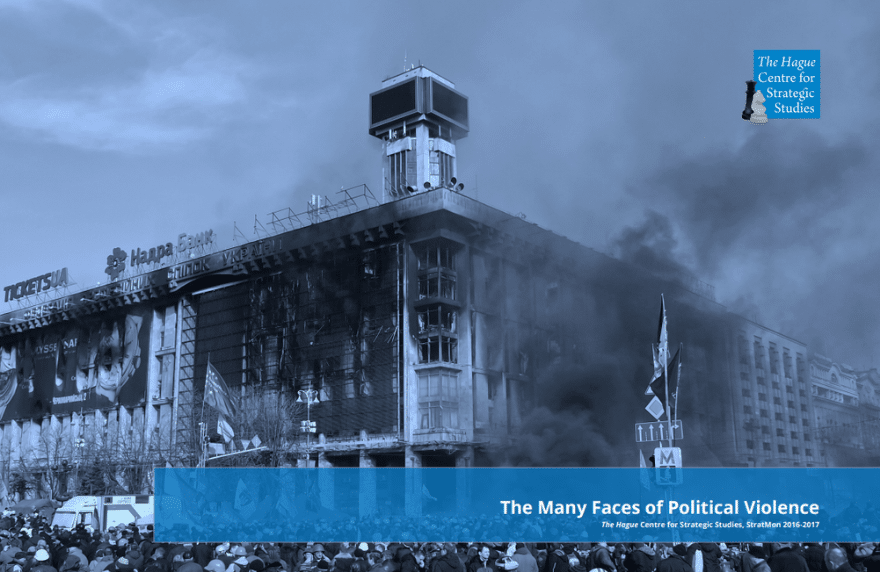
The modern era’s Great Power Peace has come under severe strain in recent years. The seams of the western-based world political order have stretched to the point of breaking, with non-state actors rising in response to exploit the global climate of paralysis and uncertainty. Indeed, violence levels are at historically high levels that haven’t been […]
Fall of ISIS
20 Feb 2017
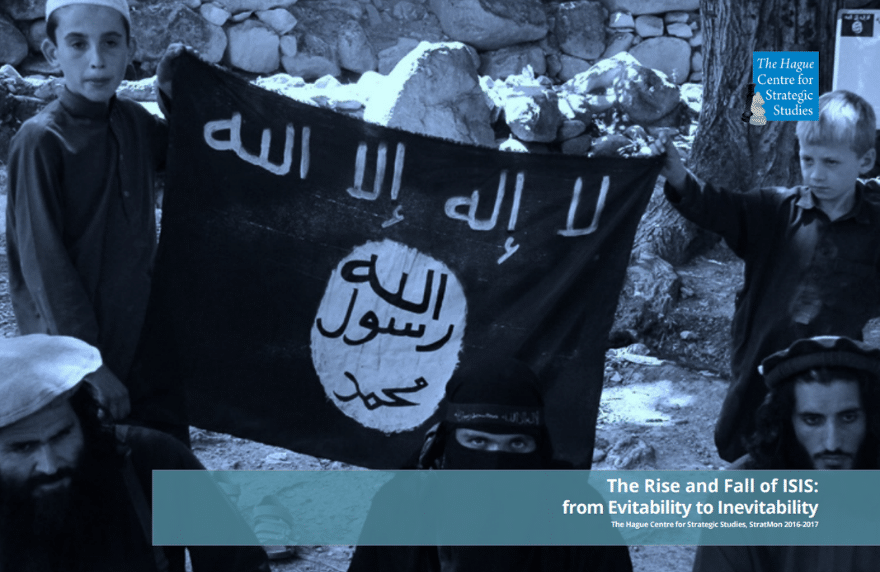
Appearing seemingly out of nowhere over the course of 2013-14, the Islamic State, or Daesh, captured the attention of international audiences through widely broadcast acts of barbarity, followed by the proclamation of its own state and upending state borders in the process. The rise of the terror organization has prompted many questions: where did it […]
Bio Weapons Threat
20 Feb 2017
With the World Health Organization (WHO), the North Atlantic Treaty Organization (NATO), and the U.S. Blue Ribbon panel publishing reports on the emerging risks of biological weaponry in past months, there is a new sense of urgency regarding biological weapons. In August 2016, the United Nations Secretary General Ban Ki Moon told the Security Council […]

© The Hague Centre for Strategic Studies