Publications

Over the years, HCSS has built up an extensive archive of reports, monitors, papers and other publications. We disseminate the results of our research as broadly as possible to benefit the public good. Use the advanced search functions below to browse through our research library, most of which is available as free PDF downloads.

2 Jun 2026
Non-profit cybersecurity organisations are essential to global cyber resilience, public safety, and the continuity of the digital economy, this new HCSS report by Hans Horan, Ron Stoop and Jan Feldhusen shows. Despite protecting critical infrastructure, supporting SMEs, and preventing billions in potential losses, these organisations remain structurally underfunded and under-recognised. The report calls for governments and industry to provide sustained, long-term support for the sector.
17 Dec 2025
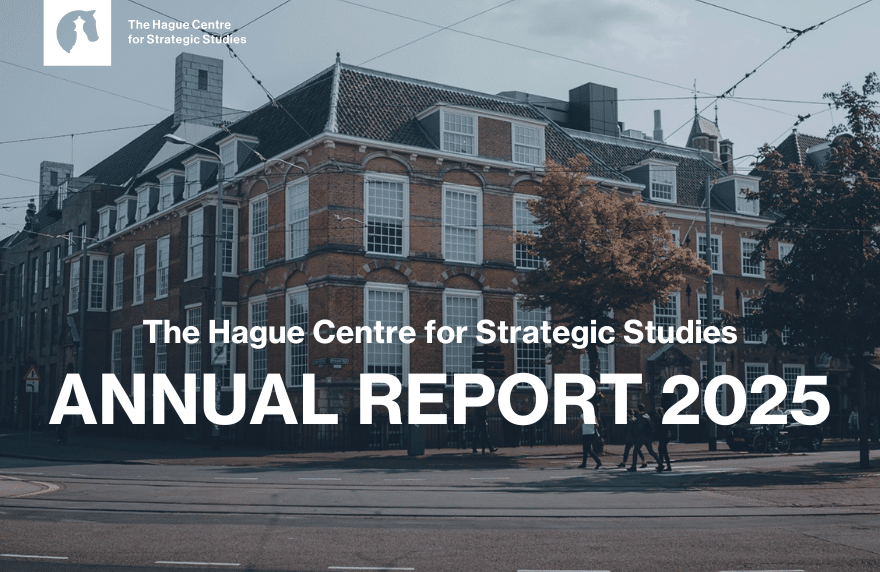
We hereby proudly present the HCSS Annual Report 2025! Our Team’s output has been nothing short of exceptional: we published over 100 reports and articles; we provided over 2000 commentaries for national and international media; we strengthened partnerships with leading institutions worldwide and hosted policymakers from Europe, the Indo-Pacific and beyond; and we welcomed over 2,200 participants at more than 35 events. On behalf of the entire HCSS Team, we wish you a very Merry Christmas and a Happy New Year!
27 Sep 2024
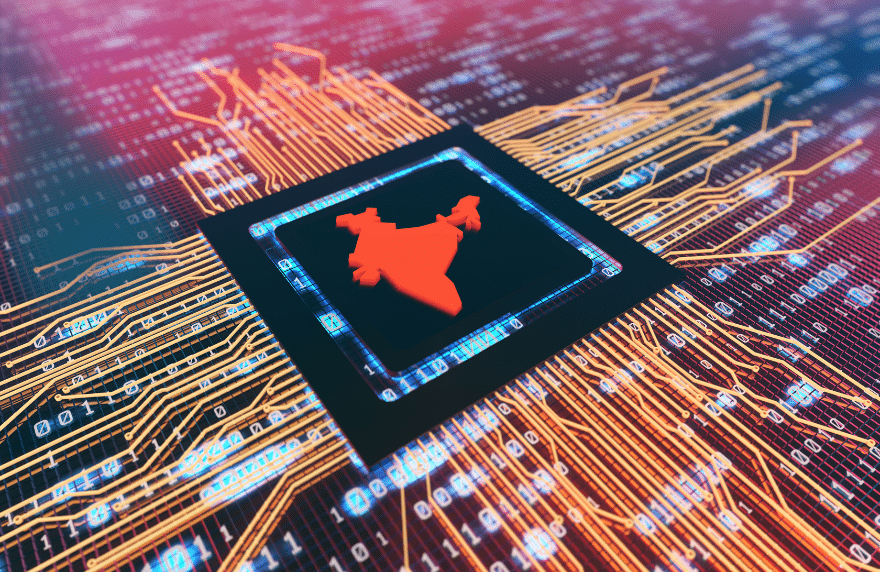
In the 2022 edition of this report, we covered how India, as the largest and most diverse democracy on earth is in the middle of building security within cyberspace and all other domains. India is currently undergoing efforts to digitise its economy and infrastructure. Consequently, the number of users to be safeguarded by securitisation of the cyber domain is rising rapidly. To become an economically developed digital nation, India must therefore also adopt a holistic approach in tackling challenges to its cybersecurity. Using the findings of the National Cyber Resilience Game and desk research, the paper was updated by participants of the 2023 Indo-Dutch Cyber Security School. This updated 2023 edition concludes by providing three recommendations to improve India's overall security in the digital domain.
29 Jan 2024
HCSS presents: the Cyber Arms Watch monitor, offering a transparency index on the offensive cyber capabilities of states. It compares the degree to which states are transparent about their declared cyber capabilities to outside perceptions of those capabilities.
16 Jan 2024
Navigating the digital landscape requires a complex balancing act between various interests, threats, and resilience. HCSS and the CyberPeace Institute are working together to increase cyber transparency, to inform policy processes and capacity building efforts, and contribute to accountability efforts. This new joint report provides an overview of the monitors and observatories developed to date by each organisation, to enable a broader understanding of threat actors, the impact and harms of cyber incidents, and accountability efforts related to laws and norms in cyberspace.
16 May 2023
Cyberspace proved to be a catalyst to unlock the information environment, taking away restrictions of influence operations via Internet. Nowadays, the capabilities are near-limitless, but governance appears to be the (self-inflicted) limiting factor. While these limitations apply to the Netherlands they do not to others. Peter B.M.J. Pijpers and Paul A.L. Ducheine highlight whether the current cyberspace-induced manipulative influence operations truly differ from the old-school deceptive and misleading operations.  
15 Feb 2023
As the largest and most diverse democracy on earth the struggle to keep the India secure within cyberspace and all other domains is significant. India is currently undergoing efforts to digitise its economy and infrastructure. Consequently, the number of users to be safeguarded by securitisation of the cyber domain is rising rapidly. To become an economically developed digital nation, India must therefore also adopt a holistic approach in tackling challenges to its cybersecurity.
14 Sep 2022
The Russian invasion of Ukraine in 2022 has reawakened thinking in terms of risks and ‘escalation’. NATO as a whole, and NATO-states individually, must keep a balanced position: do not cave to unacceptable threats, as accommodation is a recipe for further escalation from the Russian side.
13 Jun 2022
Hoe kan de strategische autonomie op cybersecurity bewaakt worden? En welke beleidsmaatregelen kunnen – en moeten – in dit kader genomen worden? Nederland is een van de meest gedigitaliseerde landen wereldwijd maar daarmee is onze samenleving ook steeds meer afhankelijk geworden van een goed functionerende digitale infrastructuur. Cybersecurity is cruciaal om dit te bewerkstelligen.
6 Apr 2022
The emergence of cyberspace provides small and medium powers with a strategic weapons capability that historically has been beyond their reach. This report explores how this capability can become an indispensable tenet of the deterrence posture of small and medium powers.
9 Dec 2021
Since the release of the final GCSC report in November 2019, the concept of cyberstability has continued to evolve. A number of new ‘conditions’ are emerging: new agreements on norms, capacity building and other stability measures have solidified. The constellation of cyber initiatives is expanding, underlining the need to connect the traditional state-led dialogues with those of the Internet communities. Gaps continue to close, not only between the global north and south and between technology and policy, but also between the stability in and the stability of cyberspace.
9 Dec 2021
The Global Commission on the Stability of Cyberspace (GCSC) and The Hague Centre for Strategic Studies is pleased to announce the launch of the first Cyberstability Paper Series.
9 Dec 2021
The Global Commission on the Stability of Cyberspace (GCSC) and The Hague Centre for Strategic Studies is pleased to announce the launch of the first Cyberstability Paper Series.
9 Dec 2021
The Global Commission on the Stability of Cyberspace (GCSC) and The Hague Centre for Strategic Studies is pleased to announce the launch of the first Cyberstability Paper Series.
9 Dec 2021
The Global Commission on the Stability of Cyberspace (GCSC) and The Hague Centre for Strategic Studies is pleased to announce the launch of the first Cyberstability Paper Series.
9 Dec 2021
The Global Commission on the Stability of Cyberspace (GCSC) and The Hague Centre for Strategic Studies is pleased to announce the launch of the first Cyberstability Paper Series.
9 Dec 2021
The Global Commission on the Stability of Cyberspace (GCSC) and The Hague Centre for Strategic Studies is pleased to announce the launch of the first Cyberstability Paper Series. Since the release of the final GCSC report in November 2019, the concept of cyberstability has continued to evolve. A number of new ‘conditions’ are emerging: new […]
1 Nov 2021
The Cyber Peace Institute has published this report elaborated in partnership with GEODE and The Hague Center for Strategic Studies as part of Working Group 5 of the Paris Call for Trust and Security in Cyberspace.
11 Oct 2021
Disinformation continues to exacerbate existing political polarizations with effects ranging from discrediting measures against the COVID-19 pandemic to inciting mass violence against the very institutions of democracy itself.
30 Sep 2021
The Global Commission on the Stability of Cyberspace (GCSC) and The Hague Centre for Strategic Studies is pleased to announce the launch of the first Cyberstability Paper Series. Since the release of the final GCSC report in November 2019, the concept of cyberstability has continued to evolve. A number of new ‘conditions’ are emerging: new […]
30 Sep 2021
The Global Commission on the Stability of Cyberspace (GCSC) and The Hague Centre for Strategic Studies is pleased to announce the launch of the first Cyberstability Paper Series. Since the release of the final GCSC report in November 2019, the concept of cyberstability has continued to evolve. A number of new ‘conditions’ are emerging: new […]
30 Sep 2021
The Global Commission on the Stability of Cyberspace (GCSC) and The Hague Centre for Strategic Studies is pleased to announce the launch of the first Cyberstability Paper Series. Since the release of the final GCSC report in November 2019, the concept of cyberstability has continued to evolve. A number of new ‘conditions’ are emerging: new […]
30 Sep 2021
The Global Commission on the Stability of Cyberspace (GCSC) and The Hague Centre for Strategic Studies is pleased to announce the launch of the first Cyberstability Paper Series. Since the release of the final GCSC report in November 2019, the concept of cyberstability has continued to evolve. A number of new ‘conditions’ are emerging: new […]
23 Sep 2021
Sensitive technologies are growing to be more and more closely associated with “European strategic autonomy”. But how do techno-nationalists operate, what can the Netherlands do to protect its sizeable R&D infrastructure from their advances, and to what degree should The Hague look to Brussels for guidance and support?

© The Hague Centre for Strategic Studies