Publications

Over the years, HCSS has built up an extensive archive of reports, monitors, papers and other publications. We disseminate the results of our research as broadly as possible to benefit the public good. Use the advanced search functions below to browse through our research library, most of which is available as free PDF downloads.

30 May 2024
In this new Clingendael/HCSS co-production, Tim Sweijs, Bob Deen and Roman de Baedts analyze the consequences of continuing or stopping military support by the US and Europe. For Europe, a Russian victory will entail very high costs on multiple dimensions, the authors conclude. It is therefore preferable to continue to provide long-term and significant support to avert that scenario - even if the Americans no longer participate.
29 May 2024
HCSS is proud to have contributed to the 2023 edition of the Netherlands Annual Review of Military Studies (NL ARMS), “Climate Security and the Military”, published by the Faculty of Military Sciences of the Netherlands Defence Academy. In the chapter “Cooling the Cauldron: A Climate Security Intervention Framework,” strategic analysts Laura Birkman, Irina Patrahau and Tim Sweijs offer a framework for the design of climate security interventions that may prevent and mitigate climate-related security effects.
29 May 2024
The impact of hybrid challenges will only intensify and manifest in new ways, conclude HCSS and TNO in this new horizon scan. The playing field for hybrid actors is expanding as the boundaries of engagement broaden. What is particularly noteworthy is the convergence of trends; hybrid actors are synergising various tactics across different domains. These developments will likely shape interactions in the international arena for the next five years, while also forming the foundation for future trends. In turn, defence strategies will need to develop alongside the changing hybrid threats.
14 May 2024
Is the United States entering a period of decline, and does it meet the preconditions for anticipatory renewal? Together with Michael J. Mazarr and Daniel Tapia, HCSS director of research Tim Sweijs authored a new study by RAND that was commissioned by the Pentagon’s Office of Net Assessment, to assess the United States’ competitive position as it faces a rising China.
6 May 2024
Het huidige energiesysteem in Nederland, en de EU, is kwetsbaar; veel kwetsbaarder dan voor de VS of China het geval is, schrijven HCSS energie analisten Jilles van den Beukel en Lucia van Geuns in dit essay. In deze situatie vragen de strijd tegen klimaatverandering en de zorgen om betaalbaarheid en leveringszekerheid van energie vaak om dezelfde oplossing: een snelle overgang van een energiesysteem gebaseerd op geïmporteerde fossiele brandstoffen naar een systeem gebaseerd op duurzame bronnen van energie.
1 May 2024
Will the market be flooded in a few years by cheap alkaline electrolysers from China or will we pay the price for independence by opting for more expensive home-grown equipment? When it comes to offshore wind energy and electrolysis, Europe must take measures to prevent strategic dependency, conclude researchers Joris Teer, Abe de Ruijter, Karlien Sambell and Sam Lamboo in a new joint TNO/HCSS report on China's role in the wind energy and electrolysis supply chains.
22 Apr 2024
De kosten en baten van de steun voor Oekraïne - een Clingendael/HCSS co-productie. Een nieuwe paper over de gevolgen van voortzetten of stoppen van militaire steun door de VS en Europa, geschreven door Tim Sweijs, Bob Deen en Roman de Baedts.
22 Apr 2024
The Indo-Pacific stands as the 21st century's strategic epicenter, with Southeast Asia pivotal in its maritime dynamics. The ASEAN Outlook on the Indo-Pacific guides cooperation, including EU support. Addressing challenges is crucial for a stable, rules-based region. This paper by guest author Sumathy Permal delves into three key areas: assessing maritime challenges in Southeast Asia, exploring shared maritime interests between the EU and Indo-Pacific states, and discussing security frameworks suited to the regional context. Addressing these facets is vital for realizing a secure, rules-based Indo-Pacific.
22 Apr 2024
Europe's interest in the Indo-Pacific grows due to trade, economic concerns, and broader international order issues. Despite obstacles, the EU is enhancing maritime engagement, focusing on information exchange and coordinated presence. This paper by guest author Marianne Peron Doise delves into Europe's objectives in the region, the hurdles it faces, and strategies for further contribution to maritime security.
22 Apr 2024
The EU sees the Indo-Pacific as a focal point for modern geopolitical challenges. Through naval strategies and operations, it signals a commitment to global maritime security. Credibility is key for effectiveness. The paper by guest authors Nicolas Blarel and Niels van Willigen analyses how this can be achieved, including in the Eastern part of the Indo-Pacific. It ends with policy recommendations for more effective signalling.
22 Apr 2024
The EU's Indo-Pacific strategy hinges on capability, credibility, and consistency. Amidst geopolitical shifts, it must emphasize economic benefits, adapt to political changes, and foster minilateral engagements for lasting impact, writes guest author Charmaine Willoughby, Associate Professor of International Studies at De La Salle University in Manila, the Philippines.
18 Apr 2024
Er zijn toenemende zorgen over de staat van de democratische rechtsstaat – zo blijkt uit het jaarverslag van de Raad van State. De take van HCSS: Het zijn terechte signaleringen. Tegelijk is het beeld gelaagd en complex. HCSS wijdde in 2023-2024 inmiddels vier publicaties aan de democratische rechtsorde : lees hier enkele key factors die in onze analyses naar voren komen.
18 Apr 2024
Zal de toenemende integratie van AI de Nederlandse samenleving de komende jaren daadwerkelijk op allerlei gebieden transformeren? Zo ja, welke vormen van druk zijn er dan te voorzien op de maatschappelijke stabiliteit? Hoe kunnen we daarmee omgaan? Lees er meer over in dit nieuwe HCSS rapport door Gerben Bakker, Sofia Romansky, Frank Bekkers, Bryan Smeets en Pieter Bindt.
3 Apr 2024
This letter to Allied governments proposes a Transatlantic Compact to stimulate and facilitate reconfirmation of the Alliance’s critical importance to the security of all the Allies while guiding the way for NATO transformation. It is also a substantive roadmap with specific capacity benchmarks and metrics that calls upon the Allies to focus at the 75th Anniversary Summit in Washington on the requirements necessitated by the new Russian threat and to accelerate progress towards fulfilling NATO Agenda 2030 and a more balanced and effective Alliance defense and deterrence.
29 Mar 2024
The 3rd edition of the HCSS ‘Observer’ series highlights the escalating Israeli-Hamas conflict and the ongoing Russo-Ukrainian war as the perceived main sources of global socio-political instability. The survey results find that demographic changes are expected to have a greater impact on instability than environmental issues this quarter. This is notable given the rise of right-wing parties and the 64 countries holding national elections this year.
28 Mar 2024
Europe’s Responsibility within the Arms Control Regime after Ukraine, with or without the United States | In the latest publication by the American Academy of Arts and Sciences, "The Future of Nuclear Arms Control and the Impact of the Russia-Ukraine War", HCSS senior strategic analyst Paul van Hooft proposes ways to strengthen the arms control regime: by Europeans playing a more prominent role.
28 Mar 2024
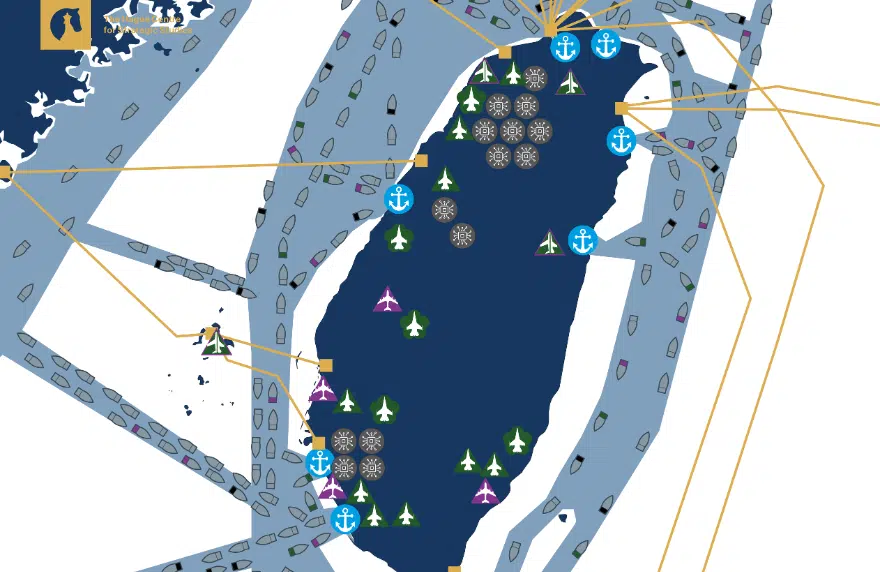
East Asia has become the manufacturing and one of the consumption centres of the world economy throughout the last fifty years. Dangerously, the probability of a military crisis in East Asia, in particular a military conflict over Taiwan, has increased throughout the last decade. The committee on Foreign Trade and Development Cooperation of the Netherlands House of Representatives has asked HCSS to assess the geo-economic consequences of a military conflict on and around Taiwan.
26 Mar 2024
Doet de overheid wat ze belooft? HCSS onderzocht hoe het Nederlands sociaal contract onder druk kan komen te staan door mismatches tussen burger en overheid. Om dit in beeld te krijgen onderzochten we hoe, op punten van bescherming, voorzieningen en mogelijkheden tot democratische participatie, verwachtingen (niet) worden waargemaakt. In deze factsheet hebben we een selectie van indicatoren uit ons rapport samengevat. Samen geven ze een beeld van belangrijke kwetsbaarheden in de verwachtingsrelatie tussen burger en overheid.
25 Mar 2024
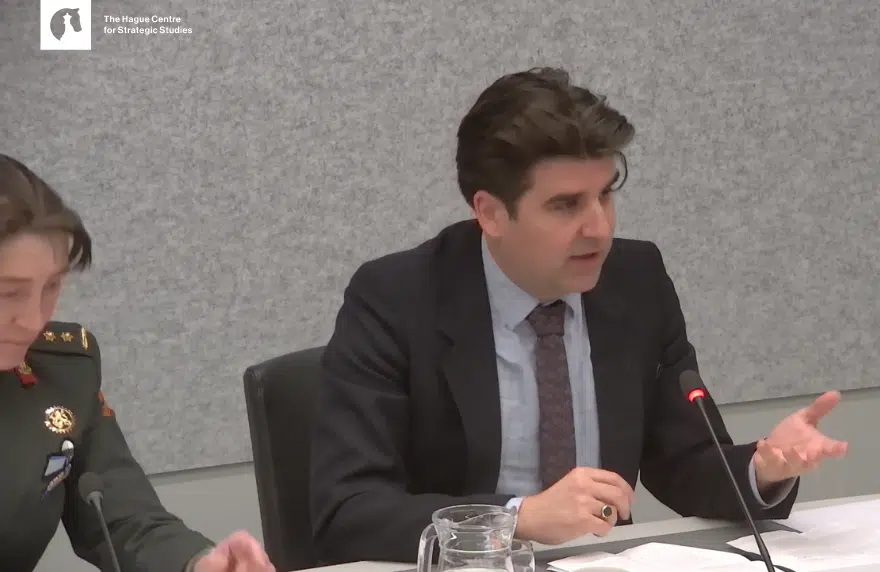
De vaste commissie voor Defensie van de Tweede Kamer organiseerde op 20 maart een rondetafelgesprek over Informatiegestuurd optreden en Multi Domain Operations. HCSS directeur onderzoek Tim Sweijs was een van de uitgenodigde sprekers. Met het rondetafelgesprek wil de commissie meer informatie vergaren over de invoering van informatiegestuurd optreden door de gehele Defensieorganisatie en de implicaties die dat heeft voor het NAVO-voornemen om het concept van Multi Domain Operations (MDO) leidend te laten zijn in het klaarmaken van de NAVO voor de toekomst.
20 Mar 2024
The multi-domain operations concept is now guiding the transformation and modernization of Western armed forces and of their peers. Yet, there are real concerns about MDO will mature into a fully functional warfighting concept or whether it will go by the wayside like effect-based operations in the past. For nearly a year, HCSS strategic analysts Tim Sweijs and Davis Ellison visited some of the main centers for thinking on multi-domain operations, to appraise the state of multi-domain operations development with a primary question in mind: Will it actually help to win wars? If so, how?
18 Mar 2024
In the great game of chokepoints, strengthening the Digital Open Strategic Autonomy (DOSA) of the Netherlands and the European Union (EU) has become important and increasingly urgent. This HCSS report by Joris Teer, Abe de Ruijter and Michel Rademaker presents a strategic dependence risk framework tool to identify high-risk strategic dependencies both within and outside of the digital domain. It presents policy opportunities and recommendations aiming to enhance the strategic indispensability of the Netherlands and EU in digital value chains.
18 Mar 2024
In 2022, 10 jaar na de oprichting van de Nationale Politie, schreven Professor Mr. Pieter van Vollenhoven en Drs. Lodewijk Gunther Moor voor HCSS een discussienotitie over de “Nationale Politie, gezagsdragers en de wijkagent”. Bij de komst van de Nationale Politie bestonden er grote zorgen. Zou deze Nationale Politie niet véél te bureaucratisch worden en de verbinding met de samenleving gaan verliezen? Vanzelfsprekend werd dit door de minister bij de discussies in de Tweede Kamer indertijd allemaal ontkend, maar ervaringen hebben ons geleerd dat de werkelijkheid vaak toch zo anders kan zijn!Reacties op de bovengenoemde discussienota hebben geleid tot deze nieuwe notitie.
28 Feb 2024
De kwaliteit van de Nederlandse rechtsstaat is nog altijd hoog, maar voor de bredere democratische rechtsorde staan veel seinen op oranje. Hoe komt het dat een land dat op democratische en institutionele structuren goed scoort, toch zo weinig vertrouwen van burgers geniet? Dit nieuwe HCSS rapport analyseert de ontwikkeling van het Nederlandse ‘sociaal contract’ tussen burger en overheid: is er sprake van oppervlakkige spanningen die opgelost kunnen worden door elkaars verwachtingen beter te begrijpen? Of is het mogelijk fundamenteler: zijn er disfuncties die de sociale stabiliteit in gevaar brengen?
26 Feb 2024
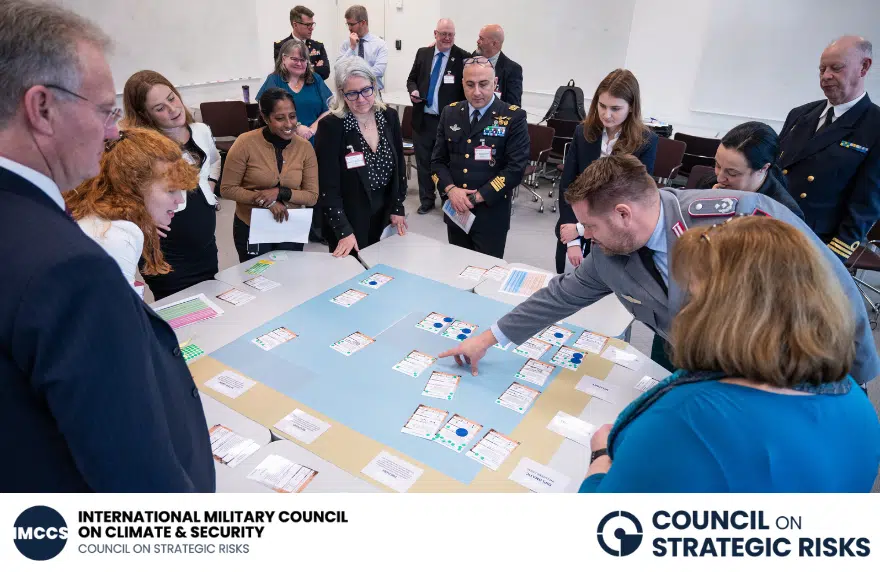
On January 24-25 in Stockholm, Sweden, the International Military Council on Climate & Security partnered with the Swedish Defence University to host the inaugural conference, “Integrating Climate Change into Professional Military Education.” The conference brought together military educators and climate security experts to share best practices and lessons learned regarding climate security-related training, serious gaming, and curriculum development. This report is a summary of the conference.

© The Hague Centre for Strategic Studies