Publications

Over the years, HCSS has built up an extensive archive of reports, monitors, papers and other publications. We disseminate the results of our research as broadly as possible to benefit the public good. Use the advanced search functions below to browse through our research library, most of which is available as free PDF downloads.

8 Apr 2022
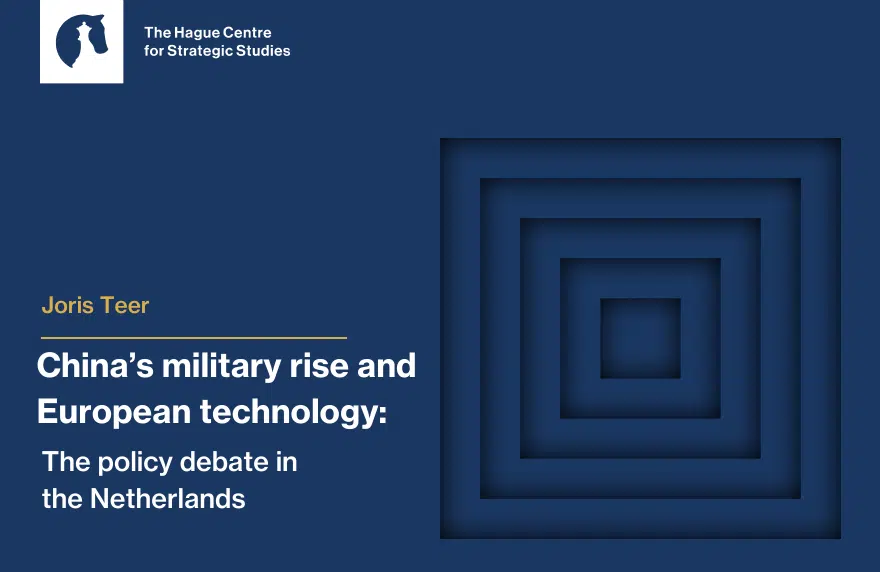
The People's Liberation Army is trying to become a “world class” military by leveraging the technological innovations of the 4th industrial revolution. In 2022, China still struggles with important military-technological gaps. Beijing should not be allowed to catch up with the help of European knowledge and technology.
6 Apr 2022
The emergence of cyberspace provides small and medium powers with a strategic weapons capability that historically has been beyond their reach. This report explores how this capability can become an indispensable tenet of the deterrence posture of small and medium powers.
5 Apr 2022
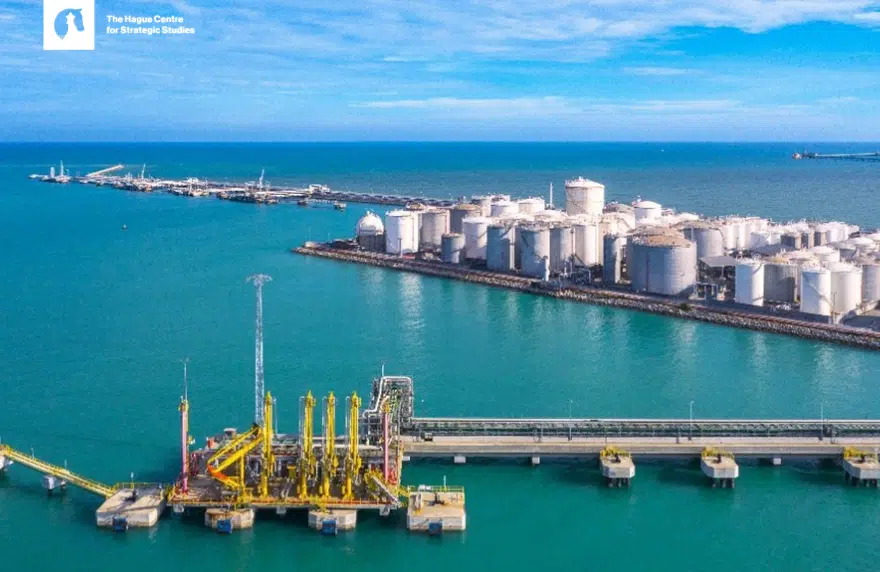
How can the European tank storage sector adapt to the changing energy landscape and emerging geopolitical dependencies up to 2030? This paper by Irina Patrahau, Michel Rademaker, Lucia van Geuns, Sarah Ojukwu and Philip Geurts analyzes the mid-term outlook (2030-2035) for tank storage by examining European and global energy ambitions in times of a changing geopolitical world.
30 Mar 2022
The specific causal mechanisms linking climate change to (violent) conflict onset remain under researched. The obscurity surrounding climate change’s links to violent conflict also hinders the development of targeted policy interventions at a time when the impact of such conflict is on the uptick. In our latest study, Tim Sweijs, Marleen de Haan and Hugo van Manen contribute to this gap by presenting seven climate-related conflict pathologies.
28 Mar 2022
The yearly report by the Clingendael Institute and The Hague Centre for Strategic Studies (HCSS) analyses the most important trends and developments in the international regimes that form the international order, taking stock of the world of today and tomorrow. The focus of this report is identifying policies and partners for the Netherlands and EU that will further the goal of fostering strategic autonomy. The context for this process is an international system characterized by accelerating great power competition and eroding multilateral institutions.
24 Mar 2022
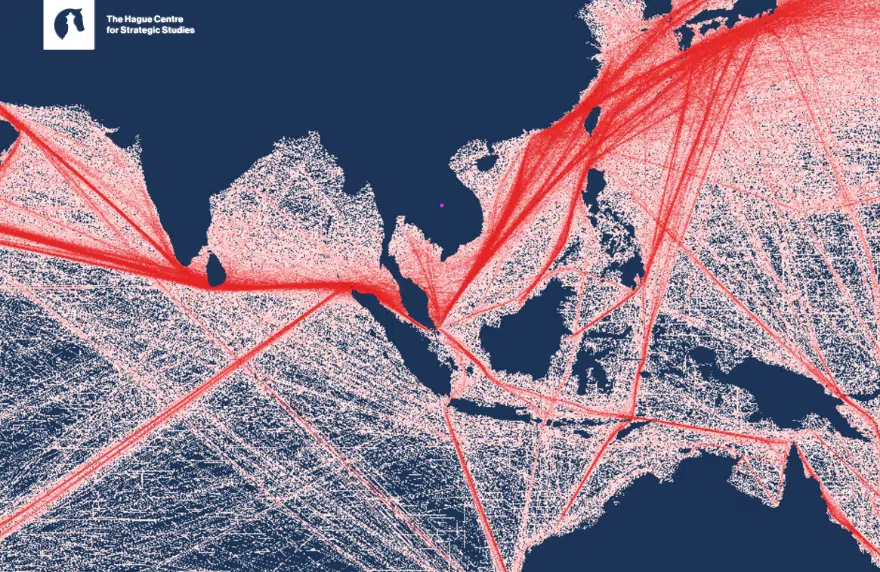
What role should Europe play in the Indo-Pacific? The new HCSS report “Guarding the Maritime Commons: What role for Europe in the Indo-Pacific" by Paul van Hooft, Benedetta Girardi, and Tim Sweijs looks to answer that question.
23 Mar 2022
European countries have the capability to make a meaningful contribution to deterrence in the Indo-Pacific, argues Stephan Frühling. European countries should deliberately use any military presence East of Singapore for deterrence signaling.
22 Mar 2022
Graphite is a critical mineral for governments in Europe and the United States, given its importance to the energy transition and high supply risk. Technologies that enable the decarbonization of transport and steel production, i.e., electric vehicles and electric arc furnaces, rely heavily on a consistent supply of high-quality graphite, leading to an exponential growth in the demand for graphite over the coming decades.
15 Mar 2022
Het Volksbevrijdingsleger probeert met de technologische innovaties van de 4e industriële revolutie de militaire koppositie te pakken in de wereld. Anno 2022 worstelt China juist nog met een belangrijke militair-technologische achterstand. Deze mag niet ingelopen worden met behulp van Europese kennis en technologie. China’s indrukwekkende militaire opkomst, heeft namelijk vergaande gevolgen voor Europese veiligheid, betoogt HCSS China-analist Joris Teer.
14 Mar 2022
In 2021, Germany jumped its shadow by sending the frigate FGS BAYERN to a 7-month Indo-Pacific deployment. Johannes Peters highlights what this means for Germany’s security role in the future of this region, in the 6th paper of our Guarding The Commons series.
10 Mar 2022
South Korea’s hedge is less likely to transform into overt balancing against China over the short-term via multilateralizing cooperation with European partners, Kuyoun Chung (Kangwon National University) argues, as both South Korea and Europe share an interest in an open and secure Indo-Pacific.
9 Mar 2022
By redefining the approach to Maritime Security, the EU Indo-Pacific strategy constitutes a useful strategic framework which, although not decisive, could provide the basis for an effective European policy and presence in the Indo-Pacific, Frédéric Grare and Mélissa Levaillant argue in the 4th paper of our Guarding The Commons series.
9 Mar 2022
Op woensdag 9 maart zal de Vaste Kamercommissie voor Economische Zaken en Klimaat een rondetafelgesprek “Russisch Gas” houden over de huidige ontwikkelingen op de gasmarkten, met name de afhankelijkheidspositie van Rusland. HCSS energie expert Jilles van den Beukel is daarbij (virtueel) aanwezig om mogelijke vragen te beantwoorden. Samen met Lucia van Geuns schreef hij deze korte position paper voor de Kamerleden.
3 Mar 2022
The energy transition will change the architecture of economies by gradually replacing the traditional types of fuels that power our societies with new energy carriers. Tank storage companies are essential players in our energy, manufacturing, and food industries. The tank storage sector supports a complex network of actors, from domestic industry players to residential users and international traders. This paper outlines the current role of the tank storage sector in maintaining Europe’s prosperity, competitiveness, and geopolitical position.
22 Feb 2022
We have witnessed a dramatic deterioration in Russian-Western relations in which the ‘harder’ policy options like coercion and the use of brute force are gaining the upper hand on both sides. A broader, deeper and more systematic examination of all – also ‘softer’ – ways in which Europe could achieve its longer-term policy objectives towards Russia may enable policy makers to design an options portfolio that delivers superior value-for-money.
21 Feb 2022
Europeans could play the role of “honest broker” and promote potential cooperation on arms control between the US and China, Tong Zhao (Carnegie Endowment for International Peace) argues in his paper.
21 Feb 2022
This report explores various options for the development of a Conflict Early Warning System (CEWS) that can immediately flag countries or regions that face imminent emerging conflict, support strategic and programmatic planning and enhance conflict analysis. It analyses the practices, principles and promises of EW based on a review of academic literature; an analysis of a set of CEWS currently deployed by governments, international organisations, non-governmental organisations, research institutes and expert analysis. It reflects on opportunities and limitations and outlines risks.
18 Feb 2022
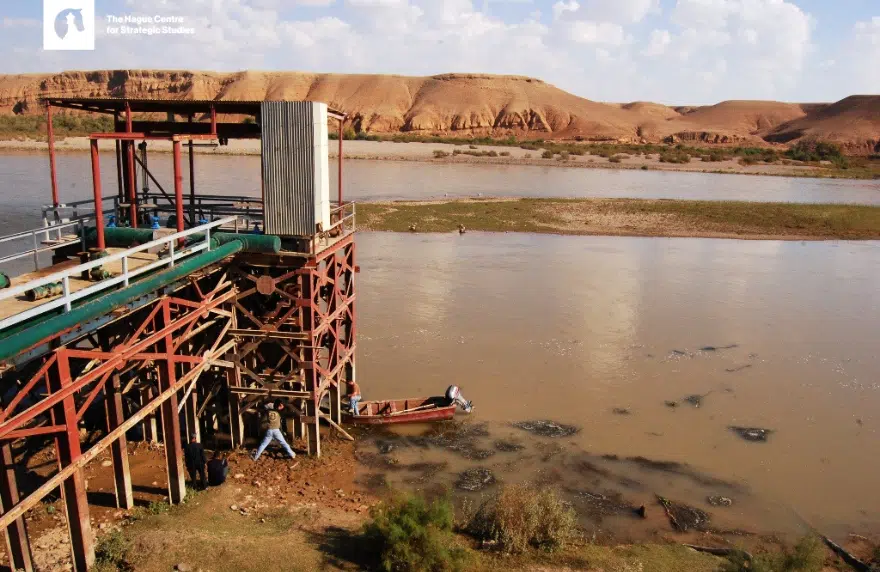
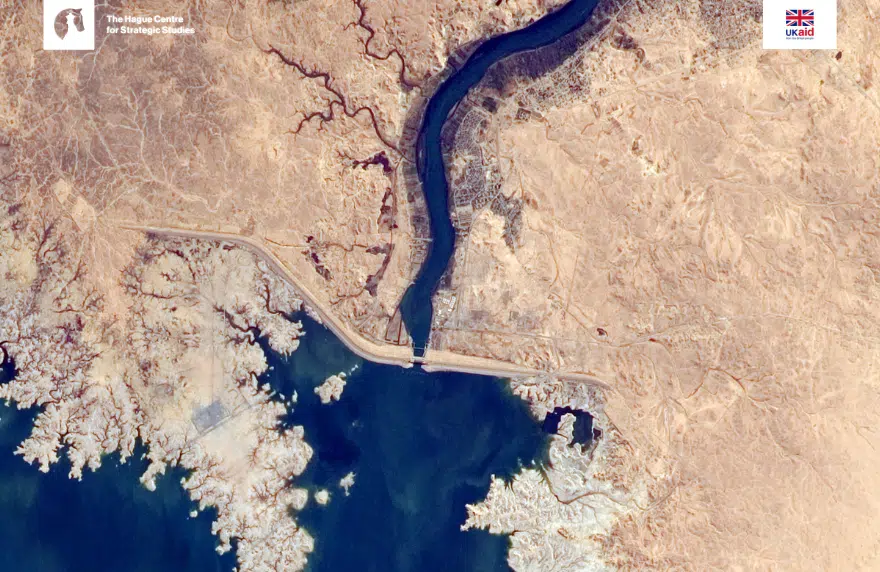
Iraq faces an increasingly dire water situation as both the quantity and quality of water continue to decline, impacting the complex dynamics between actors within Iraq’s borders, at the federal, provincial, and local levels. The aim of this study is to shed light on the link between water and conflict in Iraq at the interprovincial, provincial, and local levels in the provinces Basra, Missan, Dhi Qar, and Wasit in the south of Iraq.
17 Feb 2022
What role should Europe play in the Indo-Pacific? The new HCSS report “Guarding the Maritime Commons: What role for Europe in the Indo-Pacific" by Paul van Hooft, Benedetta Girardi, and Tim Sweijs looks to answer that question. Get a first look with this Executive Summary.
17 Feb 2022
With increasing pressure from China in the East China Sea, Japan welcomes greater European enagement in the Indo-Pacific. Yuki Tatsumi argues that Japan considers Europe a diplomatic and strategic partner to help maintain a value-based liberal international order in the Indo-Pacific region.
15 Feb 2022
The AUKUS pact casts serious doubts within Europe over the US’ leadership. Relying on traditional partners, namely the US and the UK, does not seem feasible for the EU’s approach towards powers in the Indo-Pacific, Jagannath Panda (Manohar Parrikar Institute for Defence Studies and Analyses) writes in the 2nd paper for the HCSS Guarding the Commons series.
15 Feb 2022
Renewed competition, nuclear multipolarity and the emergence of new technologies are making deliberate and inadvertent nuclear escalation increasingly likely. This new HCSS report by Paul van Hooft, Lotje Boswinkel and Tim Sweijs identifies both the risks and potential solutions.
14 Feb 2022
Strategic stability has come under pressure from a shifting military and political environment: the number of major strategic actors has increased; missile defense has evolved; and the battlefield has expanded. Nuclear arsenals are being increased and diversified. Yet, as Bruno Tertrais (Foundation for Strategic Research) argues, warnings that we have entered into a new arms race should be viewed with caution.
10 Feb 2022
The Thucydides trap, which suggests that rising and declining powers are destined for conflict, has been dismissed as irrelevant to the Sino-American competition. However, in his careful reading of Thucydides’ text, Patrick Porter argues that the power transition trap is in fact real and has major implications for the current rivalry between the US and China.

© The Hague Centre for Strategic Studies