Research
The silicon economy: Europe must strengthen polysilicon supply chains amid geoeconomic transition
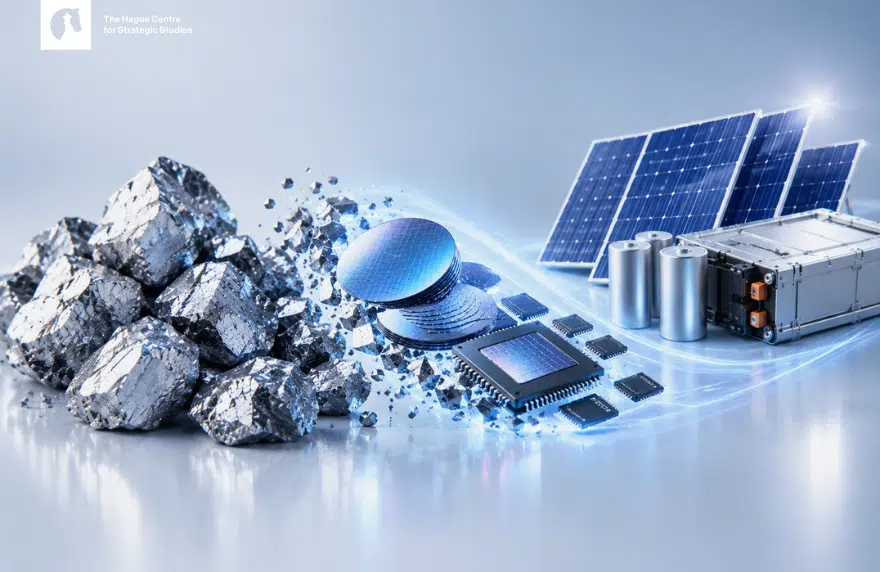
The European Union’s energy and digital transitions are increasing the strategic importance of polysilicon, the essential material underpinning technologies ranging from solar panels and batteries to semiconductor chips. In a new HCSS policy brief, Ron Stoop and Irina Patrahau examine the geopolitical and industrial dynamics shaping Europe’s polysilicon supply chains and identify steps to strengthen their resilience.
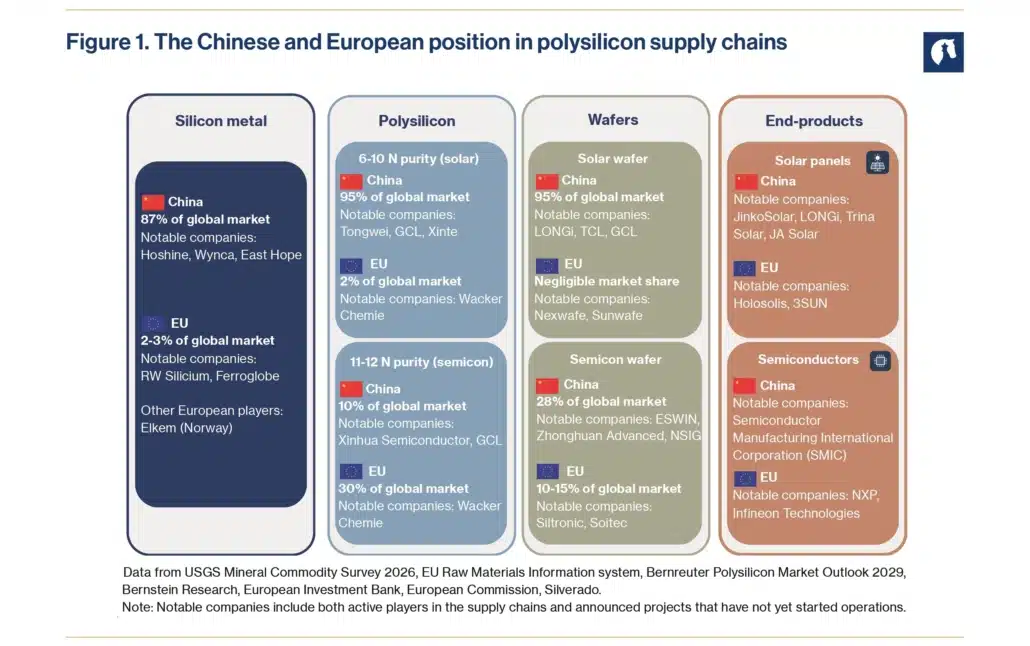
The brief finds that Europe has a relatively strong position in semiconductor-grade polysilicon production, but significant vulnerabilities remain. With the Net-Zero Industry Act’s ambition to onshore some of the EU’s solar PV manufacturing in the coming years, the demand for solar-grade polysilicon will significantly increase. Moreover, downstream manufacturing capacity is insufficient, creating dependence on Chinese technology and supply. At the same time, Europe’s entire existing semiconductor-polysilicon capacity is concentrated in a single company, making resilience particularly important in the semiconductor supply chain.
“Europe’s strong polysilicon position risks decline without capacity growth matching global and domestic demand,” the authors warn.
The authors recommend three complementary measures:
- coordinate EU-wide polysilicon supply chains across semiconductors, solar photovoltaics and batteries;
- mobilise EU financing to close supply-chain gaps and support sustainable production;
- and develop a tailored policy framework for polysilicon and related midstream products that currently sit between the Critical Raw Materials Act and Net-Zero Industry Act.
Patrahau and Stoop also stress that Europe cannot—and need not—onshore every production process. Cooperation with key non-Chinese partners will remain essential, while maintaining indispensable European capabilities can strengthen resilience in critical sectors.
“The EU must act decisively to overcome dependencies, reduce exposure to geopolitical risks, and capitalize on the economic opportunities presented by the twin energy and digital transitions,” Stoop and Patrahau conclude.
Their message to policymakers: strengthening polysilicon supply chains should be addressed now, alongside the broader industrial ambitions of the Chips Act and Net-Zero Industry Act.
Authors: Ron Stoop and Irina Patrahau
Contributors: Sophie Tinselboer
The research was commissioned by RESiLICON and executed by The Hague Centre for Strategic Studies (HCSS). The conclusions and recommendations presented in this paper are the result of independent research. Responsibility for the content rests with the authors and the authors alone.
On 6 October 2026, HCSS hosted the closed-door roundtable “Polysilicon supply chains and geopolitical implications for the Netherlands and Europe”. The policy brief provided the basis for the roundtable discussion among stakeholders from RESiLICON, the Ministry of Economic Affairs and Climate, the Ministry of Defence, ING, Invest International, the Province of Groningen, FME, and NOM.
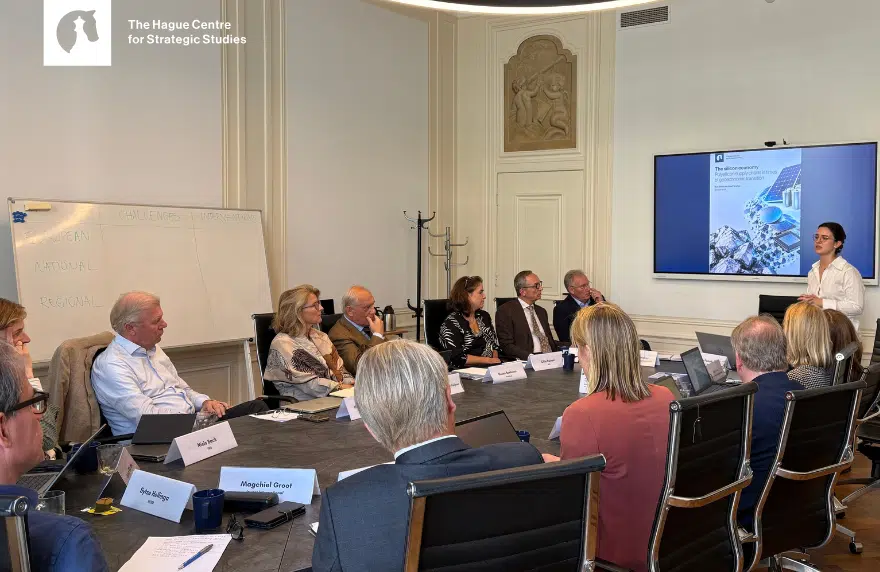
Three main conclusions emerged from the discussion:
1. Europe’s declining position in polysilicon supply chains relative to other great powers is a strategic vulnerability.
Polysilicon is a foundational input for semiconductors and solar photovoltaics, yet Europe’s position in the supply chain is vulnerable. While the EU has some existing polysilicon production, this capacity alone cannot support policy ambitions to boost domestic solar-panel manufacturing under the Net-Zero Industry Act, nor can it guarantee that the EU maintains its role as a supplier of inputs for semiconductor production. Strengthening European polysilicon production, as the US, India, and China are doing, is therefore essential to increasing supply chain resilience and reducing geopolitical exposure.
2. Current financing and subsidy mechanisms in the Netherlands and the EU do not match the risk profile of critical raw materials projects.
Projects in critical raw material supply chains in the EU face a higher risk profile than more competitive projects, largely due to an uneven global playing field. Distributing risk among stakeholders and across the value chain is therefore key. Moreover, a significant share of relevant subsidies is inaccessible to early-stage projects, making it difficult to reach a final investment decision. Participants also noted that fragmented funding schemes and a lack of long-term investment horizons make it difficult to mobilise investment.
3. The immediate priority is to turn the discussion into coordinated action across the European solar and semiconductor value chains.
A new European polysilicon plant could serve as the foundation for a broader “Made in Europe” value chain, with downstream manufacturers depending on its products and by-products. Coordinating this effort requires a new approach to geopolitical thinking that makes clear choices, sets priorities, and can absorb the higher investment risk associated with strategic projects. The overarching conclusion was that the strategic case is clear; the challenge now is to determine who will take the first step.


Related Content