Research
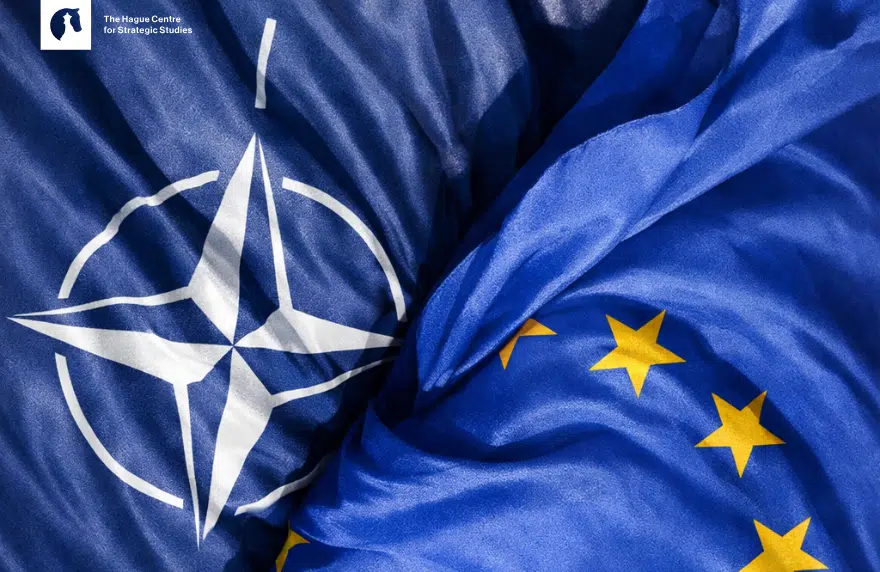
Russia’s war against Ukraine and a recalibration of the US role in European defence make stronger European conventional defence an immediate strategic requirement. In a new HCSS paper, Pieter-Jan Vandoren and Davis Ellison argue that Europe must prepare not only to take greater responsibility within NATO, but also for the possibility that NATO consensus cannot be reached when US participation is absent.
The authors propose a NATO-compatible European Plan B: a mechanism through which willing European NATO Allies could authorise, command and sustain a European defence operation if the North Atlantic Council (NAC) cannot authorise it. NATO would remain the central framework for European collective defence, with Plan B activated only when NATO options are unavailable.
“European Allies must also prepare for a contingency in which US political choices prevent American participation in a NATO operation, thus blocking consensus in the North Atlantic Council,” says lead author Pieter-Jan Vandoren.
The proposed architecture is built around a new European Defence Compact, with a European Compact Council providing political authority and a reversible military command chain connecting that authority to a designated NATO Joint Force Command. The model would allow Europe to act independently when necessary, while providing a clear route back to NATO command once NAC consensus is restored.
The paper stresses that credibility cannot come from treaty language alone. Europe would need to agree in advance on the transfer of authority, access to NATO command resources, military advice, sustainment, escalation control and termination — and then exercise these arrangements under both normal and degraded conditions.
The authors recommend seven immediate steps:
- Negotiate and conclude one European Defence Compact.
- Approve NATO-European command access before a crisis.
- Build and exercise one political-to-operational chain.
- Fund and test the supporting arrangements.
- Demonstrate the model at one regional Joint Force Command.
- Assign leads and apply completion tests.
- Launch the process before the next NATO summit.
“Governments must now decide whether they are willing to pre-authorise the decisions, command access and supporting arrangements needed to make European action possible in practice,” adds Davis Ellison.
Europe’s ability to deter depends not only on having forces, but on having a credible political mechanism to employ them when circumstances demand it.
Authors: Pieter-Jan Vandoren and Davis Ellison
Contributors: Nico Tak and Tim Sweijs
Cover image: AI-generated
The research for and production of this report has been conducted within the PROGRESS research framework agreement. Responsibility for the contents and for the opinions expressed, rests solely with the authors and does not constitute, not should be construed as, an endorsement by the Netherlands Ministries of Foreign Affairs and Defence.




Related Content