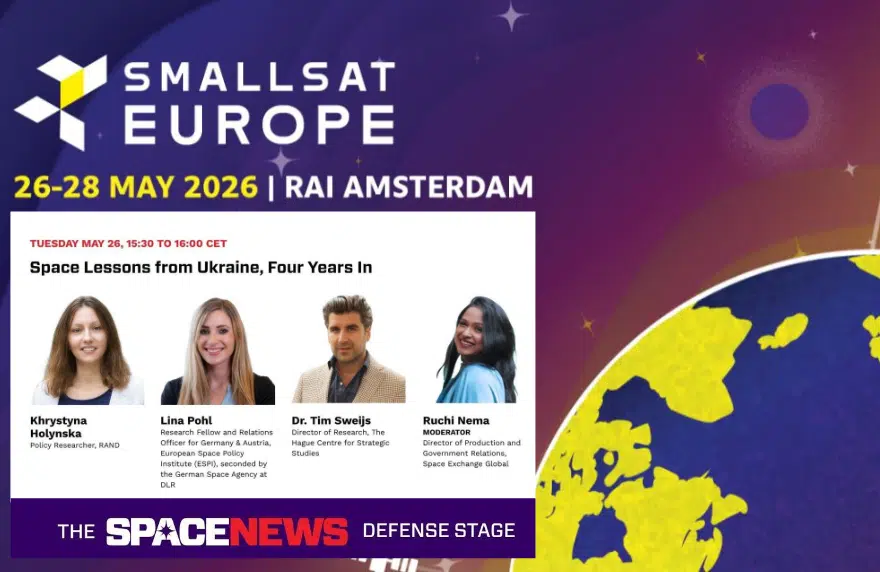
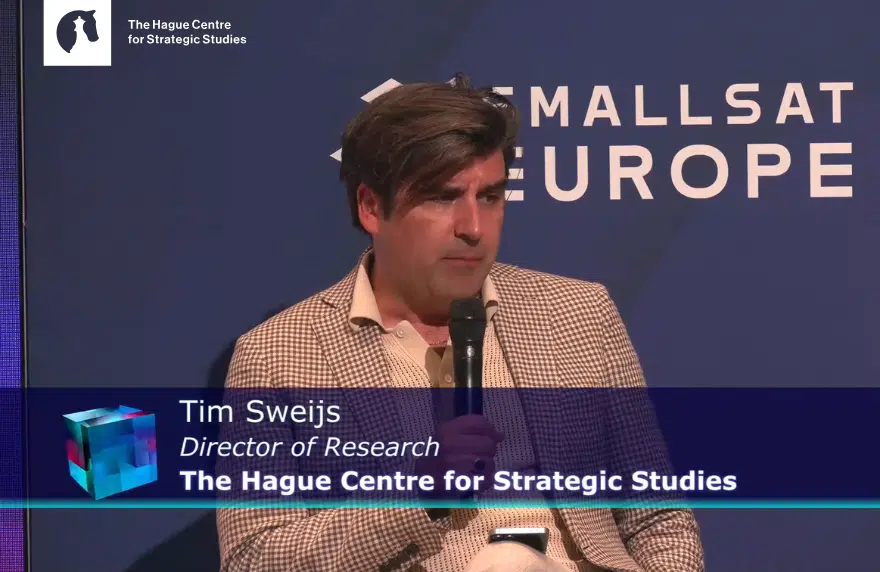
On 26 May, HCSS director of research Dr. Tim Sweijs participated in a panel at SmallSat Europe 2026, discussing the lessons from the war in Ukraine for Europe’s future space and defence posture. The session explored how the conflict has reshaped thinking on commercial space integration, military procurement and the growing convergence between space and defence.
Background and context:
Four years into Russia’s full-scale invasion, the war in Ukraine has become a clear example of how space capabilities influence modern warfare. Commercial satellite services are no longer a supporting asset but a critical component of military operations and national resilience.
Even before Russian troops crossed the border in February 2022, a cyberattack on Viasat’s KA-SAT network disrupted communications across Ukraine and parts of Europe. In the subsequent years, commercial providers played an increasingly central role. Starlink enabled battlefield communications, and companies such as ICEYE, Maxar and Planet provided imagery and intelligence that supported situational awareness, targeting and damage assessment.
The war also exposed significant vulnerabilities. Russian electronic warfare repeatedly disrupted satellite-dependent systems, while the dual-use nature of commercial space assets raised new questions about ownership, control and legal status during conflict. Russia’s designation of Western commercial satellites supporting Ukraine as potential military targets highlighted the growing strategic importance of these systems.
Moderated by Ruchi Nema (Co-Founder and CEO, Space Exchange Global), Tim Sweijs joined a panel alongside Khrystyna Holynska (Policy Researcher, RAND) and Lina Pohl (Research Fellow and Relations Officer for Germany and Austria at the European Space Policy Institute). The discussion examined what the Ukraine experience means for governments, defence organisations, industry and investors shaping the future of European space capabilities.
“Dependency kills”
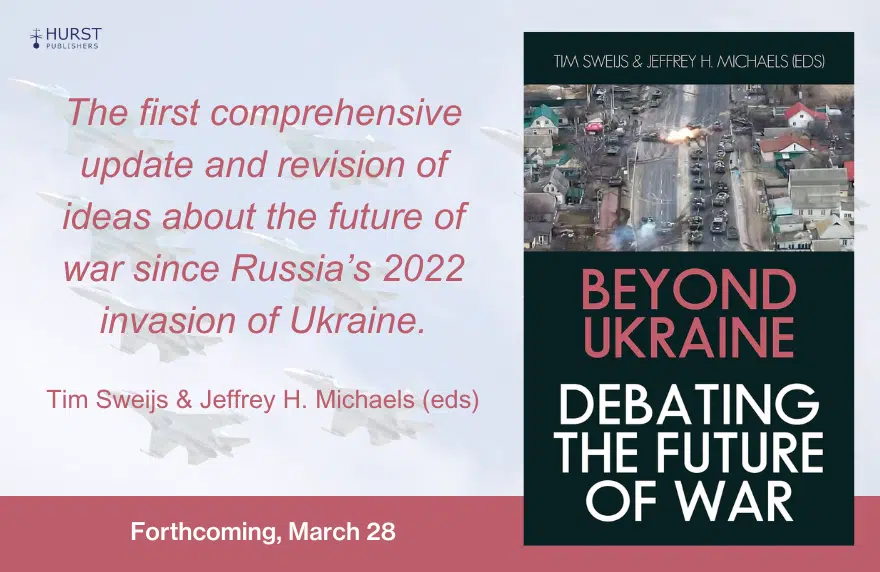
Drawing on his research, including “Beyond Ukraine” and “The War of Tomorrow”, Sweijs argued that Ukraine illustrates a broader transformation in the character of warfare. Commercial space capabilities have become deeply integrated into military operations, blurring traditional distinctions between civilian and military infrastructure. Referring to Europe’s reliance on a limited number of providers and platforms, Sweijs warned that “dependency kills“, highlighting the risks of relying on “single billionaires, single companies, single states, and single contracts” for critical defence capabilities.
Sweijs noted that the debate has now shifted beyond the concept of dual-use technology towards the question of technological sovereignty. Commercial providers remain indispensable, but the war in Ukraine has also demonstrated the need for resilient, diversified and sovereign European capabilities. The panel discussion stressed that, although Europe increasingly recognises the strategic importance of sovereign space capabilities, there is still no shared definition of what technological sovereignty in space should mean in practice.
Noting the growing cooperation between Russia and China in the space domain, Sweijs warned of the strategic implications of major powers increasingly aligning capabilities and objectives in space. Allied governments will need to rethink deterrence, resilience and collective strategy, he notes. This includes preparing for potential coalitions that could challenge Western interests across multiple domains.
The panellists underscored a central lesson from the Ukraine war: space is no longer a niche defence domain. It has now become a critical pillar of modern security, where commercial actors play an increasingly decisive role in conflict, competition and resilience.
What does that mean for future conflicts? And given the dual-use nature of the commercial space, how does it influence gray-zone warfare?
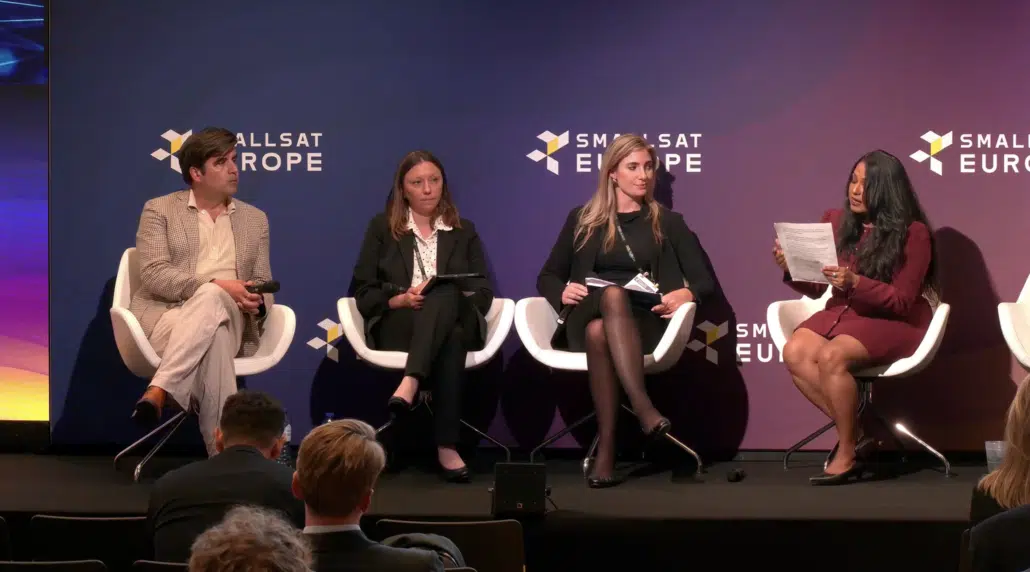
Source: SmallSat Europe / SatNews
Experts

Related Content