
The yearly report by the Clingendael Institute and The Hague Centre for Strategic Studies (HCSS) analyses the most important trends and developments in the international regimes that form the international order, taking stock of the world of today and tomorrow.
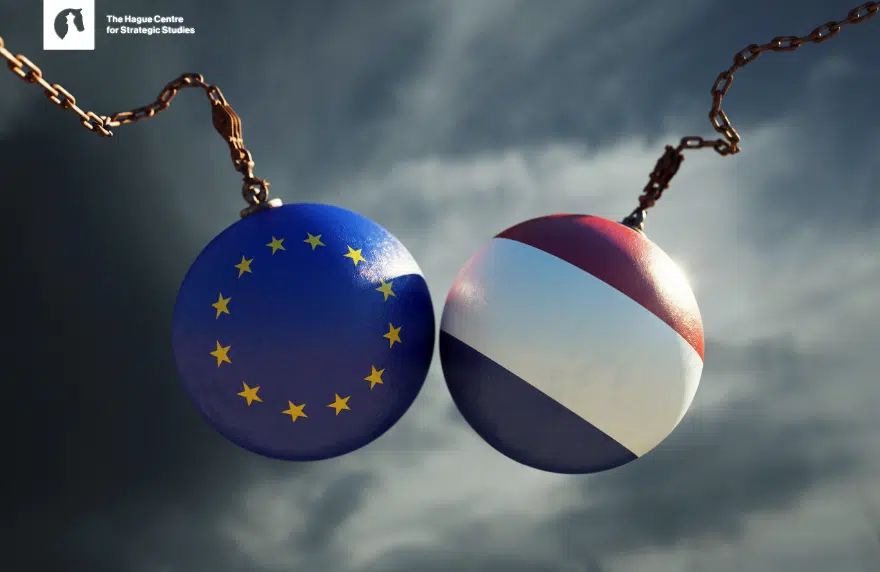
This year’s Strategic Monitor report seeks to identify policies and partners intended to advance the goal of strategic autonomy. It argues that if EU member states do not hang together – if they do not forge a common vision for foreign and security policy – they will be left to shift for themselves in a world characterized by accelerating great power competition and eroding multilateral institutions. In a nutshell, the failure to solidify Europe’s global role would mean reduced prosperity and sovereignty for states such as the Netherlands.
The report reaches two main conclusions. First, encouraging progress has been made in the five areas evaluated in the report: the problem of techno-nationalism, intelligence cooperation, arms control, collaborative armaments programs, and the security implications of climate change (though much remains to be done).
The second principal conclusion of the report is that two big hurdles still face the EU. It is hampered by significant shortcomings in capabilities, especially in the realm of defense. It is also struggling with the problem of insufficient political will, a problem driven in large part by tension between the supranational and national components of the EU, and the influence of nationalist and anti-EU political parties.
The report develops three broad principles. First, it contends that only by actively working to establish rules and norms in key areas of international concern will the Netherlands and EU be able to shape an environment conducive to European interests and values. In particular, they should focus on minilateral and multilateral international partnerships in areas such as climate security, arms control, emerging tech, and space. In a nutshell, the Netherlands and EU should lean into their already considerable normative power.
Second the report argues that better protecting EU member state economies and societies from external interference in areas such as espionage, hybrid operations, unfair market policies, and extra-territorial sanctions will enhance efforts to hang together. The EU will not be able to resist the divide and rule tactics employed by other great powers if it does not get its act together in this area.
Third, the report asserts that defending and deterring potential adversaries through boosting military strength and fostering closer military collaboration will both make the Netherlands and the EU more resilient and capable and make it easier to forge unity on key foreign and security policy questions. EU member states have been talking a good game in these areas for years; now it is time to begin putting their money where their mouths are by investing in capabilities and collaborative programs and by doing a better job of leveraging NATO and security relationships with other like-minded actors.
Authors: Jack Thompson (HCSS) and Danny Pronk (Clingendael)
Strategic Monitor 2021-2022 can be downloaded in English and Dutch:
This year’s Strategic Monitor consists of several parts, including:
- This synthesis report
Five sub-reports:
- “Climate Security in Global Hotspots: Policy Options for The Netherlands”, by Dorith Kool and Laura Birkman
- “Taming Techno-Nationalism: A Policy Agenda”, by Hugo van Manen, Tobias Gehrke, Jack Thompson, and Tim Sweijs
- “Shifting Sands of Strategic Stability: Geopolitical Competition, Emerging Technologies, and the New Arms Control Agenda”, by Paul van Hooft, Lotje Boswinkel, Tim Sweijs, Benedetta Girardi, and John Michaelis
- “Sharing the Burden, Sharing the Secrets: The future of European intelligence cooperation“, by Danny Pronk and Claire Korteweg
- “Identity, Industry and Interoperability: The Drivers of European Armaments Collaboration“, by Danny Pronk, Dick Zandee and Adája Stoetman
Experts
Related Content


