HCSS
  • News
    • BNR | De Strateeg
    • Columns
    • The Draghi Report Revisited
    • Events
    • Podcasts
  • Publications
    • Publications
      • All Publications
    • Defence & Security
      • (Nuclear) Deterrence and Arms Control
      • Foreign Information Manipulation and Interference (FIMI)
      • Hybrid Threats
      • Nationale Veiligheid en Weerbaarheid
      • NATO Summit
      • On Future War
      • Robotic and Autonomous Systems
      • Strategic Monitor Dutch Police
      • Transnational Organised Crime
    • Geopolitics & Geo-economics
      • Europe in the Indo-Pacific
      • Knowledge base on Russia (RuBase)
      • PROGRESS / Strategic Monitor
      • Transatlantic Relations
    • Climate, Energy, Materials & Food
      • Climate and Security
        • International Military Council on Climate and Security (IMCCS)
        • Water, Peace & Security (WPS)
      • Critical Minerals
      • Energy Security
      • Food Security
    • Strategic Technologies
      • Cyber Policy & Resilience
        • Global Commission on the Stability of Cyberspace (GCSC)
      • Emerging Technologies
      • Global Commission on Responsible Artificial Intelligence in the Military Domain (GC REAIM)
      • Semiconductors
      • Space
  • Dashboards
    • Dashboards
      • All Tools
        • GINA
        • SARA
    • Defence & Security
      • DAMON
      • GINA | Military
      • Nuclear Timeline
    • Geopolitics & Geo-economics
      • DFRI
      • GATRI
      • GINA | Diplomatic
      • GINA | Economic
      • GINA | Information
    • Climate, Energy, Materials & Food
      • Agrifood Monitor
      • CARMEN
      • DOMINO
      • CRM Dashboard
    • Strategic Technologies
      • Cyber Arms Watch
      • Cyber Comparator
      • Cyber Norms Observatory
      • Cyber Transparency
  • Services
    • HCSS Boardroom
    • HCSS Datalab
    • HCSS Socio-Political Instability Survey
    • Strategic Capability Gaming
    • Studio HCSS
    • Southern Africa-Netherlands Cyber Security School 2026
    • Indo-Dutch Cyber Security School 2025
  • GC REAIM
    • GC REAIM | Members
    • GC REAIM | Publications
    • GC REAIM | Conferences
    • GC REAIM | Partners, Sponsors, Supporters
  • About HCSS
    • Contact Us
    • Our People
    • Funding & Transparency
    • Partners & Clients
    • HCSS Newsletter
    • HCSS Internship Programme
    • Press & Media Inquiries
    • Working at HCSS
    • Global Futures Foundation
  • Click to open the search input field Click to open the search input field Search
  • Menu Menu

News

Innovation Origins | Critical raw materials as a lever for the circular transition

December 5, 2025

The report “Securing Europe’s Clean Tech Future” shows that voluntary stockpiling can help absorb shocks in the raw materials chain.

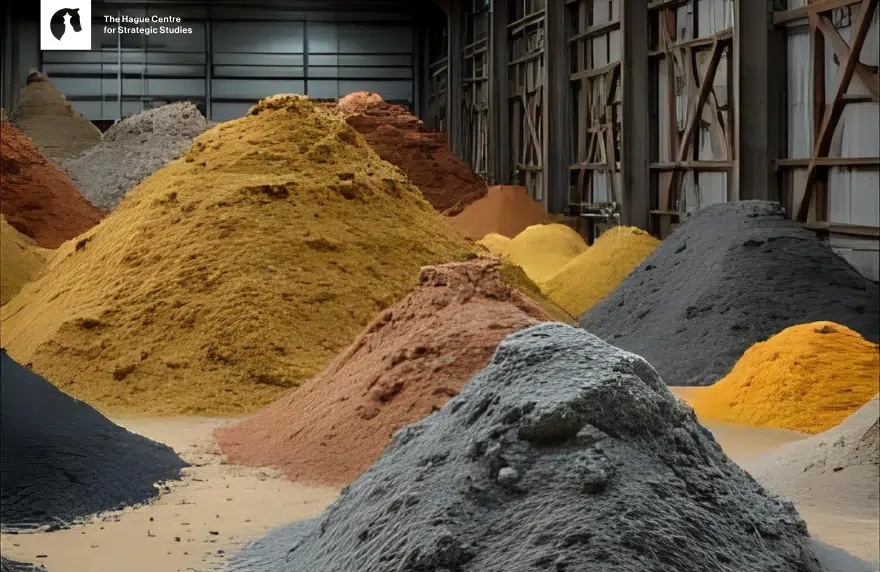
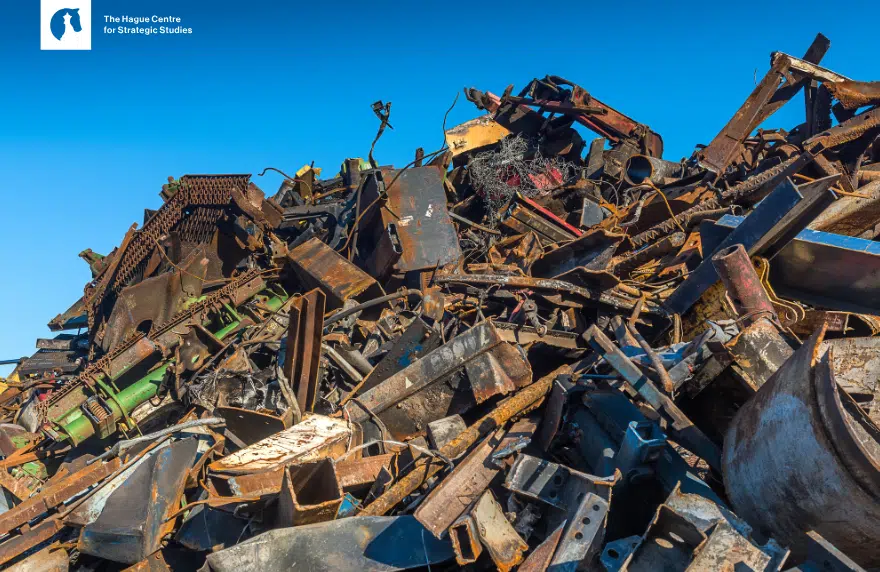
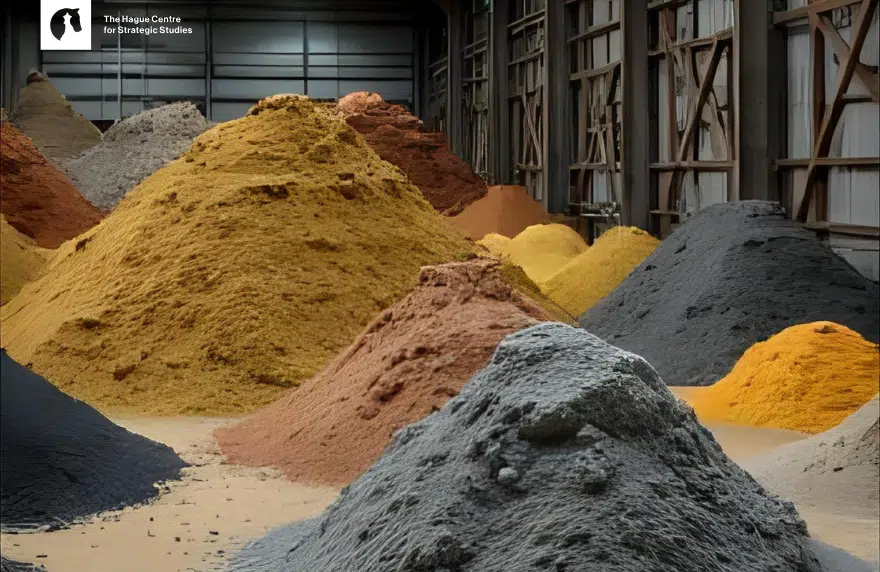
Critical raw materials such as lithium, cobalt, nickel, and rare-earth metals are indispensable to the Dutch and European cleantech industries. Our dependence on countries outside Europe for imports of these materials is increasing. Invest-NL asked The Hague Centre for Strategic Studies (HCSS) to investigate how voluntary, public-private stocks of critical raw materials can contribute to a resilient European industry.

The HCSS report ‘Securing Europe’s Clean Tech Future’ shows that voluntary stockpiling, supported by public capital, can help absorb shocks in the raw materials chain and offer companies greater price stability. Based on interviews with thirteen Dutch cleantech companies and seven logistics and recycling parties, the report presents a practical four-step model for planning, purchasing, managing, and deploying stocks.

What companies need

SMEs in the cleantech and circular sectors are particularly at risk. They are often too small to build up raw material stocks independently and have difficulty accessing financing. Raw material markets are capital-intensive and volatile, while banks and investors are cautious because of the risks. This leaves the market vulnerable to sudden disruptions or price increases.

Invest-NL sees a structural financing gap here, precisely the type of market failure that the national financing and development institution wants to address. Sustainable innovation and circular production require certainty in the chain, but the market does not provide this automatically. This research explores how public co-financing, guarantees, or revolving funds can enable voluntary strategic stockpiling without companies losing their agility.

What companies need

SMEs in the cleantech and circular sectors are particularly at risk. They are often too small to build up raw material stocks independently and have difficulty accessing financing. Raw material markets are capital-intensive and volatile, while banks and investors are cautious because of the risks. This leaves the market vulnerable to sudden disruptions or price increases.

Invest-NL sees a structural financing gap here, precisely the type of market failure that the national financing and development institution wants to address. Sustainable innovation and circular production require certainty in the chain, but the market does not provide this automatically. This research explores how public co-financing, guarantees, or revolving funds can enable voluntary strategic stockpiling without companies losing their agility.

Insights from practice

The HCSS report ‘Securing Europe’s Clean Tech Future’ shows that voluntary stockpiling, supported by public capital, can help absorb shocks in the raw materials chain and offer companies greater price stability. Based on interviews with thirteen Dutch cleantech companies and seven logistics and recycling parties, the report presents a practical four-step model for planning, purchasing, managing, and deploying stocks.

Key insights:
  • Voluntary stockpiling is still rare in the Netherlands, but is considered strategically valuable.
  • SMEs benefit most from joint public-private inventories.
  • Thanks to its strong logistics infrastructure, the Netherlands is a logical location for a Northwest European hub.
  • Linking with circular initiatives—such as recycling and reuse of critical materials—reduces dependence on primary imports.

Bron: Innovation Origins, 30 November

Report Link (PDF)
  • Share on Facebook
  • Share on X
  • Share on WhatsApp
  • Share on LinkedIn
  • Share by Mail

Experts

Irina Patrahau
Ron Stoop
Michel Rademaker
Lucia van Geuns
Peter Handley

Related News

Related Content

New report | Securing Europe’s Clean Tech Future: Supporting Industry Stockpiles of Critical Raw Materials in the Netherlands
Critical Raw Materials in the Dutch Provinces of Noord-Holland and Flevoland: Towards Resilient Supply Chains
Critical raw materials in the Dutch Province of Zuid-Holland: What, why and how?

Office Address

  • The Hague Centre for Strategic Studies
  • Lange Voorhout 1
  • 2514 EA The Hague
  • The Netherlands

Contact Us

  • Telephone: +31(70) 318 48 40
  • E-mail: info@hcss.nl
  • IBAN NL10INGB0666328730
  • BIC INGBNL2A
  • VAT NL.8101.32.436.B01
  • Contact

Legal & Privacy

  • Disclaimer & Privacy
  • Algemene Voorwaarden (NL) 
  • Terms & Conditions (ENG) 
  • Coordinated Vulnerability Disclosure
  • Ethical Standards
  • Manual for Responsible Use of AI

Follow us

© The Hague Centre for Strategic Studies
    Link to: Innovation Origins | Kritieke grondstoffen als hefboom voor een circulaire transitie Link to: Innovation Origins | Kritieke grondstoffen als hefboom voor een circulaire transitie Innovation Origins | Kritieke grondstoffen als hefboom voor een circulaire ...
    Scroll to top Scroll to top Scroll to top

    GDPR Consent

    Your privacy is important to us. Here you can set which consent you are allowing us with regards to the collection of general information, the placing of cookies of the collection of personal information. You can click 'Forget my settings' at the bottom of this form to revoke all given consents.

    Privacy policy | Close
    Settings

    GDPR Consent Settings

    Your privacy is important to us. Here you can set which consent you are allowing us with regards to the collection of general information, the placing of cookies of the collection of personal information. You can click 'Forget my settings' at the bottom of this form to revoke all given consents.

    Website statistics collect anonymized information about how the site is used. This information is used to optimize the website and to ensure an optimal user experience.

    View details

    Functional cookies are used to ensure the website works properly and are neccessary to make the site function. These cookies do not collect any personal data.  

    View details
    Forget my settings Deleted!