Publications

Over the years, HCSS has built up an extensive archive of reports, monitors, papers and other publications. We disseminate the results of our research as broadly as possible to benefit the public good. Use the advanced search functions below to browse through our research library, most of which is available as free PDF downloads.
16 Jan 2023
While emerging (and) disruptive technologies (EDTs) play a critical role in generating economic prosperity, they also generate a bevy of challenges, posing both risks and opportunities. In the current competitive global environment, Dutch policymakers should seek to reduce the Dutch innovation ecosystem’s vulnerability to techno-nationalist practices and to improve its ability to compete internationally, while simultaneously seeking international cooperation to regulate the societal impact of EDTs. This report offers recommendations to policymakers of what can be envisaged as possible solutions.
10 Jan 2023
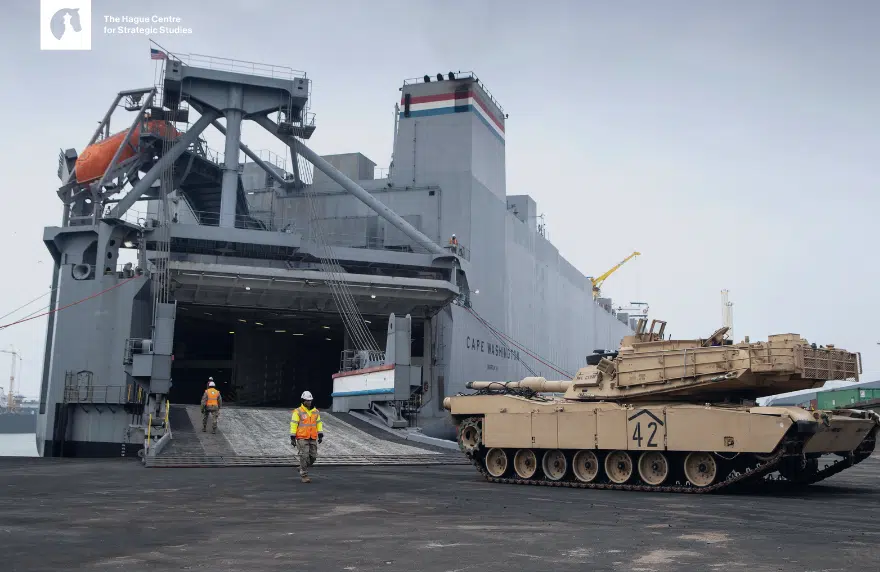
What raw materials are used to build next-gen aircraft fighters, tanks and corvettes? What is the supply chain risk of these materials? This new HCSS report looks at military applications and their components to map out the European defence industry’s raw materials dependence, as well as uncover the vulnerability of supply.
3 Jan 2023
Om te begrijpen hoe Rusland kan worden afgeschrikt is het noodzakelijk om inzichten en concepten uit de Koude Oorlog opnieuw te bezien, in het licht van de huidige tijd met zowel duidelijke vergelijkbare als echt andere kenmerken. In deze HCSS studie trachten Rob de Wijk, Frank Bekkers en Tim Sweijs een antwoord te geven op de vraag hoe we met die nieuwe én tegelijkertijd oude dreiging moeten omgaan. Daarbij staat oorlogsvoorkoming door afschrikking centraal.
20 Dec 2022
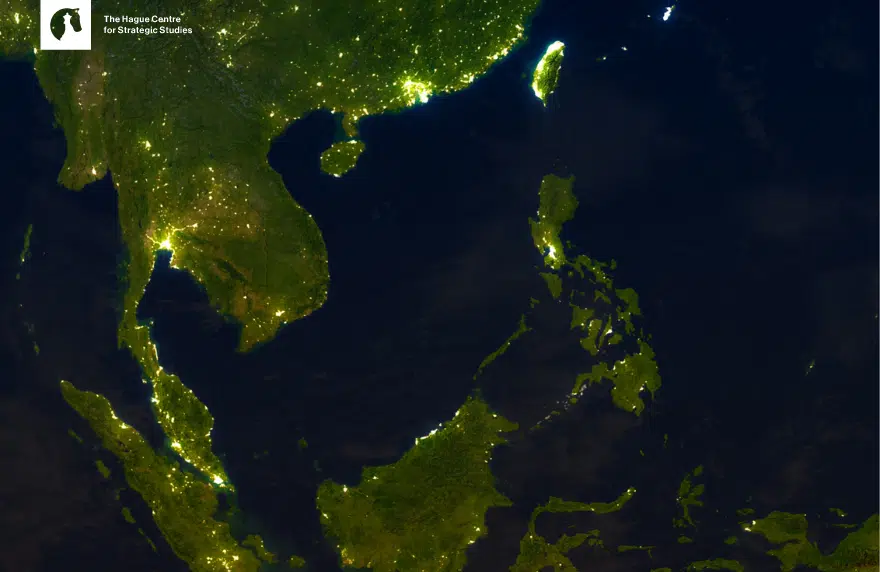
Europe’s role in the Indo-Pacific has become a matter of strategic importance in global politics. China’s disruptive role in the region, especially with its hardening stance towards Taiwan and burgeoning relations with Russia, have forced a shift in the European Union’s (EU) outlook towards the Indo-Pacific. This policy paper by Jagannath Panda looks at the EU’s policy frameworks – like the MSS, Strategic Compass and the Indo-Pacific strategy – to understand their complementarities and impact on its presence in the Indo-Pacific domain.
19 Dec 2022
Een nieuwe stap in de wetgeving rond kennisveiligheid en strategische autonomie, de Wet VIFO is uitgebreid naar campusbeheerders. Wat voor effect heeft dit op de kennisveiligheid van Nederland? Birch en HCSS ontwikkelden een toetsingskader voor campusbeheerders.
15 Dec 2022
HCSS analist Paul van Hooft gaf op 14 december 2022 een briefing aan de vaste commissie voor Buitenlandse Zaken over open strategische autonomie. Ter voorbereiding van deze sessie schreef hij de Factsheet “Wiens open strategische autonomie? Verschillende perspectieven in EU-lidstaten”.
14 Dec 2022
As we find ourselves on the threshold of 2023, you might look back and assess the past year as being stressful and disrupting. If that’s the case, it is time to brace yourself. Our balancing act towards a multipolar order is going to become even more precarious and nerve-racking. This HCSS Annual Report contains food for thought, as we focus on some of the highlights of 2022 and on future developments. Through this we hope to look ahead to a brighter future beyond the gloom of the daily headlines.
6 Dec 2022
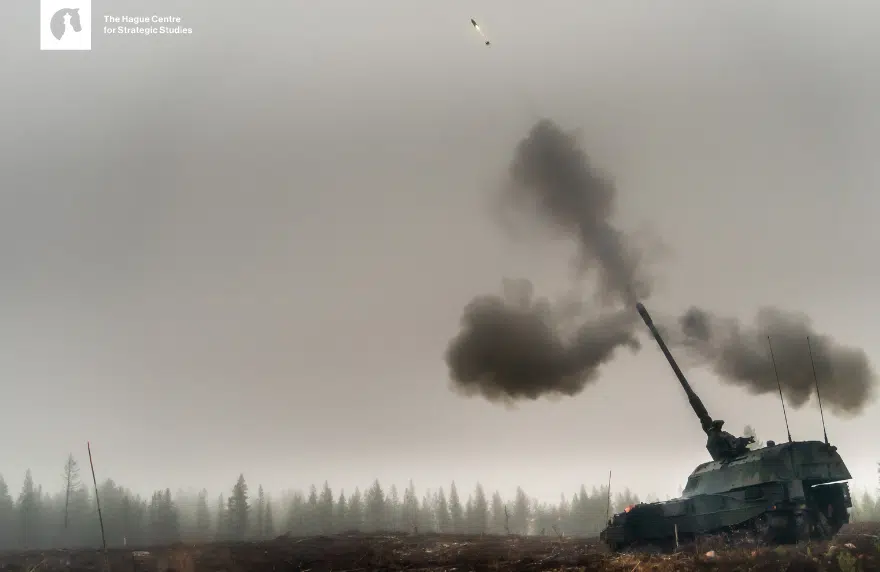
Neither arms control nor deterrence can be considered without the other; they are separated yet two sides of the same coin, Paul van Hooft and Lotje Boswinkel write in a new HCSS policy brief. The Ukraine war has put deterrence-by-denial and deterrence-by-punishment firmly back on the agenda, and it’s key for Europe to seek the right mix of deterrence, arms control & non-proliferation measures.
THeMIS firing, the UGV is armed with a .50 machine gun. Action photo taken during the live fire exercise in Bergen-Hohne, 2022.
29 Nov 2022
Though long seen as the future of warfare, the application of Robots and Autonomous Systems (RAS) is relatively new and experimental in most militaries, including in the Dutch Armed Forces. In 2018, the Royal Netherlands Army established an experimental unit to explore the use of RAS and research key topics on the application of such systems by militaries. This article is a summary of the army's Concept Development & Experimentation (CD&E) plan and its research on RAS for Military use.
28 Nov 2022
The EU taxonomy for sustainable activities is a vital instrument in implementing the Green Deal. By establishing a common framework for identifying sustainable activities, the taxonomy can facilitate the scale-up and acceleration of green investments. This short explainer sheds light on the purpose and structure of the EU Taxonomy, and provides concrete examples of economic activities that make a substantial contribution to the six environmental objectives.
24 Nov 2022
HCSS China analist Joris Teer spreekt op 19 oktober bij de China Ronde Tafel van Commissie Buitenlandse Zaken van de Tweede Kamer, waar deze position paper zal worden behandeld.
15 Nov 2022
Green hydrogen is one of the key energy sources that will enable the Netherlands to reach net zero by 2050. In October 2022, VOTOB, HCSS and VNO-NCW brought together stakeholders of the emerging hydrogen supply chains. The Hydrogen Accelerator workshop aimed to facilitate dialogue and to speed up action.
14 Nov 2022
Het gebiedsgebonden werken komt bij de Nationale Politie steeds meer ter discussie te staan. Een belangrijke reden is dat lokale gezagdragers zich hebben moeten schikken naar de eisen die het beheer stelt, terwijl normaliter het beheer het gezag volgt. Daarnaast is er een structureel tekort aan wijkagenten. Beide kunnen het vertrouwen in de democratische rechtstaat ondermijnen. Deze notitie door Pieter van Vollenhoven pleit daarom voor een versterking van het gezag en de zichtbaarheid van de politie in de wijk.
11 Nov 2022
The Global Center on Adaptation "State and Trends in Adaptation Report 2022" offers comprehensive recommendations for action, based on new evidence that Africa faces a serious shortfall in funding for climate adaptation, even as costs of delayed action rise. HCSS senior strategic analyst Laura Birkman contributed to the report, as co-author of the Security chapter.
31 Oct 2022
The first 7 months of the war in Ukraine have reaffirmed that warfare does not only take place in the physical realm. Rather, in modern high-intensity warfare, an ongoing informational battle interacts with and impacts the behaviour of people on the ground. This paper looks at 7 case studies to map the ways in which Ukrainian and Russian narratives developed and interacted. In doing so, we attempt to disentangle the various information influencing tactics employed in the war thus far, as well as draw out key conclusions that must be learnt.
27 Oct 2022
Although Europe still seems committed to the Paris Agreement, it needs to seriously ramp up its efforts to secure the minerals and raw materials required. It’s essential to get two crucial players on board: the raw material producers and financial risk takers. The good news is that there is an instrument that gets both on board at the same time, HCSS strategic advisor Jeff Amrish Ritoe states: the Untied Loan Guarantee.
24 Oct 2022
De Europese aanwezigheid in de Asia-Pacific / Indo-Pacific is de afgelopen jaren toegenomen. In deze nota bespreken Paul van Hooft (HCSS) en Linde Desmaele (Vrije Universiteit Brussel) de militaire en economische aanwezigheid, die ten grondslag ligt aan de diplomatieke aanwezigheid. We bespreken ook hoe de Europese militaire en economische belangen zich verhouden tot de belangen en het beleid van de VS, China en regionale staten.
19 Oct 2022
Both semiconductors and critical raw materials (CRM) have been described as the oil of the 21st century. Oil products were central in mechanizing the economy, as these enabled containerships to ship goods around the world, cars for people to commute to work, and trucks to deliver products to local convenience stores. Semiconductors play a central role in powering the modern digital economy, as well as the energy transition.
18 Oct 2022
“Watch out for War with a Capital W,” this new HCSS report concludes, the first comprehensive expert survey to study the future of European defence since the Russian invasion of Ukraine. Authors Lotje Boswinkel and Tim Sweijs use a multi-method approach to explore where Europe is most likely to intervene militarily over the next ten years, and lay out a comprehensive policy agenda for European defence policy makers.
12 Oct 2022
Moskou gebruikt nucleaire dreigementen om de spanningen met de NAVO te managen zonder dat escalatie oncontroleerbaar uit de hand loopt. Dat betekent niet dat het risico van de baan is, want het is de vraag of het Westen deze signalen in voldoende mate opvangt en, belangrijker nog, begrijpt, schrijft gast auteur Majoor Frederik A.J.J. Wintermans in een essay.
10 Oct 2022
Op welke manier kan kernenergie in de toekomstige Nederlandse energiemix een onderdeel zijn van het energieaanbod en wat zijn hiervan de kosten en baten? In opdracht van het Ministerie van Economische Zaken onderzocht een consortium bestaande uit Witteveen+Bos, eRisk Group en HCSS deze vraag.
10 Oct 2022
How can nuclear energy be part of the energy supply in the future energy mix of the Netherlands and Northwest Europe? And what are the costs and benefits? In addition to the question of whether there is an economic role for nuclear power in the electricity system, this study also looks at raw materials and the use of space.
3 Oct 2022
Renewable energy technologies, the core of the energy transition, are mineral intensive, leaving a large material footprint. This research addresses the case of cobalt, which is largely used in lithium-ion batteries suited for electric cars, and whether the mineral can be mined within the European Union.
14 Sep 2022
The Russian invasion of Ukraine in 2022 has reawakened thinking in terms of risks and ‘escalation’. NATO as a whole, and NATO-states individually, must keep a balanced position: do not cave to unacceptable threats, as accommodation is a recipe for further escalation from the Russian side.

© The Hague Centre for Strategic Studies