Research
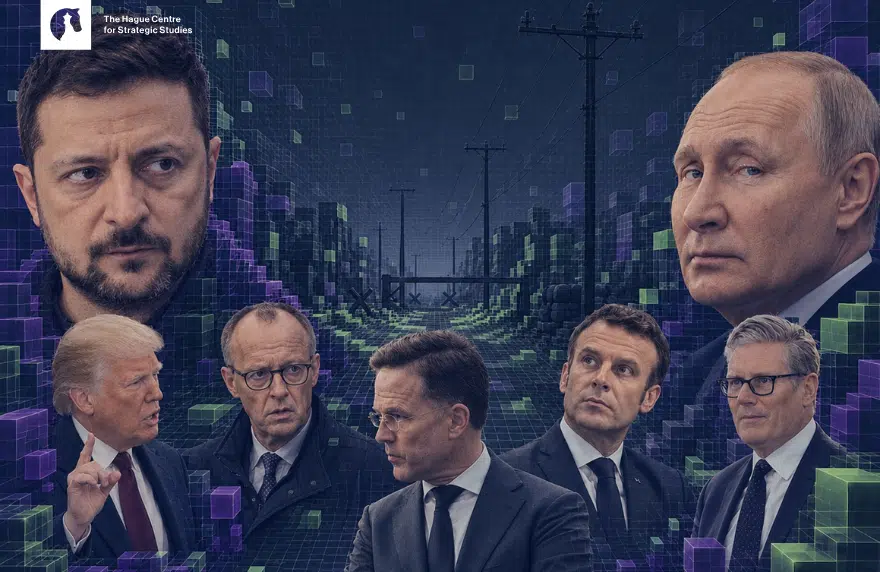
What happens when a fragile ceasefire in Ukraine breaks down, and a second international emergency hits before leaders can bring the situation under control?
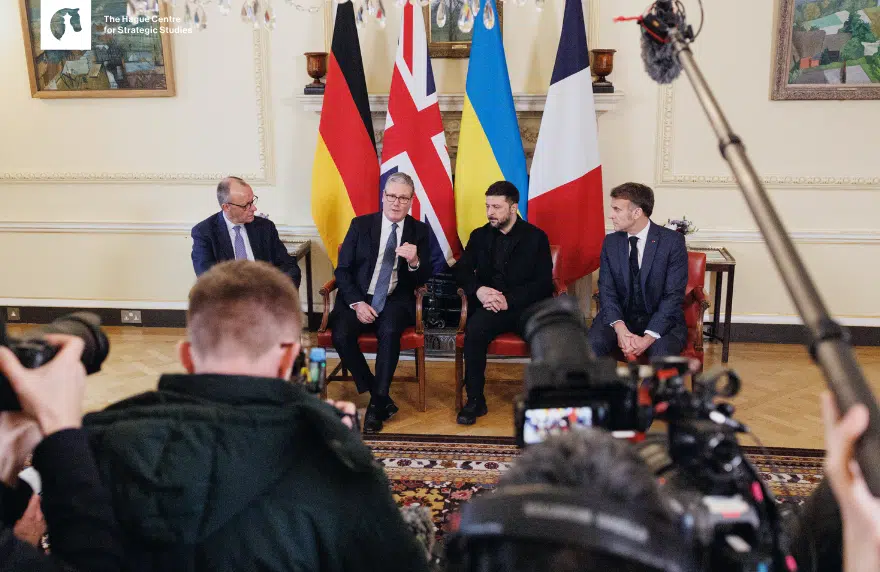
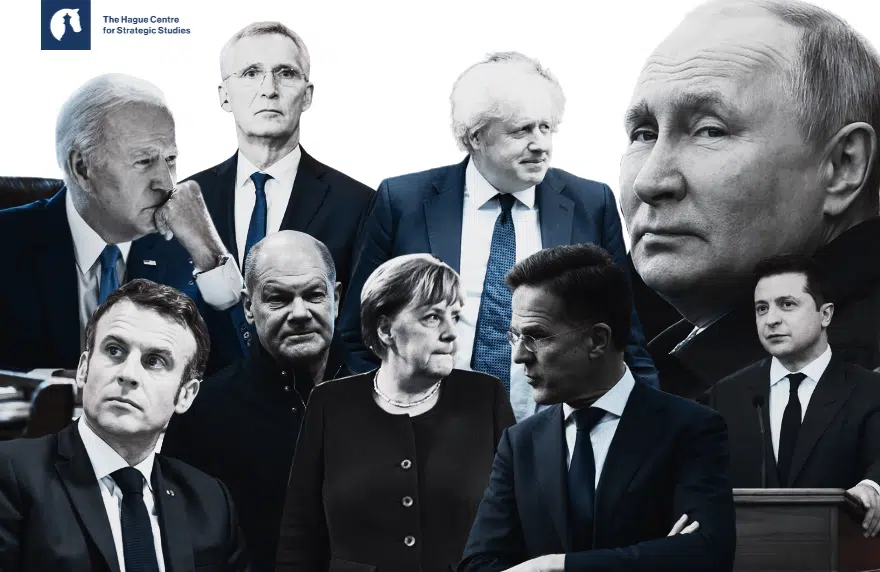
A new HCSS report by Jesse Kommandeur, Chiara Barontini and Tim Sweijs uses ARENA, our Datalab’s crisis simulation platform, to examine how seven political leaders of Russia, Ukraine, the United States, France, Germany, the United Kingdom and NATO might respond to a hypothetical ceasefire breakdown.
The research models 16 scenarios, each replayed ten times, for a total of 160 simulation runs. The scenarios combine four possible ceasefire triggers with four external shocks, ranging from a Chinese blockade of Taiwan to a cyberattack on Europe’s power grid.
The results point to three critical vulnerabilities:
- First, the middle of a crisis matters more than its initial trigger: an unrelated emergency can dramatically alter the trajectory.
- Second, Western coalition cohesion is decisive: in many simulations, Russia gains the upper hand when divisions emerge among Ukraine’s supporters.
- Third, leaders respond differently to the same circumstances, reflecting distinct decision-making styles and strategic beliefs.
A ceasefire in Ukraine would not end the risk of escalation. It marks the beginning of a fragile period in which political leaders’ decisions, divisions among Ukraine’s allies and a second international crisis determine whether tensions subside or spiral further. A crisis over Taiwan is particularly dangerous for Europe, as it draws American military attention towards the Pacific while leaving European allies more exposed.
From Trump and Putin to Zelensky and Macron, across the simulations, a pandemic was the only external shock consistently followed by negotiations. No leader crosses the threshold into strategic nuclear exchange in any of the runs, although the authors stress that this finding requires further testing.
“The report’s central message is that policymakers must look beyond the opening hours of a crisis and prepare for how it evolves. That means understanding how leaders involved think, decide and react under pressure,” observes lead author Jesse Kommandeur, manager of the HCSS Datalab.
The authors recommend that NATO and the Coalition of the Willing plan explicitly for the fragile post-ceasefire period, study the decision-making tendencies of political leaders, rehearse both escalation and de-escalation, strengthen coalition cohesion and wargame scenarios in which multiple crises collide. They also call for European allies to build the capability to deter Russia when American attention is diverted, and to establish direct, high-level communication channels with Moscow.
“It’s imperative to understand the psychology of the leaders. Their personality and decision-making style are critically important for the outcome of a crisis. Crisis simulations that take leadership characteristics seriously should be part and parcel of crisis management preparations within NATO,” concludes HCSS research director Tim Sweijs.
Authors: Jesse Kommandeur, Chiara Barontini and Tim Sweijs.
Contributors: Alessandro Dell’Orto, Clarice van der Paardt, Nicole Eichstaedt and Veerle Tielemans.
Quality Assurance: Frank Bekkers.
The research conducted in preparation of this publication has been made possible in part by financial support from the Research Division of NATO’s Defence College.



Related Content