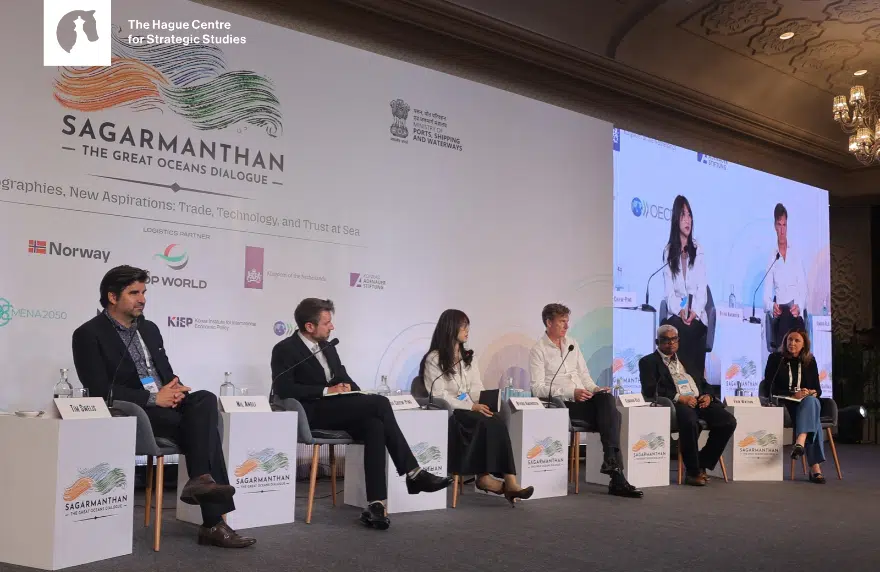
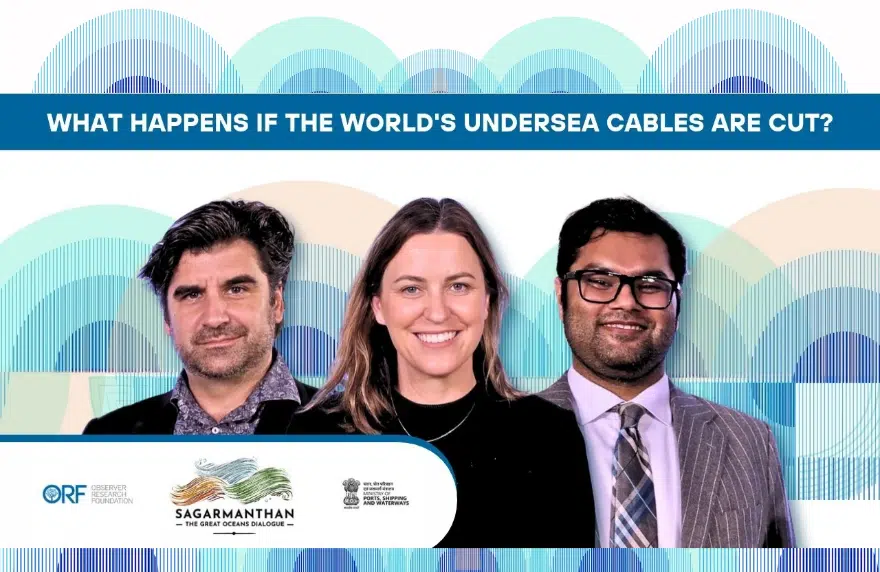
What happens if the world’s undersea cables are cut? From 7–9 October 2026, HCSS Research Director Dr. Tim Sweijs participated in the third edition of Sagarmanthan: The Great Oceans Dialogue in New Delhi. Co-hosted by ORF and India’s Ministry of Ports, Shipping and Waterways, the event gathered over 2,000 participants from more than 76 countries. Sweijs contributed to a panel on “The New Geopolitics of Undersea Infrastructure”, explored emerging risks, governance challenges, and opportunities for international cooperation, with particular emphasis on advancing EU-India partnerships to safeguard critical undersea infrastructure.
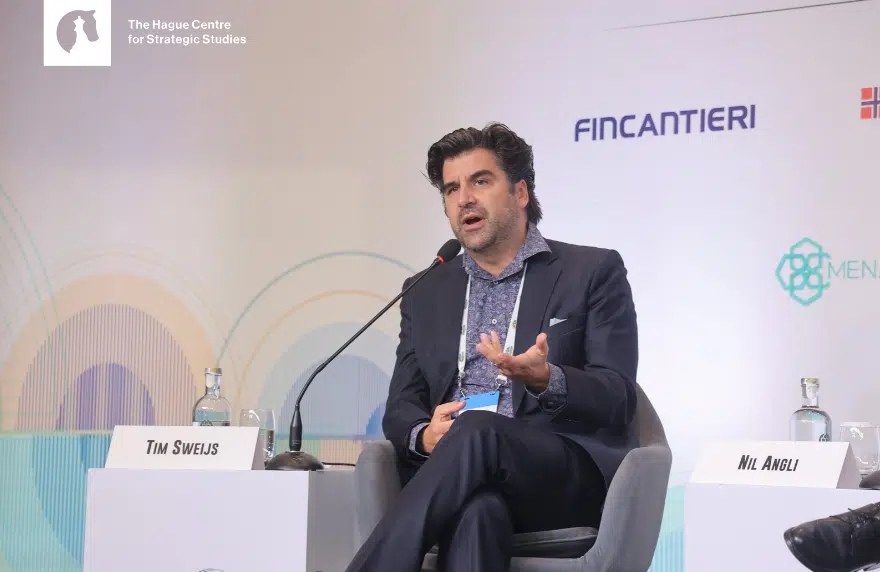
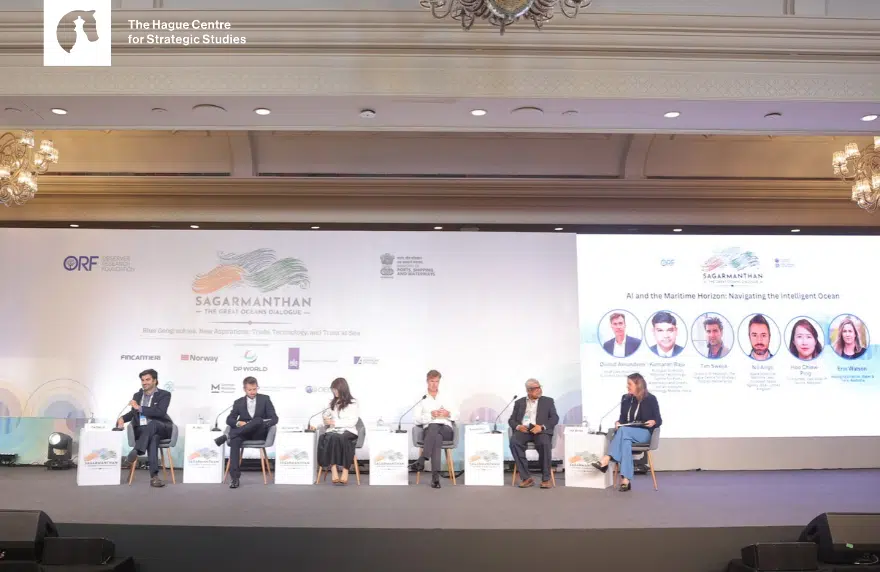
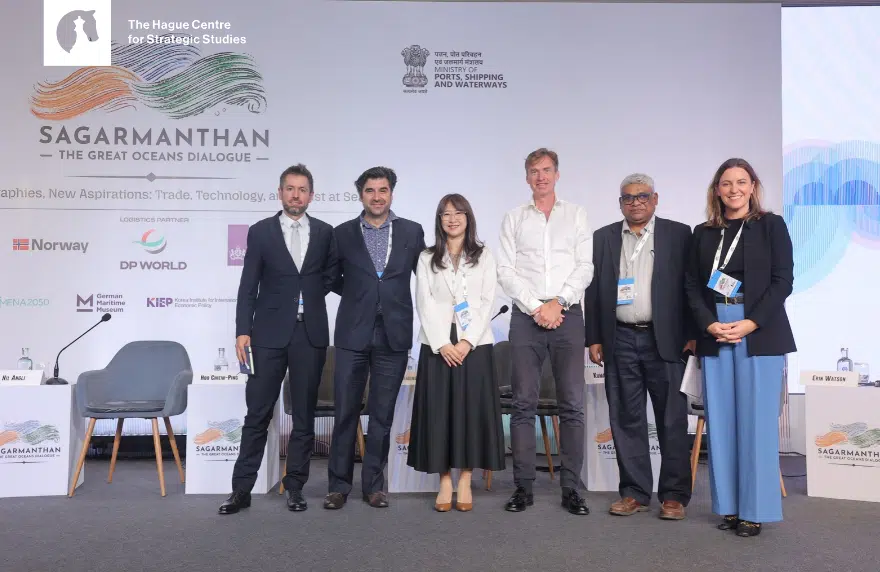
HCSS Research Director Dr. Tim Sweijs participated in the Dialogue and contributed to a session on “The New Geopolitics of Undersea Infrastructure”, together with Erin Watson, Chief Executive Officer, Baker & York, and Tuneer Mukherjee, Non-Resident Associate Fellow, Observer Research Foundation.
How can governments urgently strengthen the protection of critical undersea infrastructure against sabotage, hybrid threats, and geopolitical tensions? Are existing international frameworks and public-private partnerships sufficient to detect, prevent, and respond to disruptions of critical undersea infrastructure? How can India, the EU, and Indo-Pacific partners rapidly translate shared security concerns into coordinated action to safeguard vital undersea networks?
Critical undersea infrastructure (CUI), including submarine telecommunications cables, offshore energy installations, pipelines, and emerging electricity interconnectors, underpins the global digital economy and energy systems. Submarine cable networks carry over 95 percent of international data traffic and support an estimated US$10 trillion in financial transactions every day, making them among the world’s most strategically important infrastructures. As reliance on interconnected maritime and digital systems grows, these assets face increasing risks from accidental damage, natural hazards, technological vulnerabilities, sabotage, hybrid threats, and geopolitical shifts.
The Indian Ocean’s strategic importance for global connectivity, with critical cable routes linking Europe, the Middle East, Africa, and Asia, places India in a key position to contribute to strengthening the resilience of these systems. This workshop brings together policymakers, industry leaders, researchers, and experts to examine emerging risks, exchange best practices, and identify pathways for enhancing the protection, security, and resilience of CUI. The discussions explores opportunities for international and public-private cooperation, with a focus on advancing EU-India partnerships to strengthen critical undersea infrastructure and shape a secure, resilient, and connected maritime digital future.
Rewatch the panel discussion here:
Panel: The New Geopolitics of Undersea Infrastructure
- Erin Watson, Chief Executive Officer, Baker & York, Australia
- Tuneer Mukherjee, Non-Resident Associate Fellow, Observer Research Foundation, India
- Tim Sweijs, Director of research, The Hague Centre for Strategic Studies
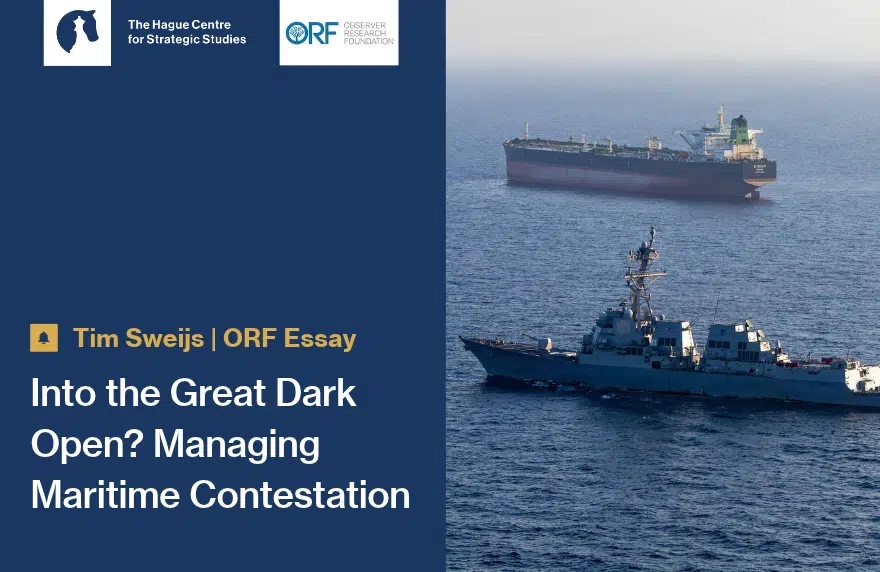
Tim Sweijs | ORF Essay: “Into the Great Dark Open? Managing Maritime Contestation”
From 7-9 October 2026, the third edition of Sagarmanthan: The Great Oceans Dialogue was held in New Delhi. Co-hosted by the Observer Research Foundation (ORF) and India’s Ministry of Ports, Shipping and Waterways, the conference brought together over 2,000 participants from more than 76 countries to exchange perspectives on ports, maritime connectivity, shipping and shipbuilding, ocean governance, sustainability and an inclusive ocean economy.
The world’s oceans are increasingly arenas of geopolitical competition. In an essay, originally published on September 28 as part of the Sagarmanthan Edit 2026 essay series by the Observer Research Foundation (ORF), HCSS Research Director Dr. Tim Sweijs explores how countries can manage these tensions and safeguard freedom of the seas.
As states seek to control vital shipping routes, expand their naval fleets, and deploy new maritime technologies, the risk of escalation is growing. The essay examines how contestation over Sea Lines of Communication is reshaping global security, from the Strait of Hormuz to the Taiwan Strait.
Sweijs argues that this trajectory is not inevitable: political leadership, military dialogue, and mechanisms for restraint are urgently needed to preserve freedom of the seas, safeguard global prosperity and prevent wider conflict.
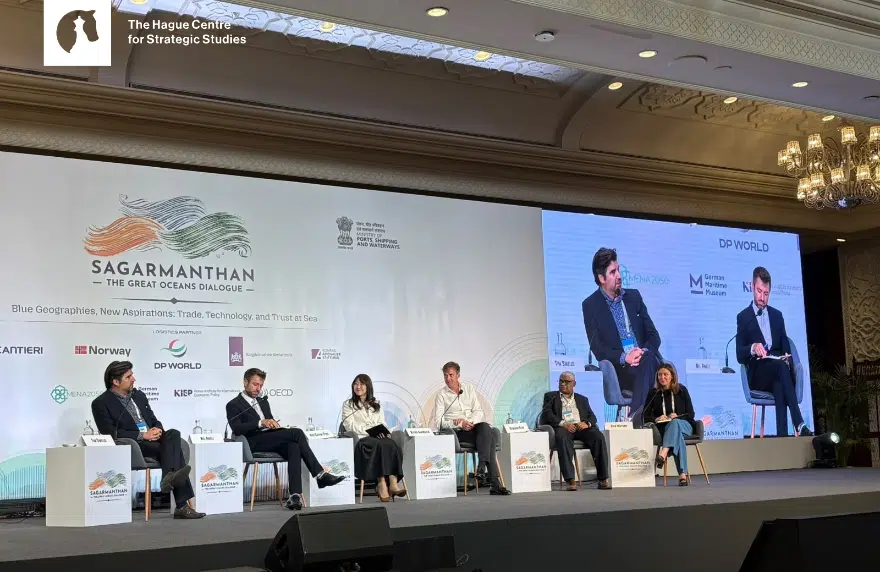
About the Sagarmanthan: The Great Oceans Dialogue:
As a country partner at Sagarmanthan, The Great Oceans Dialogue organized by ORF India, the Netherlands Embassy in India underlined how central the maritime field is for both countries in terms of trade, energy security, supply chains and economic resilience.
Ambassador Marisa Gerards highlighted the emerging Green & Digital Sea Corridor between Indian ports and Rotterdam, linked to green hydrogen, as a living laboratory for the maritime economy of the future where the green transition and competitiveness can reinforce each other.
Mr Richard van Liere, Special Advisor at the Ministry of Infrastructure and Water Management participated in a panel session titled “Next Blue Capitals: Port Cities at the Heart of Sustainable Ocean Economies”, where he spoke about making coastal and port cities resilient, inclusive and sustainable hubs.
Over the past years, India and the Netherlands have built a strong basis for collaboration in maritime development. The Netherlands now aim to deepen and broaden trade and investment in the sector, developing smart and sustainable ports and energy hubs, decarbonising shipping, and building diversified, resilient supply chains between our two countries.
Experts

Related Content