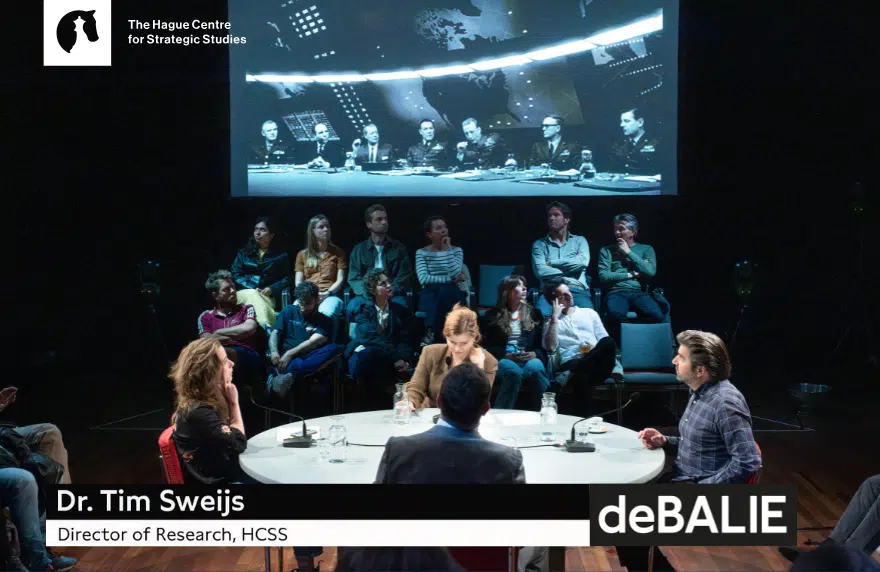
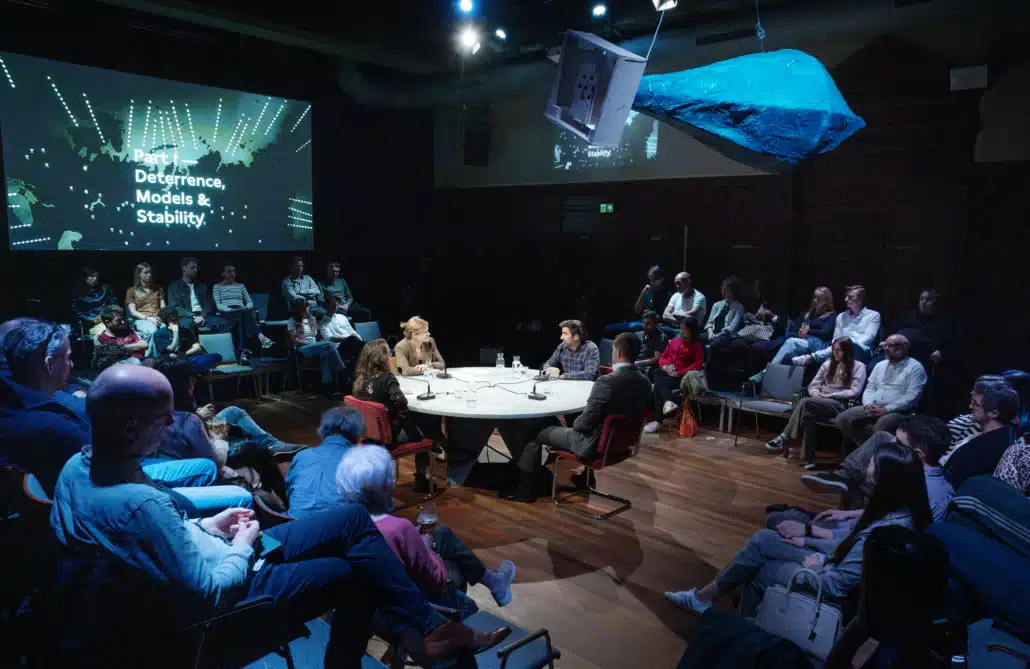
In case you missed it: on 8 May, HCSS Director of Research Tim Sweijs joined the discussion at De Balie Amsterdam on the return of nuclear competition and what it means for Europe’s security. From Macron’s call for a broader European nuclear umbrella, to the erosion of arms control treaties, and the role of AI in nuclear decision-making, the conversation explored the major strategic questions shaping today’s world.
After the short peaceful years that followed the Cold War, the world is rearming itself with nuclear weapons again. On the 8th of May, 2026, HCSS Director of Research Tim Sweijs spoke at De Balie Amsterdam about what this renewed nuclear arms race means for global security.
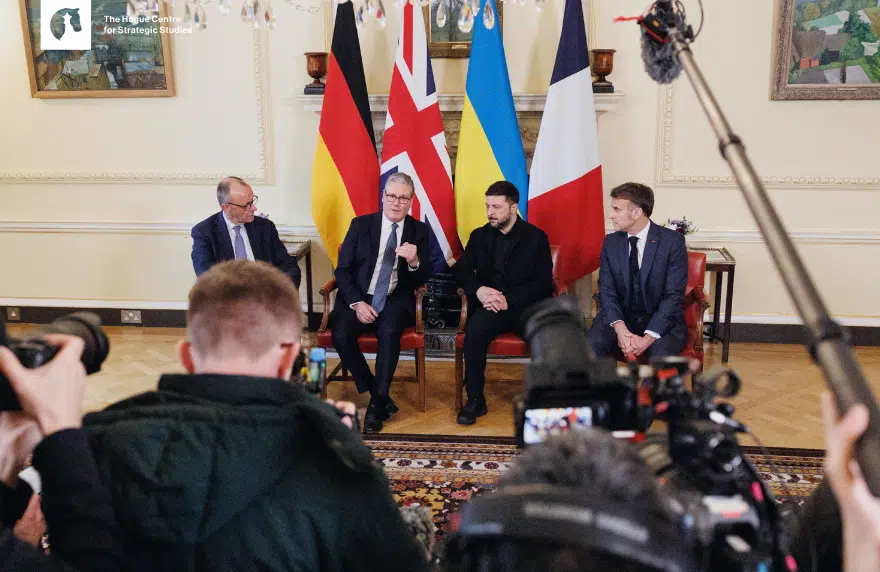
With the theatrical backdrop of a gigantic submarine, President Macron announced an unprecedented change of course: France wants to broaden its nuclear umbrella and cooperate with other countries, including the Netherlands. The reason for this drastic step is the declining confidence that the American nuclear umbrella will continue to protect Europe in the future.
At the same time, treaties between the United States and Russia (which together possess 90 percent of the world’s nuclear weapons) aimed at limiting the number of nuclear weapons have expired. In addition to the United States and Russia, major powers such as China, India, and France are also modernizing or increasing their number of nuclear warheads.
What does this renewed nuclear arms race mean for global security? Is a second, European, nuclear shield our best guarantee of peace? And what does the rise of AI mean for the way nuclear weapons are controlled and deployed?
Rewatch the discussion here:
Speakers:
- Tim Sweijs, Director of Research at The Hague Centre for Strategic Studies (HCSS)
- Paul van Hooft, Research leader at Rand Europe
- Lisa Dupuy, Journalist specialised in international politics and nuclear proliferation
Moderated by Veronica Baas, programme editor De Balie
Source: De Balie, May 8th, 2026
Experts
Related Content