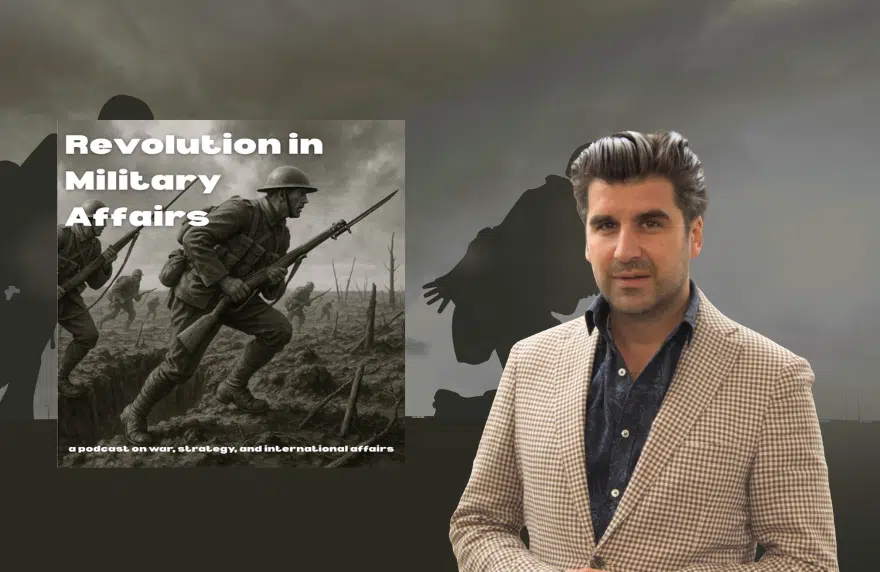
On the latest episode of podcast Revolution in Military Affairs, Tim Sweijs, Research Director at The Hague Centre for Strategic Studies (HCSS), joins host Amos Fox to explore how military innovation is reshaping the character of modern warfare. What insights can we distil from contemporary conflicts for future wars? How do technologies such as drones, precision strike systems, and networked information environments change the way wars are fought and won?
Looking in particular at the ongoing war in Ukraine following Russia’s 2022 invasion, Sweijs and Fox reflect on what contemporary battlefields may reveal on the Future of Warfare. Against this backdrop, the episode asks a central question for defence planners and military professionals alike: which lessons from today’s conflicts are likely to define the wars of tomorrow, and which risk being misinterpreted if taken out of context?
About the podcast:
Podcast Revolution in Military Affairs explores military innovation and modern warfare’s evolution. Revolution in Military Affairs adheres to the position that the science of war exceeds the bounds of ideology. As such, Revolution of Military Affairs promotes the marketplace of ideas, and not just the advocacy of preferential thinking. Revolution in Military Affairs emphasizes military theory, dissecting wisdom from strategic minds that guide war. We discuss its relevance to today’s challenges. Join us for conversations with experts and leaders, scrutinizing pressing issues from geopolitics to policies shaping armed conflict. Whether a strategist or theory enthusiast, we’re your compass in navigating warfare and global strategy.
Amos Fox is a PhD Candidate at the University of Reading. Amos’ studies focus on the impact of proxy force employment on contemporary armed conflict. Amos is also the Chief Human Resources Officer for the Irregular Warfare Initiative and is a freelance writer with the Association of the United States Army.
Bron: Acast, Revolution in Military Affairs
Experts

Related Content