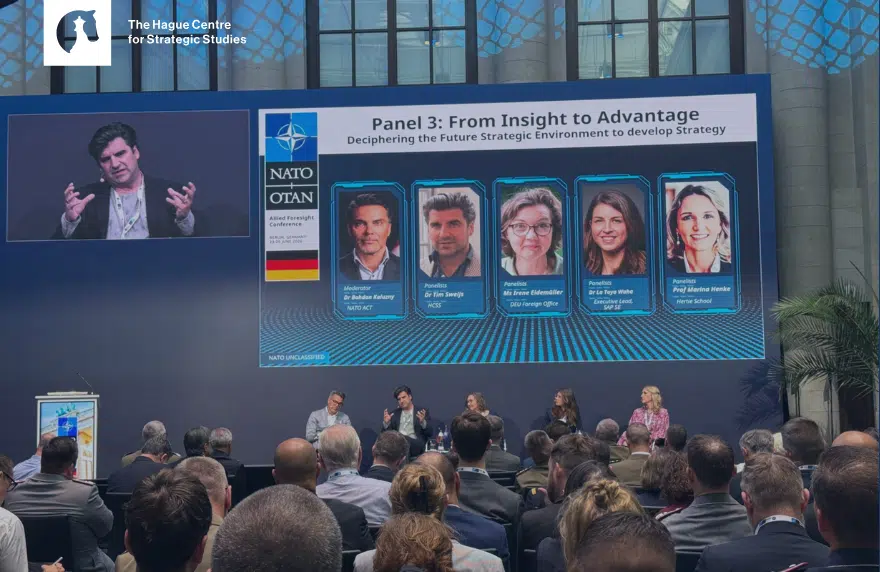
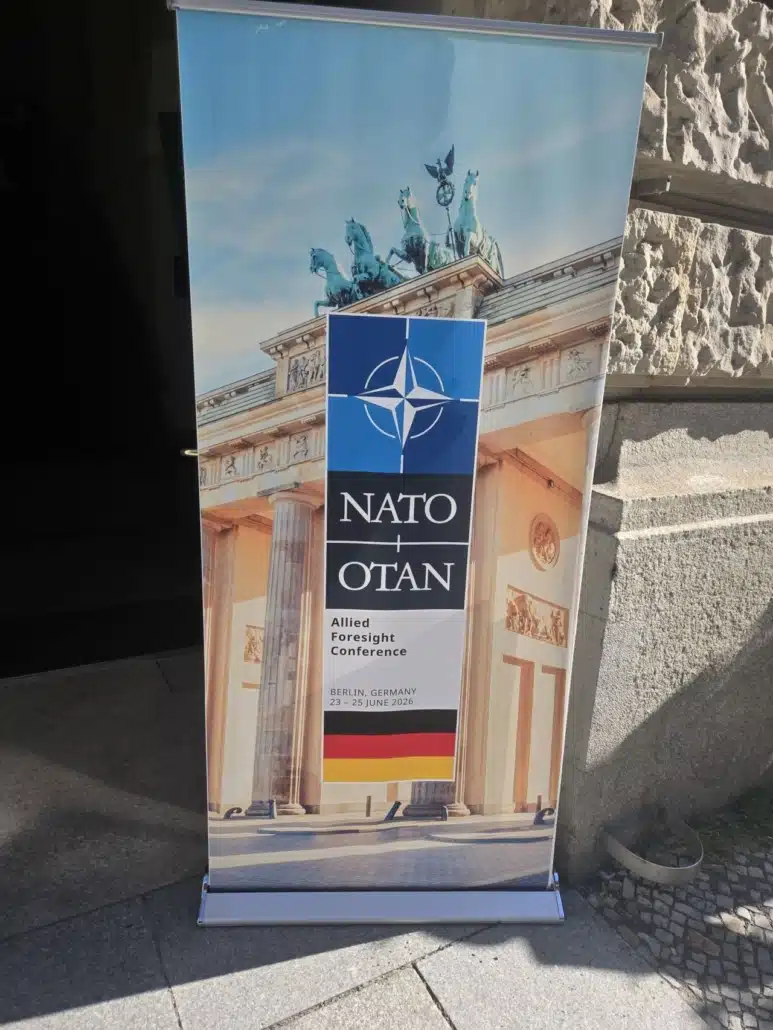
On the 24th of June HCSS Director of Research Tim Sweijs was a panellist at the 3rd NATO Allied Command Transformation (ACT) Foresight Conference 2026 in Berlin. The panel, titled “From Insight to Advantage: Deciphering the Future Strategic Environment to develop Strategy”, explored how emerging technologies and the weak signals that often precede them are reshaping the future security environment. The following experts were on the panel alongisde Dr. Sweijs:
- Ms Irene Eidemüller – DEU Foreign Office
- Dr. La Toya Waha – Executive Lead, SAP SE
- Prof. Marina Henke – Hertie School
- Moderated by Dr. Bohdan Kaluzny – NATO ACT
For two decades Dr. Sweijs has been involved in numerous foresight exercises in the security and defensive realm. Here are his thoughts he shared at the 3rd NATO ACT Foresight Conference:
- The bulk of security and defence foresight is irrelevant.
- Exercises typically involve very high-level scenarios with lots of energy spent on constructing internally coherent futures but with little attention to the pathways that lead there, causal dynamics, critical transition points, and potential levers that policymakers can use to understand and shape the environment.
- Moreover, there is often no clear anchoring of the foresight to a specific purpose and set of objectives necessary to create a direct link with the development of policies that it should help inform.
- Yet, also high quality work – which is definitely out there – tends to be ignored:
- ‘Preposterous futures’ (Joseph Voros) and ‘fringe futures’ (Florence Gaub) that go against the grain tend to be discarded immediately.
- Possible futures that are not in sync with prevailing conceptions tend to be dismissed swiftly for a variety of well documented biases (availability bias, cognitive dissonance, group think, poliheuristic bias etc.).
- Foresight units moreover tend to be safely tucked away in positions in the organogram where (senior) leadership can easily ignore their products.
There is clearly no single silver bullet here but there is enough low hanging fruit to be reaped to help improve the current situation:
- Improve the Quality of the Product. I may write up a list of Dos and Don’ts another time, but for now I suggest to address the flaws identified above, consult a foresight handbook 1.01, and confer with a foresight method and – process specialist.
- Redesign the Process. Reposition foresight units in the organogram, and tie them closer to strategy formulation and execution, ensuring that their deliberations not only occupy the working level but also feed into executive decision making. (See our manual on how to design this in relation to early warning: Practices, Principles and Promises of Conflict Early Warning Systems – HCSS).
- Train yourself and your people, increase their strategic literacy, and cultivate – with apologies for the cliche, a flexible mindset.

Experts
Related Content