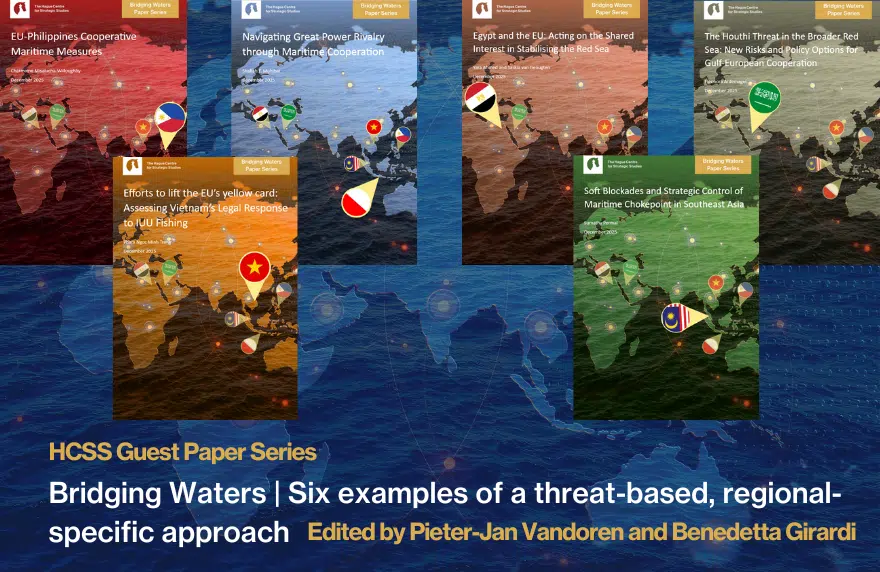
Bridging Waters Paper Series | Six examples of a threat-based, regional-specific approach
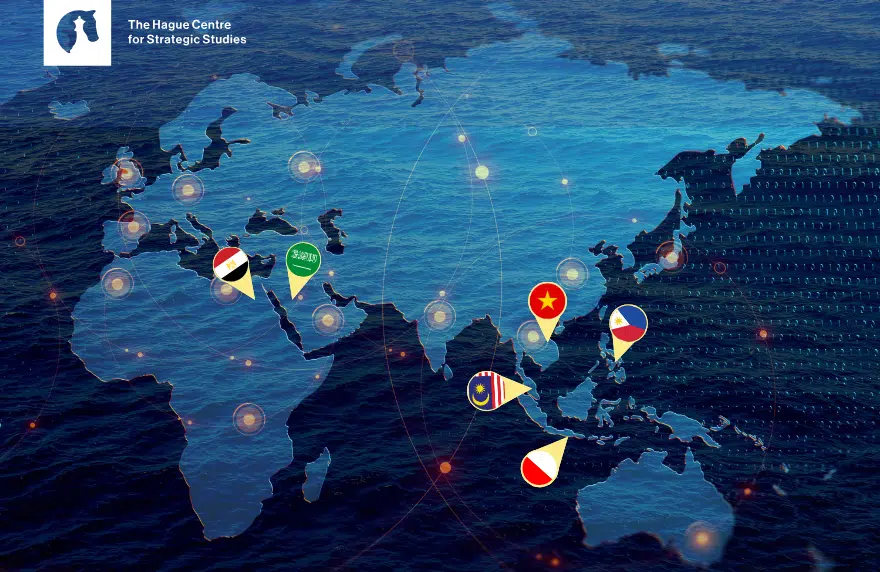
For a new paper series, six guest authors explore key aspects of maritime security cooperation between Europe and rising middle powers. Each author presents the perspective of a different littoral state, specifically Egypt and Saudi Arabia in the Red Sea region, and Indonesia, Malaysia, the Philippines and Vietnam in the South China Sea. The series builds on insights from the report 'Bridging Waters: Strengthening Europe’s Maritime Security Engagement Through Partnerships with Rising Middle Powers' and the webinar Bridging Waters: Middle Powers’ Cooperation on Maritime Security, held on 18 November.
Bridging Waters: Strengthening Europe’s Maritime Security Engagement Through Partnerships with Rising Middle Powers
In a new report ‘Bridging Waters: Strengthening Europe’s Maritime Security Engagement Through Partnerships with Rising Middle Powers,’ Benedetta Girardi and Pieter-Jan Vandoren explore how Europe can strengthen maritime security in the South China Sea and Red Sea through cooperation with rising middle powers. The study outlines urgent threats, identifies high-value preventive and responsive measures, and presents an actionable agenda for European policymakers.
Bridging Waters Guest Paper Series: Soft Blockades and Strategic Control of Maritime Chokepoints in Southeast Asia
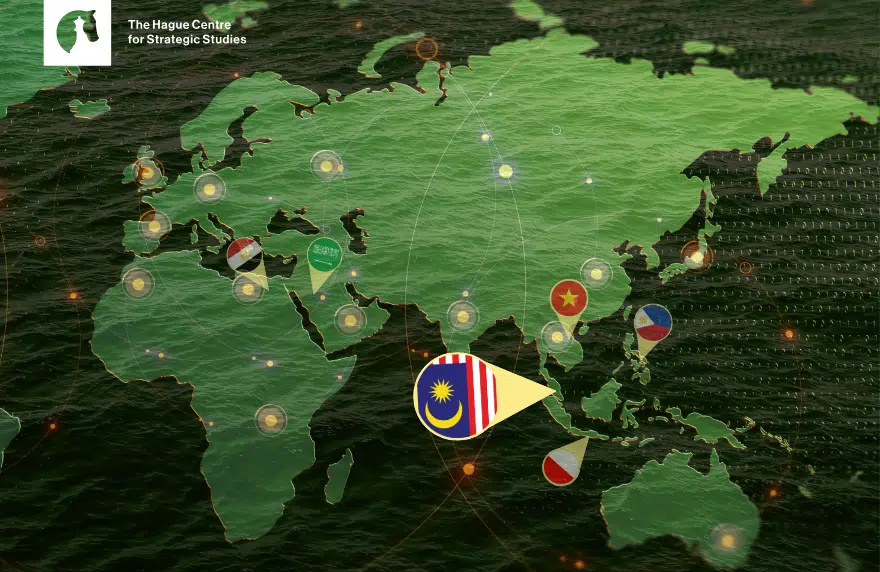
In a new HCSS guest paper, Sumathy Permal examines how strategic competition in Southeast Asia is increasingly playing out through soft blockades and grey-zone tactics in critical maritime chokepoints such as the Straits of Malacca and the South China Sea. As these practices raise risks to freedom of navigation, regional stability, and global trade, the paper outlines how Malaysia’s national responses — alongside targeted EU–Malaysia cooperation in capacity building, maritime domain awareness, and legal support — can strengthen chokepoint resilience while upholding a rules-based maritime order.