
HCSS
  • News
    • BNR | De Strateeg
    • Columns
    • De Tafel van Mars
    • Events
    • HCSS Newsletter
    • Podcasts
  • Publications
    • Publications
      • All Projects
      • All Publications
    • Geopolitics & Governance
      • Transatlantic Relations
      • Russia & Eurasia
      • Europe in the Indo-Pacific
      • GC REAIM
      • PROGRESS / Strategic Monitor
    • Economics & Technology
      • Emerging Technologies
      • Critical Materials
      • Energy Security
    • Defence & Security
      • On Future War
      • Deterrence and Arms Control
      • Hybrid Threats
      • Cyber Security
    • Society & Resilience
      • Nationale Veiligheid en Weerbaarheid
      • Transnational Organised Crime
      • Strategic Monitor Dutch Police
    • Climate, Water & Food
      • Climate Security
      • Water, Peace & Security (WPS)
      • Food Security
  • Dashboards
    • Dashboards
      • All Tools
        • GINA
        • SARA
    • Geopolitics & Governance
      • DFRI
      • GINA | Diplomatic
      • GINA | Information
      • CLARIS
    • Economics & Technology
      • DOMINO
      • GATRI
      • GINA | Economic
      • Cyber Arms Watch
      • Cyber Comparator
      • Cyber Norms Observatory
      • Cyber Transparency
    • Defence & Security
      • GINA | Military
      • Nuclear Timeline
    • Society & Resilience
      • DAMON
    • Climate, Water & Food
      • Agrifood Monitor
      • CARMEN
      • CRM Dashboard
  • Services
    • GC REAIM
      • GC REAIM | Former Members
      • GC REAIM | Publications
      • GC REAIM | Conferences
      • GC REAIM | Partners, Sponsors, Supporters
    • HCSS Boardroom
    • HCSS Datalab
    • Socio-Political Instability Survey
    • Strategic Capability Gaming
    • Strategic Negotiations Course
    • Studio HCSS
    • Southern Africa-Netherlands Cyber Security School 2026
    • Indo-Dutch Cyber Security School 2025
  • About HCSS
    • Contact Us
    • Our People
    • Funding & Transparency
    • Partners & Clients
    • Internship Programme
    • Press & Media Inquiries
    • Working at HCSS
    • Global Futures Foundation
  • Click to open the search input field Click to open the search input field Search
  • Menu Menu

News

New HCSS report: Europe must decide what victory in Ukraine means—and how to achieve it

February 17, 2026
Download PDF

In A European Theory of Victory: Compelling Russia to End the War in Ukraine, HCSS analysts Markus Iven and Tim Sweijs argue that the absence of a coherent European strategy has become a decisive vulnerability four years into the war.

Because the war cannot be decided decisively without risking nuclear escalation, the central question is not how to defeat Russia militarily, but under what conditions the Kremlin would conclude that continuing the war no longer improves its position and that renewed aggression would not pay. From Moscow’s perspective, the war remains rational as long as it expects European support for Ukraine to erode over time.

The report analyses the war as a sequence of failed theories of victory pursued by Russia, Ukraine, and their supporters, resulting in a prolonged stalemate. It shows that Russia’s strategy is embedded in a broader grand strategy aimed at revising the European balance of power and exploiting declining U.S. prioritisation of Europe. Ukraine is decisive in this context: its collapse would remove the principal military constraint preventing Russia from reconstituting forces and expanding westward.

Against this backdrop, the authors develop a European theory of victory – one that European NATO allies and the EU can execute largely independently of the United States. Victory is defined not as Russia’s defeat or regime change, but as a shift in Russia’s cost–benefit calculation.

“Victory is achieved when Russia concludes that continuing the war cannot possibly result in a more favourable position than ending it now,” says Markus Iven. “And victory endures only when renewed aggression is assessed as either failing outright or costing more than it is worth.”

The report identifies five conclusions Russia must be compelled to reach simultaneously:

  • the Ukrainian state will not collapse;
  • major Ukrainian cities cannot be controlled;
  • the war of attrition cannot be won;
  • settling the war offers more than continuing it; and
  • future aggression costs more than it gains.

To make these conclusions unavoidable, Europe must take sequenced and mutually reinforcing actions. Key recommendations include fixing European macro-financial support for Ukraine into the 2030s, preventing Ukraine’s depopulation, denying Russia fossil-fuel revenues, prioritising support to Ukraine over European rearmament, preparing a conditional bargaining package – including sanctions relief and frozen assets – and establishing automatic deterrence mechanisms to prevent renewed aggression.

“Partial implementation preserves Russia’s theory of victory,” warns Tim Sweijs. “If Europe wants this war to end – and to stay ended – it must commit to a strategy that is credible, sequenced, and difficult to reverse.”

The report’s central message is clear: Ukraine is decisive for European security, and Europe is in a stronger strategic position than it often assumes. Turning that position into durable outcomes requires commitments that are credible, sequenced and difficult to reverse.

Download PDF

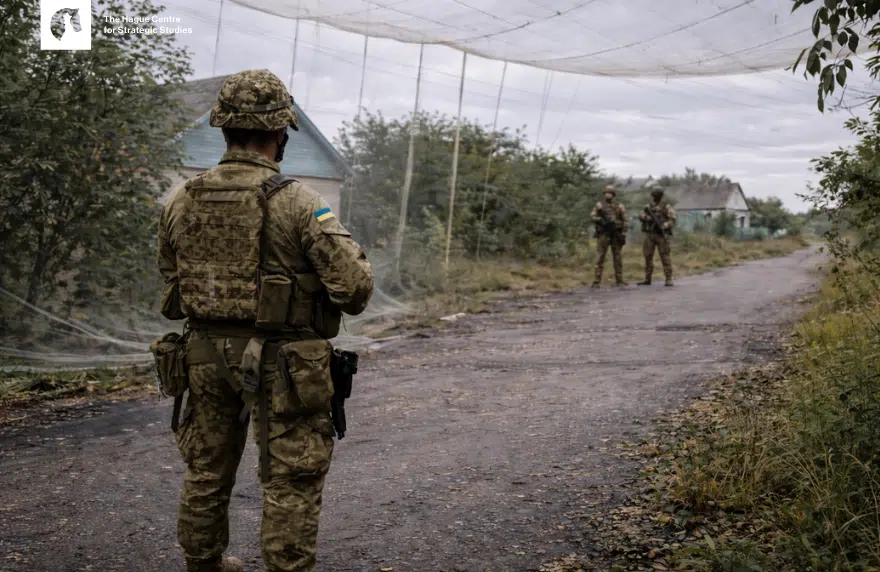
Cover image: UK Prime Minister

Authors: Markus Iven and Tim Sweijs

Contributions by Jan Feldhusen, Pieter-Jan Vandoren, Alexander Krabbendam and Lennart Cramer; Figures made by Nicole Eichstaedt

The research for and production of this report has been conducted within the PROGRESS research framework agreement. Responsibility for the contents and for the opinions expressed, rests solely with the authors and does not constitute, not should be construed as, an endorsement by the Netherlands Ministries of Foreign Affairs and Defe


  • Share on Facebook
  • Share on X
  • Share on WhatsApp
  • Share on LinkedIn
  • Share by Mail

Experts

Markus Iven
Tim Sweijs
Pieter-Jan Vandoren

Related News

Related Content

New report | Shields and Spears: Nuclear-Conventional Force Balancing and the European Deterrence Architecture
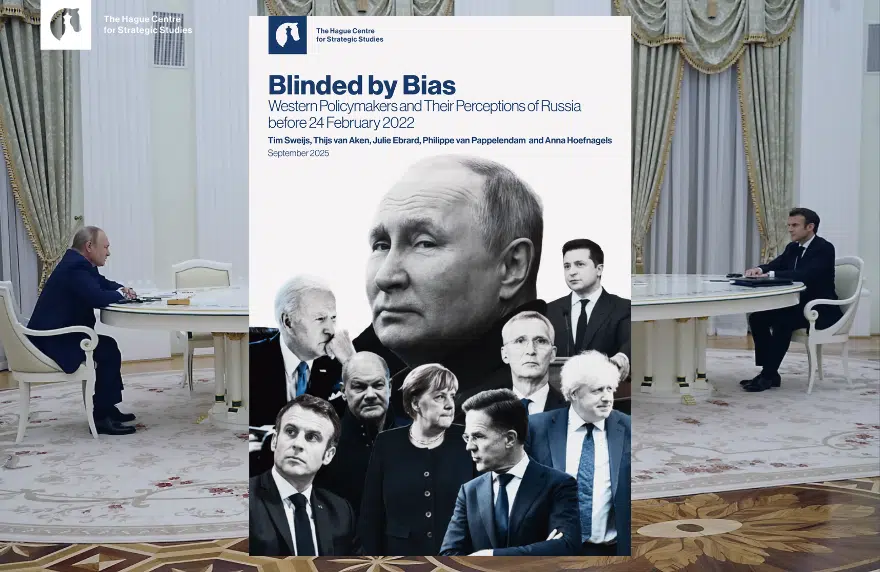
Western Blind Spot: New HCSS Report explores why the West failed to anticipate Russia’s Invasion of Ukraine
New HCSS report stresses: Supporting Ukraine is supporting Europe

Office Address

  • The Hague Centre for Strategic Studies
  • Lange Voorhout 1
  • 2514 EA The Hague
  • The Netherlands

Contact Us

  • Telephone: +31(70) 318 48 40
  • E-mail: info@hcss.nl
  • IBAN NL10INGB0666328730
  • BIC INGBNL2A
  • VAT NL.8101.32.436.B01
  • Contact

Legal & Privacy

  • Disclaimer & Privacy
  • Algemene Voorwaarden 2024 (NL) 
  • Terms & Conditions 2024 (ENG) 
  • Algemene Voorwaarden 2026 (NL) 
  • Terns & Conditions 2026 (EN) 
  • Coordinated Vulnerability Disclosure
  • Ethical Standards
  • Manual for Responsible Use of AI

Follow us

© The Hague Centre for Strategic Studies
    Link to: Strategische Vragen | De Strateeg: Moet je militaire ervaring hebben op het ministerie van Defensie?   Link to: Strategische Vragen | De Strateeg: Moet je militaire ervaring hebben op het ministerie van Defensie?   Strategische Vragen | De Strateeg: Moet je militaire ervaring hebben op het... Link to: GC REAIM at the REAIM 2026 Summit Link to: GC REAIM at the REAIM 2026 Summit GC REAIM at the REAIM 2026 Summit
    Scroll to top Scroll to top Scroll to top

    GDPR Consent

    Your privacy is important to us. Here you can set which consent you are allowing us with regards to the collection of general information, the placing of cookies of the collection of personal information. You can click 'Forget my settings' at the bottom of this form to revoke all given consents.

    Privacy policy | Close
    Settings

    GDPR Consent Settings

    Your privacy is important to us. Here you can set which consent you are allowing us with regards to the collection of general information, the placing of cookies of the collection of personal information. You can click 'Forget my settings' at the bottom of this form to revoke all given consents.

    Website statistics collect anonymized information about how the site is used. This information is used to optimize the website and to ensure an optimal user experience.

    View details

    Functional cookies are used to ensure the website works properly and are neccessary to make the site function. These cookies do not collect any personal data.  

    View details
    Forget my settings Deleted!