Generative AI is rapidly transforming the way knowledge is created, analysed and shared. At HCSS, we see enormous potential in these technologies to strengthen research and innovation. At the same time, their responsible use requires more than technical proficiency. It demands critical thinking, sound judgement and a commitment to research integrity.
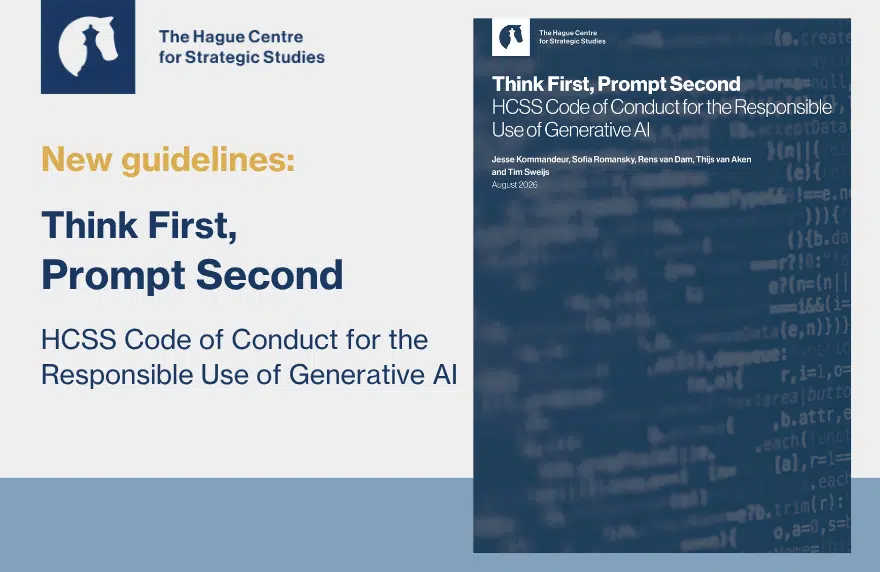
With this in mind, HCSS has published its new Code of Conduct for the Responsible Use of Generative AI, built around a simple but powerful principle: “Think First, Prompt Second”.
The Code of Conduct provides practical guidance for integrating generative AI into research workflows without compromising the standards that underpin high-quality knowledge production. Rather than viewing AI as either a threat or a solution in itself, the document advocates a balanced approach: embracing AI’s capabilities while recognising its limitations, including bias, hallucinations, lack of explainability and data security risks.
The Code is structured around eight principles for responsible AI use. Researchers are encouraged to cultivate scepticism, practice active learning, select the right tool for the right task, safeguard research integrity, maintain confidentiality, use deliberate prompting, ensure transparency and continuously experiment with new methods and tools. Together, these principles reinforce the idea that generative AI should augment, not replace, human expertise and critical thinking.
Importantly, the Code recognises that responsible AI use is both an individual and organisational responsibility. It emphasises secure technical environments, transparent documentation of AI use, ongoing experimentation and continuous learning as essential conditions for making the most of these rapidly developing technologies. As AI capabilities continue to evolve, HCSS will review and update the Code annually to reflect new developments and emerging best practices.
With this Code of Conduct, HCSS aims to foster a research culture in which AI enhances creativity, efficiency and analytical capability, while preserving the rigorous standards, independent judgement and intellectual curiosity that remain at the heart of excellent research. After all, responsible AI starts long before the first prompt is written. It starts with thinking first.*
*This content is AI-driven. It was drafted by AI and reviewed, edited, and verified by a human editor. The authors take full responsibility for the integrity of the work.





Related Content