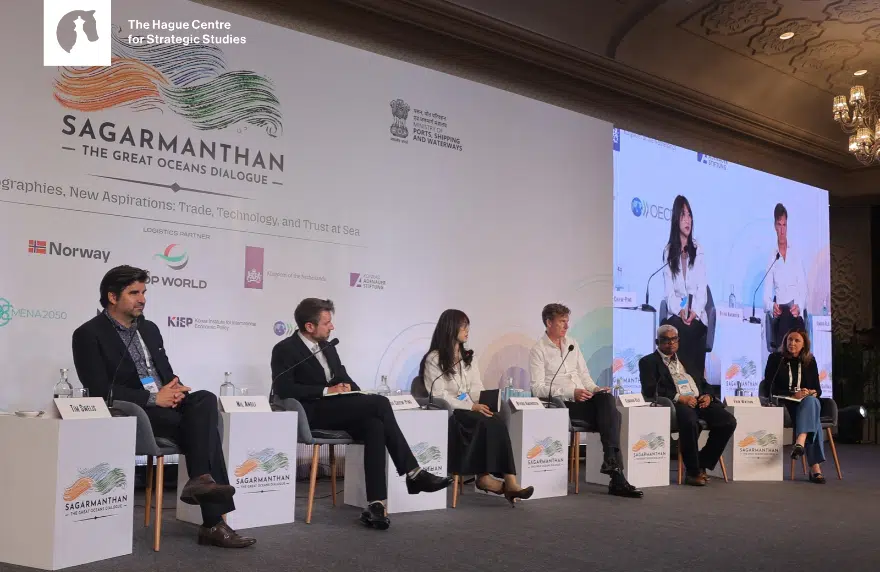
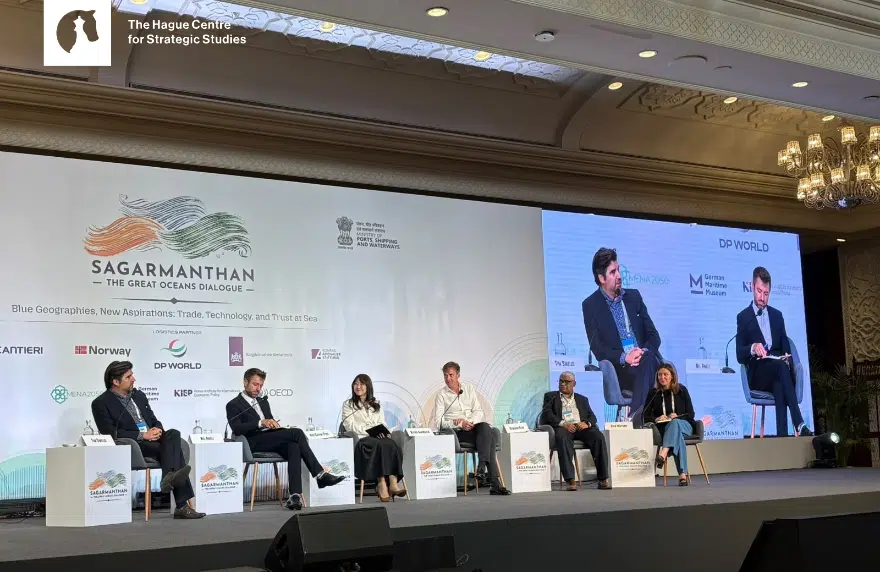
From 7–9 October 2026, HCSS Research Director Dr. Tim Sweijs participated in the third edition of Sagarmanthan: The Great Oceans Dialogue in New Delhi. Co-hosted by ORF and India’s Ministry of Ports, Shipping and Waterways, the event gathered over 2,000 participants from more than 76 countries. Sweijs contributed to a panel on “AI and the Maritime Horizon: Navigating the Intelligent Ocean”, exploring how artificial intelligence and automation are reshaping maritime operations, business models, security, and the wider ocean economy, alongside emerging technological challenges.
From 7-9 October 2026, the third edition of Sagarmanthan: The Great Oceans Dialogue was held in New Delhi. Co-hosted by the Observer Research Foundation (ORF) and India’s Ministry of Ports, Shipping and Waterways, the conference brought together over 2,000 participants from more than 76 countries to exchange perspectives on ports, maritime connectivity, shipping and shipbuilding, ocean governance, sustainability and an inclusive ocean economy.
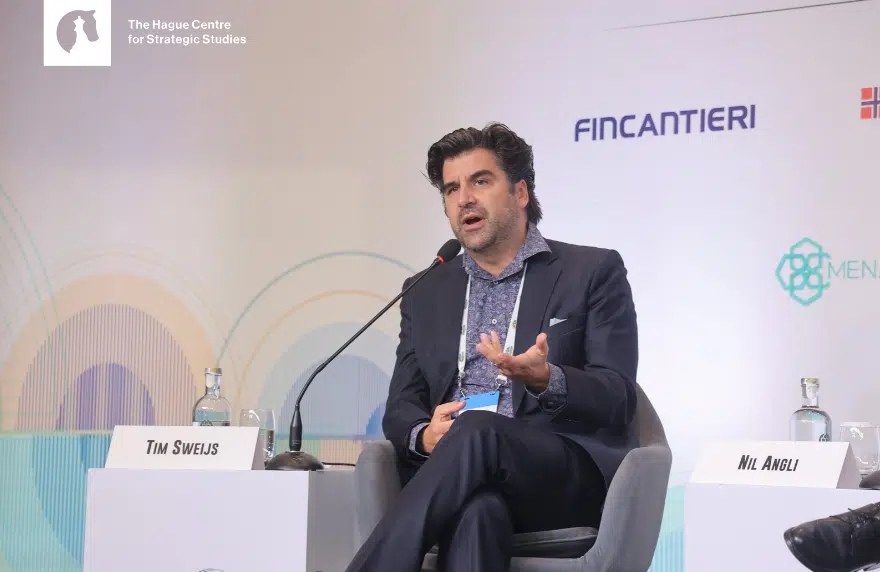
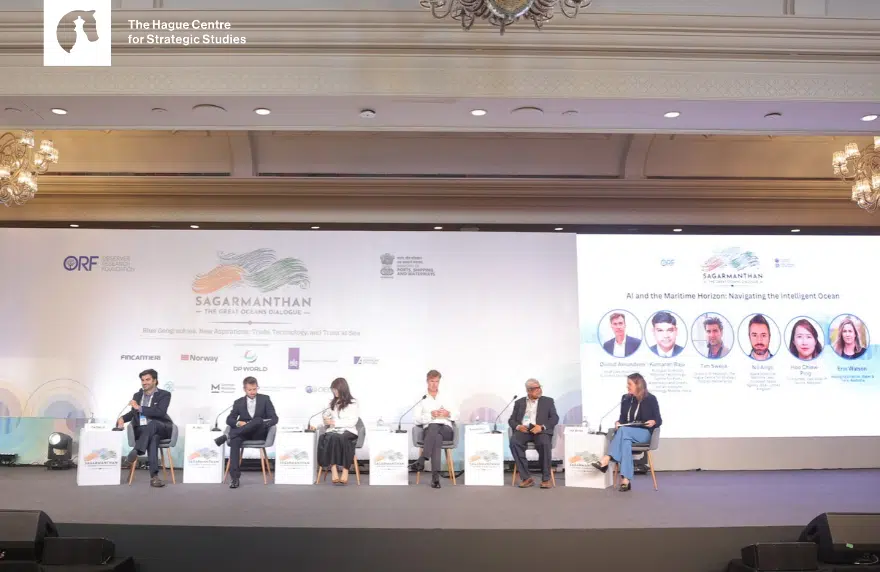
HCSS Research Director Dr. Tim Sweijs participated in the Dialogue and contributed to a session on “AI and the Maritime Horizon: Navigating the Intelligent Ocean”. Held at the Yamuna Hall of the Taj Palace Hotel, the discussion unpacked how AI and space tech are redefining maritime efficiency, security, and capital markets. Sweijs emphasized how artificial intelligence and automation will transform maritime operations, business models, and the wider ocean economy.
Artificial intelligence is moving beyond pilot algorithms into the core operational fabric of global shipping, container terminals, and oceanic supply chains. Yet, as ports digitize from quayside cranes to satellite-based routing, the maritime sector faces mounting friction: massive data-center power demands, fragmented port maturity, rogue autonomous agents, and vulnerabilities in satellite time-synchronization (GNSS).
Panel: Navigating the Intelligent Ocean
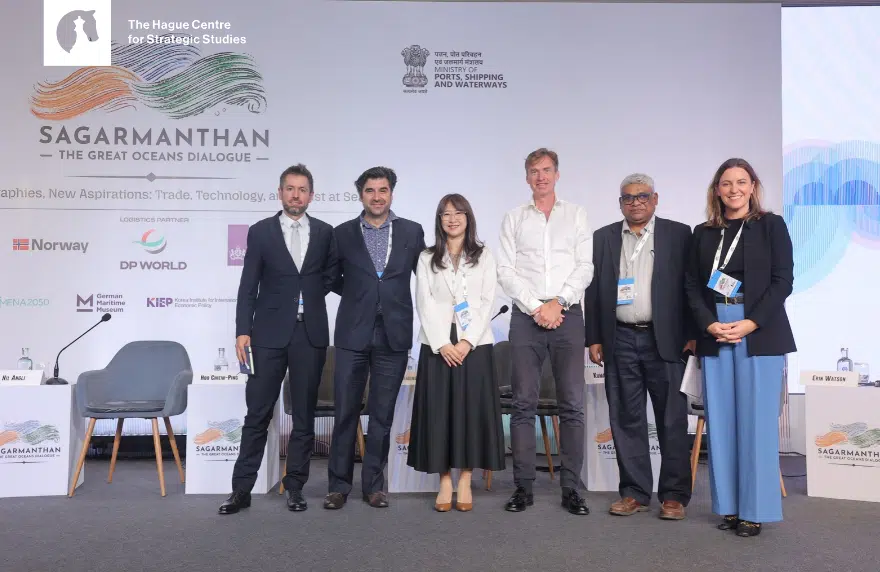
Moderated by Erin Watson (Managing Director, Baker & York, Australia), the international panel included insights on the partnerships and collective action needed to navigate an evolving oceanscape from:
- Øivind Amundsen, Chief Executive Officer, Euronext Oslo Børs, Norway;
- Kumaran Raju, Principal Scientist, National Technology Centre for Ports Waterways and Coasts, Indian Institute Technology, Madras, India;
- Tim Sweijs, Director of Research, The Hague Centre for Strategic Studies, Netherlands;
- Nil Angli, Space Solutions Maritime Lead, European Space Agency (ESA), United Kingdom;
- Hoo Chiew-Ping, Co-Founder, East Asian IR Caucus, Malaysia.
Rewatch the panel discussion here:
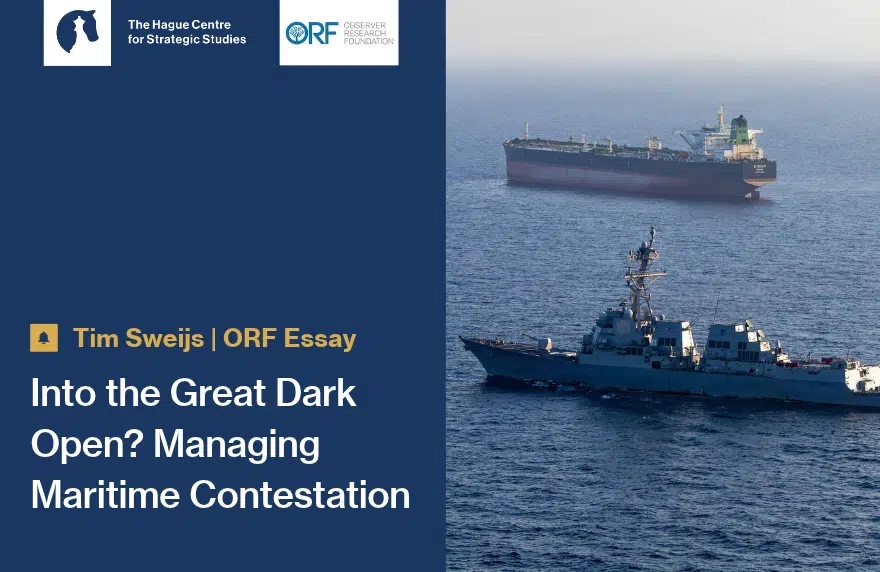
Tim Sweijs | ORF Essay: “Into the Great Dark Open? Managing Maritime Contestation”
The world’s oceans are increasingly arenas of geopolitical competition. In an essay, originally published on September 28 as part of the Sagarmanthan Edit 2026 essay series by the Observer Research Foundation (ORF), HCSS Research Director Dr. Tim Sweijs explores how countries can manage these tensions and safeguard freedom of the seas.
As states seek to control vital shipping routes, expand their naval fleets, and deploy new maritime technologies, the risk of escalation is growing. The essay examines how contestation over Sea Lines of Communication is reshaping global security, from the Strait of Hormuz to the Taiwan Strait.
Sweijs argues that this trajectory is not inevitable: political leadership, military dialogue, and mechanisms for restraint are urgently needed to preserve freedom of the seas, safeguard global prosperity and prevent wider conflict.
About the Sagarmanthan: The Great Oceans Dialogue:
As a country partner at Sagarmanthan, The Great Oceans Dialogue organized by ORF India, the Netherlands Embassy in India underlined how central the maritime field is for both countries in terms of trade, energy security, supply chains and economic resilience.
Ambassador Marisa Gerards highlighted the emerging Green & Digital Sea Corridor between Indian ports and Rotterdam, linked to green hydrogen, as a living laboratory for the maritime economy of the future where the green transition and competitiveness can reinforce each other.
Mr Richard van Liere, Special Advisor at the Ministry of Infrastructure and Water Management participated in a panel session titled “Next Blue Capitals: Port Cities at the Heart of Sustainable Ocean Economies”, where he spoke about making coastal and port cities resilient, inclusive and sustainable hubs.
Over the past years, India and the Netherlands have built a strong basis for collaboration in maritime development. The Netherlands now aim to deepen and broaden trade and investment in the sector, developing smart and sustainable ports and energy hubs, decarbonising shipping, and building diversified, resilient supply chains between our two countries.
Photo Gallery / Video Playlist
Experts
Related Content