New HCSS Report warns: Europe must break Russia’s strategic trap
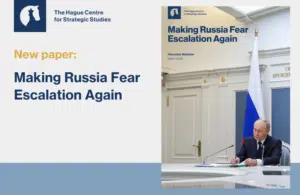
Russia's sabotage operations, drone incursions and other sub-threshold attacks across Europe are often treated as isolated incidents. A new HCSS report argues they are a deliberate coercive strategy, designed to reduce European support for Ukraine. Drawing on case studies from Belgium and Poland, the report shows how Russia targets vulnerabilities in European decision-making while exploiting the difficulties of responding below the threshold of major war. To counter this challenge, the authors propose a 4D strategy of Deny, Disrupt, Degrade and Deter. Their central argument: every Russian sub-threshold attack should result in more support for Ukraine and greater costs for Russia.

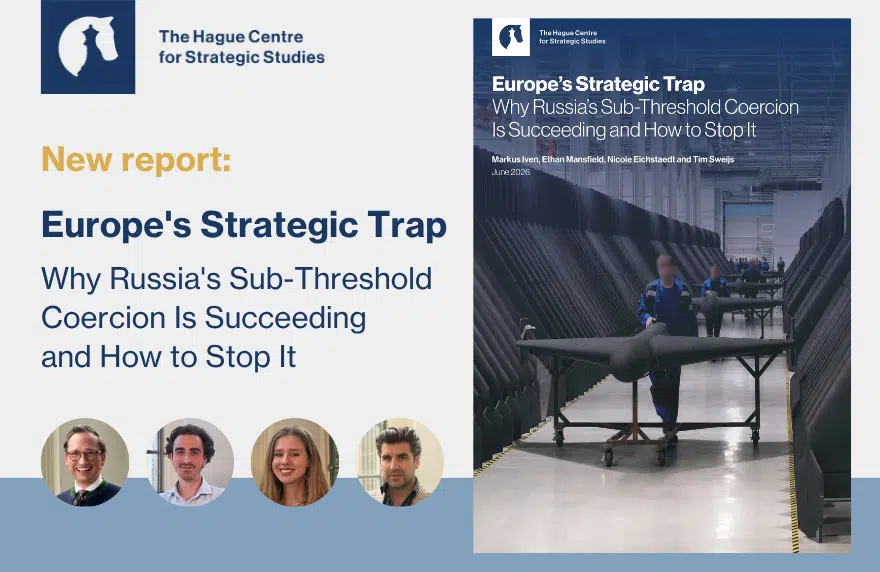
Europe’s Strategic Trap: Why Russia’s Sub-Threshold Coercion Is Succeeding and How to Stop It
Russia’s sub-threshold attacks on Europe are not isolated incidents, but part of a deliberate strategy to weaken support for Ukraine. In a new HCSS report, Markus Iven, Ethan Mansfield, Nicole Eichstaedt and Tim Sweijs argue that Europe’s current response is failing and outline a new “4D Strategy” to Deny, Disrupt, Degrade and Deter Russian coercion: “Every Russian sub-threshold attack should trigger more support for Ukraine and impose greater costs on Russia’s war effort.”

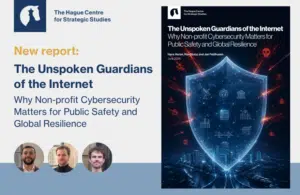
Nieuw HCSS-rapport: non-profitorganisaties onmisbaar voor wereldwijde cyberveiligheid
Non-profit cybersecurityorganisaties zijn essentieel voor de wereldwijde cyberweerbaarheid, de openbare veiligheid en de continuïteit van de digitale economie, zo blijkt uit dit nieuwe HCSS-rapport van Hans Horan, Ron Stoop en Jan Feldhusen. Ondanks dat ze kritieke infrastructuur beschermen, het mkb ondersteunen en miljarden aan potentiële verliezen voorkomen, blijven deze organisaties structureel ondergefinancierd en ondergewaardeerd. Het rapport roept overheden en het bedrijfsleven op om de sector op de lange termijn te ondersteunen.