

Eindelijk. Dat dacht ik toen ik de berichten las over het werkbezoek van Eurocommissaris Christophe Hansen van Landbouw aan Nederland. Hansen wil het debat over landbouw ombuigen naar productieve landbouw.
Boeren zijn in de afgelopen jaren, zeker in ons land, voortdurend de maat genomen over de schade die zij zouden aanrichten aan het milieu. Maar nu heeft Brussel de conclusie getrokken dat ook kwantiteit belangrijk is. Zo niet, dan worden we te afhankelijk van de grillen van ontspoorde leiders.
Het werd tijd. De ene na de andere wake-up call is genegeerd; zelfs Vladimir Poetins oorlog tegen Oekraïne heeft mensen niet wakker geschud. In 2022 werd duidelijk dat Poetin er niet voor terugdeinst om voedsel als wapen te gebruiken. Zo strafte hij landen die de kant van Oekraïne kozen. Poetin verstoorde bewust de Oekraïense agrarische exporten, waardoor de prijzen opliepen en landen in Afrika in de knel kwamen.
Inmiddels is de wereld gezegend met de Amerikaanse president Donald Trump, die net als Poetin in de eerste plaats geïnteresseerd is in zichzelf en in de tweede plaats in zijn land. We zien nu al dat zijn handelsoorlog effecten heeft. China treft met 15 procent de importen van onder meer kip, mais, en tarwe en een extra 10 procent op sojabonen, fruit en varkensvlees.
Bovendien worden Amerikaanse importen steeds meer vervangen door Braziliaanse, met grote gevolgen voor de mondiale handelsstromen. In Europa zijn de Franse wijn- en champagneproducenten mogelijk de eerste slachtoffers.
Juist door Trump heeft Brussel nu de mond vol over strategische autonomie. Maar er is meer. Door klimaatverandering zien we het landbouwareaal in grote delen van de wereld kleiner wordt. De verwoestijning begint in Spanje en de verwachtingen voor Afrika zijn somber.
Wie naar de toekomstverwachtingen kijkt, ziet dat landbouwgronden zich steeds meer concentreren in het noorden van Amerika, het noorden van Europa en het noorden van Rusland. Daarmee wordt landbouw steeds meer een geopolitiek vraagstuk. Drie concurrerende blokken verbouwen dan het meeste voedsel.
Tegelijkertijd zien we dat door biodiversiteits- en milieueisen de Europese landbouwopbrengsten mogelijk met 20 procent verminderen. Voor de pluimveesector kan het zelfs een halvering betekenen. Dit ondermijnt het streven naar strategische autonomie. Willen we echt autonoom worden, dan moeten we alle ruimte geven aan technologie. Maar voorlopig moet ik constateren dat wat Hansen zegt goed voor de hele sector is. Nu maar wachten wat ervan terechtkomt.
HCSS is pleased to announce that Hans Horan has joined our team as a Strategic Analyst!
An expert on the Indo-Pacific, cyber threat intelligence, and security and defence affairs, prior to joining HCSS, Hans worked for over seven years in the intelligence and security industry for both private and public sector organisations across the globe, where he served as their lead cyber intelligence and principal Asia-Pacific analyst. Hans advised a number of both private and public sector clients during this time on how to navigate growing geopolitical tensions and minimise the impact on their business operations.
Hans regularly publishes with renowned international current affairs magazines and news outlets, such as The Diplomat and NK News, on defence and security trends. Hans received his master’s degree in Asian studies from Leiden University, where he specialised in the political economies of the East Asian region (Japan, the Korean Peninsula, Taiwan, and China). He earned his bachelor’s degree in International Studies at Leiden University, where he also studied politics, economics and sociology at Nagasaki University.
On joining HCSS, he stated:
“I look forward to bringing my expertise and knowledge to HCSS, a leading institution that brings fact-based knowledge to policymakers and businesses across the globe, and learning from its highly talented team. I’m particularly looking forward to helping HCSS explore security trends in the Indo-Pacific and bridge the cyber-geopolitics gaps, especially given that our society’s growing digitalisation has left us more exposed to malicious threat actors, both state-sponsored and otherwise.”
Dit evenement wordt in het Nederlands gehouden.
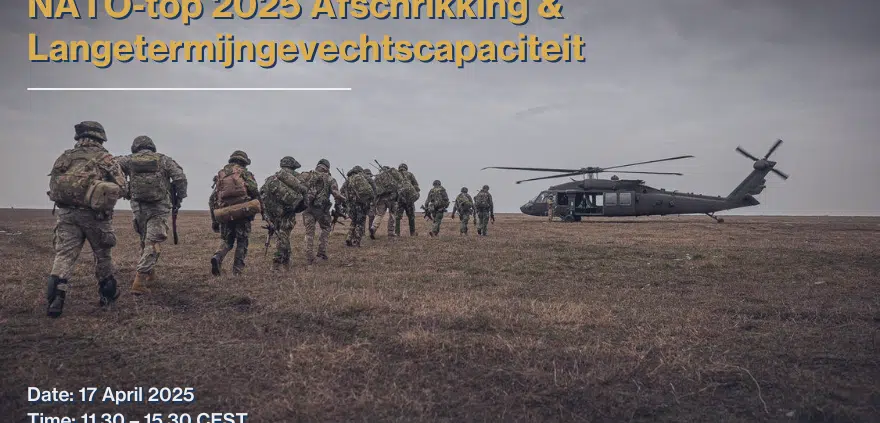
De Russische oorlogshandelingen in Oekraïne en de potentiële dreiging richting de Europese lidstaten kan niet worden onderschat. Hoe snel zou Rusland na een staakt-het-vuren en vredesverdrag weer op militair avontuur kunnen gaan? Wat is hun regeneratievermogen? Wat is het voortzettingsvermogen van de Nederlandse landmacht? En hoelang zal het duren voordat de landmacht haar gevechtskracht op orde heeft en dat langdurig kan volhouden?
Agenda
11.30 Aankomst Gasten
12.00 Welkom door HCSS, Michel Rademaker, Plaatsvervangend Directeur
Dagvoorzitter Ministerie van Defensie, Lkol Elisabeth van der Steenhoven, Stafofficier
12.05 Keynote, C-CLAS, Ltgen Jan Swillens
12.20 Panel: Russisch Regeneratievermogen
Zijn we ons voldoende bewust en hebben we inzicht in de Russische capaciteit om haar militaire capaciteit in stand te houden en wanneer ze opnieuw een militair avontuur zou kunnen opstarten?
Korte demonstratie Rubase: HCSS, Jesse Kommandeur, Strategische Analist
13.20 Fingerfood Lunch & Koffie pauze
13.55 Panel: Het voortzettingsvermogen van de Nederlands Landmacht
Wat is er nodig om het voortzettingsvermogen van de Nederlandse landmacht te vergroten en het gevecht langdurig vol te kunnen houden?
14.55 Take-aways: HCSS, Prof Rob de Wijk, Oprichter & Hoogleraar
15.05 Koffie, Thee en Netwerken
15.30 Wrap up
🔗 Registreer nu en verzeker je plek!
Dit evenement wordt in het Nederlands gehouden.
De Russische oorlogshandelingen in Oekraïne en de potentiële dreiging richting de Europese lidstaten kan niet worden onderschat. Hoe snel zou Rusland na een staakt-het-vuren en vredesverdrag weer op militair avontuur kunnen gaan? Wat is hun regeneratievermogen? Wat is het voortzettingsvermogen van de Nederlandse landmacht? En hoelang zal het duren voordat de landmacht haar gevechtskracht op orde heeft en dat langdurig kan volhouden?
Agenda
11.30 Aankomst Gasten
12.00 Welkom door HCSS, Michel Rademaker, Plaatsvervangend Directeur
Dagvoorzitter Ministerie van Defensie, Lkol Elisabeth van der Steenhoven, Stafofficier
12.05 Keynote, C-CLAS, Ltgen Jan Swillens
12.20 Panel: Russisch Regeneratievermogen
Zijn we ons voldoende bewust en hebben we inzicht in de Russische capaciteit om haar militaire capaciteit in stand te houden en wanneer ze opnieuw een militair avontuur zou kunnen opstarten?
Korte demonstratie Rubase: HCSS, Jesse Kommandeur, Strategische Analist
13.20 Fingerfood Lunch & Koffie pauze
13.55 Panel: Het voortzettingsvermogen van de Nederlands Landmacht
Wat is er nodig om het voortzettingsvermogen van de Nederlandse landmacht te vergroten en het gevecht langdurig vol te kunnen houden?
14.55 Take-aways: HCSS, Prof Rob de Wijk, Oprichter & Hoogleraar
15.05 Koffie, Thee en Netwerken
15.30 Wrap up
🔗 Registreer nu en verzeker je plek!
We geven meer geld uit aan defensie. Niet alleen omdat Amerika dat van ons eist, maar ook omdat we minder afhankelijk willen worden van diezelfde Amerikanen. Maar om dat te bereiken is nog heel veel nodig. Zo is de defensie-industrie in Europa nog ontzettend versnipperd. En op sommige domeinen staan de ontwikkelingen in Europa nog in de kinderschoenen.
Hoe kunnen we onze slagkracht op het vlak van defensie vergroten en ook echt onafhankelijker van Amerika worden?
Deze aflevering spreekt Paul van Liempt met:
In aanloop naar de NAVO-top in juni is De Strateeg er elke week met een nieuwe aflevering!
Bron: BNR Nieuwsradio, De Strateeg, 13 april 2025
Over deze podcast
De Strateeg is een podcast van BNR in samenwerking met het Den Haag Centrum voor Strategische Studies (HCSS). Abonneer je via bnr.nl/destrateeg om geen enkele aflevering te missen.
Host: Paul van Liempt
Redactie: Michaël Roele
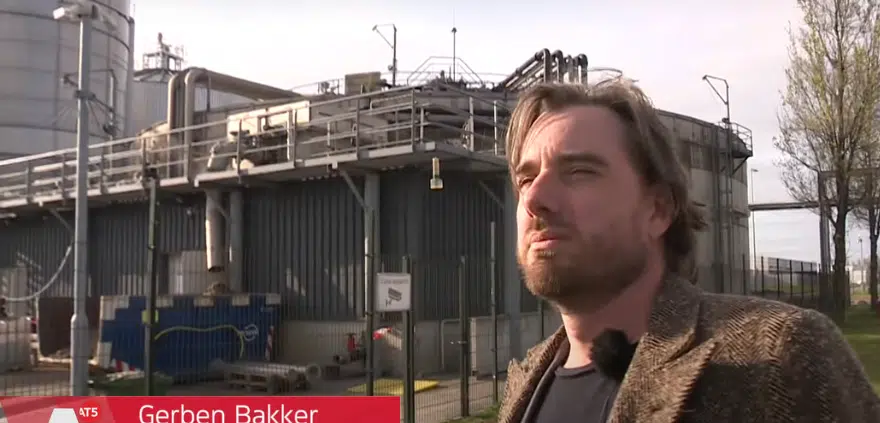
“Als je een havengebied met ingewikkelde chemische industrie weet plat te leggen, kan dat een groot ongeval veroorzaken”, zegt analist hybride dreiging Gerben Bakker, terwijl hij door het Westelijk Havengebied loopt. Samen met andere experts informeerde hij gisteravond de gemeenteraad over de risico’s van hybride dreigingen voor de stad. Volgens hem is het aannemelijk dat Rusland zijn pijlen op Amsterdam richt: “Amsterdam is een mix van woon, werk en industrie en heeft een aantal kritieke kwetsbaarheden die door de Russen kunnen worden uitgebuit.”
Bij een hybride dreiging voeren statelijke actoren acties uit, terwijl ze proberen te voorkomen dat deze acties als oorlogsdaad worden gezien. “Je moet denken aan cyberaanvallen, sabotages en liquidaties”, zegt Bakker. Volgens hem nemen sinds de oorlog in Oekraïne vooral acties vanuit Rusland toe.
Ondanks de dreiging, benadrukt Bakker tijdens de expertmeeting dat we niet terecht moeten komen in een angstcultuur. Wel hamert hij op meer bewustwording. “De dreiging en de kwetsbaarheden zijn groter dan mensen doorhebben. Het is belangrijk om te beseffen dat we in een dichtbevolkt landje wonen onder zeeniveau, met een hoogwaardige technologische industrie waardoor er veel mogelijkheden zijn om ons land te verstoren.”
Het Westelijk Havengebied is een van de plekken waar hoogwaardige industrie gevestigd is. “Er zijn in het verleden best wel wat acties uitgevoerd op havengebieden in Nederland.” Dat zoiets ook in Amsterdam zal gebeuren is daarom denkbaar, zegt Bakker. “Een uiterst scenario is dat er een ramp ontstaat, doordat kwaadaardige software wordt geïnstalleerd op beveiligingscomputers van de haven, wat uiteindelijk tot een explosie leidt.” Dat de haven vlak bij woongebieden in West ligt, maakt de situatie nog gevaarlijker.
Naast fysieke plekken die risico lopen op een hybride aanval in de stad, spreekt Bakker ook over de symbolische waarde die Amsterdam kwetsbaar maakt. “Amsterdam is natuurlijk de hoofdstad en het hart van Nederland. Het is logisch dat de Russen daarop focussen.”
Bovendien huisvest Amsterdam mensen die zich uitspreken tegen het Russische regime, vertelt Bakker. “We huisvesten bijvoorbeeld de Moscow Times. Dat zijn allemaal journalisten die naar Nederland zijn gevlucht. Je kan je voorstellen dat dat partijen zijn waar Rusland zich op richt.”
Bron: AT5, 10 april 2025
De gemeenteraad werd woensdagavond door experts bijgepraat over de risico’s van hybride dreigingen voor stad. Het beeld was somber: vooral acties vanuit Rusland nemen toe. Volgens de experts is het niet ondenkbaar dat de stad een keer dagenlang zonder stroom zit.
“Ik ben bang dat als je dit soort type mensen uitnodigt, het geen lichte avond wordt”, waarschuwde Bart Schuurman, hoogleraar Terrorisme en Politiek Geweld aan de Universiteit Leiden, aan het begin van de bijeenkomst, die door D66 op de agenda was gezet.
En een lichte avond werd het ook niet. In twee uur tijd kwamen er meerdere hybridedreigingen langs: brandstichting, moorden, desinformatie en cyberaanvallen. “Het kan van alles zijn. Acties van een statelijke actor die heel erg zijn best doet om het geen oorlogsdaad te laten zijn”, vatte Gerben Bakker het samen.
Bakker, strategisch analist aan het Den Haag Centrum voor Strategische Studies, vindt dat burgers hun alertheid moeten vergroten. “Maar ik wil aan de andere kant voorkomen dat we in een soort van angstcultuur terechtkomen.”
Toch moet de raad zich bewuster worden van bepaalde veiligheidsrisico’s, vindt hoogleraar Schuurman. “Wie huur je bijvoorbeeld in voor onderhoud aan kabels? Laatst ben ik door iemand gemaild met een voorbeeld uit een van niet nader te noemen gemeente waar de Wit-Russen dat onderhoud deden. Vroeger dacht je: dat is prima, maar nu kan het potentieel een behoorlijk groot veiligheidsrisico zijn.”

Volgens de experts moeten Amsterdammers ook rekening houden met langdurige stroomuitval. Volgens Veiligheidsregio-directeur Tijs van Lieshout moet de stad ervoor zorgen dat inwoners, mocht het nodig zijn, 72 uur zonder stroom kunnen.
Van Lieshout schetst hoe een stad zonder stroom eruit ziet: “Metro’s en treinen vallen uit. Roltrappen doen het niet. Het betalingsverkeer valt uit, internet valt uit en na 2,5 uur valt het communicatieverkeer met mobiele telefoon weg.”
Volgen Van Lieshout is het risico op dagenlange stroomuitval reëel. “Dat kan komen door sabotage of een overbelast netwerk. Langdurige stroomuitval is wel een beetje de moeder aller crises, op een oorlog na.” Er wordt op dit moment al aan een plan gewerkt waarbij brandweerkazernes een noodsteunpunt worden bij zo’n crisis.
De directeur van de Veiligheidsregio gaf in zijn uitgebreide presentatie ook aan dat de Nederlandse havens bij een eventuele grootschalige oorlog, waarbij Artikel 5 van de NAVO (een aanval op één is een aanval op allen) in werking treedt, kwetsbaar zijn. “Rotterdam is de primaire aanvoerroute van oorlogsmateriaal.”
Vanwege de toenemende dreiging uit Rusland moet er in Amsterdam militaire aanwezigheid zijn, vindt Van Lieshout. Hij mengde zich daarmee in al een langer lopende politieke discussie. De afgelopen jaren is er gesproken om van het Marineterrein een woonbuurt te maken. “Ik zou dat raar vinden”, zei Van Lieshout. “Als je geloofwaardige weerbaarheid van Amsterdam wil, dan hoort daar een stukje afschrikking en militaire aanwezigheid bij. Alleen maar huizen daar lijkt mij een slechte raadgever.”
Schuurman: “Er komen ongekende dreigingen onze kant op. We kunnen er nog heel veel aan doen. Spendeer een halve dag met de lijst van het Rode Kruis met wat je nodig hebt.”
Bron: AT5, 9 april 2024
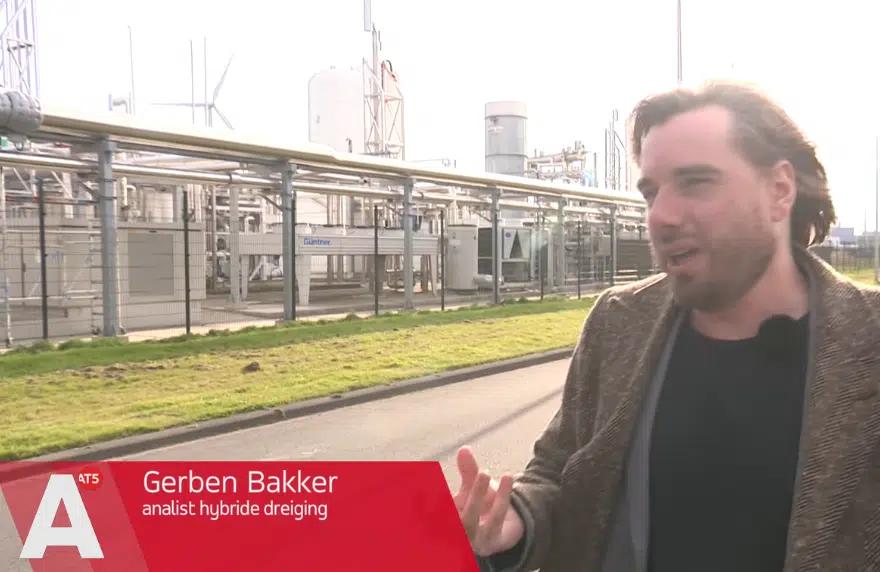
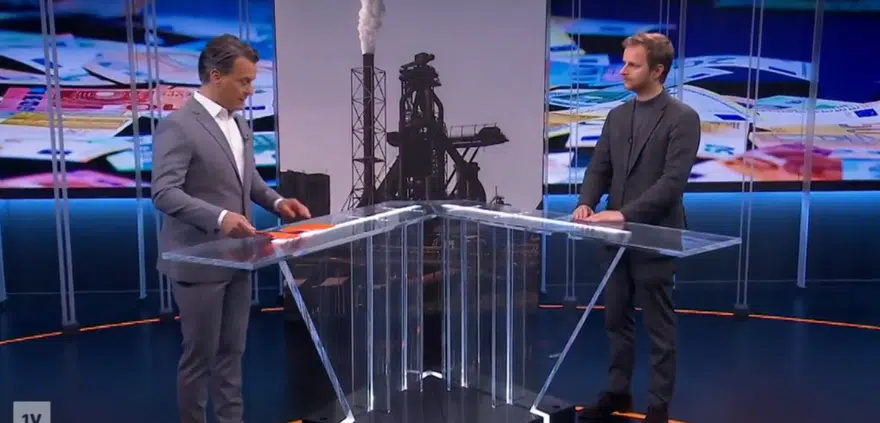
Terwijl China en de Verenigde Staten met importheffingen naar elkaar gooien, is er slecht nieuws uit IJmuiden. Mede dankzij die importheffingen zit Tata Steel in zwaar weer. 1 op de 5 medewerkers gaat zijn baan verliezen. “Speelt al heel lang bij Tata.”
Tata Steel heeft het, net als andere Europese staalbedrijven, al jarenlang moeilijk. De recente importheffingen van Amerikaanse president Donald Trump van 25 procent op Europees staal zijn maar een van de vele uitdagingen, ziet ook Ron Stoop, strategisch analist geo-economie aan het Haags Centrum voor Strategische Studies. Hij sprak erover bij EenVandaag.
Bekijk het hele fragment hieronder:
“Allereerst is er hele hoge concurrentie vanuit China op dit moment”, legt hij uit. Dat komt volgens Stoop door het industriebeleid van China, daar wordt erg ingezet op de zogenaamde maakindustrie maar neemt de consumptie minder toe. Dus er wordt heel veel gemaakt in China terwijl de vraag niet enorm hoog is.
“Daardoor wordt er vanuit China heel veel staal geëxporteerd. Dat staal komt dus op andere markten terecht, waaronder de Europese.” Dat goedkope Chinese staal drukt op de markt, legt Stoop uit, waardoor Europese staalbedrijven minder aantrekkelijk worden. “Er zijn toch veel bedrijven die gewoon staal kopen waar het het goedkoopst is.”
Maar ook binnen Europa zijn er grote ontwikkelingen, ziet de analist. “Ten eerste de hogere energieprijzen, als gevolg van onder andere de energiecrisis.” Daardoor zijn Europese bedrijven die veel energie gebruiken, zoals de staalindustrie, veel duurder uit. “Die worden gewoon minder concurrerend.”
De tweede ontwikkeling is volgens Stoop de energietransitie, staal moet op een groenere manier gemaakt worden. “Daarvoor zijn veel investeringen nodig. Daarbij is het ook zo dat groene productiemethoden op dit moment duurder zijn dan de traditionele methoden”, legt hij uit. Bedrijven weten daarom volgens hem niet zeker of ze die grote investeringen gaan terugverdienen.
Voor Stoop is het ook geen verrassing dat Tata Steel met een ontslagronde komt. “Het is een trend, ook in Engeland zijn er staalbedrijven flink aan het snoeien in het aantal medewerkers”, vertelt hij. “Je hebt ook andere Europese bedrijven die bepaalde groene staalinitiatieven nu aan het terugschroeven zijn.”
Het verschilt volgens de analist enorm per bedrijf wat ze doen om geld te besparen. Zo kunnen bedrijven doorwerken maar geen nieuwe investeringen doen, mensen ontslaan, het bedrijf verplaatsen naar goedkopere plekken of sluiten.
De vraag is hoe belangrijk het nog is dat we staalfabrieken hebben in Europa, want we kunnen het gewoon veel goedkoper halen uit China. Maar volgens Stoop is deze zogenaamde ‘basisindustrie’ nog steeds nodig. “Belangrijkste is dat die producten weer in andere industrieën verder gebruikt worden, zoals in de hightechindustrie.”
Stoop legt uit dat die industrieën zich vaak vestigen waar ze die producten kunnen kopen, zoals in Rotterdam. “Er zijn ook allemaal hightech-bedrijfjes die om die basisindustrie heen zitten. Daar zie je het veel.”
Een andere reden waarom Europa – vooral nu – volgens de analist staalfabrieken nodig heeft, is de herbewapening. “Want staal heb je nodig voor schepen en voor tanks. Zonder staal kun je eigenlijk bijna niet beginnen met het maken van defensieproducten.”
“Stel je bent in oorlog met China, jij moet schepen maken en China zegt: ‘Je krijgt geen staal meer van ons.’ Dan heb je wel een probleem natuurlijk”, legt hij uit.
Bron: EenVandaag, 9 april 2025

HCSS onderzoeksdirecteur Tim Sweijs verving deze week Rob de Wijk in BNR Nieuwsradio podcast Boekestijn en De Wijk. Samen met Arend Jan Boekestijn onder leiding van Hugo Reitsma besprak hij de laatste ontwikkelingen rondom Trumps trade war en andere dreigementen, oplopende spanningen in het Midden-Oosten, escalatie tussen de VS en China, en meer.
Zorgt de handelsoorlog van Trump voor een schisma tussen de tech-miljardairs, die in feite wél globalisten zijn, en de andere pijler van de Trumpisten, de populisten? Gaat Amerika echt Groenland aanvallen, en misschien ook wel Canada? Wat voor heffingen en sancties kan de wereld verder nog verwachten uit het Witte Huis? Hoe veel verder zal het conflict in het Midden-Oosten escaleren, nu ook de spanningen rondom het kernwapenprogramma van Iran oplopen?
Luister alle afleveringen hieronder terug:
Paniek op de beurs | Onenigheid onder Trumpisten | Oplopende spanning rond Iran
Bron: Boekestijn en De Wijk, BNR Nieuwsradio, 7 april 2025
Heffingen als chantagemiddel | Zou het Amerikaanse leger Groenland aanvallen? | En Canada?
Bron: Boekestijn en De Wijk, BNR Nieuwsradio, 8 april 2025
Handelstarieven bedreigen financiële stabiliteit | Bully-game of Chicken-game | Trump zwabbert met heffingen (tijdens deze podcast zelfs twee keer)
Bron: Boekestijn en De Wijk, BNR Nieuwsradio, 9 april 2025
Zijn we niet te bang voor de Russen? | Wat heeft China nog te verliezen? | Kan Trump de handelsoorlog winnen?
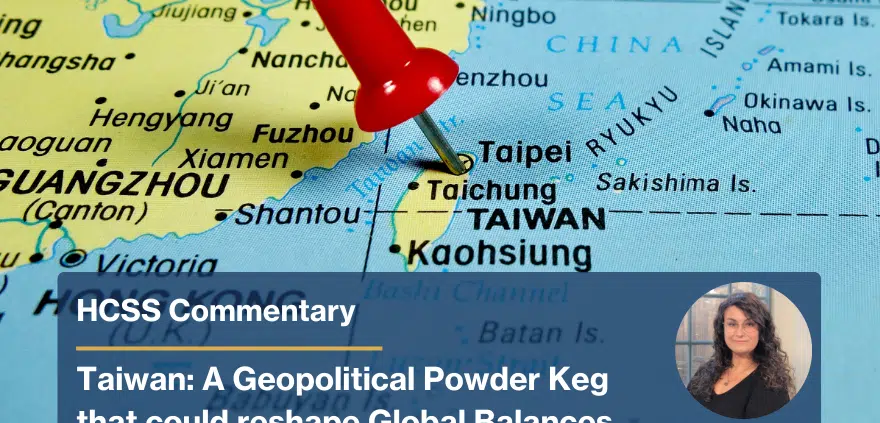
The Taiwan crisis stands as one of the most intricate and consequential geopolitical flashpoints of the 21st century. Far from being a mere regional dispute, Taiwan’s status is a defining element in the strategic competition between the United States and China, influencing military alliances, economic stability, and the broader international order.
“The reunification of the motherland is a historical inevitability,” declared President Xi Jinping in his New Year’s address of 2024, reinforcing a narrative he has consistently espoused. This rhetoric underscores Beijing’s determination to bring Taiwan under its control, a stance that has intensified tensions across the Taiwan Strait. Under Xi’s leadership, China’s territorial claims have grown increasingly assertive, elevating the risk of a military confrontation with far-reaching global consequences.
Given Taiwan’s strategic significance—both in military and economic terms—it is imperative to examine the potential scenarios and broader implications of a Chinese attempt to force reunification.
The military dimension of a potential conflict over Taiwan is shaped by the island’s strategic importance, China’s military advancements, and the evolving posture of the U.S. and its allies.
Taiwan occupies a pivotal position in global and Indo-Pacific security due to its strategic location within the first island chain, anchoring a network of U.S. allies from Japan to the Philippines. Its military significance is undeniable, as its control—or lack thereof—shapes the regional balance of power. If Taiwan remains outside of China’s grasp, Beijing’s military capabilities remain constrained, limiting its ability to project power beyond its shores.
Conversely, if China were to annex Taiwan, it could deploy submarines, air defence units, and surveillance systems that would significantly restrict U.S. military operations and erode Washington’s ability to defend its Asian allies. This shift would not only embolden Beijing’s bid for regional dominance but also cast doubt on U.S. security commitments, potentially prompting allies to develop independent military capabilities, including nuclear weapons. Furthermore, Taiwan serves as a crucial defensive buffer, preventing China from extending its naval and aerospace power deep into the Pacific, which would threaten U.S. influence and destabilize the region. The future of Taiwan is thus inextricably linked to the broader security architecture of the Indo-Pacific, making its fate a decisive factor in global stability.
China significant modernization of its military adds fuel to the fire. With the rapid expansion of its navy, missile forces, and cyber capabilities, the PRC has strengthen its preparedness for amphibious and joint operations. Furthermore, the People’s Liberation Army (PLA) has repeatedly demonstrated its preparedness through large-scale exercises and routine incursions into Taiwan’s Air Defence Identification Zone (ADIZ), signalling its readiness to escalate tensions if necessary.
China can deploy several tactics to enforce reunification, from economic coercion and grey zone strategies to naval and aerial blockades. In the worst case scenario, Beijing could attempt an amphibious invasion, though Taiwan’s rugged terrain and escalatory risks make such an operation much more dangerous. Still, the People’s Liberation Army Navy (PLAN) seem to be preparing for the eventuality by strengthening its ability to conduct large-scale amphibious landings with the launch of multiple Type-075 assault ships.
Meanwhile, Taiwan has focused on asymmetric warfare, adopting a “porcupine strategy” designed to make an invasion costly through mobile missile systems, drones, and an increasingly resilient civilian defence infrastructure. The expansion of Taiwan’s military conscription further underscores the island’s commitment to defending itself in a prolonged conflict.
While the adoption of a stronger denial strategy enhances the possibility of survival for Taiwan, the intervention of third parties will be vital for the island, should China impose a semi-permanent blockade or launch an invasion. Above all, US support will be decisive. Historically, the U.S. has maintained a policy of “strategic ambiguity,” leaving uncertain whether it would intervene militarily if China attempted to seize Taiwan.
At the same time, recent arms sales, including of F-16 fighter jets, anti-ship missiles, and drone systems, and military cooperation suggest a shift toward a more explicit commitment to Taiwan’s defence and upholding the status quo. In fact, the U.S. has responded to China’s military buildup by strengthening its alliances in the Indo-Pacific. The Quadrilateral Security Dialogue (Quad), comprising the U.S., Japan, India, and Australia, has gained renewed focus, while NATO has also expressed concern over China’s actions in the Taiwan Strait.
However, a full-scale military confrontation would be catastrophic. Given China’s growing missile capabilities, U.S. bases in the region, such as those in Guam and Okinawa, would be vulnerable to attacks. A conflict could quickly escalate into a broader regional war, drawing in Japan, South Korea, and possibly other ASEAN nations.
The complexity of a military confrontation over Taiwan brings along significant risks of miscalculation that might lead to a rapid escalation of tensions that would have consequences reaching far beyond the military domain.
A military confrontation over Taiwan would have devastating consequences for the global economy.
Taiwan holds significant importance on the international economic stage, both as a strategic hub for maritime trade and as the leader in semiconductor manufacturing. Situated along some of the world’s busiest trade routes, the Taiwan Strait is a critical passage for global commerce, with 44% of the global container fleet passing through it in 2022. The strait also serves as a key corridor for China’s trade with Europe and links two of China’s most important manufacturing zones, the Yangtze River Delta and Pearl River Delta. Disruptions in this region would have severe consequences for global supply chains and economic stability.
Beyond trade, Taiwan dominates the semiconductor industry through its indigenous giant, Taiwan Semiconductor Manufacturing Company (TSMC), which controls over 90% of the world’s advanced chip production. These semiconductors are vital for cutting-edge technologies, including AI and defence systems, making Taiwan an essential player in the ongoing technological competition between the U.S. and China. A Chinese takeover—whether through peaceful unification or forceful annexation—would shift the balance of global technological power, potentially granting Beijing control over the world’s most advanced semiconductor manufacturing.
A crisis over Taiwan would have devastating economic effects. A Chinese-led semi-permanent blockade could shrink global GDP by 5%, costing the world economy over $2 trillion, with major disruptions to industries like automotive, electronics, and computing. If a war broke out, the economic consequences would be even more severe, with global GDP falling by 10%—twice the impact of the 2008 financial crisis or the COVID-19 pandemic. Trade disruptions through the Taiwan Strait would halt the transit of $2.45 trillion worth of goods, while Taiwan and China’s economies would suffer massive contractions of 40% and 16.7%, respectively.
Ultimately, Taiwan’s economic significance makes it a flashpoint in global supply chains and any disruption to the island’s economy would reverberate across industries, economies, and supply chains worldwide.
The Taiwan crisis also carries profound political ramifications, intensifying geopolitical rivalries, reshaping global alliances, and affecting the core principles of the international order.
An exacerbation of tensions over Taiwan would have significant political consequences for both China and the United States. In China, President Xi Jinping has tied national reunification with Taiwan to his vision of Chinese rejuvenation, meaning failure to assert control over the island could weaken his leadership and destabilize the Communist Party’s rule. Conversely, a successful takeover could strengthen his grip on power but at the cost of international isolation.
In the U.S., a war over Taiwan would become a defining issue in domestic politics, with pressure on any administration to take a firm stance against Chinese aggression. American policymakers would face difficult choices balancing military action, economic consequences, and public opinion. A prolonged conflict or failure to defend Taiwan could erode confidence in U.S. global leadership, while a decisive response could further entrench Cold War-style divisions between China and the West.
Internal political instability in the US and China is likely to further exacerbate Sino-American competition, enhancing geopolitical tensions and great power rivalry. For both the US and China, Taiwan has hence not only economic and military relevance, but also political significance.
Beyond bilateral rivalries, a Taiwan crisis would also reshape global alliances and security arrangements. U.S. intervention could draw in regional allies such as Japan, South Korea, and Australia, considerably enlarging the scope of the crisis. At the same time, the uncertain role of other regional actors, such as India, Vietnam, and Indonesia further adds to the unpredictability of the political outcomes of a Taiwan crisis. Meanwhile, European nations would be forced to reassess their China policies. While Europe maintains strong economic ties with Beijing, a Chinese attack on Taiwan could prompt a further reconsideration of Europe’s strategic dependence on China. The European Union, already wary of economic coercion from Beijing, might impose sanctions or limit trade with China, further straining diplomatic relations. Additionally, NATO could expand its focus beyond the Euro-Atlantic, increasing cooperation with Indo-Pacific democracies to counter China’s growing influence.
Finally, a conflict over Taiwan would challenge fundamental principles of the international order, particularly the norm that borders cannot be changed by force. If China were to absorb Taiwan despite resistance, it would reinforce a precedent set by Russia’s invasion of Ukraine, normalizing authoritarian aggression against democratic neighbours. This would undermine global stability, erode confidence in international institutions, and encourage other revisionist powers to challenge territorial boundaries. Furthermore, Taiwan’s fall would signal a retreat of democratic governance in Asia, potentially weakening global democratic movements. The international response to such a crisis would determine whether the existing order remains resilient or shifts toward a more unstable, multipolar world defined by power politics.
The Taiwan crisis stands at the intersection of military strategy, global economics, and political power struggles, making it one of the most consequential geopolitical issues of our time. As China intensifies its claims over the island and expands its military capabilities, the risk of conflict—whether through calculated coercion or full-scale war—continues to grow. Taiwan’s unique position in the Indo-Pacific security framework and its dominance in semiconductor production elevate its significance far beyond a mere territorial dispute, entangling major global players in a high-stakes confrontation with implications that extend across multiple domains.
From a military standpoint, the increasing tensions across the Taiwan Strait highlight the delicate balance of deterrence and defence. While Taiwan has invested in asymmetric strategies to counter a potential invasion, its long-term security ultimately hinges on external support, particularly from the United States and its allies. A failure to deter Chinese aggression could embolden Beijing to assert further regional dominance, challenging the stability of the broader Indo-Pacific and forcing neighbouring countries to reconsider their security strategies. Meanwhile, any military engagement would carry immense risks of escalation, not only for Taiwan and China but for the global order, potentially drawing in major powers and altering the nature of modern warfare.
Beyond military concerns, the economic ramifications of a Taiwan crisis cannot be overstated. The island’s centrality to global trade and semiconductor manufacturing makes it a linchpin of technological innovation and economic stability. A disruption to Taiwan’s economy—whether through a blockade, cyberattacks, or war—would send shockwaves through global markets, destabilizing industries and economies that rely on its high-tech supply chains. The economic interdependence between China and its trading partners further complicates the situation, as sanctions or economic countermeasures in response to aggression could have profound and unpredictable consequences for global trade.
Politically, Taiwan’s fate carries deep implications for international norms and the balance of power. A successful Chinese takeover, whether through force or political pressure, would challenge the principle of national sovereignty and encourage other revisionist states to pursue territorial ambitions. Conversely, a strong international response to deter aggression could reinforce alliances and reshape global security dynamics, potentially solidifying a coalition against Chinese expansionism.
Ultimately, the Taiwan crisis is not just about control over a single island—it is a defining struggle that will shape the trajectory of U.S.-China relations, the Indo-Pacific region, and the future of global stability. How the world responds will determine whether deterrence and diplomacy can prevail or if the international order will face an irreversible shift toward conflict and division.
This article by HCSS strategic analyst Benedetta Girardi was originally written in Italian for and published in Analisi Difesa, on April 2, 2025.
De ministeries van Defensie en Economische Zaken publiceerden afgelopen vrijdag de strategie voor industrie en innovatie. Niet voor niets wordt deze koppeling gelegd. Eerder dit jaar toonde onderzoek van RaboResearch aan dat investeringen in defensiegerichte R&D gemiddeld tussen de $8,1 en $9,4 per geïnvesteerde dollar oplevert. Dit komt doordat defensie-innovatie vaak leidt tot baanbrekende technologieën, zoals radar, straalmotoren, het internet en GPS.
Wil Nederland sterk inzetten op technologisch leiderschap binnen sleuteltechnologieën, zoals AI en chips, liggen er nu kansen. Zoals de investering in een AI-fabriek. Een faciliteit die concrete impulsen zal geven aan het bedrijfsleven, innovatief onderzoek en de overheid. Het bevordert de doorgroei van Nederlandse start- en scale-ups, faciliteert de verwerking van gevoelige data binnen Nederland en draagt bij aan wetenschappelijk onderzoek. Urgentie is echter geboden om, in navolging van andere EU-lidstaten, vóór begin mei gebruik te maken van de hiervoor beschikbare EU-financiën. Bovendien kan de impact en reikwijdte van een investering mogelijk gezamenlijk met de regio Groningen verdubbeld worden door de koppeling met het European High Performance Computing (EuroHPC) initiatief.
De Europese Commissie maakte in februari bekend 200 miljard euro te investeren in de ontwikkeling van AI. Hiervoor is een sterke chipindustrie een vereiste omdat aan alle voor AI benodigde technologische kracht, chips aan de basis liggen. Nederland heeft een bijzonder sterke positie met onze machinebouw en kennis over de integratie en ontwerp van chips in systemen. Die voorsprong moeten we koesteren en zo mogelijk versterken. Met de aanpak Beethoven zijn stappen gezet om randvoorwaarden als talentontwikkeling en woningbouw een impuls te geven. Nu is het van belang ook de innovatieprogramma’s zelf te versterken. Anders staan er straks huizen, zijn er opleidingen en wegen, maar is de werkgelegenheid verdwenen. In het ChipNL Innovatieprogramma hebben 64 bedrijven en (kennis)organisaties uit de Nederlandse chipindustrie de krachten gebundeld en gewerkt aan een innovatievoorstel gericht op het duurzaam competitief houden van de sector. Een sector waar we als Nederland sterk in zijn en die voor de economie en de Nationale Veiligheid van grote waarde is. Nu is de overheid aan zet om naast de geboden private middelen een bijdrage te leveren.
Met een sterke chip en AI industrie wordt een belangrijk fundament voor de Nederlandse defensie-industrie gelegd. Deze week onderhandelt politiek Den Haag over de Voorjaarsnota, de bal ligt op de stip.
Auteurs:

De NAVO-top in Den Haag komt eraan in juni en misschien wordt het wel de meest belangrijke NAVO-top OOIT. Blijft Amerika binnenboord. En zo ja wat is daar dan voor nodig vanuit Europa?
Het antwoord op die vraag hopen we te krijgen op de NAVO-top in juni in Den Haag. In aanloop naar die top is De Strateeg er elke week met een nieuwe aflevering!
Deze week vraagt Paul van Liempt het aan:
– Anna van Zoest, directeur van de Atlantische Commissie
– Tim Sweijs, onderzoeksdirecteur bij het Den Haag Centrum voor Strategische Studies
Bron: BNR Nieuwsradio, De Strateeg, 9 april 2025
Over deze podcast
De Strateeg is een podcast van BNR in samenwerking met het Den Haag Centrum voor Strategische Studies (HCSS). Abonneer je via bnr.nl/destrateeg om geen enkele aflevering te missen.
Host: Paul van Liempt
Redactie: Michaël Roele
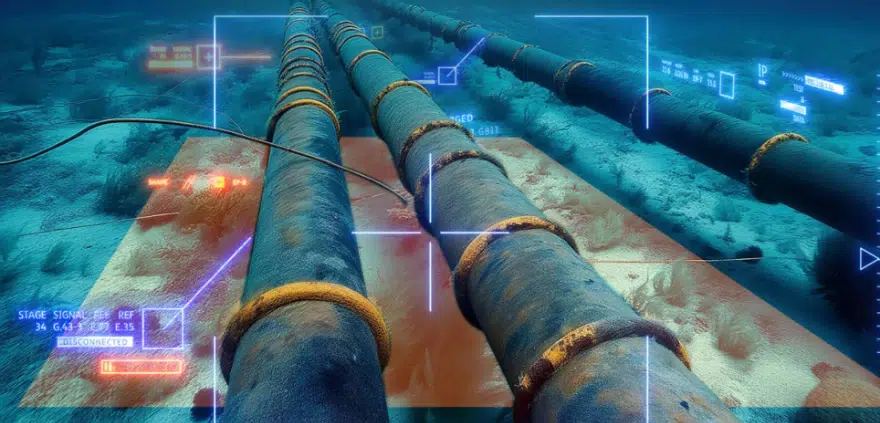
On March 27, HCSS and TNO, in close collaboration with the Ministries of Infrastructure and Water Management and Defence, organised the Seabed Security Seminar: Protecting our Critical Undersea Infrastructure Together in The Hague.
The Seminar was part of a series of NATO Summit pre-events organised by HCSS together with other partners to set the stage for the 2025 NATO summit in The Hague, on June 24 and 25.
As part of the preparations, TNO in collaboration with HCSS and the Ministeries, drafted a position paper containing concrete recommendations for action, aimed at strengthening the debate and contributing to effective solutions for the strategic security of the seabed.
Authors: Jeroen de Jonge, Casper Bosschaart (TNO)
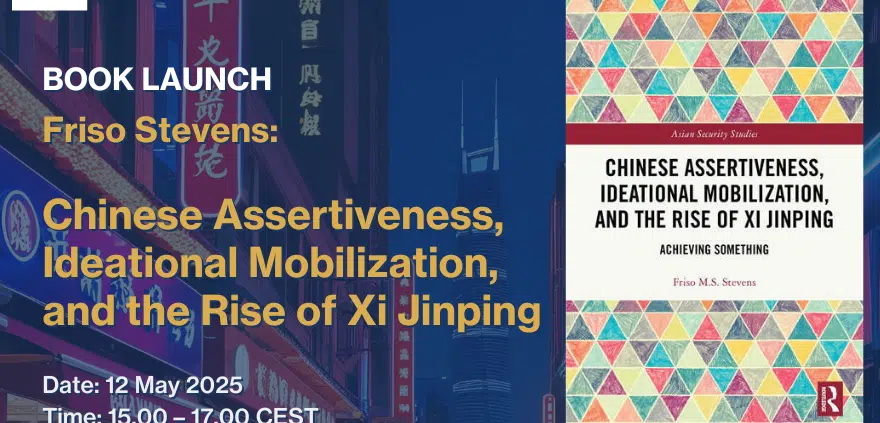
On 12 May, from 15.00-17.00 p.m., HCSS fellow Friso Stevens will present his new book “Chinese Assertiveness, Ideational Mobilization and the Rise of Xi Jinping“, at HCSS – The Hague Centre for Strategic Studies.
Rather than viewing Xi Jinping as the sole architect of China’s more forceful foreign policy, the book examines the deeper historical, domestic, and leadership drivers behind China’s repositioning, arguing that Xi Jinping had a broad mandate from the Party establishment when he was elevated to heir apparent in 2007.
In the years of global turmoil that followed the 2008 global financial crisis, China’s foreign policy of the late Hu Jintao years came to be viewed in Western discourse as increasingly “assertive.” Displaying a certain cognitive dissonance, China, however, vehemently rejects this viewpoint. Especially after Xi Jinping rose to power in 2012, it is clear that China has abandoned its long-held foreign policy doctrine of “keeping a low profile.”
Analyzing how language has been produced and reproduced over time, this book explains the shift to a more assertive China by examining the intervening ideas about China’s desired place in East Asia’s regional order. The Chinese Communist Party propaganda offers compelling evidence that there is much greater continuity between the Hu and Xi eras than is exhibited in the current literature. Moreover, the book traces the deeper ideational sources of Chinese assertiveness back to the New Left movement and the Patriotic Education Campaign of the 1990s. Agency for the turn in the late 2000s and the selection of the compromise candidate Xi is attributed to the choices past leaders made, with some Party elders “ruling from behind the curtain.”
📅 Date: May 12, 2025
⏲️ Time: 15.00-17.00 p.m.
📍 Location: HCSS, Lange Voorhout 1
Friso Stevens is a Nonresident Senior Fellow at The Hague Centre for Strategic Studies. Previously, he completed postdoctoral fellowships at the European University Institute and the University of Helsinki. While writing his doctoral dissertation at Leiden University, Friso taught at the Vrije Universiteit, his alma mater in Amsterdam. Educated as a lawyer and political scientist, he also studied at Northwestern University, Peking University, and King’s College London. His work has been published in The Pacific Review, Asian Security, Asian Affairs, and popular outlets such as ChinaFile, The Diplomat, and East Asia Forum.
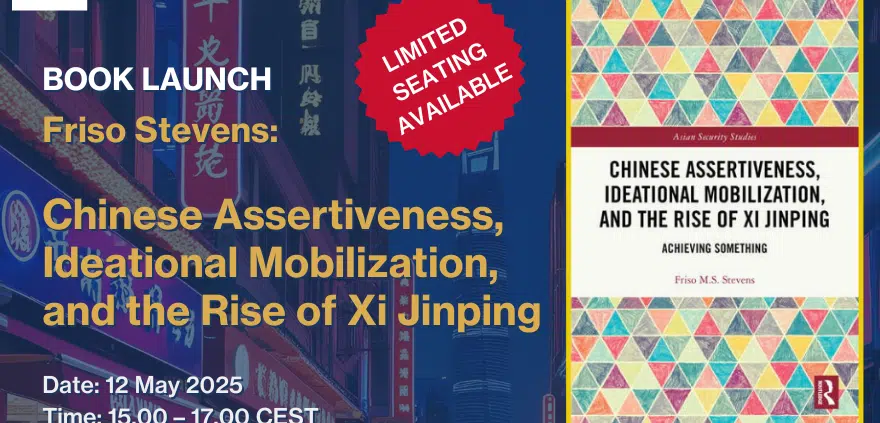
On 12 May, from 15.00-17.00 p.m., HCSS fellow Friso Stevens will present his new book “Chinese Assertiveness, Ideational Mobilization and the Rise of Xi Jinping“, at HCSS – The Hague Centre for Strategic Studies.
Rather than viewing Xi Jinping as the sole architect of China’s more forceful foreign policy, the book examines the deeper historical, domestic, and leadership drivers behind China’s repositioning, arguing that Xi Jinping had a broad mandate from the Party establishment when he was elevated to heir apparent in 2007.
In the years of global turmoil that followed the 2008 global financial crisis, China’s foreign policy of the late Hu Jintao years came to be viewed in Western discourse as increasingly “assertive.” Displaying a certain cognitive dissonance, China, however, vehemently rejects this viewpoint. Especially after Xi Jinping rose to power in 2012, it is clear that China has abandoned its long-held foreign policy doctrine of “keeping a low profile.”
Analyzing how language has been produced and reproduced over time, this book explains the shift to a more assertive China by examining the intervening ideas about China’s desired place in East Asia’s regional order. The Chinese Communist Party propaganda offers compelling evidence that there is much greater continuity between the Hu and Xi eras than is exhibited in the current literature. Moreover, the book traces the deeper ideational sources of Chinese assertiveness back to the New Left movement and the Patriotic Education Campaign of the 1990s. Agency for the turn in the late 2000s and the selection of the compromise candidate Xi is attributed to the choices past leaders made, with some Party elders “ruling from behind the curtain.”
📅 Date: May 12, 2025
⏲️ Time: 15.00-17.00 p.m.
📍 Location: HCSS, Lange Voorhout 1
Friso Stevens is a Nonresident Senior Fellow at The Hague Centre for Strategic Studies. Previously, he completed postdoctoral fellowships at the European University Institute and the University of Helsinki. While writing his doctoral dissertation at Leiden University, Friso taught at the Vrije Universiteit, his alma mater in Amsterdam. Educated as a lawyer and political scientist, he also studied at Northwestern University, Peking University, and King’s College London. His work has been published in The Pacific Review,
Zorgt de handelsoorlog van Trump voor een schisma tussen de tech-miljardairs, die in feite wél globalisten zijn, en de andere pijler van de Trumpisten, de populisten? Hoe veel verder zal het conflict in het Midden-Oosten escaleren, nu ook de spanningen rondom Iran oplopen?
Arend Jan Boekestijn bespreekt het allemaal met Tim Sweijs, onderzoeksdirecteur bij HCSS, die deze week Rob de Wijk vervangt in BNR’s podcast Boekestijn en De Wijk.
Paniek op de beurs | Onenigheid onder Trumpisten | Oplopende spanning rond Iran

What does the future hold for the Dutch Navy in a world of climate change, global trade shifts and rising conflicts?
The latest HCSS report by Davis Ellison, Pieter-Jan Vandoren and Frank Bekkers explores the future demands on the Royal Netherlands Navy (RNLN) and its European partners in the 2040-2050 period. It highlights two key trends shaping maritime security: long-term shifts in global trade and climate change.
We present four scenarios: deep-sea resource competition, instability around the Suez Canal, conflict with Russia over the Northern Sea Route, and a great power war between the U.S. and China. These developments could significantly strain European naval capabilities, necessitating greater flexibility and strategic prioritization.
Climate change is identified as the most consequential security challenge. Rising sea levels, extreme weather events, and coastal flooding will threaten European nations, especially the Netherlands and Belgium, increasing the burden on the RNLN. Additionally, shifts in global trade—marked by China’s growing economic and naval power, U.S. disengagement from trade arrangements, and the opening of Arctic sea routes—will demand an expanded European naval presence along major trade corridors.
Economic competition and geopolitical instability will exacerbate security risks. Regions such as North Africa and the Middle East are likely to experience persistent conflicts due to economic precarity, governance challenges, and climate-driven crises. This necessitates a European and Dutch naval strategy that balances immediate crisis response with long-term strategic positioning.
To address these challenges, our report outlines key capability requirements for the RNLN:
The study warns against over-specialization, emphasizing the need for a balanced, flexible force structure. With the potential for simultaneous crises, European navies, including the RNLN, must adapt their strategies and capabilities to remain effective in a rapidly changing geopolitical landscape.
Authors: Davis Ellison, Pieter-Jan Vandoren and Frank Bekkers. With contributions from Bryan Smeets and Tom Connolly.
This study was carried out by the Hague Centre for Strategic Studies (HCSS) within a framework agreement with the Royal Netherlands Navy. The conclusions and recommendations presented in this study are the result of independent research. Responsibility for the content rests with the authors and the authors alone
What does the future hold for the Dutch Navy in a world of climate change, global trade shifts and rising conflicts?
The latest HCSS report by Davis Ellison, Pieter-Jan Vandoren and Frank Bekkers explores the future demands on the Royal Netherlands Navy (RNLN) and its European partners in the 2040-2050 period. It highlights two key trends shaping maritime security: long-term shifts in global trade and climate change.
We present four scenarios: deep-sea resource competition, instability around the Suez Canal, conflict with Russia over the Northern Sea Route, and a great power war between the U.S. and China. These developments could significantly strain European naval capabilities, necessitating greater flexibility and strategic prioritization.
Climate change is identified as the most consequential security challenge. Rising sea levels, extreme weather events, and coastal flooding will threaten European nations, especially the Netherlands and Belgium, increasing the burden on the RNLN. Additionally, shifts in global trade—marked by China’s growing economic and naval power, U.S. disengagement from trade arrangements, and the opening of Arctic sea routes—will demand an expanded European naval presence along major trade corridors.
Economic competition and geopolitical instability will exacerbate security risks. Regions such as North Africa and the Middle East are likely to experience persistent conflicts due to economic precarity, governance challenges, and climate-driven crises. This necessitates a European and Dutch naval strategy that balances immediate crisis response with long-term strategic positioning.
To address these challenges, our report outlines key capability requirements for the RNLN:
The study warns against over-specialization, emphasizing the need for a balanced, flexible force structure. With the potential for simultaneous crises, European navies, including the RNLN, must adapt their strategies and capabilities to remain effective in a rapidly changing geopolitical landscape.
Authors: Davis Ellison, Pieter-Jan Vandoren and Frank Bekkers. With contributions from Bryan Smeets and Tom Connolly.
This study was carried out by the Hague Centre for Strategic Studies (HCSS) within a framework agreement with the Royal Netherlands Navy. The conclusions and recommendations presented in this study are the result of independent research. Responsibility for the content rests with the authors and the authors alone
De steun aan Oekraïne, het respecteren van de territoriale integriteit van Canada en Groenland en het waarborgen van Artikel 5. Zomaar een paar zaken die niet meer vanzelfsprekend zijn nu Donald Trump weer president van Amerika is. Dat Europa te lang toekeek mag duidelijk zijn, maar wat betekent dit voor de toekomst van de NAVO?
Het antwoord op die vraag hopen we te krijgen op de NAVO-top in juni in Den Haag. In aanloop naar die top is De Strateeg er elke week met een nieuwe aflevering!
Deze aflevering vormt de aftrap van de reeks met als gasten:
– Anna van Zoest, directeur van de Atlantische Commissie
– Tim Sweijs, onderzoeksdirecteur bij het Den Haag Centrum voor Strategische Studies
Bron: BNR Nieuwsradio, De Strateeg, 6 april 2025
Over deze podcast
De Strateeg is een podcast van BNR in samenwerking met het Den Haag Centrum voor Strategische Studies (HCSS). Abonneer je via bnr.nl/destrateeg om geen enkele aflevering te missen.
Host: Paul van Liempt
Redactie: Michaël Roele
La crisi di Taiwan rappresenta uno dei punti critici geopolitici più complessi e rilevanti del XXI secolo. Lungi dall’essere una semplice disputa regionale, lo status di Taiwan costituisce un elemento centrale nella competizione strategica tra Stati Uniti e Cina, con implicazioni dirette per le alleanze militari, la stabilità economica e l’ordine internazionale più ampio.
«La riunificazione della madrepatria è una inevitabilità storica», ha dichiarato il presidente Xi Jinping nel discorso di Capodanno del 2024, riaffermando una narrativa da lui costantemente sostenuta. Tale retorica evidenzia la determinazione di Pechino a riportare Taiwan sotto il proprio controllo, posizione che ha accresciuto le tensioni nello Stretto di Taiwan. Sotto la guida di Xi, le rivendicazioni territoriali cinesi si sono fatte più assertive, aumentando il rischio di un confronto militare dalle potenziali conseguenze globali.
Data la rilevanza strategica di Taiwan—sia in termini militari che economici—è essenziale considerare i possibili scenari e le implicazioni di un’eventuale riunificazione forzata da parte della Cina.
La dimensione militare di un potenziale conflitto su Taiwan è definita dall’importanza strategica dell’isola, dai progressi militari della Cina e dalla postura in evoluzione degli Stati Uniti e dei loro alleati.
Taiwan infatti occupa una posizione cruciale per la sicurezza globale e dell’Indo-Pacifico grazie alla sua collocazione strategica all’interno della prima catena di isole (first islands chain). La posizione geografica di Taiwan è effettivamente un crocevia degli interessi regionali militari di Stati Uniti e Cina.
Nell’attuale status quo, Taiwan permette agli Stati Uniti di ancorare le proprie alleanze nell’Indo-Pacifico, in una catena che si estende dal Giappone alle Filippine e di fatto contiene le forze militari cinesi. Inoltre, Taiwan funge da essenziale cuscinetto difensivo, impedendo alla Cina di espandere il proprio potere navale e aerospaziale in profondità nel Pacifico, scenario che minaccerebbe l’influenza statunitense e destabilizzerebbe la regione. Con Taiwan fuori dalla portata cinese, le capacità di proiezione militare di Pechino restano quindi limitate, riducendo le possibilità Cinesi di proiettare forza oltre i propri confini.
Al contrario, qualora la Cina annettesse Taiwan, potrebbe dispiegare sottomarini, unità di difesa aerea e sistemi di sorveglianza in grado di limitare significativamente le operazioni militari statunitensi, compromettendo la capacità di Washington di difendere i propri alleati asiatici.
Un tale cambiamento non soltanto rafforzerebbe le ambizioni di dominio regionale di Pechino, ma genererebbe dubbi sugli impegni di sicurezza degli Stati Uniti, inducendo potenzialmente gli alleati a sviluppare capacità militari autonome, incluse quelle nucleari. Il futuro di Taiwan è quindi indissolubilmente legato all’architettura generale di sicurezza dell’Indo-Pacifico, rendendo il suo status un fattore decisivo per la stabilità globale.
La significativa modernizzazione militare della Cina contribuisce ad aumentare le tensioni. Con la rapida espansione della Marina dell’Esercito Popolare di Liberazione Cinese (PLAN), delle forze missilistiche e delle capacità informatiche, la Cina ha rafforzato la propria preparazione per operazioni anfibie e congiunte. Inoltre, l’Esercito Popolare di Liberazione (PLA) ha più volte dimostrato la propria prontezza attraverso esercitazioni su larga scala e frequenti incursioni nella Zona di Identificazione della Difesa Aerea (ADIZ) di Taiwan, segnalando la propria disponibilità ad aumentare le tensioni se necessario.
La Cina può adottare diverse iniziative per imporre la riunificazione, dall’uso della coercizione economica e delle strategie “grey zone” fino a blocchi navali e aerei. Nello scenario peggiore, Pechino potrebbe tentare un’invasione anfibia, sebbene il territorio accidentato di Taiwan e i rischi di escalation rendano questa operazione particolarmente rischiosa. Tuttavia, la Marina dell’Esercito Popolare di Liberazione sembra prepararsi per questa eventualità rafforzando la capacità di condurre sbarchi anfibi su larga scala con il varo di numerose navi d’assalto della classe Tipo 075.
Nel frattempo, Taiwan si è concentrato sulla guerra asimmetrica, adottando una “strategia del porcospino” finalizzata a rendere l’invasione costosa per la Cina, utilizzando sistemi missilistici mobili, droni e una sempre più robusta infrastruttura di difesa civile. L’estensione del servizio militare obbligatorio a Taiwan evidenzia ulteriormente l’impegno dell’isola a difendersi in caso di conflitto prolungato.
Eppure, Taiwan non può contare solamente sulle proprie forze. Infatti, anche se l’adozione di una più solida “denial strategy” aumenta le possibilità di sopravvivenza di Taiwan, l’intervento di terze parti sarà cruciale per l’isola nel caso in cui la Cina imponesse un blocco semi-permanente o avviasse un’invasione.
Primo fra tutti, il sostegno statunitense sarà determinante. Storicamente, gli Stati Uniti hanno adottato una politica di “ambiguità strategica”, lasciando incerto se interverrebbero militarmente nel caso in cui la Cina tentasse di prendere il controllo di Taiwan.
Tuttavia, le recenti vendite di armi (tra cui caccia F-16V, missili antinave, e droni) e la cooperazione militare suggeriscono uno spostamento verso un impegno più esplicito nella difesa di Taiwan e nel mantenimento dello status quo. Infatti, gli Stati Uniti hanno risposto al rafforzamento militare cinese intensificando le proprie alleanze nell’Indo-Pacifico. Il Dialogo di Sicurezza Quadrilaterale (Quad), composto da Stati Uniti, Giappone, India e Australia, ha guadagnato nuova importanza, mentre anche la NATO ha espresso preoccupazione riguardo alle azioni della Cina nello Stretto di Taiwan.
La reazione degli Stati Uniti è radicata nella consapevolezza che, date le crescenti capacità missilistiche della Cina, le basi statunitensi nella regione, come quelle di Guam e Okinawa, sarebbero vulnerabili ad attacchi. Un conflitto potrebbe rapidamente degenerare in una guerra regionale più ampia, coinvolgendo Giappone, Corea del Sud e potenzialmente altre nazioni ASEAN.
La complessità di un confronto militare su Taiwan comporta rischi significativi di errore di valutazione che potrebbero portare a una rapida escalation delle tensioni, con conseguenze che andrebbero ben oltre la sfera militare.
Un confronto militare su Taiwan avrebbe anche conseguenze devastanti per l’economia globale.
Taiwan riveste un’importanza significativa sul piano economico internazionale, sia come nodo strategico per il commercio marittimo sia come leader nella produzione di semiconduttori. Situato lungo alcune delle rotte commerciali più trafficate al mondo, lo Stretto di Taiwan rappresenta un passaggio cruciale per il commercio globale, con il 44% della flotta mondiale di container che lo ha attraversato nel 2022.
Lo stretto costituisce inoltre un corridoio fondamentale per gli scambi commerciali tra la Cina e l’Europa, collegando due delle principali zone manifatturiere cinesi: il Delta del Fiume Yangtze e il Delta del Fiume delle Perle. Interruzioni in quest’area avrebbero gravi ripercussioni sui processi di produzione globali e sulla stabilità economica internazionale.
Oltre al commercio, Taiwan domina l’industria dei semiconduttori grazie alla sua impresa nazionale, la Taiwan Semiconductor Manufacturing Company (TSMC), che detiene oltre il 90% della produzione mondiale di chip avanzati. Questi semiconduttori sono essenziali per tecnologie all’avanguardia, tra cui l’intelligenza artificiale e i sistemi di difesa, rendendo Taiwan un attore chiave nella competizione tecnologica in corso tra Stati Uniti e Cina.
Un’eventuale acquisizione da parte della Cina—sia mediante unificazione pacifica sia tramite annessione forzata—modificherebbe l’equilibrio del potere tecnologico globale, potenzialmente conferendo a Pechino il controllo sulla più avanzata capacità produttiva di semiconduttori al mondo.
Una crisi su Taiwan comporterebbe gravi effetti economici. Un blocco parziale e prolungato guidato dalla Cina potrebbe ridurre il PIL globale del 5%, con una perdita economica mondiale superiore ai 2.000 miliardi di dollari e gravi interruzioni in settori quali l’automotive, l’elettronica e l’informatica.
In caso di guerra, le conseguenze economiche sarebbero ancor più gravi: il PIL globale potrebbe diminuire del 10%, ossia il doppio dell’impatto della crisi finanziaria del 2008 o della pandemia da COVID-19. Le interruzioni commerciali attraverso lo Stretto di Taiwan bloccherebbero il transito di merci per un valore di 2.450 miliardi di dollari, mentre le economie di Taiwan e della Cina subirebbero contrazioni significative, rispettivamente del 40% e del 16,7%.
In definitiva, l’importanza economica di Taiwan rende l’isola un punto critico nei processi di produzione globali, e qualsiasi perturbazione dell’economia dell’isola si ripercuoterebbe su scala mondiale, attraversando settori, economie e reti commerciali.
La crisi di Taiwan comporta anche profonde implicazioni politiche, intensificando le rivalità geopolitiche, rimodellando le alleanze globali e incidendo sui principi fondamentali dell’ordine internazionale.
Un’esacerbazione delle tensioni su Taiwan avrebbe rilevanti conseguenze politiche sia per la Cina che per gli Stati Uniti. In Cina, il presidente Xi Jinping ha legato la riunificazione nazionale con Taiwan alla sua visione del “rinascimento” cinese, rendendo un eventuale fallimento nel rivendicare il controllo dell’isola potenzialmente dannoso per la sua leadership e la stabilità del Partito Comunista. Al contrario, una presa di controllo riuscita potrebbe rafforzare la sua posizione, ma al prezzo di un possibile isolamento internazionale.
Negli Stati Uniti, una guerra per Taiwan costituirebbe una questione centrale per la politica interna, esercitando pressioni su qualsiasi amministrazione affinché adotti una posizione decisa contro l’aggressione cinese. I decisori statunitensi si troverebbero a dover bilanciare azioni militari, costi economici e opinione pubblica.
Un conflitto prolungato o il mancato sostegno a Taiwan potrebbero indebolire la credibilità della leadership globale americana, mentre una risposta risoluta potrebbe rafforzare le divisioni in stile Guerra Fredda tra Cina e Occidente.
Un’instabilità politica interna sia negli Stati Uniti che in Cina rischierebbe di intensificare ulteriormente la competizione sino-americana, aggravando le tensioni geopolitiche e le rivalità tra grandi potenze. Per entrambe le nazioni, Taiwan rappresenta dunque non solo una questione economica e militare, ma anche una posta politica significativa.
Oltre alle rivalità bilaterali, una crisi su Taiwan riplasmerebbe alleanze globali e assetti di sicurezza. Un intervento statunitense potrebbe coinvolgere alleati regionali quali Giappone, Corea del Sud e Australia, ampliando notevolmente la portata della crisi. Allo stesso tempo, il ruolo incerto di altri attori regionali – come India, Vietnam e Indonesia – accrescerebbe l’imprevedibilità degli esiti politici.
Nel frattempo, le nazioni europee sarebbero costrette a rivedere le proprie politiche verso la Cina. Sebbene l’Europa mantenga forti legami economici con Pechino, un attacco cinese a Taiwan potrebbe innescare un ripensamento strategico circa la dipendenza economica dall’economia cinese. L’Unione Europea, già attenta alle forme di coercizione economica da parte di Pechino, potrebbe imporre sanzioni o limitazioni commerciali, acuendo le tensioni diplomatiche. Inoltre, la NATO potrebbe ampliare il proprio raggio d’azione oltre l’area euro-atlantica, rafforzando la cooperazione con le democrazie indo-pacifiche per contrastare l’influenza cinese.
Infine, un conflitto su Taiwan metterebbe in discussione principi fondamentali dell’ordine internazionale, in particolare la norma secondo cui i confini non possono essere modificati con la forza. Se la Cina riuscisse ad annettere Taiwan nonostante la resistenza, si rafforzerebbe il precedente stabilito dall’invasione russa dell’Ucraina, contribuendo alla normalizzazione dell’aggressione autoritaria ai danni di vicini democratici.
Ciò comprometterebbe la stabilità globale, ridurrebbe la fiducia nelle istituzioni internazionali e incoraggerebbe altre potenze revisioniste a sfidare i confini territoriali.
Inoltre, la caduta di Taiwan segnerebbe un arretramento della governance democratica in Asia, potenzialmente indebolendo i movimenti democratici a livello globale. La risposta internazionale a una simile crisi determinerebbe se l’ordine esistente saprà resistere o se si evolverà verso un mondo multipolare più instabile, dominato dalla logica di potenza.
La crisi di Taiwan si colloca all’intersezione tra strategia militare, economia globale e competizione politica, configurandosi come una delle questioni geopolitiche più rilevanti del nostro tempo. Con l’intensificarsi delle rivendicazioni cinesi sull’isola e l’espansione delle sue capacità militari, il rischio di un conflitto—sia mediante coercizione calcolata sia attraverso una guerra su vasta scala—continua a crescere.
La posizione strategica di Taiwan nell’architettura di sicurezza dell’Indo-Pacifico, unita alla sua leadership nella produzione di semiconduttori, le conferisce un’importanza che va ben oltre una semplice disputa territoriale, coinvolgendo attori globali in un confronto ad alto rischio con implicazioni multidimensionali.
Dal punto di vista militare, le crescenti tensioni nello Stretto di Taiwan mettono in luce l’equilibrio delicato tra deterrenza e difesa. Sebbene Taiwan abbia investito in strategie asimmetriche per contrastare una potenziale invasione, la sua sicurezza a lungo termine dipende in ultima analisi dal sostegno esterno, in particolare da parte degli Stati Uniti e dei loro alleati.
Un fallimento nella dissuasione dell’aggressione cinese potrebbe incentivare Pechino ad affermare una maggiore influenza regionale, minando la stabilità dell’intero Indo-Pacifico e inducendo i Paesi vicini a riconsiderare le proprie strategie di sicurezza. Qualsiasi confronto armato comporterebbe inoltre elevati rischi di escalation, con ripercussioni non solo per Taiwan e la Cina, ma per l’ordine globale, potenzialmente coinvolgendo grandi potenze e modificando la natura stessa della guerra contemporanea.
Al di là delle considerazioni militari, le conseguenze economiche di una crisi su Taiwan non possono essere sottovalutate. L’isola, al centro del commercio globale e della produzione di semiconduttori, rappresenta un pilastro dell’innovazione tecnologica e della stabilità economica internazionale.
Una perturbazione dell’economia taiwanese—che si tratti di un blocco, di attacchi cibernetici o di un conflitto armato—genererebbe effetti a catena sui mercati globali, destabilizzando industrie ed economie dipendenti dai suoi processi di produzione ad alta tecnologia. L’interdipendenza economica tra la Cina e i suoi partner commerciali complica ulteriormente il quadro, poiché sanzioni o contromisure economiche in risposta a un’aggressione potrebbero produrre conseguenze profonde e difficilmente prevedibili per il commercio internazionale.
Sul piano politico, il destino di Taiwan ha implicazioni rilevanti per le norme internazionali e per l’equilibrio del potere globale. Un’eventuale acquisizione da parte della Cina—sia attraverso la forza che per mezzo di pressioni politiche—metterebbe in discussione il principio della sovranità nazionale, incoraggiando altri attori revisionisti a perseguire ambizioni territoriali. Al contrario, una risposta internazionale forte e coerente volta a scoraggiare l’aggressione potrebbe rafforzare le alleanze esistenti e ridefinire le dinamiche di sicurezza globale, potenzialmente consolidando una coalizione contraria all’espansionismo cinese.
La crisi di Taiwan non riguarda soltanto il controllo di un’isola: essa rappresenta una sfida determinante che influenzerà l’evoluzione delle relazioni tra Stati Uniti e Cina, la sicurezza dell’Indo-Pacifico e la stabilità del sistema internazionale. La reazione della comunità internazionale sarà cruciale nel determinare se prevarranno la deterrenza e la diplomazia, oppure se l’ordine globale subirà una trasformazione irreversibile verso una fase di conflitto e frammentazione.
Questo articolo è stato originariamente pubblicato su Analisi Difesa, il 2 aprile 2025.

We gaan massaal meer investeren in defensie en de industrie die daarbij hoort. Maar om wapens, apparatuur en munitie te kunnen ontwikkelen heb je grondstoffen nodig. Moeten we die uit eigen bodem gaan halen? Paul van Liempt stelt jouw vragen aan zijn gasten. Te gast is opnieuw:
Bron: BNR Nieuwsradio, De Strateeg, 30 maart 2025
Over deze podcast
De Strateeg is een podcast van BNR in samenwerking met het Den Haag Centrum voor Strategische Studies (HCSS). Abonneer je via bnr.nl/destrateeg om geen enkele aflevering te missen.
Host: Paul van Liempt
Redactie: Michaël Roele
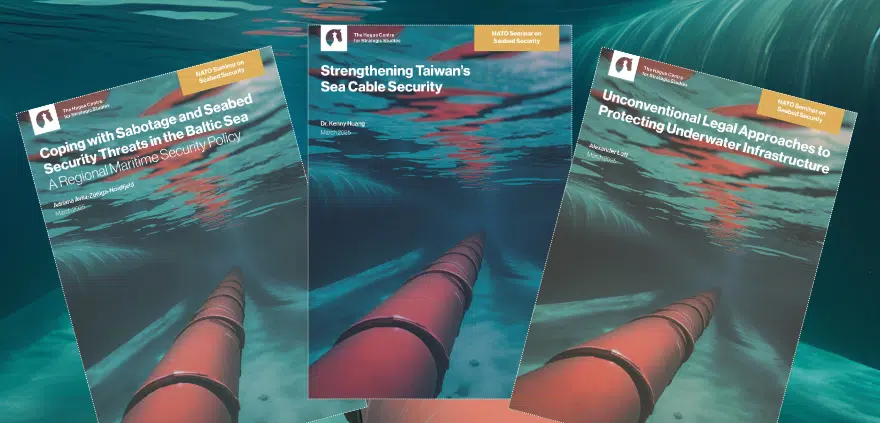
The seabed is under attack — and so is our security. Recent incursions by Russian vessels and the sabotage of underwater power and internet cables have exposed critical vulnerabilities in NATO countries’ infrastructure. This threat to security, as well as societal and business continuity, demands urgent and unified action.
In preparation for the NATO Summit in The Hague (June 25-26, 2025), TNO and HCSS, in close cooperation with the Dutch Ministries of Defence and Infrastructure & Water Management, organised an exclusive NATO Seminar on Seabed Security, on March 27, 2025. The seminar brought together leading experts for inspiring panels to discuss topics like “The Threat Landscape – From Baltic to Global”, “Smart Responses – Innovation & Risk-Based Resilience”, and “Race to the Bottom – Collaboration Across Sectors.
As a follow-up, HCSS asked several experts to contribute a guest paper on Seabed Security.
In his contribution, Alexander Lott (researcher at the Norwegian Center for the Law of the Sea at UiT – The Arctic University of Norway) explores legal solutions to safeguard critical underwater infrastructure from sabotage and accidental damage. Existing international law offers little protection beyond territorial waters, leaving submarine cables and pipelines vulnerable. The paper examines unconventional legal tools—ranging from piracy laws to safety zones—that could help coastal states take action. As recent incidents in the Baltic Sea and beyond have shown, securing these vital assets is more urgent than ever.
Submarine cables are the lifeline of global digital communication, yet they remain vulnerable to geopolitical risks, cyber threats, and sabotage. Dr. Kenny Huang (Chair, Taiwan Network Information Centre) examines these security challenges and explores strategies to protect critical infrastructure. From AI-powered monitoring to stronger international cooperation, the paper provides key recommendations for strengthening sea cable security in an era of rising global tensions.
How can regional cooperation improve maritime security in the Baltic Sea? Adriana Ávila-Zúñiga-Nordfjeld (Senior Lecturer, Swedish Defence University) explores the feasibility of expanding the Helsinki Convention and HELCOM to include maritime security measures. The paper highlights the need for a regional agreement to counter undersea sabotage threats through standardized policies and cooperation.
Edited by HCSS deputy director Michel Rademaker. The Seminar on Seabed Security was part of a series of NATO Summit pre-events organised by HCSS together with other partners to set the stage for the 2025 NATO summit in The Hague, on June 24 and 25.

Today marks the 18th anniversary of the Hague Centre for Strategic Studies (HCSS), a milestone that invites reflection on our journey, the dedication of our staff, and the significance of our research in today’s complex geopolitical landscape.
Since our inception in 2007, founder Rob de Wijk and the HCSS team have been committed to providing rigorous analyses on geopolitical, defence, and security issues to governments, international institutions, and businesses. Our mission has always been to inform public discourse and strategic decision-making, contributing to national and international security in alignment with liberal democratic values.
A Legacy of Pioneering Research and Analysis
Over the years, HCSS has produced a diverse portfolio of research that addresses critical global challenges. We analyse geopolitical risks, hybrid threats, and conflict prevention, helping policymakers navigate an increasingly volatile world. Our work on energy security and climate resilience informs strategies for sustainable development. In the realm of cybersecurity and emerging technologies, we explore AI and digital threats. Additionally, we provide insights into economic security, supply chain resilience, and defence innovation, ensuring that societies remain adaptive and secure in uncertain times.
HCSS is not only dedicated to in-depth research but also to shaping the public debate through effective PR and communication strategies. Our experts regularly provide media commentary, offering clear, data-driven insights on pressing global issues. Through op-eds, podcasts, interviews, and social media engagement, we ensure our research reaches policymakers, businesses, and the public. By translating complex geopolitical developments into accessible narratives, we contribute to informed decision-making and foster a more nuanced understanding of international security and strategic affairs.
The Heart of HCSS: Our Dedicated Team
The achievements of HCSS are a testament to the unwavering dedication of our staff. Our international team of researchers, analysts, and support personnel bring a wealth of knowledge, experience, and passion to their work, driving the organization’s success. From reports to events, their commitment to excellence ensures that HCSS remains at the forefront of strategic studies, providing insights that shape policies and strategies in the Netherlands, Europe, and beyond.
In an era marked by geopolitical tensions, technological disruptions, and shifting alliances, the role of independent research institutions like HCSS is more critical than ever. Our work helps decipher complex developments, anticipate future challenges, and formulate strategies that promote stability and security. By fostering informed dialogue and offering actionable recommendations, HCSS contributes to a more resilient and responsive international community.
Looking Ahead: Navigating Turbulent Times
As we celebrate this milestone, we remain committed to our mission and values. The coming years will undoubtedly present new challenges and opportunities. HCSS will continue to adapt, innovate, and collaborate, ensuring that our research remains relevant and impactful. We extend our deepest gratitude to our partners, supporters, and, most importantly, our dedicated staff for their unwavering commitment to excellence.
Our work is more important now than it ever was. Here’s to 18 years of strategic insights and to many more years of contributing to a safer, more understanding world!
Team HCSS
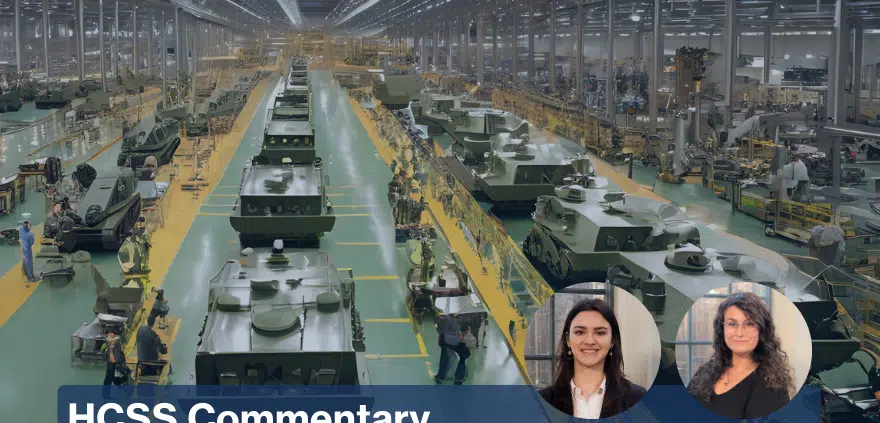
European military supply chains are too fragile, fragmented, and opaque for today’s security environment. This may hinder the success of its Rearmament Plan.
The blind spot lies in the midstream: the production of components that serve as critical links between raw materials and system manufacturing.
Amidst increased tensions and geopolitical uncertainties, European military readiness, especially on the eastern side of the Atlantic, has come under scrutiny. European states have since gained strong momentum to revitalize their militaries, pressed by concerns ignited by the Russo-Ukrainian war. Defence investments are a key priority of the Von der Leyen II Commission, emphasized by the ReArm Europe plan. This is also pushed by NATO Secretary General Mark Rutte, who encouraged the Alliance’s members to “turbo-charge [our] defence production and defence spending.”
In response, policymakers are rushing to allocate resources to repairs, modernization efforts, and personnel.
But a crucial aspect has been flying under the radar: securing the supply chains of defence systems. Europe’s military readiness will not be strengthened without addressing its fragile, fragmented and opaque supply chains.
The beginning and the end of a military supply chain are mostly known. Upstream, the use of materials such as titanium, tungsten, antimony, aluminium, and steel in defence systems is relatively well-documented. Downstream, the major defence manufacturers responsible for assembling frigates, jet fighters or submarines are known and headquartered in NATO countries.
The blind spot lies in the midstream: the production of components that serve as critical links between raw materials and system manufacturing.
A submarine is made up of more than 600,000 components. Defence manufacturers source each of these components from a vast network of suppliers that consists of thousands of companies across the globe.
Many defence suppliers operate in the commercial sector; in other words, defence has to compete with the digital sector or healthcare for components like semiconductors, switches, and lenses.
When it comes to dual-use components, many defence suppliers operate in the commercial sector. In other words, defence has to compete with the digital sector or healthcare for components like semiconductors, switches, and lenses. These dual-use components use raw materials and minerals from a wide range of suppliers, the largest of which being China.
The rest of the components are defence-specific with highly specialized characteristics that require precise engineering and stringent certifications. In turn, these depend on advanced materials: landing gears use special steels, tank armours use titanium alloys, and submarine ball valves use tungsten alloys. Like in the case of dual-use components, the raw materials come from a wide range of suppliers, but go through a diverse range of highly specialized production processes in different countries before being used as advanced materials in the defence sector.
By the time the 600,000 components are integrated to manufacture a submarine, several tiers of contractors have been involved in the process. This extensive and often decentralized sourcing mechanism adds numerous layers of complexity, making it difficult to track the origins and movement of materials and components. As a result, the midstream of defence supply chains becomes highly opaque, introducing bottlenecks that can become single points of failure as well as significant challenges in understanding and mitigating supply risks. A disruption in the supply of materials and components that are critical for a military system can delay production timelines, inflate costs, and weaken overall military readiness. In a conflict situation, this leads to fatal combat failures.
Strengthening the ability of the defence industry’s supply chain to anticipate, absorb, and adapt to unexpected disruptions should be a key priority for policymakers.
Two fundamental weaknesses make it difficult for Europe’s defence industries to achieve this goal. First, there is little-to-no mapping by the defence industry of which materials are used in which components or sub-components. Second, and related to this, defence manufacturers do not have a clear view of which actors are involved in procuring components, sub-components and materials.
The future of Europe’s defence sector depends not only on political will, but also on increased insights into supply chains and into future material and component needs.
Without understanding the midstream, even if the production of (upstream) materials in Europe grows or stockpiles are established, (downstream) defence manufacturers will still not be able to directly use these to mitigate a supply disruption.
The future of Europe’s defence sector depends not only on political will, but also on increased insights into supply chains and into future material and component needs. This can be achieved through systematic tracking and forecasting of material and component needs, starting with digital material passports to identify vulnerabilities and extending to a comprehensive assessment of future components’ requirements. The EU, in collaboration with the defence industry, can lead these efforts by establishing shared methodologies and data management systems, ensuring a more secure and resilient supply chain.
The Rearmament Plan comes at a crucial moment for Europe, but procurement is only the tip of the ice-berg —without secure supply chains, even the best military can falter. And in times of intense geopolitical instability, Europe can no longer afford to march forward with blind spots in its defence.
Authors: Irina Patrahau and Benedetta Girardi, March 2025
The international nuclear order is facing unprecedented challenges, with deterrence re-emerging as a central defence strategy, particularly for European nations. However, the reliability of U.S. extended deterrence is increasingly uncertain due to Washington’s shifting global security priorities and transactional approach to alliances. This new HCSS report by Davis Ellison, Samuel Zilincik, and Tim Sweijs explores the implications of these developments for European security and examines potential pathways for European states to take greater ownership of their defence.
For decades, European security was underpinned by U.S.-Russia arms control agreements, including INF, ABM, START, and New START. The dissolution of these treaties has left Europe vulnerable as both nations develop new nuclear capabilities. The U.S. modernization program, aimed at strategic superiority, prioritizes national defence over extended deterrence, further raising concerns about Europe’s reliance on American nuclear guarantees.
The return of Donald Trump and his transactional and even hostile view of alliances places additional pressure on European NATO members. Efforts to secure U.S. support through defence spending commitments and arms purchases may provide temporary assurances but expose Europe to intra-alliance coercion. In this evolving landscape, European nations must explore independent strategies to maintain security and deterrence.
This report outlines six strategic options for Europe:
The authors provide a comprehensive evaluation of these options, assessing their political feasibility, military effectiveness, escalation risks, and broader arms control implications.
Conclusion:
While complete nuclear independence may be unrealistic, Europe must rethink its security posture and move beyond automatic reliance on the U.S.
The research for and production of this report has been conducted within the PROGRESS research framework agreement. Responsibility for the contents and for the opinions expressed, rests solely with the authors and does not constitute, nor should be construed as, an endorsement by the Netherlands Ministries of Foreign Affairs and Defence.
Authors: Davis Ellison, Samuel Zilincik, and Tim Sweijs.