HCSS
  • News
    • BNR | De Strateeg
    • Columns
    • Events
    • HCSS Newsletter
    • Podcasts
  • Publications
    • Publications
      • All Projects
      • All Publications
    • Geopolitics & Governance
      • Transatlantic Relations
      • Russia & Eurasia
      • Europe in the Indo-Pacific
      • AI in the Military Domain
      • PROGRESS / Strategic Monitor
    • Economics & Technology
      • Emerging Technologies
      • Critical Materials
      • Energy Security
    • Defence & Security
      • On Future War
      • Deterrence and Arms Control
      • Hybrid Threats
      • Cyber Security
    • Society & Resilience
      • Nationale Veiligheid en Weerbaarheid
      • Publieksmonitor Maatschappelijke Stabiliteit
      • Transnational Organised Crime
      • Strategic Monitor Dutch Police
    • Climate, Water & Food
      • Climate Security
      • Water, Peace & Security (WPS)
      • Food Security
  • Dashboards
    • Dashboards
      • All Tools
        • GINA
        • SARA
    • Geopolitics & Governance
      • DFRI
      • GINA | Diplomatic
      • GINA | Information
      • CLARIS
    • Economics & Technology
      • DOMINO
      • GATRI
      • GINA | Economic
      • Cyber Arms Watch
      • Cyber Comparator
      • Cyber Norms Observatory
      • Cyber Transparency
    • Defence & Security
      • GINA | Military
      • Nuclear Timeline
    • Society & Resilience
      • DAMON
    • Climate, Water & Food
      • Agrifood Monitor
      • CARMEN
      • CRM Dashboard
  • Leadership Practice
    • HCSS Leadership Practice
    • HCSS Boardroom
    • Strategic Negotiations Course
    • Serious Gaming
    • IDCSS | Indo-Dutch Cyber Security School
    • SANCS | Southern Africa-Netherlands Cyber Security School
  • About HCSS
    • Contact Us
    • HCSS Datalab
    • Our People
    • Funding & Transparency
    • Internship Programme
    • Press & Media Inquiries
    • Studio HCSS
    • Working at HCSS
    • Global Futures Foundation
  • Click to open the search input field Click to open the search input field Search
  • Menu Menu

News

Tim Sweijs | EenVandaag: Lof voor Trump-fluisteraar Rutte, maar ook hardere taal Europese leiders

January 27, 2026

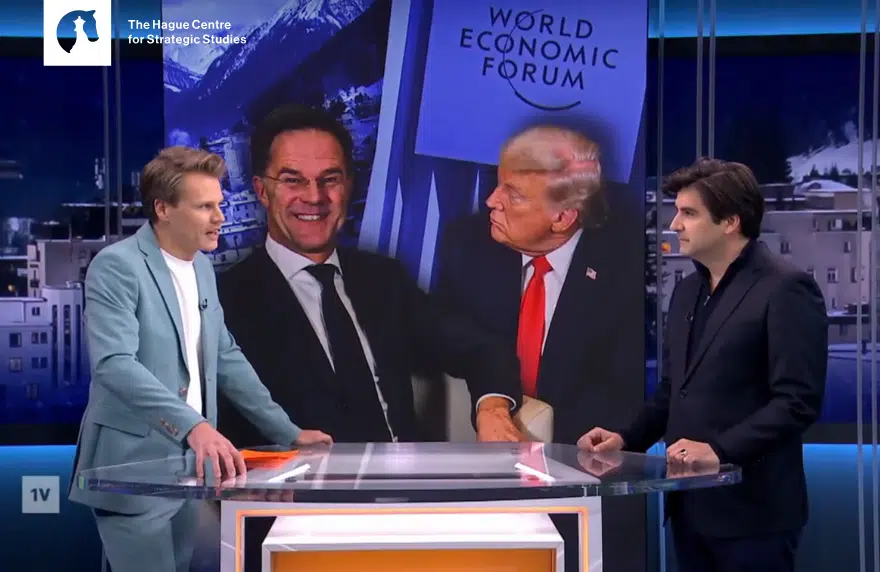
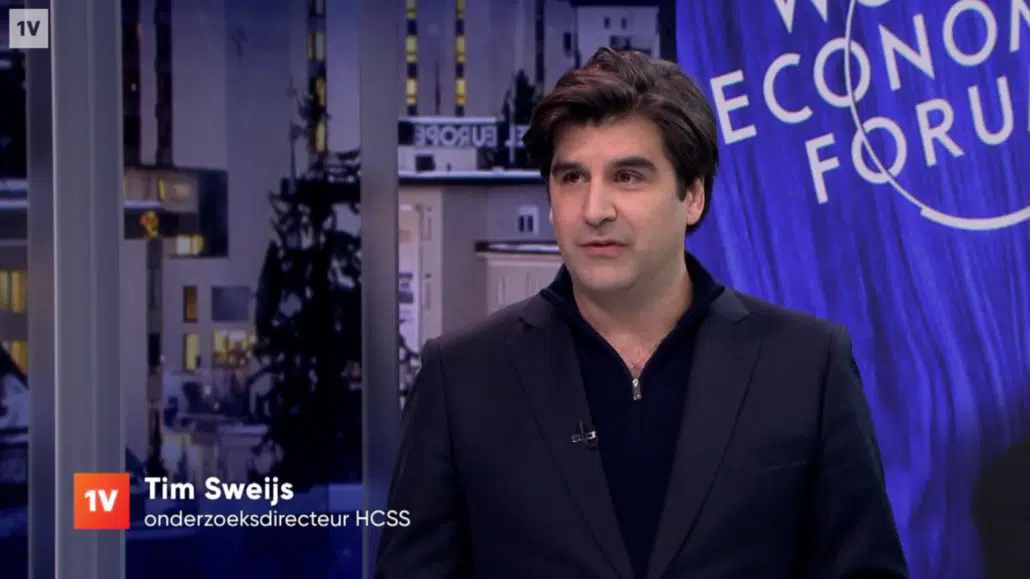
Veel lof voor Rutte, als Trump-fluisteraar en de ‘hero of Davos’, maar is dat terecht? Deels wel, zegt HCSS onderzoeksdirecteur Tim Sweijs bij EenVandaag. Als premier belde Rutte al vriend en vijand met zijn Nokia om de boel bij elkaar te houden, en dat doet hij nu op het internationale toneel. Hij is Secretaris-Generaal – meer secretaris dan generaal – maar hij heeft duidelijk het probleem geherformuleerd: het gaat niet om de annexatie van Groenland door Amerika, maar het gaat om het ‘beter beschermen van Groenland’, en daar ligt nu een plan voor op tafel. Althans, een raamwerk voor een plan voor een deal…  

Er zijn twee zaken belangrijk, vervolgt Sweijs. Een: er gaan nu zeven NAVO-bondgenoten Groenland beter beschermen, en twee: het lijkt erop dat het verdrag uit 1951 tussen Amerika en Denemarken opnieuw wordt opengebroken, waarmee Amerika nieuwe militaire bases kan oprichten op Groenland, en de mogelijkheid van mineralen exploitatie. Interessant om daarbij te zeggen is wel: eigenlijk mocht Amerika dat al binnen de voorwaarden van dat verdrag uit 1951, dus in die zin is er niet heel veel veranderd.

Wat wel belangrijk is: we hielden afgelopen weken onze adem in, want onze voormalige beschermheer bleek een bully te zijn, en die eiste gewoon het soeverein territorium van een bondgenoot op. Toen Trump in Davos zei Groenland niet militair te zullen annexeren, ging er een zucht van oplichting door de zaal.

Die eer geven we deels aan Rutte, maar heeft ook wel degelijk te maken met de hardere taal die Europese leiders hebben uitgeslagen. De afgelopen zomer hebben we – die Europese leiders – de tarieven van 15% gewoon geaccepteerd. Maar wat er de laatste weken gebeurde was gewoon een existentiële dreiging. Toen werd gezegd: tot hier en niet verder. We hebben onze hakken in het zand gezet, en heel duidelijk een politiek signaal gezonden: als je hier mee doorgaat, betekent dat het einde van de NAVO, we gaan Groenland helpen beschermen en we gaan de economische bazooka’s op tafel leggen in Brussel. Trump is duidelijk gemaakt: als je doorzet, kun je een groot economisch sanctie pakket verwachten.

Dus opluchting, voor nu, maar we moeten niet weer in slaap vallen: het gevaar is geweken, maar dit soort incidenten kennen vaak meerdere aktes. Misschien is één van de aktes bijna voorbij, maar stel je voor dat Trump over drie dagen, drie weken of drie maanden, wispelturig als hij is, zich opnieuw bedenkt en alsnog Groenland wil annexeren.

Dan is het belangrijk om dat pakket klaar te hebben liggen. Dan kunnen we handelstarieven inzetten, kijken of we de NAVO nog willen voortzetten. We moeten voorbereid zijn op dat scenario, en als de wiedeweerga onze eigen strategische autonomie opbouwen, de defensie-industrie aanzwengelen en de afhankelijkheid van de Amerikanen afbouwen.

Bron: EenVandaag, 22 januari 2026
  • Share on Facebook
  • Share on X
  • Share on WhatsApp
  • Share on LinkedIn
  • Share by Mail

Experts

Tim Sweijs

Related News

Related Content

Tim Sweijs | De Jortcast: Trap Trump de NAVO uit
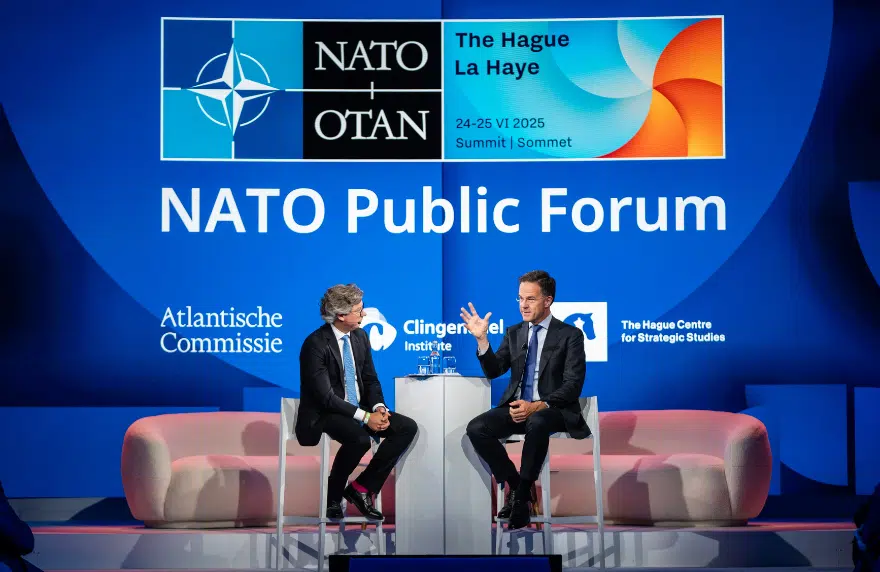
VRT NWS | Tim Sweijs blikt terug op NAVO-Top: “Rutte houdt de boel bij elkaar”
Column Rob de Wijk: Deze top in Washington maakte Navo nog niet Trump-proof

Office Address

  • The Hague Centre for Strategic Studies
  • Lange Voorhout 1
  • 2514 EA The Hague
  • The Netherlands

Contact Us

  • Telephone: +31(70) 318 48 40
  • E-mail: info@hcss.nl
  • IBAN NL10INGB0666328730
  • BIC INGBNL2A
  • VAT NL.8101.32.436.B01
  • Contact

Legal & Privacy

  • Disclaimer & Privacy
  • Algemene Voorwaarden 2024 (NL) 
  • Terms & Conditions 2024 (ENG) 
  • Algemene Voorwaarden 2026 (NL) 
  • Terns & Conditions 2026 (EN) 
  • Coordinated Vulnerability Disclosure
  • Ethical Standards
  • Manual for Responsible Use of AI

Follow us

© The Hague Centre for Strategic Studies
    Link to: De Strateeg | Waarom kiezen autoritaire landen voor de georganiseerde misdaad?   Link to: De Strateeg | Waarom kiezen autoritaire landen voor de georganiseerde misdaad?   De Strateeg | Waarom kiezen autoritaire landen voor de georganiseerde misdaad?... Link to: Ellison and Sweijs author chapter on Warfighting Concepts and the State of MDO Development Link to: Ellison and Sweijs author chapter on Warfighting Concepts and the State of MDO Development Ellison and Sweijs author chapter on Warfighting Concepts and the State of MDO...
    Scroll to top Scroll to top Scroll to top

    GDPR Consent

    Your privacy is important to us. Here you can set which consent you are allowing us with regards to the collection of general information, the placing of cookies of the collection of personal information. You can click 'Forget my settings' at the bottom of this form to revoke all given consents.

    Privacy policy | Close
    Settings

    GDPR Consent Settings

    Your privacy is important to us. Here you can set which consent you are allowing us with regards to the collection of general information, the placing of cookies of the collection of personal information. You can click 'Forget my settings' at the bottom of this form to revoke all given consents.

    Website statistics collect anonymized information about how the site is used. This information is used to optimize the website and to ensure an optimal user experience.

    View details

    Functional cookies are used to ensure the website works properly and are neccessary to make the site function. These cookies do not collect any personal data.  

    View details
    Forget my settings Deleted!