

Following the relaunch of GINA Diplomatic and GINA Economic over the last two weeks, HCSS continues the rollout of its next-generation Geopolitical Interactive Network Analysis (GINA) tools with the launch of GINA Military 2.0. As part of the GINA series introduced in late 2024, this updated platform delivers enhanced analytical capabilities, broader data coverage, and a unified methodological framework across all domains, strengthening its utility for security policy analysis.
GINA Military examines global security dynamics through the lens of armed conflict and defence cooperation. The tool enables policy-makers, researchers, and analysts to explore how states and non-state actors interact through organised violence and military capability transfers. Built on verified data from the Uppsala Conflict Data Program (UCDP) and the Stockholm International Peace Research Institute (SIPRI), the platform uses network science to map the relational structures that shape international security at multiple scales.
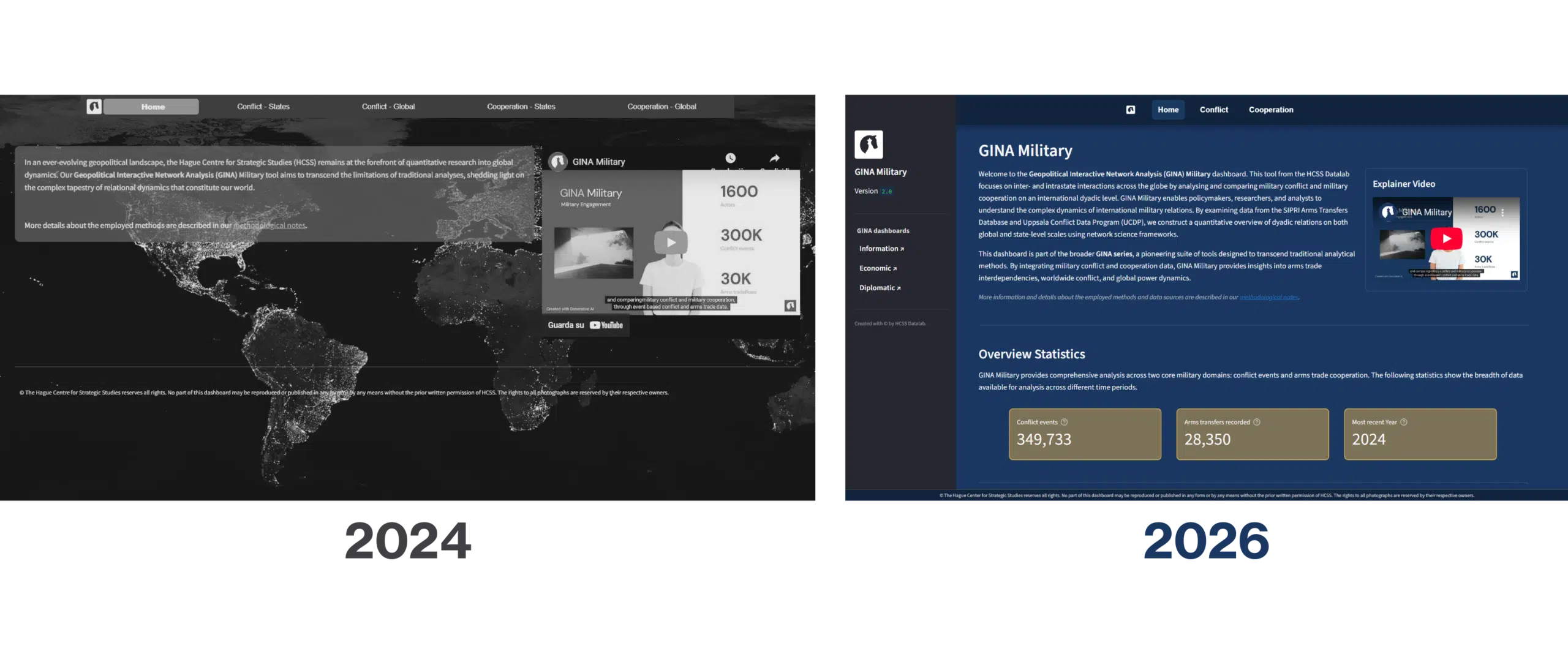
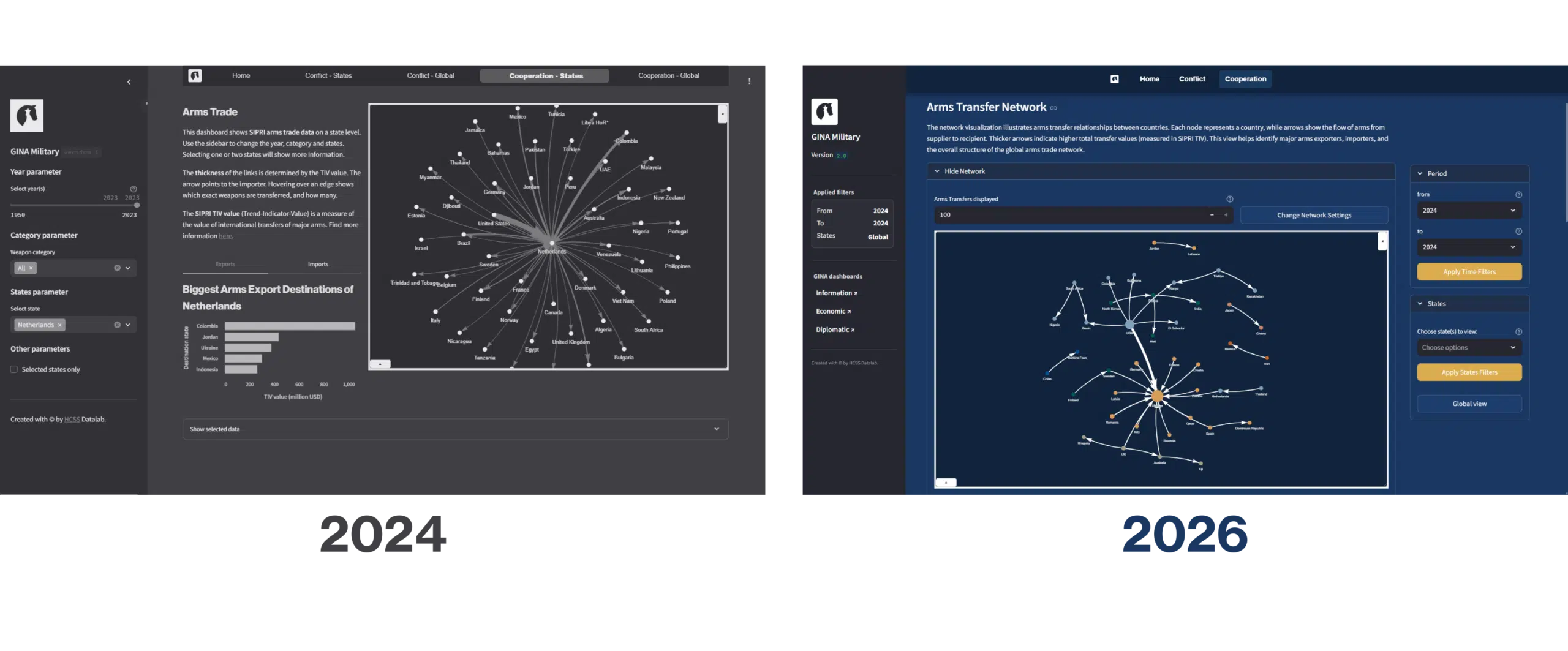
Users can explore two distinct but complementary networks, one capturing violent interactions between armed actors, and another tracing the exchange of military capabilities between states. This layered structure reveals where cooperative defence ties intersect with, reinforce, or contrast against conflict patterns. Temporal coverage extends from 1989 to 2024 for organised violence data and from 1950 to 2024 for arms transfers.
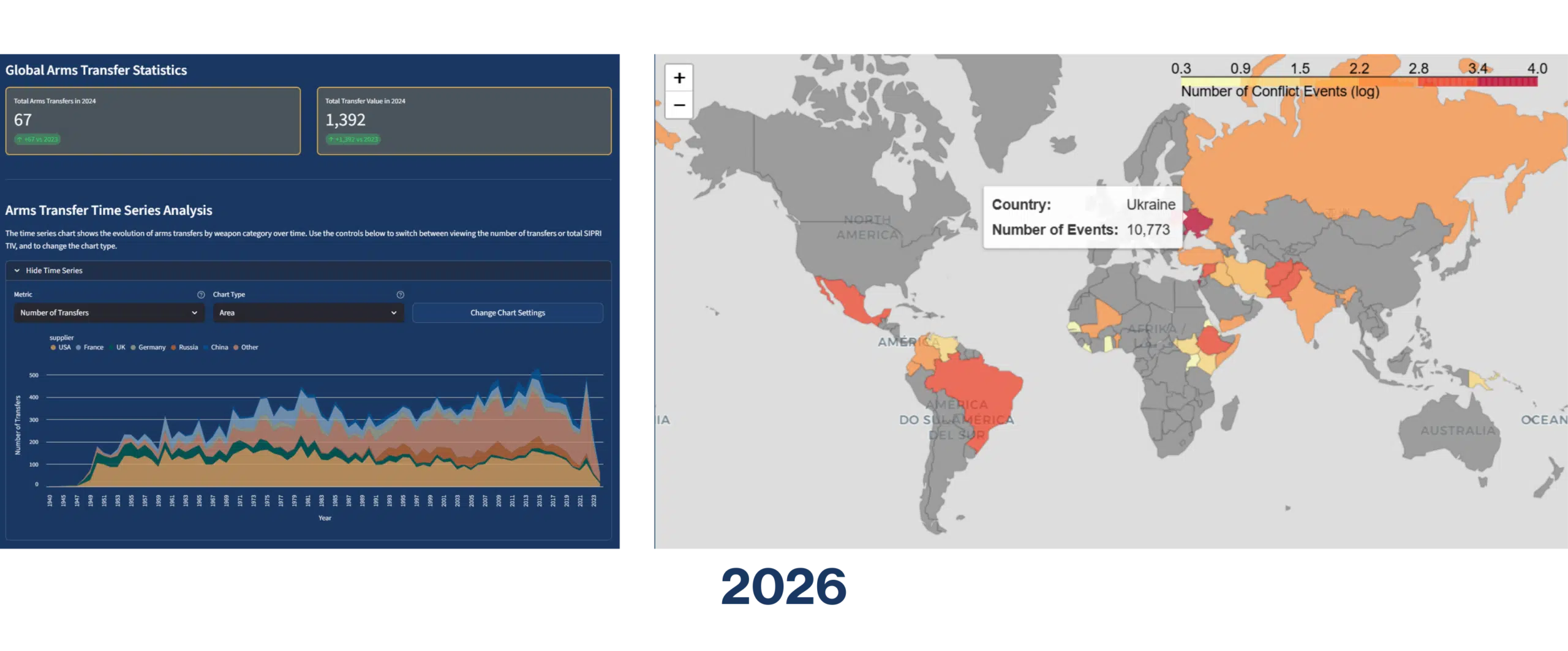
The platform features an interactive global map highlighting country-level conflict involvement and arms trade activity, which serves as a gateway to in-depth state profiles. Users can access aggregated statistics for selected periods and generate customisable time series to track trends and turning points.
Watch the explainer video below, or go directly to the GINA Military landing page. If your organisation is interested in our GINA tools or contributing to their evolution, please contact us at datalab@hcss.nl.
The last GINA 2.0 dashboard, the updated Information domain, will be released later in 2026.



Related Content


