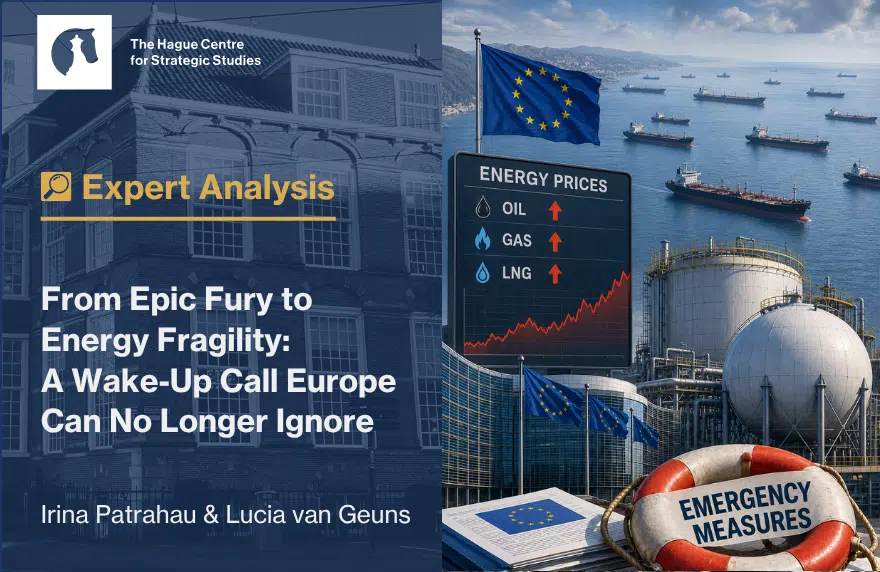
Expert Analysis | From Epic Fury to Energy Fragility: A Wake-Up Call Europe can no longer ignore
The 2026 Hormuz Crisis has triggered the largest and most complex energy shock in modern history, exposing deep vulnerabilities in Europe’s energy system. While the immediate disruption stems from conflict in the Gulf, the crisis has revealed a longer-term problem, warn Irina Patrahau and Lucia van Geuns: Europe remains heavily dependent on external energy supplies and continues to respond with emergency measures rather than structural reform. As geopolitical tensions and climate-related risks intensify, the continent faces a stark choice between recurring crises and building lasting resilience.
Bridging Waters Guest Paper Series: Soft Blockades and Strategic Control of Maritime Chokepoints in Southeast Asia
In a new HCSS guest paper, Sumathy Permal examines how strategic competition in Southeast Asia is increasingly playing out through soft blockades and grey-zone tactics in critical maritime chokepoints such as the Straits of Malacca and the South China Sea. As these practices raise risks to freedom of navigation, regional stability, and global trade, the paper outlines how Malaysia’s national responses — alongside targeted EU–Malaysia cooperation in capacity building, maritime domain awareness, and legal support — can strengthen chokepoint resilience while upholding a rules-based maritime order.
Bridging Waters Guest Paper Series | Egypt and the EU: Acting on the Shared Interest in Stabilising the Red Sea
In a new HCSS guest paper, Yara Ahmed and Saskia van Genugten examine how instability in the Red Sea — from Houthi attacks and piracy to intensifying great-power rivalries — is disrupting global shipping and sharply impacting Egypt, especially through declining Suez Canal revenues. The paper outlines practical avenues for Egypt–EU cooperation, including strengthening Suez Canal resilience, enhancing maritime situational awareness, improving coordination between naval missions, and protecting undersea cables. It also highlights the need for joint diplomatic efforts in regional conflicts, offering a pathway to reinforce the stability of a corridor vital to both regional and European security.