New HCSS report warns: Europe must act now to safeguard critical technologies and defence capabilities
The Hague, 5 February 2026 – A new report by The Hague Centre for Strategic Studies (HCSS), Lessons from the Jungle for the Zoo, issues a stark warning: Europe risks falling behind in technological innovation and strategic resilience unless urgent steps are taken to strengthen collaboration between industry, defence, and civil society.
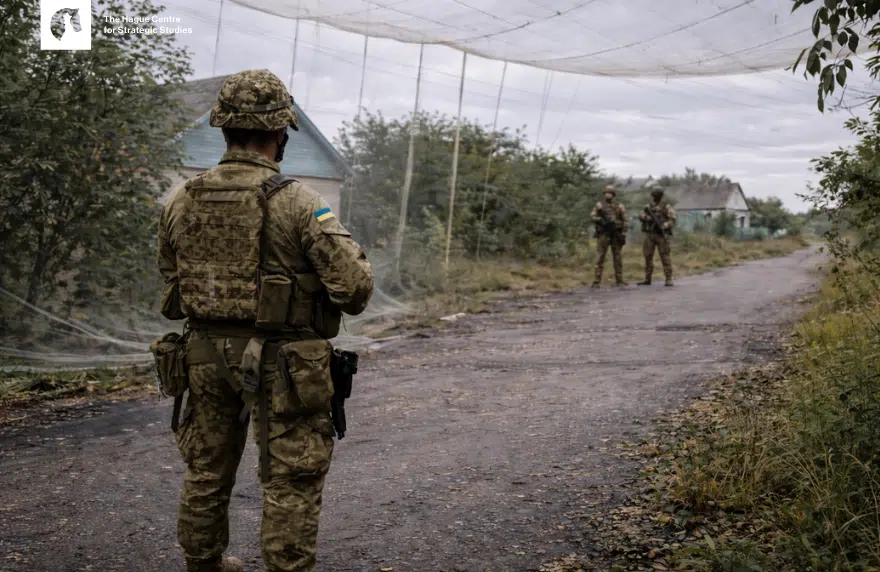
Last fall, HCSS researchers visited Kyiv and spoke with a wide range of military operators, strategists, policymakers, technology suppliers, and NGOs involved in the Ukrainian defence and innovation ecosystem. The findings from this visit form the basis for the current report and provide insight into how Ukraine is adapting in an extremely complex and protracted war, which innovations are effective, and what lessons Europe can learn for its own defence and technological resilience.
“The technological race is accelerating, and Europe cannot afford to be a passive observer,” said Tim Sweijs, lead author of the report. “Our analysis shows that adversaries are rapidly integrating AI, autonomous systems, and advanced industrial capabilities into their military and civilian sectors. Europe’s window to act decisively is closing.”
Sweijs, Director of Research at HCSS, emphasised the strategic urgency: “This is not a theoretical exercise. Every delay weakens our ability to defend critical infrastructure and maintain technological sovereignty. Policymakers must move swiftly to translate insights into action, or the gap with our competitors will widen irreversibly.”
The report identifies three core areas where immediate intervention is necessary:
- Short-term: Strengthen partnerships between defence and leading tech industries to secure critical supply chains and integrate emerging technologies.
- Medium-term: Expand civil-military cooperation to ensure technological advances benefit both economic and security objectives.
- Long-term: Establish robust, pan-European governance mechanisms for AI, autonomous systems, and industrial innovation to maintain strategic advantage.
“We need a mindset shift: Europe must treat its technological ecosystem as a matter of strategic survival. Every project delayed, every collaboration missed, increases our vulnerability,” Sweijs adds.
The time for cautious observation is over. Assisting Ukraine is simultaneously assisting ourselves – preparing for a future where Europe can deter or defeat Russia without shouldering the full cost alone.
“Policymakers have the tools and expertise at hand. What is required now is bold leadership and rapid implementation. Waiting for consensus or incremental steps risks leaving Europe on the back foot in critical sectors for decades to come.”
The full HCSS report is available here:



Related Content