
HCSS
  • News
    • BNR | De Strateeg
    • Columns
    • Events
    • HCSS Newsletter
    • Podcasts
  • Publications
    • Publications
      • All Projects
      • All Publications
    • Geopolitics & Governance
      • Transatlantic Relations
      • Russia & Eurasia
      • Europe in the Indo-Pacific
      • AI in the Military Domain
      • PROGRESS / Strategic Monitor
    • Economics & Technology
      • Emerging Technologies
      • Critical Materials
      • Energy Security
    • Defence & Security
      • On Future War
      • Deterrence and Arms Control
      • Hybrid Threats
      • Cyber Security
    • Society & Resilience
      • Nationale Veiligheid en Weerbaarheid
      • Publieksmonitor Maatschappelijke Stabiliteit
      • Transnational Organised Crime
      • Strategic Monitor Dutch Police
    • Climate, Water & Food
      • Climate Security
      • Water, Peace & Security (WPS)
      • Food Security
  • Dashboards
    • Dashboards
      • All Tools
        • GINA
        • SARA
    • Geopolitics & Governance
      • DFRI
      • GINA | Diplomatic
      • GINA | Information
      • CLARIS
    • Economics & Technology
      • DOMINO
      • GATRI
      • GINA | Economic
      • Cyber Arms Watch
      • Cyber Comparator
      • Cyber Norms Observatory
      • Cyber Transparency
    • Defence & Security
      • GINA | Military
      • Nuclear Timeline
    • Society & Resilience
      • DAMON
    • Climate, Water & Food
      • Agrifood Monitor
      • CARMEN
      • CRM Dashboard
  • Leadership Practice
    • HCSS Leadership Practice
    • HCSS Boardroom
    • Strategic Negotiations Course
    • Serious Gaming
    • IDCSS | Indo-Dutch Cyber Security School
    • SANCS | Southern Africa-Netherlands Cyber Security School
  • About HCSS
    • Contact Us
    • HCSS Datalab
    • Our People
    • Funding & Transparency
    • Internship Programme
    • Press & Media Inquiries
    • Studio HCSS
    • Working at HCSS
    • Global Futures Foundation
  • Click to open the search input field Click to open the search input field Search
  • Menu Menu

News

New HCSS paper by Iskander Rehman | What the Spanish Civil War reveals about Ukraine and today’s strategic choices

March 30, 2026
Download PDF

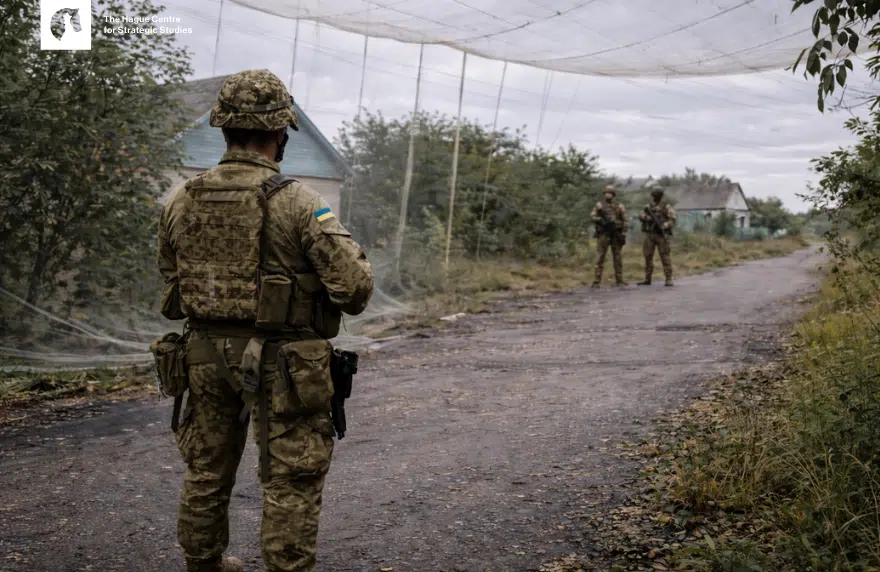
The war in Ukraine is often framed as a regional conflict. A new HCSS paper by Dr. Iskander Rehman argues this is a dangerous misreading. Drawing on the history of the Spanish Civil War, the author shows how proxy wars often become global laboratories for military innovation, and how democracies risk falling behind when they fail to learn and act decisively.

The paper demonstrates that both Spain in the 1930s and Ukraine today function as arenas where external powers test weapons, refine tactics, and gain combat experience. Authoritarian regimes, from Nazi Germany then to Russia, China, and North Korea now, have shown a greater willingness to intervene directly, absorbing lessons that shape future conflicts.

“Ukraine is not just a battlefield,” says Dr. Rehman. “It is a laboratory of military adaptation, and the powers that have intervened – whether directly or indirectly – are already preparing for the next war.”

Key findings:

  • Proxy wars accelerate military learning: In Spain, Germany refined airpower and combined-arms warfare; in Ukraine, drones, electronic warfare, and industrial-scale attrition are reshaping modern conflict.
  • Authoritarian regimes are gaining invaluable battlefield experience: Direct involvement allows for rapid experimentation and feedback, from North Korean troop deployments to Russian drone innovation.
  • Democracies risk mislearning, or not learning at all: During the Spanish Civil War, Western powers observed but often misinterpreted key developments, sometimes reinforcing flawed doctrines.
  • Escalation aversion carries real costs: Delayed Western military support to Ukraine suggests that fears of escalation can inadvertently grant adversaries the initiative.
  • Few protracted proxy wars remain regional: Spain helped forge the Axis alignment; Ukraine is already reshaping global power dynamics across Europe and the Indo-Pacific.

Recommendations:

  • Institutionalise battlefield learning: Move beyond observation and ensure systematic integration of lessons from Ukraine into doctrine, procurement, and training.
  • Adopt a more agile approach to escalation management: Avoid self-deterrence that allows adversaries to dictate the pace and scope of conflict.
  • Invest in scalable, cost-effective capabilities: Prioritise drones, electronic warfare, and resilient, rapidly produced systems suited for high-intensity attritional warfare.
  • Think across regions: Treat Ukraine as part of a broader systemic contest, not a contained European crisis.
  • Strengthen learning partnerships: Expand two-way exchanges with Ukrainian forces to capture real-time operational insights.

“History may not repeat itself mechanically,” notes Dr. Rehman, “but it has a way of punishing those who reflexively dismiss its value and relevance to contemporary warfare.”

Download PDF

Author: Dr. Iskander Rehman

Editor: Dr. Tim Sweijs

The research for this report has been conducted within a framework agreement between HCSS and the Royal Netherlands Army Command (CLAS). Responsibility for the contents of the report rests solely with the authors and does not constitute, nor should be construed as, an endorsement by the Royal Netherlands Army.

  • Share on Facebook
  • Share on X
  • Share on WhatsApp
  • Share on LinkedIn
  • Share by Mail

Experts

Tim Sweijs

Related News

Related Content

New report: Lessons Learned from Contemporary War for Taiwan
Iskander Rehman | A Little World War: Lessons from the Spanish Civil War for Contemporary Strategies 
New HCSS report stresses: Supporting Ukraine is supporting Europe

Office Address

  • The Hague Centre for Strategic Studies
  • Lange Voorhout 1
  • 2514 EA The Hague
  • The Netherlands

Contact Us

  • Telephone: +31(70) 318 48 40
  • E-mail: info@hcss.nl
  • IBAN NL10INGB0666328730
  • BIC INGBNL2A
  • VAT NL.8101.32.436.B01
  • Contact

Legal & Privacy

  • Disclaimer & Privacy
  • Algemene Voorwaarden 2024 (NL) 
  • Terms & Conditions 2024 (ENG) 
  • Algemene Voorwaarden 2026 (NL) 
  • Terns & Conditions 2026 (EN) 
  • Coordinated Vulnerability Disclosure
  • Ethical Standards
  • Manual for Responsible Use of AI

Follow us

© The Hague Centre for Strategic Studies
    Link to: Studio Schumpeter | Ron Stoop over Europa’s energieachilleshiel en de lessen uit Spanje Link to: Studio Schumpeter | Ron Stoop over Europa’s energieachilleshiel en de lessen uit Spanje Studio Schumpeter | Ron Stoop over Europa’s energieachilleshiel en de... Link to: De Tafel van Mars | Luister vanaf 6 april naar de nieuwe podcast van Trouw en HCSS Link to: De Tafel van Mars | Luister vanaf 6 april naar de nieuwe podcast van Trouw en HCSS De Tafel van Mars | Luister vanaf 6 april naar de nieuwe podcast van Trouw en...
    Scroll to top Scroll to top Scroll to top

    GDPR Consent

    Your privacy is important to us. Here you can set which consent you are allowing us with regards to the collection of general information, the placing of cookies of the collection of personal information. You can click 'Forget my settings' at the bottom of this form to revoke all given consents.

    Privacy policy | Close
    Settings

    GDPR Consent Settings

    Your privacy is important to us. Here you can set which consent you are allowing us with regards to the collection of general information, the placing of cookies of the collection of personal information. You can click 'Forget my settings' at the bottom of this form to revoke all given consents.

    Website statistics collect anonymized information about how the site is used. This information is used to optimize the website and to ensure an optimal user experience.

    View details

    Functional cookies are used to ensure the website works properly and are neccessary to make the site function. These cookies do not collect any personal data.  

    View details
    Forget my settings Deleted!