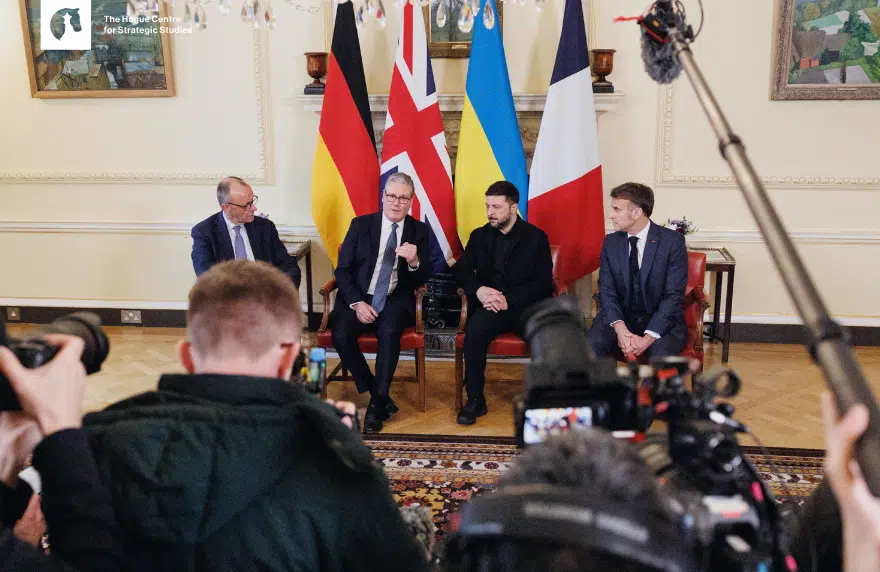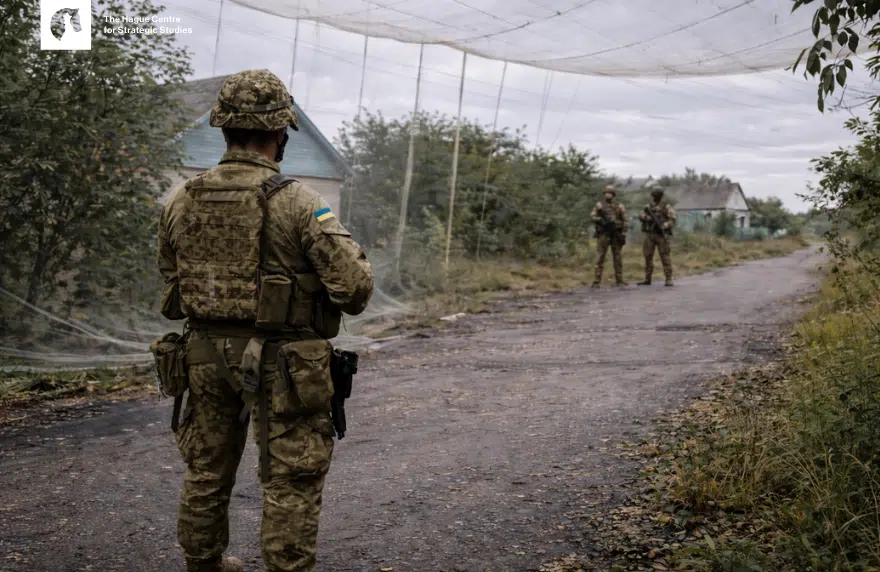
“Every Russian sub-threshold attack should trigger more support for Ukraine and impose greater costs on Russia’s war effort.”
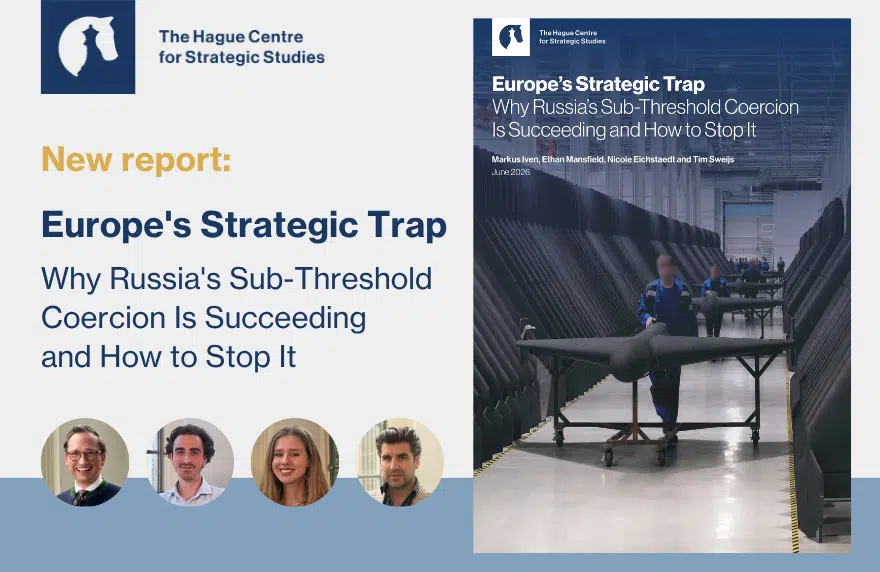
Russia’s campaign of sabotage, drone incursions and other sub-threshold attacks across Europe is succeeding in its primary objective: reducing European support for Ukraine. That is the conclusion of a new HCSS report, Europe’s Strategic Trap: Why Russia’s Sub-Threshold Coercion Is Succeeding and How to Stop It, by Markus Iven, Ethan Mansfield, Nicole Eichstaedt and Tim Sweijs.
The report argues that Russia’s actions are neither random nor indiscriminate. Instead, they constitute a deliberate coercive strategy aimed at influencing European political decision-making. By targeting countries that support Ukraine, Russia seeks to increase the political and economic costs of continued assistance.
Drawing on case studies from Belgium and Poland in 2025, the authors demonstrate how Russian drone incursions coincided with critical decisions concerning Ukraine and contributed to shifts in European policy and planning.
“Russia’s sub-threshold campaign is not about airports, railways or airbases as such. Its real targets are the political decisions that sustain Ukraine’s defence,” said the authors. “Europe continues to treat these attacks as isolated security incidents when they are, in fact, part of a broader coercive strategy.”
The report finds that Europe’s current response, focused largely on resilience and defensive measures, leaves it trapped in an asymmetric contest. While Russia only needs to identify one vulnerability at a time, European governments must protect an ever-growing number of potential targets.
To address this challenge, the report proposes a 4D Strategy:
- Deny Russia the ability to coerce Europe into reducing support for Ukraine.
- Disrupt Russian intelligence networks and operational structures.
- Degrade the resources and capabilities underpinning sub-threshold attacks.
- Deter future attacks through credible punishment.
Among its twelve recommendations, the report calls for long-term Ukraine funding commitments, stronger action against Russian intelligence networks, greater pressure on Russia’s military-industrial base, and a standing mechanism that automatically increases support for Ukraine following Russian attacks.
“Europe must reverse the logic of coercion,” the authors state. “Every Russian sub-threshold attack should result in more aid to Ukraine and greater costs for Russia’s war effort. If attacks consistently leave Russia worse off, the strategy will cease to be effective.”
The report concludes that strengthening support for Ukraine is not separate from European security, but central to it. A strategy that raises the costs of coercion while sustaining Ukraine’s defence offers Europe its best chance of escaping the strategic trap Russia has created.
Authors: Markus Iven, Ethan Mansfield, Nicole Eichstaedt and Tim Sweijs.
With thanks to Frank Bekkers for his contribution.
The research for and production of this report has been conducted within the PROGRESS research framework agreement. Responsibility for the contents and for the opinions expressed, rests solely with the authors and does not constitute, not should be construed as, an endorsement by the Netherlands Ministries of Foreign Affairs and Defence.


Related Content