The Russo-Ukrainian war has transformed the character of modern land warfare. Yet not every lesson observed on the battlefield will transfer directly to future conflicts. In a new HCSS paper, researchers Tim Sweijs, Jan Feldhusen, Markus Iven and Björn de Heer examine which tactical developments are most likely to shape future NATO land operations and what European armed forces should prioritise over the next three to five years.
The study identifies four developments with lasting significance: persistent battlefield transparency, AI-enabled intelligence fusion, the continuing importance of leadership and organisational quality, and the growing role of mass precision effects delivered through drones and other low-cost systems.
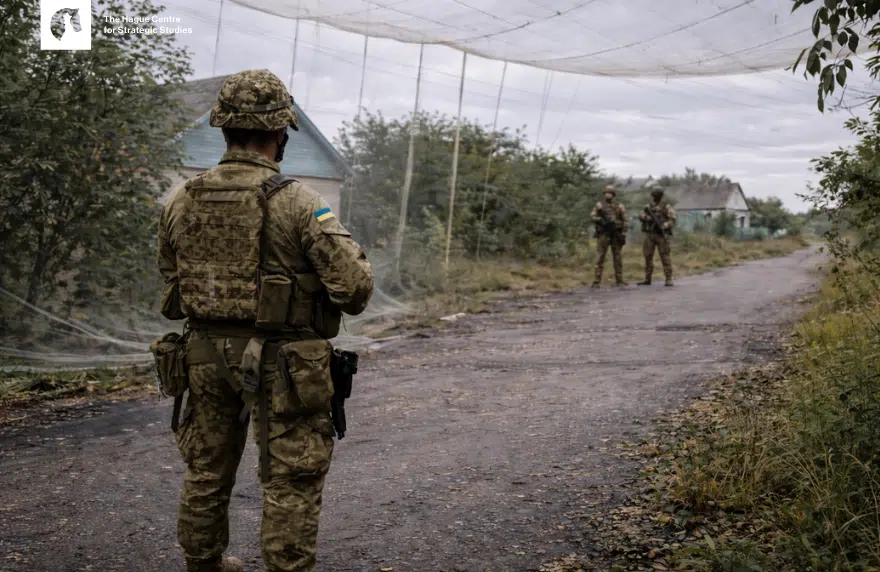
According to the authors, the modern battlefield has become increasingly transparent. The proliferation of drones, electronic warfare systems and satellite-enabled intelligence makes it harder than ever for forces to move undetected.
The paper also highlights how AI-enabled intelligence fusion is compressing targeting cycles from tens of minutes to near real time, creating new dependencies on digital infrastructure and software platforms. The authors argue that European countries should begin developing sovereign alternatives capable of maintaining intelligence fusion and targeting functions even under cyber and electronic attack.
At the same time, the war demonstrates that technology alone does not determine outcomes. Leadership, training quality, organisational learning and rapid adaptation remain critical determinants of military effectiveness.
Among the key findings and recommendations:
- Field organic reconnaissance drones, counter-drone systems and electronic warfare capabilities throughout combat formations.
- Institutionalise deception measures and electromagnetic discipline.
- Develop resilient European intelligence fusion and targeting capabilities.
- Accelerate organisational learning through experimentation, innovation and faster feedback loops.
- Procure precision munitions as organic capabilities for combat formations.
- Build layered counter-drone and air-defence architectures.
- Design logistics, maintenance and command infrastructure for dispersal and survivability.
The paper emphasises that while the war in Ukraine is not a template for every future conflict, it remains the most important contemporary case study for understanding how peer land warfare is changing.
***
The research for and production of this report has been conducted within the PROGRESS research framework agreement. Responsibility for the contents and for the opinions expressed, rests solely with the authors and does not constitute, not should be construed as, an endorsement by the Netherlands Ministries of Foreign Affairs and Defence.
Authors: Tim Sweijs, Jan Feldhusen, Markus Iven and Björn de Heer.
We would like to thank Frank Bekkers for his critical feedback and contributions.




Related Content