HCSS
  • News
    • BNR | De Strateeg
    • Columns
    • The Draghi Report Revisited
    • Events
    • Podcasts
  • Publications
    • Publications
      • All Publications
    • Defence & Security
      • (Nuclear) Deterrence and Arms Control
      • Foreign Information Manipulation and Interference (FIMI)
      • Hybrid Threats
      • Nationale Veiligheid en Weerbaarheid
      • NATO Summit
      • On Future War
      • Robotic and Autonomous Systems
      • Strategic Monitor Dutch Police
      • Transnational Organised Crime
    • Geopolitics & Geo-economics
      • Europe in the Indo-Pacific
      • Knowledge base on Russia (RuBase)
      • PROGRESS / Strategic Monitor
      • Transatlantic Relations
    • Climate, Energy, Materials & Food
      • Climate and Security
        • International Military Council on Climate and Security (IMCCS)
        • Water, Peace & Security (WPS)
      • Critical Minerals
      • Energy Security
      • Food Security
    • Strategic Technologies
      • Cyber Policy & Resilience
        • Global Commission on the Stability of Cyberspace (GCSC)
      • Emerging Technologies
      • Global Commission on Responsible Artificial Intelligence in the Military Domain (GC REAIM)
      • Semiconductors
      • Space
  • Dashboards
    • Dashboards
      • All Tools
        • GINA
        • SARA
    • Defence & Security
      • DAMON
      • GINA | Military
      • Nuclear Timeline
    • Geopolitics & Geo-economics
      • DFRI
      • GATRI
      • GINA | Diplomatic
      • GINA | Economic
      • GINA | Information
    • Climate, Energy, Materials & Food
      • Agrifood Monitor
      • CARMEN
      • DOMINO
      • CRM Dashboard
    • Strategic Technologies
      • Cyber Arms Watch
      • Cyber Comparator
      • Cyber Norms Observatory
      • Cyber Transparency
  • Services
    • HCSS Boardroom
    • HCSS Datalab
    • HCSS Socio-Political Instability Survey
    • Strategic Capability Gaming
    • Studio HCSS
    • Southern Africa-Netherlands Cyber Security School 2026
    • Indo-Dutch Cyber Security School 2025
  • GC REAIM
    • GC REAIM | Members
    • GC REAIM | Publications
    • GC REAIM | Conferences
    • GC REAIM | Partners, Sponsors, Supporters
  • About HCSS
    • Contact Us
    • Our People
    • Funding & Transparency
    • Partners & Clients
    • HCSS Newsletter
    • HCSS Internship Programme
    • Press & Media Inquiries
    • Working at HCSS
    • Global Futures Foundation
  • Click to open the search input field Click to open the search input field Search
  • Menu Menu

News

New report | Response and Resilience: Government Strategies for Securing Subsea Infrastructure in Europe and Asia   

December 11, 2025
Download Report

New HCSS–RSIS Report: Strengthening Protection of Critical Undersea Infrastructure in Europe and Asia 

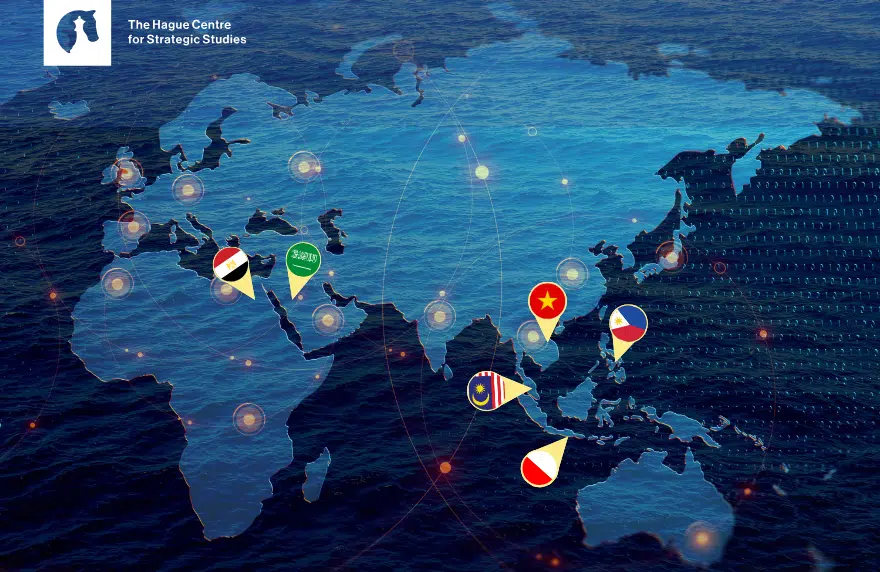
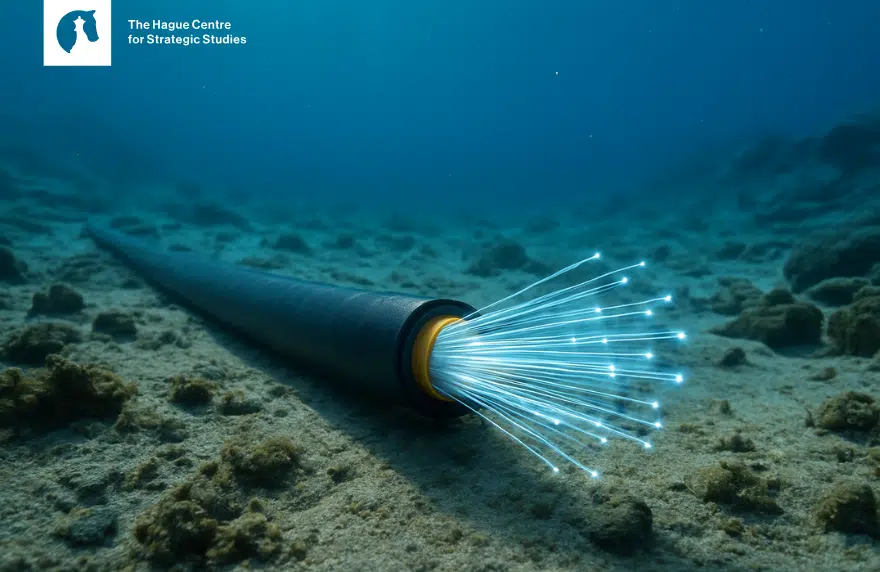
The Hague Centre for Strategic Studies (HCSS) and the S. Rajaratnam School of International Studies (RSIS) have released a joint report, Response and Resilience: Government Strategies for Securing Subsea Infrastructure in Europe and Asia, authored by Benedetta Girardi and Sean Tan. The study compares the threat environments and policy responses of the Netherlands and Singapore—two highly connected economies whose prosperity depends on secure and resilient critical undersea infrastructure (CUI), including internet cables, energy pipelines, and power interconnectors. The report presents the results of a workshop held on October 30, 2025 in Singapore and organised in cooperation with The Embassy of the Kingdom of the Netherlands in Singapore.  

Key Findings 

The report identifies three principal threat vectors to underwater infrastructure: 
• Grey-zone activities such as covert sabotage, cable tampering, and incursions by state-linked vessels. 
• Military activities, including physical attacks, cyber interference, and intelligence-gathering aimed at seabed systems. 
• Accidental damage caused mainly by fishing, anchoring, and operational errors—still the leading source of cable failures worldwide. 

Both countries face similar challenges in legal ambiguity, gaps in monitoring and attribution, high defence and repair costs, and fragmented policy coordination across public–private actors and international jurisdictions. 

Recommendations 

To strengthen resilience and deterrence, the report highlights four priority areas: 

  1. Closing legal and normative gaps, including clarifying permissible defensive measures and improving civil liability frameworks. 
  1. Enhancing monitoring, detection, and attribution, especially through sensor networks, autonomous systems, and cooperative surveillance. 
  1. Reducing defensibility and cost asymmetries by investing in redundancy, rapid-repair capacity, and dual-use technologies. 
  1. Deepening public-private and international coordination, including EU, NATO, ASEAN, and cross-regional exchanges. 

The authors propose a shared Singapore–Netherlands agenda focused on adaptive governance, knowledge exchange, and coordinated capability development. 

Benedetta Girardi emphasises: 

“As hybrid threats expand and attribution becomes harder, no state can protect undersea infrastructure alone. Building resilience requires not only better technology, but also smarter governance and deeper cooperation between governments, industry, and like-minded partners.”

Download Report

Authors: Benedetta Girardi and Sean Tan

Quality Assurance: Tim Sweijs and Benjamin Ang

Partner Institutions: The report is the result of a collaboration between HCSS in cooperation with RSIS and the Embassy of the Kingdom of the Netherlands in Singapore.

The research for and production of this report has been conducted within the PROGRESS research framework agreement. Responsibility for the contents and for the opinions expressed, rests solely with the authors and does not constitute, nor should be construed as, an endorsement by the Netherlands Ministries of Foreign Affairs and Defence.


  • Share on Facebook
  • Share on X
  • Share on WhatsApp
  • Share on LinkedIn
  • Share by Mail

Experts

Benedetta Girardi
Tim Sweijs

Related News

Related Content

Maritime Security for resilient global Supply Chains in the wider Indo-Pacific
What the Indo-Pacific means to Europe: trade value, chokepoints, and security risks
Bridging Waters: Strengthening Europe’s Maritime Security Engagement Through Partnerships with Rising Middle Powers 

Office Address

  • The Hague Centre for Strategic Studies
  • Lange Voorhout 1
  • 2514 EA The Hague
  • The Netherlands

Contact Us

  • Telephone: +31(70) 318 48 40
  • E-mail: info@hcss.nl
  • IBAN NL10INGB0666328730
  • BIC INGBNL2A
  • VAT NL.8101.32.436.B01
  • Contact

Legal & Privacy

  • Disclaimer & Privacy
  • Algemene Voorwaarden (NL) 
  • Terms & Conditions (ENG) 
  • Coordinated Vulnerability Disclosure
  • Ethical Standards
  • Manual for Responsible Use of AI

Follow us

© The Hague Centre for Strategic Studies
    Link to: GIS Report by Rob de Wijk | The Netherlands: Economic decline and waning influence Link to: GIS Report by Rob de Wijk | The Netherlands: Economic decline and waning influence GIS Report by Rob de Wijk | The Netherlands: Economic decline and waning in... Link to: BNR De Alliantie: Trump dumpt Europa Link to: BNR De Alliantie: Trump dumpt Europa BNR De Alliantie: Trump dumpt Europa
    Scroll to top Scroll to top Scroll to top

    GDPR Consent

    Your privacy is important to us. Here you can set which consent you are allowing us with regards to the collection of general information, the placing of cookies of the collection of personal information. You can click 'Forget my settings' at the bottom of this form to revoke all given consents.

    Privacy policy | Close
    Settings

    GDPR Consent Settings

    Your privacy is important to us. Here you can set which consent you are allowing us with regards to the collection of general information, the placing of cookies of the collection of personal information. You can click 'Forget my settings' at the bottom of this form to revoke all given consents.

    Website statistics collect anonymized information about how the site is used. This information is used to optimize the website and to ensure an optimal user experience.

    View details

    Functional cookies are used to ensure the website works properly and are neccessary to make the site function. These cookies do not collect any personal data.  

    View details
    Forget my settings Deleted!