Research
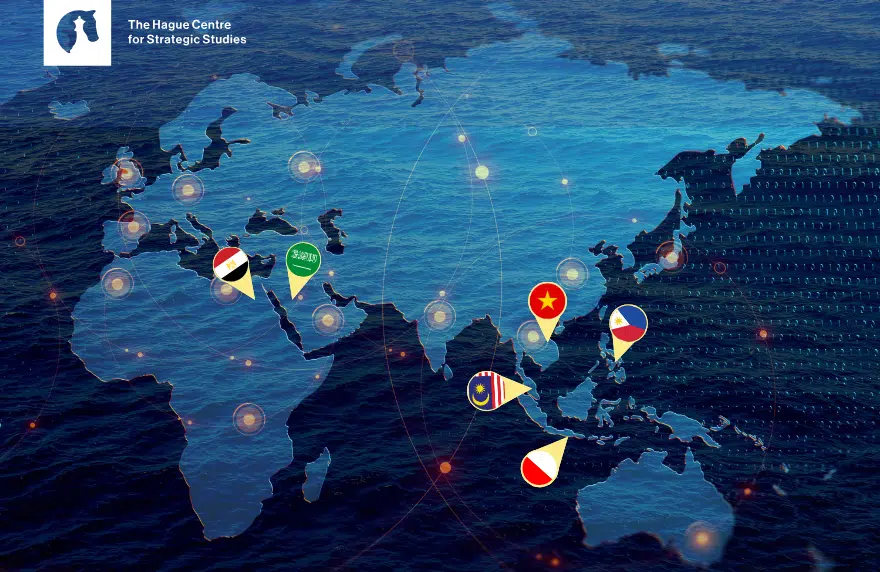
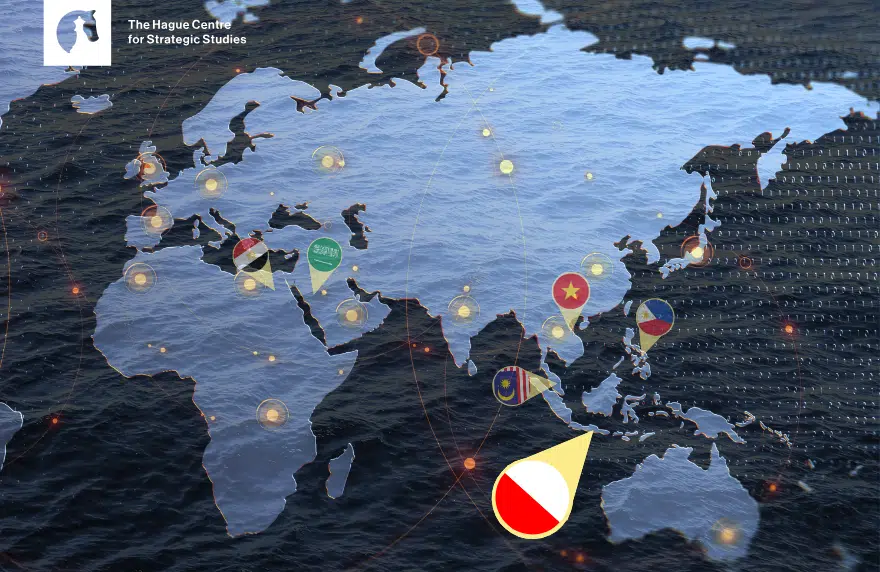
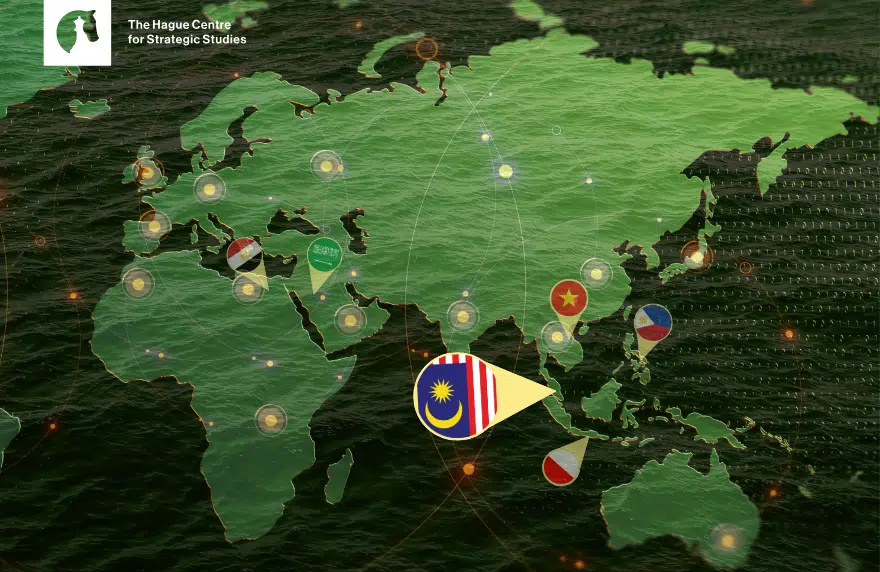
HCSS Strategic Analysts Benedetta Girardi and Pieter-Jan Vandoren examine how Europe can strengthen its maritime security engagement in two of the world’s most strategically vital regions: the South China Sea and the Red Sea. The report argues that Europe’s prosperity depends on secure and open sea lanes — yet both regions face rising instability driven by great-power rivalry, blue crime, chokepoint disruptions, hybrid threats, and accelerating environmental pressures.
Using a threat-based methodology grounded in the AMCAT and Cooperative Effectiveness Assessment Frameworks, the report identifies the most urgent risks, evaluates preventive and responsive countermeasures, and maps out where cooperation with regional emerging powers can be both feasible and impactful.
Key findings
- Threat landscapes are distinct but converging.
– In the South China Sea, threats are geostrategic and long-term, dominated by great-power competition and interstate disputes.
– In the Red Sea, threats are more episodic, driven by non-state actors, chokepoint vulnerabilities, terrorism, and piracy.
- Preventive measures offer Europe the most sustainable entry point, especially through capacity-building, joint training, maritime domain awareness, and information sharing.
- Responsive measures remain essential for high-intensity threats, but effectiveness hinges on trust, interoperability, and clear legal frameworks.
- Europe must match limited resources with strategic prioritisation, tailoring engagement to regional realities rather than adopting uniform approaches.
Recommendations
In the South China Sea, Europe should:
- Develop multilateral crisis-management and deconfliction mechanisms with regional navies.
- Strengthen maritime governance through cooperation on blue crime.
- Future-proof critical infrastructure by supporting resilience in ports, undersea cables, and climate-adapted facilities.
In the Red Sea, priorities include:
- Enhancing chokepoint resilience through contingency planning and real-time surveillance systems.
- Expanding coordinated multinational operations against piracy and smuggling.
- Co-developing climate-resilient maritime infrastructure and environmental early-warning systems.
Lead author Benedetta Girardi emphasises:
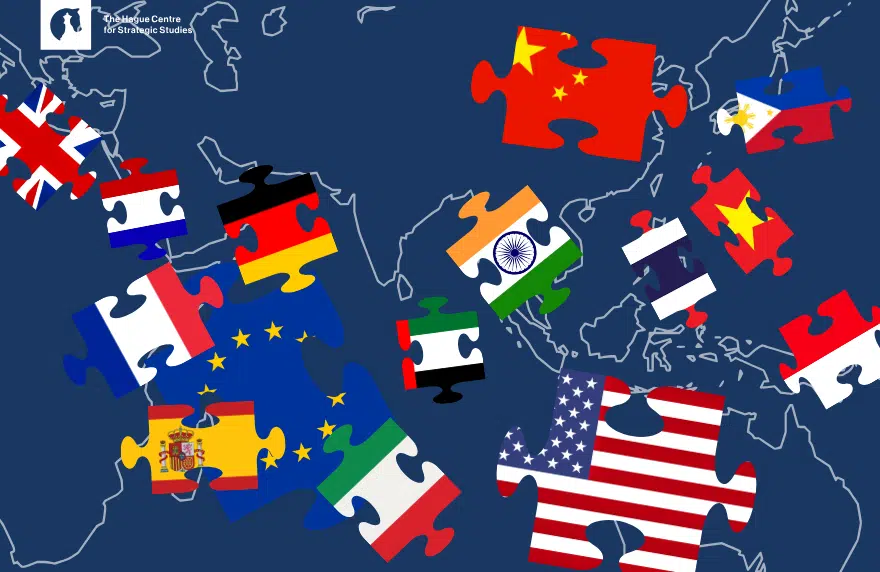
“Europe cannot secure its sea lines of communication alone. Partnerships with rising middle powers are no longer optional — they are the key to preserving stability, protecting global trade, and building a resilient, rules-based maritime order.”
The report concludes that Europe’s ability to act effectively at sea depends on a threat-based, region-specific approach that balances preventive investment with responsive readiness. By focusing on cooperation with emerging middle powers, Europe can strengthen maritime security where it matters most. The report proposes an actionable agenda to do so.
Authors: Benedetta Girardi and Pieter-Jan Vandoren
Contributor: Thomas Jansen
Quality Assurance: Dr. Tim Sweijs
The research for and production of this report has been conducted within the PROGRESS research framework agreement. Responsibility for the contents and for the opinions expressed, rests solely with the authors and does not constitute, nor should be construed as, an endorsement by the Netherlands Ministries of Foreign Affairs and Defence.



Related Content