Publications

Over the years, HCSS has built up an extensive archive of reports, monitors, papers and other publications. We disseminate the results of our research as broadly as possible to benefit the public good. Use the advanced search functions below to browse through our research library, most of which is available as free PDF downloads.
25 Mar 2025
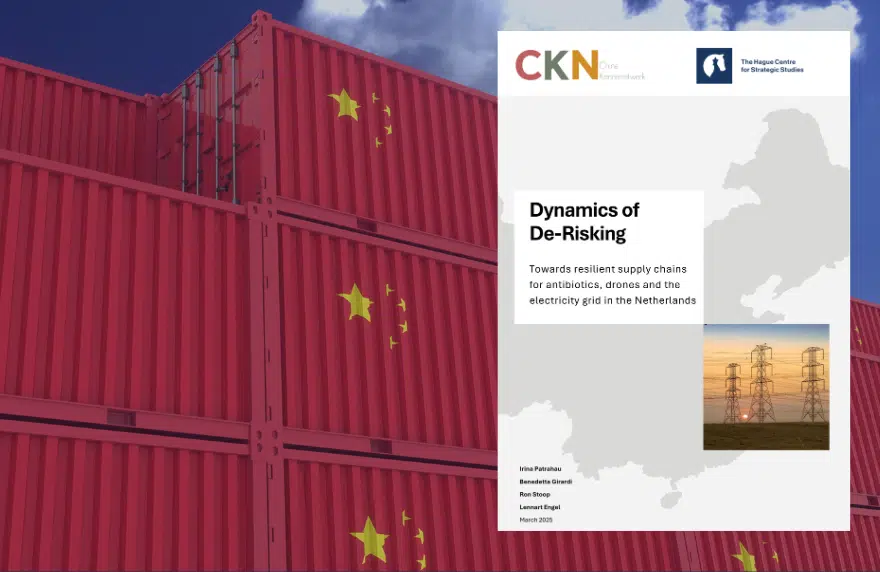
The EU faces growing economic dependencies on China in vital sectors like health, defence, and energy. This HCSS report by Irina Patrahau, Benedetta Girardi, Ron Stoop and Lennart Engel, written at the request of the China Knowledge Network (CKN), examines the risks posed by China’s economic statecraft and outlines a strategic de-risking approach for Europe. By analysing vulnerabilities in antibiotics, drones, and electricity grids, we provide concrete policy recommendations to strengthen resilience.
19 Mar 2025
This guest paper Are the West’s Golden Years Over? was written by Dr. Florence Gaub in anticipation of the third The Hague Strategic Foresight Forum Talks titled 'The Future World Order', held on 11 December 2024. The paper examines the narrative of Western decline in contrast to the rising influence of China and Russia. It argues that by embracing innovation and a forward-looking vision, the West can reshape its future and reclaim global leadership.
18 Mar 2025
On the 11th of December 2024, The Hague Centre for Strategic Studies (HCSS) invited foresight experts to explore the shifting dynamics of our global order from a North American, Southeast Asian and European perspective. This was the third and final event in a three-part series called 'The Hague Strategic Foresight Forum Talks'. The third event was titled ‘The Future World Order.’ This write-up of the third event offers perspectives on the flaws and merits of the current order and lays out the contours of the future global order from American, Asian and European experts. It concludes with a set of key takeaways offered by the participants.
17 Mar 2025
In the rapidly changing geopolitical context, middle and minor powers have fewer options regarding arms control. But minilateral cooperation can be beneficial to retain past experiences and expertise concerning the negotiation, implementation, and verification of formal arms control treaties. In a new HCSS guest paper, Wannes Verstraete focuses on the establishment, the current role, and future opportunities for the Benelux Arms Control Agency (BACA) as a successful example of trilateral conventional arms control cooperation.
14 Mar 2025
In deze nieuwe notitie over militaire inzet in Oekraïne bespreken Rob de Wijk, Tim Sweijs, Pieter Bindt en Tom Middendorp de mogelijke scenario’s, zoals een ‘geruststellingsmacht’ of een grootschalige afschrikkingsmissie. Zonder Amerikaanse betrokkenheid is afschrikking onzeker, en een staakt-het-vuren blijft instabiel. De notitie onderzoekt de risico’s van militaire inzet, het escalatiegevaar, de afweging tussen steun aan Oekraïne en NAVO-verdediging en de implicaties voor de Europese veiligheid.
12 Mar 2025
How are EDTs reshaping nuclear deterrence and global defence strategies? The latest HCSS report by Davis Ellison, Tim Sweijs, and Timur Ghirotto explores how emerging and disruptive technologies (EDTs) like AI, hypersonic missiles, and cyber warfare threaten global security. It highlights the urgent need for arms control measures, transparency, and European engagement with China to prevent instability.
7 Mar 2025
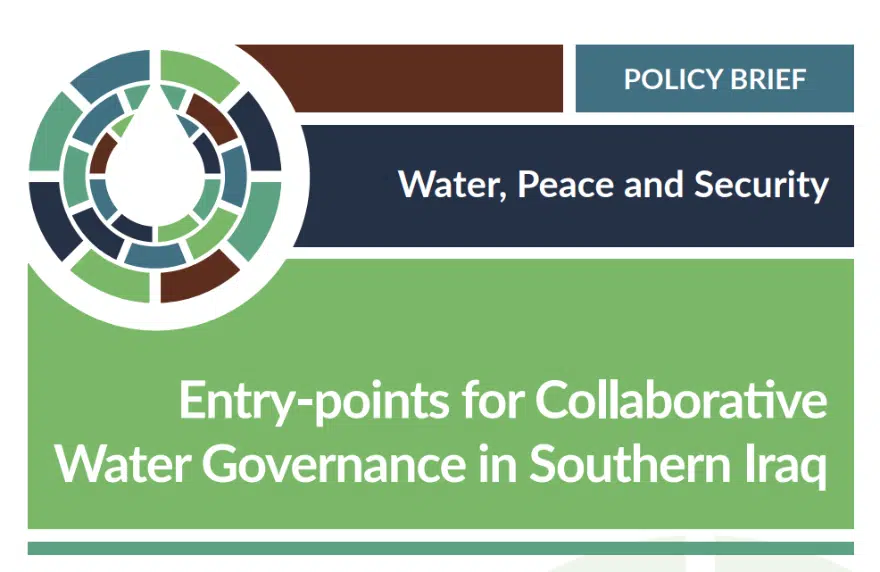
As Iraq continues to deal with a chronic water crisis, experts both inside and outside the government are mobilising to find and design durable solutions. Addressing water-related tensions in southern Iraq can be a significant challenge, especially when it comes to addressing long-term systemic issues. In support of designing realistic and achievable first steps, this Water, Peace and Security (WPS) policy brief – based on 13 interviews with water experts in southern Iraq, 3 focus groups, and 3 working groups – outlines a set of entry-points for the development of long-term solutions.
6 Mar 2025
How has Russia’s invasion of Ukraine opened up new spaces for organised crime to become weaponised across Europe and thereby risking security across the continent? This report by Laura Jasper, Ana Dadu, and Davis Ellison examines how the Russian invasion of Ukraine has enabled criminal networks to exploit wartime instability, adapt to shifting markets, and expand their operations across Eastern Europe. Key findings reveal a significant link between organised crime, kleptocracy, and stability, highlighting their particularly destabilising impact on Eastern Europe. Understanding these dynamics is crucial to addressing the hidden criminal dimensions of war.
5 Mar 2025
De grootste zorg bij de invoering van de gedeelde verantwoordelijkheid voor veiligheid was dat de overheid haar regierol zou verliezen en het toezicht zou afnemen. Hoewel de overheid veiligheid als kerntaak behield, werd zij steeds terughoudender in haar controle, wat leidde tot een verschuiving naar sectorale veiligheidsregels zonder bindende overheidsvoorschriften. Dit resulteerde in verminderde inspecties en bezuinigingen op toezicht. In deze notitie pleiten Professor mr. em. Pieter van Vollenhoven en Drs. Lodewijk Gunther Moor ervoor dat de Tweede Kamer het initiatief neemt om echt onafhankelijk toezicht door Rijksinspecties mogelijk te maken, zodat veiligheid niet ten koste gaat van bestuurlijke invloed en financiële overwegingen.
5 Mar 2025
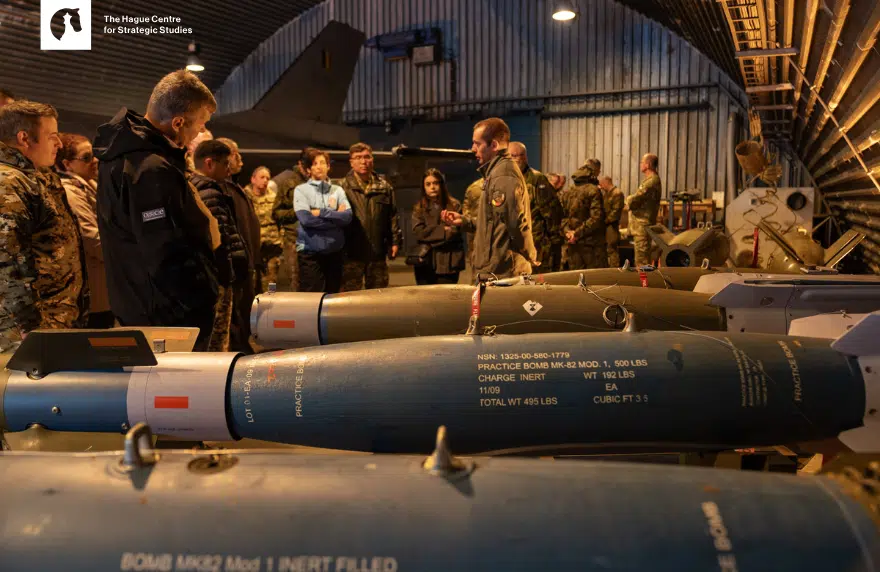
In an era of heightened geopolitical tensions, the importance of military preparedness and sustainment of any war effort is more pressing than ever. The Trump presidency has once more underscored the need for Europe to be able to fend for itself. Unfortunately, Europe is currently falling short in a number of critical capabilities if called upon to go alone. European NATO-members states strongly depend on US capabilities for their defence operations. This position paper will give an overview of the most pressing topics in the defence industry sector and will provide recommendations for future policy agendas.
28 Feb 2025
Control over water has become an entrenched part of strategic considerations for groups governing Syria, both due to the role played by water infrastructure in projecting power across the Syrian territory, and the fact that irrigation is currently the ‘sine qua non’ of food self-sufficiency ambitions. As Syria enters a reconstruction phase, how can the HTS-led transitional government use water governance to contribute to peace and stability in Syria? Our newest snapshot by Benedetta Benzoni tries to answer this question.
17 Feb 2025
Why did Western Allies fail to deter Russia’s invasion of Ukraine, and how can our deterrence improve? In this guest paper, Kenneth Payne, Professor of Strategy at King’s College London, explores how regret and shifting preferences shaped Western responses. Payne argues for a dynamic, self-reflective approach to deterrence that accounts for evolving goals and biases, complementing the focus on adversaries. Policymakers must challenge assumptions, revisit judgments, and embrace imagination to better navigate future crises.
7 Feb 2025
What lessons can Taiwan learn from the Russian war in Ukraine? A new HCSS study by Davis Ellison, Benedetta Girardi and Tim Sweijs analyses Ukraine’s resistance against Russia, offering key insights for Taiwan’s defence strategy. The report highlights the importance of asymmetric denial tactics, sustained resilience, and strategic deterrence to counter a potential Chinese invasion. Key recommendations include strengthening air and missile defence, enhancing naval strike capabilities, and improving intelligence networks. By learning from Ukraine, Taiwan can bolster its defences and deter aggression.
7 Feb 2025
The war in Ukraine illustrates the use of various old and new techniques in warfighting, employing both Western cutting-edge and Soviet-era equipment. Different innovations and adaptations have been witnessed across domains. Although each war is unique, we can distil lessons about the ongoing trends in warfighting and the employment of new and old equipment. This guest paper by Dr Viktoriya Fedorchak explores the lessons that can be learned from the land domain, focusing on the relevance for the potential Taiwan–China conflict.
7 Feb 2025
Taiwan has faced threats from China for decades, but the risk of invasion has grown significantly since Xi Jinping’s rise to power. Russia’s 2022 invasion of Ukraine has reshaped global geopolitics, offering valuable lessons for Taiwan’s national security. These lessons, however, must be adapted to Taiwan’s unique conditions, writes guest author Dr. Jyh-Shyang Sheu, Institute for National Defence and Security Research, in this HCSS paper. 
7 Feb 2025
At the onset of Russia’s full-scale invasion of Ukraine in February 2022, the Black Sea and the Sea of Azov were under firm Russian control. This narrative, however, quickly shifted, raising critical questions: How did Russia lose its maritime edge against a country with virtually no navy? How did Ukraine achieve such significant naval successes? This paper by guest author Prof. Alessio Patalano of King’s College London explores these questions and reveals how Ukraine turned the tide in the naval dimension of the conflict.
7 Feb 2025
The war in Ukraine has underlined the importance of airpower in a contemporary conflict like never before. What lessons from that conflict can be learned and applied to a possible future conflict in and around the island of Taiwan? This paper by HCSS strategic advisor Peter Wijninga will focus on the lessons for airpower, be it crewed or uncrewed, and ground-based air defence.
6 Feb 2025
De Strategische Monitor Politie 2024 biedt inzicht in de snel veranderende wereld en de impact daarvan op Nederland en haar democratische rechtsstaat. De monitor beschrijft hoe geopolitieke, technologische en maatschappelijke ontwikkelingen onzekerheid, instabiliteit en hybride dreigingen versterken. Het rapport benadrukt het belang van samenwerking tussen overheid, politie en internationale actoren, met een focus op preventie, innovatie en versterking van weerbaarheid. Door realistische scenario’s en kennisontwikkeling biedt de monitor handvatten voor strategie en beleid, gericht op het waarborgen van stabiliteit en veiligheid in een complexe, dynamische samenleving.
27 Jan 2025
Hoe kan Nederland niet alleen zijn eigen defensie-industrie versterken, maar ook bijdragen aan een veerkrachtiger Europees defensielandschap dat beter in staat is om toekomstige uitdagingen aan te gaan? De vaste commissie voor Defensie van de Tweede Kamer hield op 16 januari 2025 een rondetafelgesprek over Innovatie in de Defensie-industrie met Michel Rademaker en andere deskundigen. Rademaker, HCSS adjunct-directeur, mede-oprichter en grondstoffenexpert, schreef ter voorbereiding deze position paper.
21 Jan 2025
Nederlandse steden staan komende decennia voor complexe uitdagingen door bevolkingsgroei, vergrijzing, migratie, klimaatverandering en technologische ontwikkelingen. Kwetsbare wijken, superdiversiteit, polarisatie, psychische problematiek en criminaliteit vergroten de druk op veiligheid en leefbaarheid. Dit nieuwe HCSS-onderzoek biedt inzichten voor strategische aanpassingen en lange termijnbeleid. Samenwerking tussen steden, provincies en het Rijk is cruciaal om stedelijke veerkracht te waarborgen en toekomstgerichte oplossingen te realiseren.
20 Jan 2025
Over the past years, China’s rapid military modernisation has caused alarm in the US, Asia and Europe. If the US-China military balance of power in the Indo-Pacific definitively tips in China’s favour, this could have far-reaching consequences for security in East Asia, as well as globally. Drawing on a collaborative research effort by HCSS and Datenna, this report provides a detailed analysis of China's technological strategies and industrial landscape, offering European policymakers actionable recommendations for managing technology transfer and safeguarding security interests.
16 Jan 2025
De wereld is in transitie, en de EU moet zich aanpassen. De nieuwste HCSS Strategische Monitor “Chaos, Orde en Machtspolitiek” benadrukt: strategische autonomie, het vergoten van de defensiecapaciteit en samenwerking met het mondiale zuiden zijn cruciaal. Onderzoekers Frank Bekkers, Rob de Wijk, Jesse Kommandeur en Ron Stoop benadrukken dat Europa een verenigde aanpak nodig heeft om de uitdagingen van deze tijd te overwinnen. Alleen door gezamenlijk op te treden kunnen de EU-lidstaten een sleutelrol spelen in de nieuwe wereldorde.
16 Jan 2025
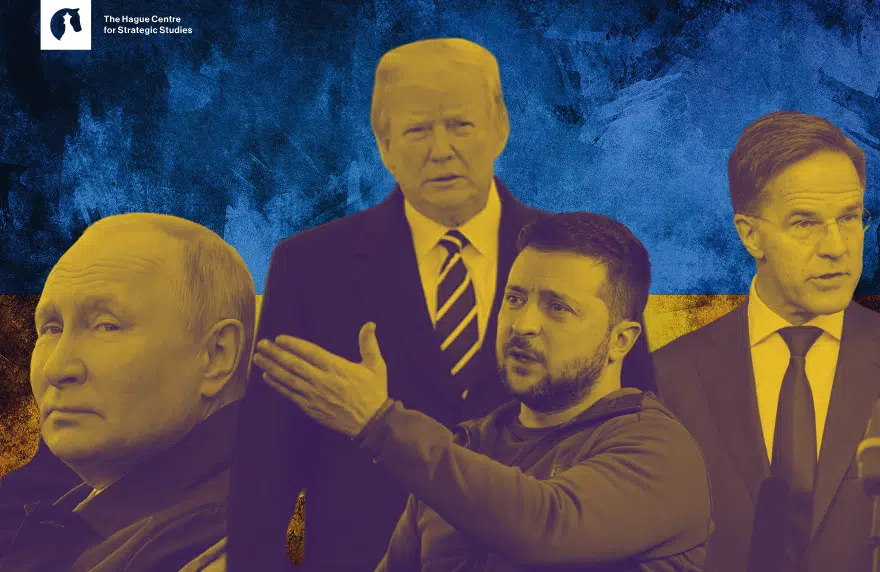
New joint Clingendael/HCSS policy brief | Next week, Trump takes office with the ambition to strike a quick deal between Russia and Ukraine that will have far-reaching repercussions for security on the European continent. There is no quick and easy fix. A ceasefire by itself does not end the war, and war termination does not necessarily lead to sustainable peace - especially not if it compromises on key aspects of Ukrainian sovereignty. Europe should not only complain to Trump but be actively involved and help to make sure an agreement succeeds. This includes funds for reconstruction, continued arms supplies and stabilising and securing Ukraine after a ceasefire.
15 Jan 2025
How can we bolster the resilience of the Dutch military supply chain? The Dutch Ministry of Economic Affairs has commissioned HCSS and PwC to analyse the supply chain of Air Defence & Command Frigates (Luchtverdedigings- en Commandofregat - LCF). This study identifies geopolitical vulnerabilities related to critical raw materials and provides policy recommendations for enhancing resilience against disruptions. The research shows that the Ministry of Defence has a solid overview of its tier-1 suppliers who are located within EU and NATO countries, but limited insights exist regarding lower-tier suppliers and raw material dependencies.

© The Hague Centre for Strategic Studies