Research

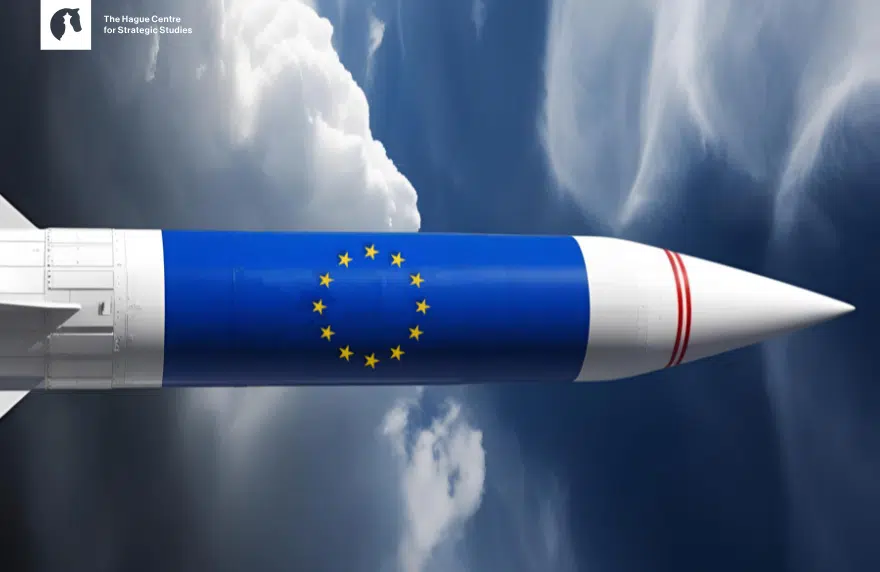
Europe’s deterrence architecture is changing—whether European leaders like it or not. Built for more than 75 years on American extended nuclear deterrence and forward deployments, it is now increasingly exposed to US retrenchment and political volatility. Despite a brief interlude of reassurance under the Biden administration, the second Trump presidency has once again shaken European assumptions about the reliability of the US security guarantee.
In this new HCSS report, Davis Ellison and Tim Sweijs examine how US retrenchment, Russia’s military adaptation, and the collapse of arms control are reshaping Europe’s security environment.
Their conclusion is stark: continued dependence on the United States, at the expense of Europe’s own capabilities, is no longer a sustainable basis for European defence — particularly in light of Russia’s ongoing military modernisation, the erosion of arms control regimes, and Europe’s persistent conventional shortfalls.
“Europe faces a choice between muddling through on borrowed credibility or making the hard political decisions needed to defend itself,” says Davis Ellison.
“A credible European deterrence architecture starts first and foremost with conventional strength, not nuclear proliferation,” adds Tim Sweijs.
The report advances a new European-led deterrence posture centred on a regionally specialised “shield and spear” concept. The shield is deterrence by denial, grounded in robust conventional forces capable of defending Europe’s most vulnerable regions. The spear is deterrence by punishment, based on conventional deep precision strike capabilities, ultimately backed by more closely coordinated British and French nuclear deterrents.
Key findings:
- The United States is unlikely to recentre European security; US strategic priorities are shifting decisively towards the Pacific and the Western Hemisphere.
- Russia is likely to emerge from the war in Ukraine with a more capable and experienced military by 2030, despite heavy losses.
- European armed forces remain structured for expeditionary missions rather than sustained, high-intensity warfare on the continent.
- Nuclear proliferation within Europe would increase escalation risks and undermine stability; strengthening conventional capabilities offers a safer and more credible path.
Key recommendations:
- Make an explicit political decision to reduce dependency on the United States and build a European-led deterrence posture.
- Shift from a narrow focus on readiness to a broader concept of preparedness, emphasising personnel, reserves, sustainment, and surge capacity.
- Develop regionally focused force packages to defend the Central Region, isolate Kaliningrad, deny access to key maritime theatres, and protect European populations from air, missile, and drone attacks.
- Deepen coordination between the UK and France on nuclear strategy, while integrating conventional support roles such as deep precision strike and conventional-nuclear operations.
- Invest in European defence-industrial autonomy, particularly in C4ISR, integrated air and missile defence, long-range strike, ammunition stockpiles, and strategic lift.
As Ellison and Sweijs argue, Europe can only defend itself by securing its most vulnerable regions and vital approaches—and by taking responsibility for shaping its own strategic environment.
Authors: Davis Ellison and Tim Sweijs
Quality Assurance by Frank Bekkers
Contributions from Pierre-Etienne Courrier, Julie Ebrard, and Laurence Krakow.
The research for and production of this report has been conducted within the PROGRESS research framework agreement. Responsibility for the contents and for the opinions expressed, rests solely with the authors and does not constitute, not should be construed as, an endorsement by the Netherlands Ministries of Foreign Affairs and Defence.



Related Content