Research
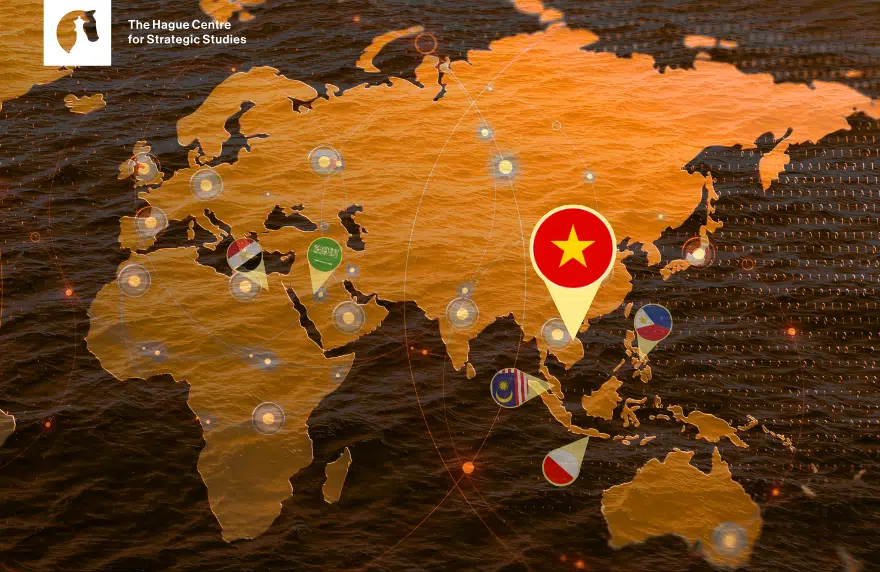
For a new paper series, six guest authors explore key aspects of maritime security cooperation between Europe and rising middle powers. Each author presents the perspective of a different littoral state, specifically Egypt and Saudi Arabia in the Red Sea region, and Indonesia, Malaysia, the Philippines and Vietnam in the South China Sea. The series builds on insights from the report ‘Bridging Waters: Strengthening Europe’s Maritime Security Engagement Through Partnerships with Rising Middle Powers’ and the webinar Bridging Waters: Middle Powers’ Cooperation on Maritime Security, held on 18 November, which brought together maritime experts from both regions to discuss avenues for further collaboration. The discussion highlighted the need for strengthened partnerships to address growing instability and to safeguard maritime routes that are vital for international trade.
Vietnam has been under the EU’s IUU “yellow card” since 2017 due to shortcomings in vessel monitoring, enforcement, and the discharge of its Flag State responsibilities. The card has had significant economic and reputational consequences, including declining seafood exports to Europe and the risk of similar restrictions from other major markets. In response, Vietnam has undertaken substantial legal reforms, strengthening its fisheries legislation, tightening sanctions, and improving inter-agency coordination. Despite these efforts, persistent gaps remain, particularly in the monitoring of small-scale vessels, continuous VMS transmission, and the reliability of traceability systems, which continue to hinder Vietnam’s ability to demonstrate full compliance with EU standards.
This HCSS guest paper by Pham Ngoc Minh Trang analyses Vietnam’s post-2017 legal reforms and identifies the areas where cooperation with the EU remains critical. The paper highlights how European expertise in vessel monitoring, electronic reporting, and at-sea enforcement can support Vietnam in closing its remaining capacity gaps. It also outlines practical avenues for partnership, including sustained legal dialogue, joint training on VMS anomaly response, and pilot tracking programmes for small-scale vessels. Strengthening Vietnam’s compliance mechanisms would not only facilitate the lifting of the yellow card but also promote more sustainable fisheries governance, while ensuring that enforcement measures remain sensitive to Vietnam’s broader maritime security context in the South China Sea.
Author: Pham Ngoc Minh Trang, Research fellow, Max Planck Foundation for International Peace and the Rule of Law, Germany
Editors: Pieter-Jan Vandoren and Benedetta Girardi
Quality Assurance: Paul Sinning
The research for and production of this report has been conducted within the PROGRESS research framework agreement. Responsibility for the contents and for the opinions expressed, rests solely with the authors and does not constitute, nor should be construed as, an endorsement by the Netherlands Ministries of Foreign Affairs and Defence.



Related Content