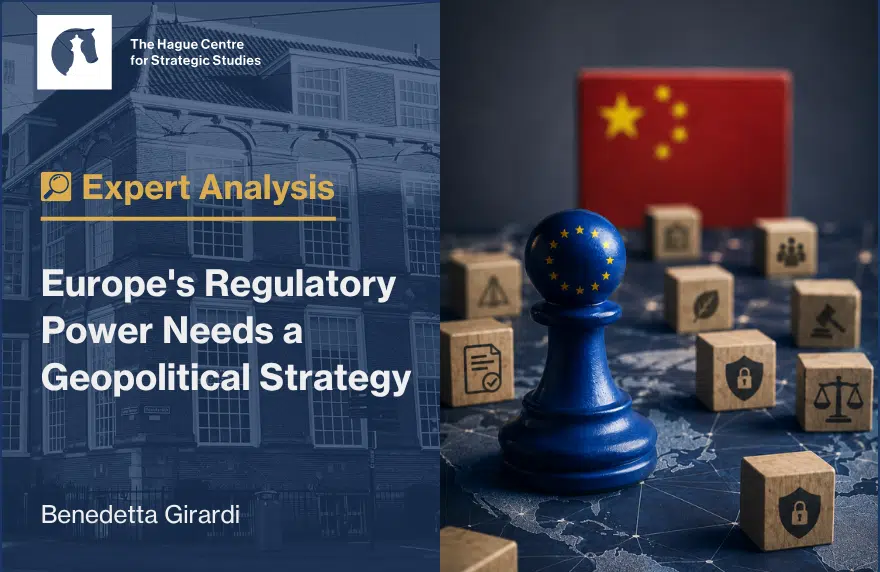
As global competition intensifies over technology standards, supply chains, and digital governance, the European Union finds itself in a paradoxical position: it remains the world’s most influential regulatory power, yet continues to treat this influence largely as a by-product of governance rather than a tool of geopolitical strategy. While Brussels has successfully exported its rules across areas such as data protection, sustainability, and competition policy, other major powers are increasingly leveraging regulatory frameworks and standard-setting processes as instruments of statecraft. Drawing on China’s strategic use of legal and regulatory influence, Benedetta Girardi argues that the EU must begin viewing its regulatory power as a geopolitical asset if it wants to preserve and advance its position in an increasingly contested international order.
The European Union (EU) is often described as a regulatory superpower. This characterisation is not without merit. Through its vast internal market and sophisticated rulemaking apparatus, the EU has developed an unparalleled capacity to shape global standards. European regulations on data protection, competition policy, sustainability reporting, digital governance, and environmental compliance frequently extend beyond the Union’s borders, influencing corporate behaviour and regulatory approaches worldwide.
Still, an important question remains when looking at the EU’s position in today’s global affairs: does the EU think geopolitically about regulation?
For decades, European policymakers have largely approached law and regulation as instruments of governance. Rules are designed to facilitate market integration, protect consumers, safeguard fundamental rights, and ensure predictability. In this understanding, law constrains power. It establishes limits, creates accountability, and reduces arbitrariness.
Increasingly, however, major powers view regulation through a different lens. Rather than merely constraining power, they regard legal frameworks, standards-setting processes, and international institutions as instruments through which power can be exercised and strategic objectives pursued. Among contemporary actors, China has emerged as one of the most sophisticated practitioners of this approach.
This development is often misunderstood in Western discussions. Public debates frequently portray China as a revisionist actor seeking to dismantle the existing international order. Such interpretations capture only part of the picture. In many cases, Beijing has not sought to overthrow international institutions but to operate within them more effectively to its advantage. Chinese policymakers have invested heavily in international organisations, technical standardisation bodies, legal expertise, and regulatory engagement. The objective is not necessarily to replace existing rules wholesale, but to shape how they evolve, how they are interpreted, and whose interests they ultimately serve.
This distinction matters.
The challenge posed by China’s growing legal and regulatory influence is not primarily one of rule-breaking. Rather, it concerns influence over rule-making and rule-interpretation. As geopolitical competition increasingly unfolds within institutional and regulatory arenas, power accrues not only to those who can enforce rules, but also to those who can shape the normative environment in which those rules operate.
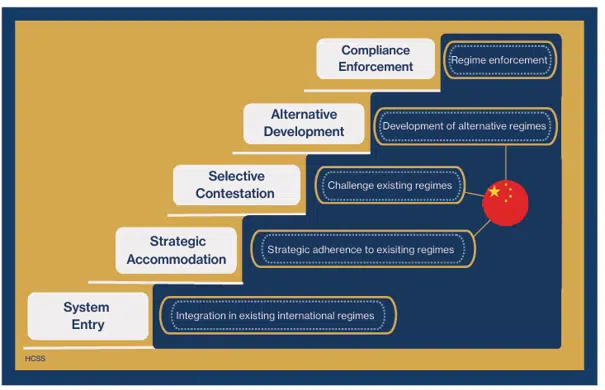
Figure 1: The PRC and International Regimes
To be clear, claims regarding Chinese lawfare should not be exaggerated. Much of the public discourse surrounding the concept risks overstating both the coherence and effectiveness of China’s efforts. Chinese initiatives remain uneven across sectors and regions. In many domains, Beijing continues to encounter substantial resistance from other states, international organisations, and private actors. The notion of an unstoppable Chinese legal offensive misrepresents a far more complex reality.
Nevertheless, dismissing the phenomenon altogether would be equally misguided.
China’s experience demonstrates that legal and regulatory instruments can be mobilised strategically as part of broader statecraft. It illustrates how influence can be accumulated through participation in technical committees, engagement in standards development, legal capacity-building, and long-term institutional investment. These activities may appear technocratic, but their consequences are often geopolitical.
For Europe, this observation carries an uncomfortable implication.
The EU arguably possesses the most powerful regulatory toolkit in the world. The so-called “Brussels Effect” has shown that European standards frequently become de facto global standards because firms operating internationally choose to comply with EU requirements across their entire business models. As a result, European regulations often shape markets far beyond the Union’s borders.
Despite this considerable influence, Europe rarely treats regulatory power as a strategic asset in the same way that other major actors do.
This is not because the EU lacks capabilities. Rather, it reflects a persistent tendency to separate governance from geopolitics. European institutions often view regulatory success as an end in itself, emphasising compliance, harmonisation, and market efficiency. While these objectives remain important, they do not fully account for the increasingly competitive international environment in which regulation now operates.
The geopolitical significance of standards and legal frameworks is growing. Emerging technologies, critical infrastructure, digital ecosystems, supply chains, artificial intelligence, and green technologies are all governed by rules that shape market access, technological trajectories, and strategic dependencies. Decisions made in technical committees or regulatory agencies can have consequences comparable to those generated by more traditional instruments of power.
In this context, norms and regulations are no longer merely administrative tools. They are geopolitical assets.
The implications for Europe are significant. Much contemporary debate focuses on whether the EU can compete with China or the United States through military spending, industrial subsidies, or technological investment. These discussions are important, but they often overlook an area where Europe already enjoys a comparative advantage: its capacity to shape rules.
The strategic challenge, therefore, is not whether Europe can replicate the power resources of other major actors. Rather, it is whether Europe is willing to leverage its own strengths more deliberately. This would require a shift in mindset. Regulation would need to be viewed not solely as a mechanism for governance, but also as an instrument of influence capable of advancing European interests in an increasingly contested international system.
Such a shift does not imply abandoning the EU’s commitment to multilateralism, the rule of law, or open markets. Nor does it require emulating China’s approach wholesale. The lessons Europe can draw from the Chinese experience concern strategy rather than ideology. They highlight the importance of recognising that legal and regulatory domains have become central arenas of geopolitical competition.
Europe’s regulatory power remains one of its most valuable sources of international influence. The question is whether European policymakers are prepared to treat that influence as an element of statecraft rather than merely a by-product of governance.
In an era defined by strategic rivalry and institutional contestation, that distinction will prove increasingly consequential.
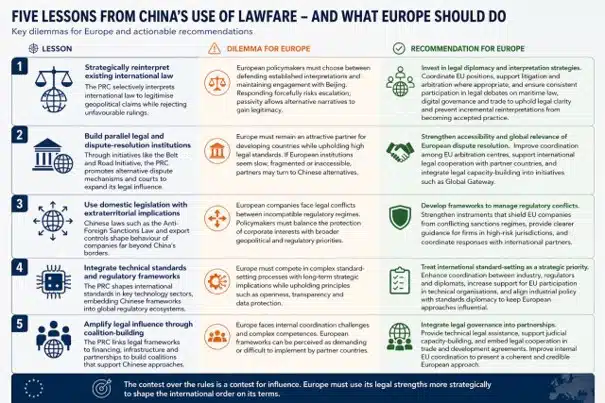
Figure 2: Five lessons from China’s use of lawfare – and what Europe should do
Read the full report here: Reshaping the international legal order: China’s strategic use of lawfare and lessons learned for Europe
Benedetta Girardi, Programme Coordinator Europe in the Indo-Pacific
Experts

Related Content