No Bang for Buck: Exploring the Heterogeneous Relationships Between Official Development Assistance and Intrastate Conflict Casualties
What determines whether Official Development Assistance (ODA) can reduce casualties in intrastate conflicts? In the newly published master’s thesis, HCSS Data Scientist Emma Bokel examines 156 countries between 1989 and 2022 using Dynamic Panel GMM and a Causal Forest model to assess both average effects and underlying heterogeneity. The study finds that ODA does not reliably reduce conflict deaths on average, with a persistent “conflict trap” driven by prior-year fatalities. Instead, effectiveness depends on four key conditions: political stability, aid fragmentation, delivery channel, and purpose-specific aid dynamics, leading to policy recommendations emphasising context-sensitive allocation, multilateral delivery in fragile settings, and prevention over de-escalation.
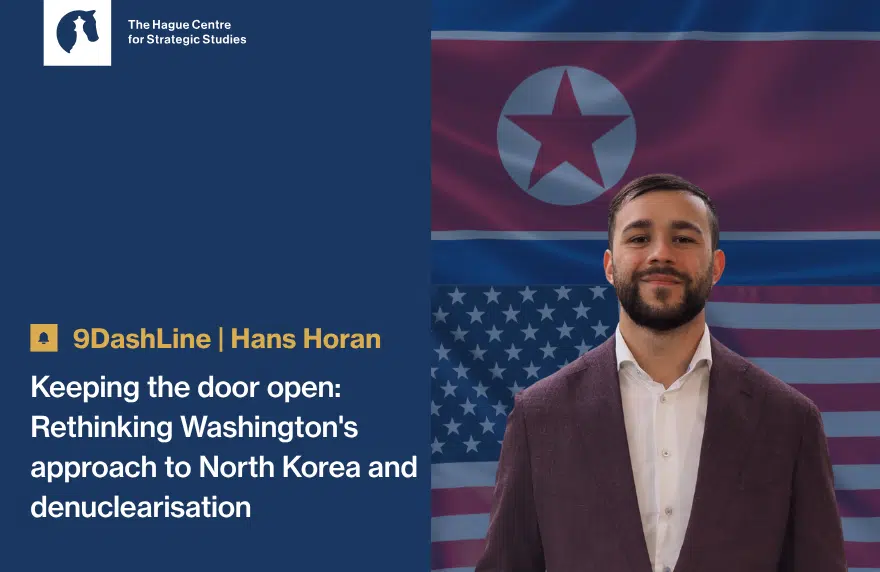
9DashLine | Hans Horan: Keeping the door open: Rethinking Washington’s approach to North Korea and denuclearisation
In late February 2026, during a speech at North Korea’s Ninth Party Congress, Supreme Leader Kim Jong-un declared that denuclearisation “can never happen” and that the country’s nuclear capabilities were “irreversible and permanent”. HCSS analyst Hans Horan argues Washington should keep the door open: sustain dialogue and wait for cracks in Pyongyang’s ties with Moscow and Beijing.
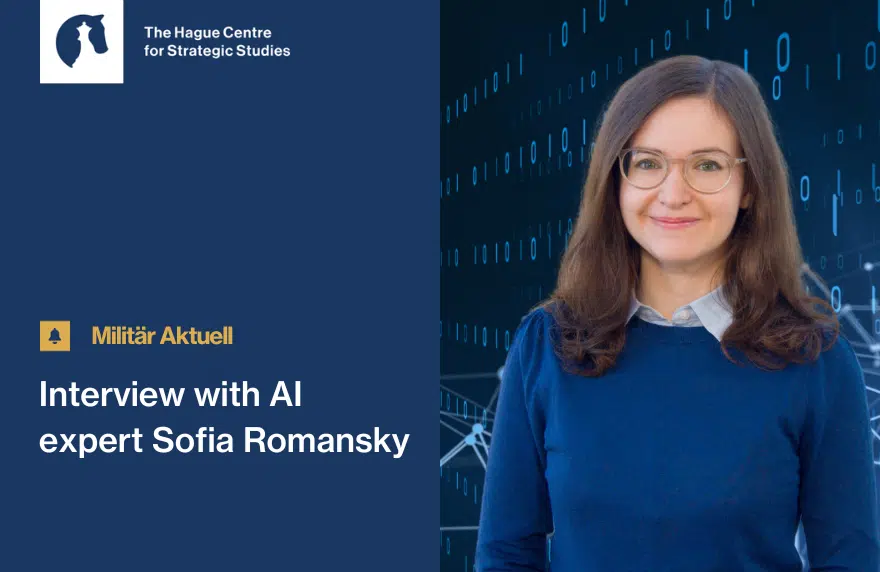
Militär Aktuell | Interview with AI expert Sofia Romansky
Militär Aktuell recently took part in the Paris Action Summit on Artificial Intelligence (February 10-11), a high-profile event organized by the French Ministry of Foreign Affairs. On the fringes of the summit, the renowned École Supérieure de Guerre provided an opportunity to talk to Sofia Romansky, strategic analyst at The Hague Centre for Strategic Studies and project coordinator of the Global Commission on Responsible AI in the Military Domain.