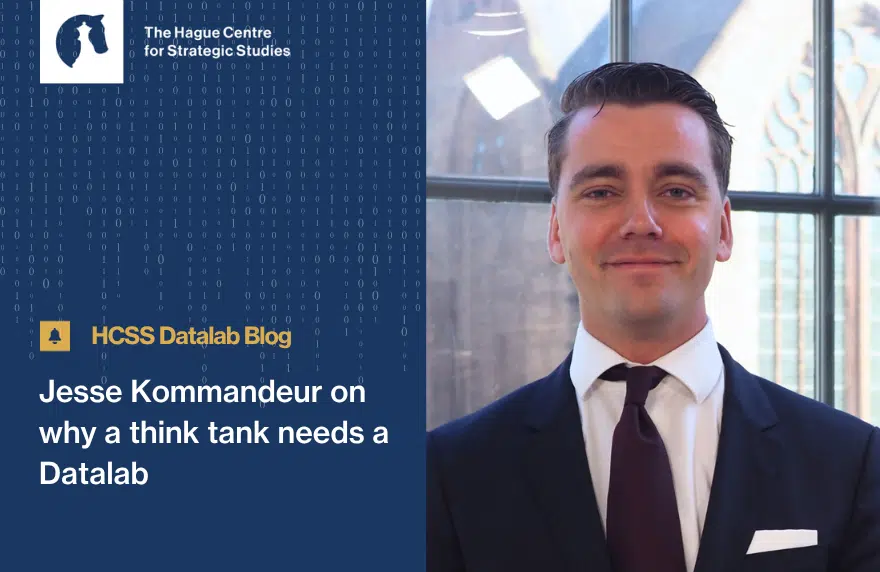
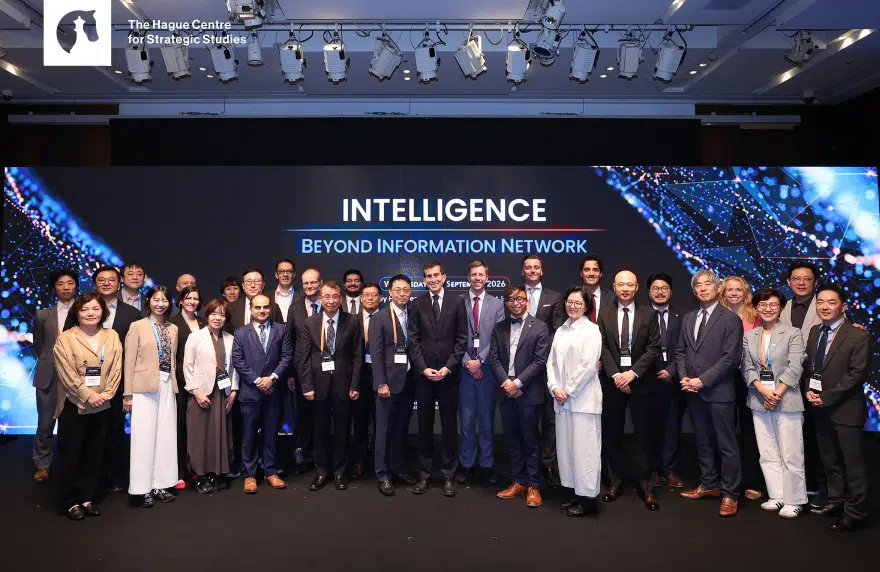
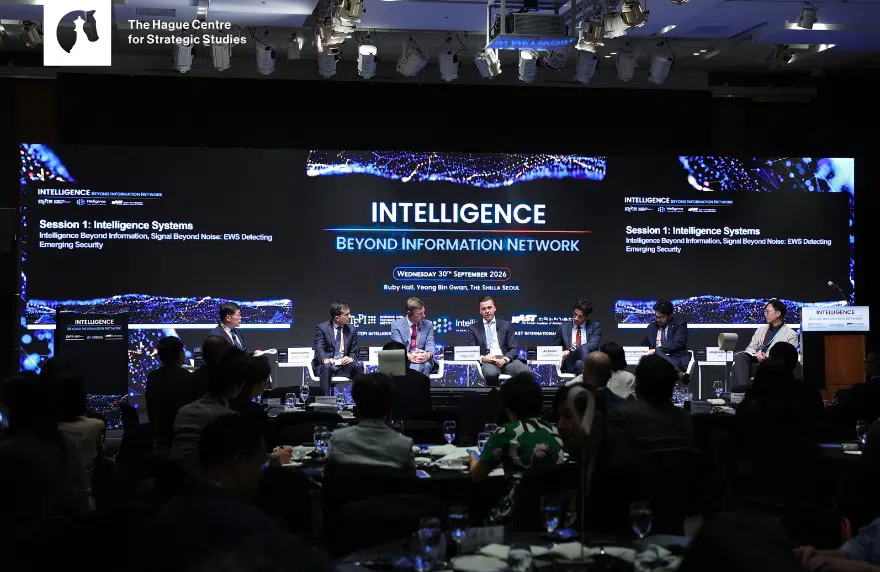
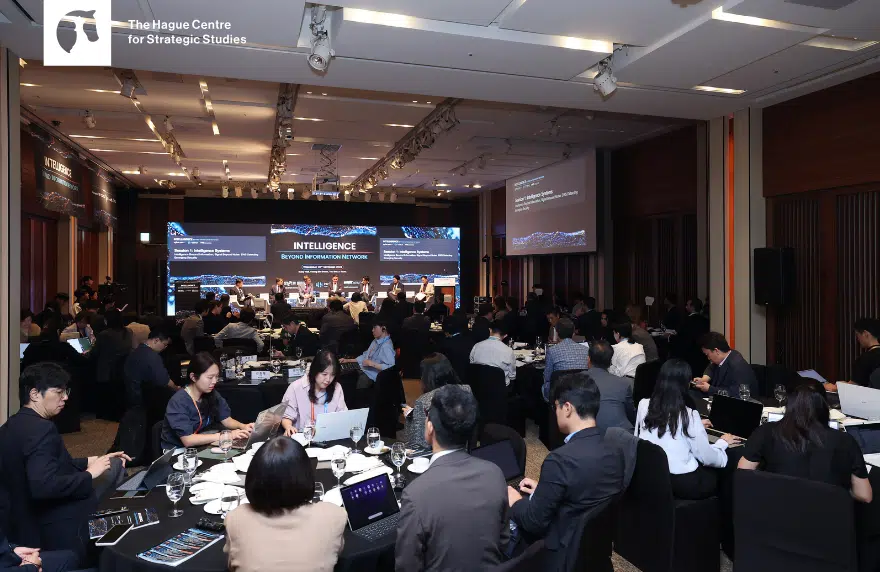
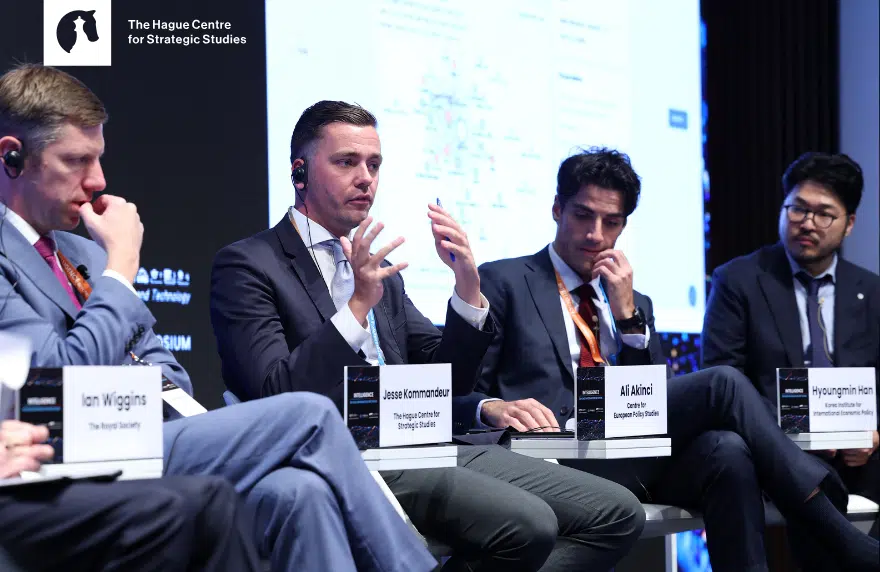
Jesse Kommandeur, Manager of HCSS Datalab, showcased DOMINO at the 2026 STEPI Intelligence Dialogue in Seoul, South Korea. The event brought together international experts to explore how science and technology intelligence can support strategic decision-making amid growing geopolitical tensions. DOMINO demonstrates how artificial intelligence can help analysts keep track of developments across complex supply chains. Discussions also highlighted technological interdependencies and international cooperation. The dialogue underscored the need to develop intelligence tools collaboratively, turning complex data into actionable insights for decision-makers.
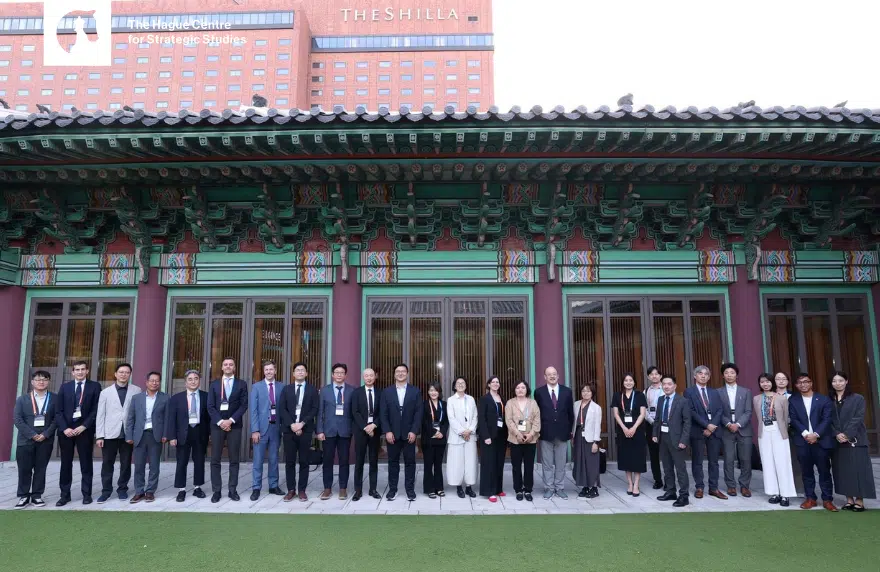
How can science and technology intelligence support strategic decision-making? And what is the role of data in this process? This is what experts from leading think tanks and research institutions discussed during the second annual 2026 STEPI Intelligence Dialogue, hosted by the Science and Technology Policy Institute (STEPI) on September 20, 2026 in Seoul. Co-hosted by the Korean Academy of Science and Technology (KAST), the discussions focused on the growing importance of early warning, strategic technology intelligence and international cooperation, amid the increasing securitisation of emerging technologies.
Among the international experts participating in the first session “Intelligence for Early Warning in Science and Technology” was Jesse Kommandeur, Manager of the HCSS Datalab. The session explored how information can be transformed into actionable intelligence and how red flagging systems can help monitor important signals of change in rapidly evolving environments.
DOMINO
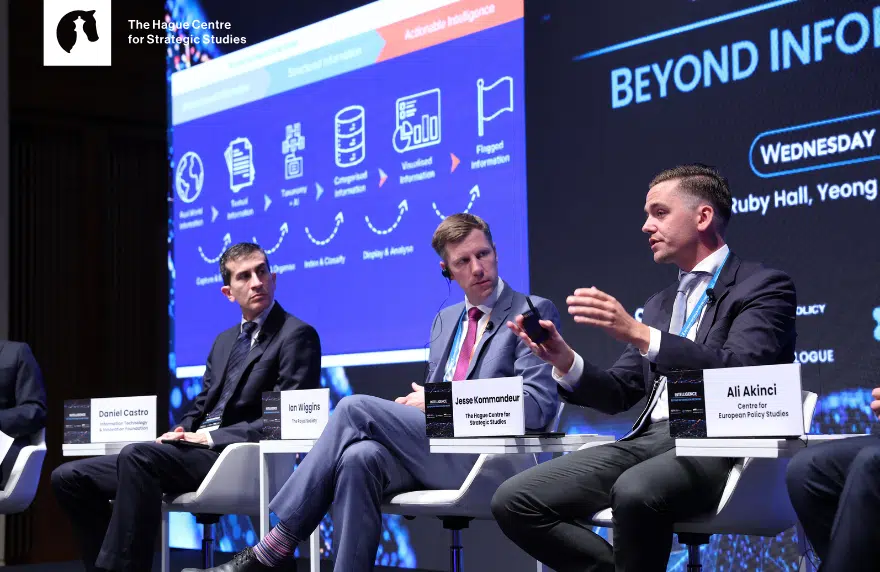
Kommandeur presented DOMINO as a practical example of how artificial intelligence can help analysts keep track of developments across complex supply chains. It is one of the platforms that has been developed at the Datalab to flag warning signs and to understand potential domino effects. The platform does so by combining real-time news articles with an AI classification system. The supply chains that are monitored range from critical minerals to advanced products such as semiconductors and permanent magnets.
The demonstration of DOMINO directly reflected the central theme of the session: moving beyond simply collecting large volumes of information towards identifying signals that can inform strategic decisions. STEPI researchers stressed the importance of detecting developments that may not yet be visible through conventional intelligence approaches. One recurring concept was information asymmetry – the ability to identify changes or risks that others have not yet detected.
Understanding the technological interdepencies
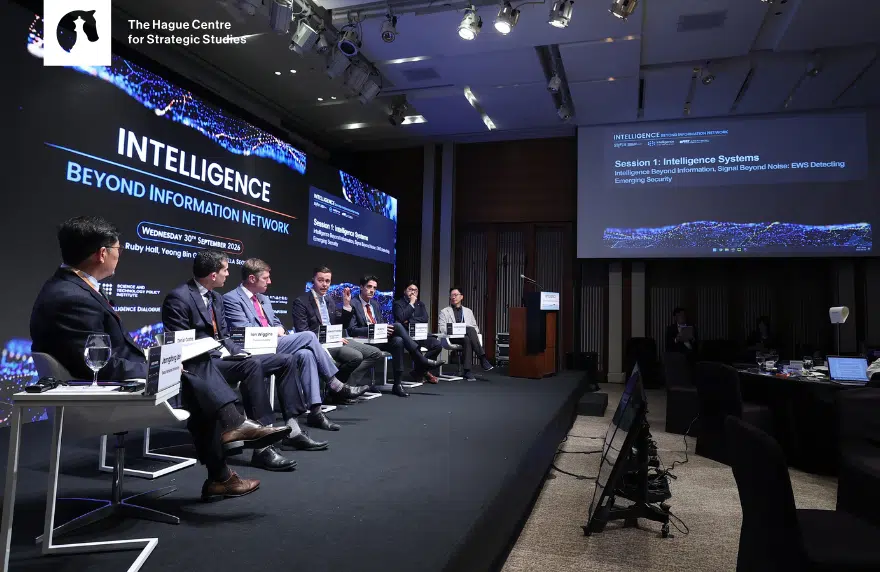
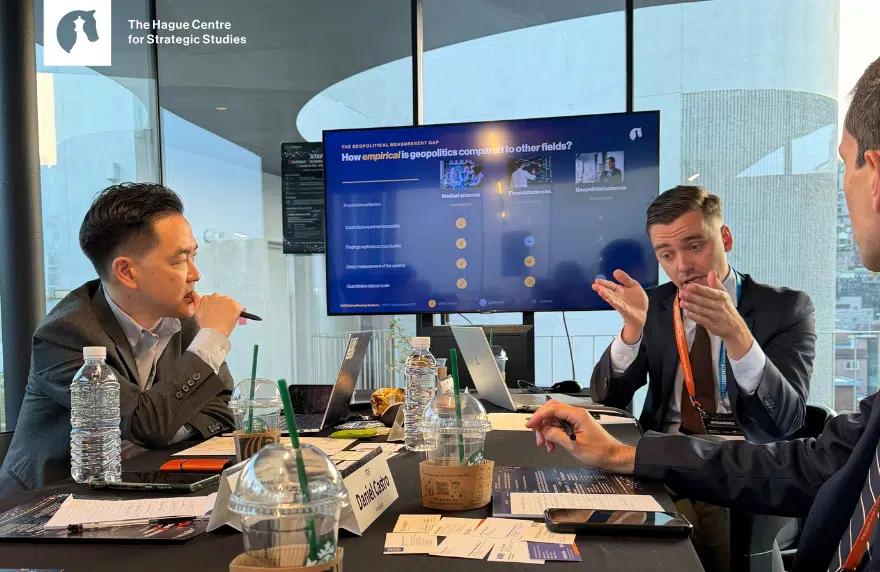
The second session also addressed the geopolitical aspects of technological supply chains. The session was devoted to mapping out the AI value chain from a geopolitical and security perspective. The panellists discussed questions such as which countries and companies play a key role in the development of AI, and what strategic risks arise if a country is dependent on other countries for certain components?
The discussion once more addressed that, in addition to semiconductors technology, other dependencies and vulnerabilities still exist, such as sensors, actuators, assembly and system integration. The participants agreed that a better understanding of these interdependencies requires a broader view of where national strengths, dependencies and blind spots lie.
The road ahead
For the HCSS Datalab, the invitation to demonstrate DOMINO in Seoul provided an opportunity to contribute a concrete, technology-enabled approach to this emerging international intelligence community. The dialogue underscored the growing need to connect data and strategic analysis across borders – and the role that AI-enabled tools can play in making complex global supply chain developments more visible to decisionmakers.
Looking back on the STEPI discussions, Kommandeur notes: “It’s encouraging to see how seriously this community is thinking about these questions. Beyond the topics themselves, I think the focus of the conversation is now also shifting towards the methods: how do we actually build tools like this, and how can we work together on that development so we’re not all reinventing the wheel?”

About DOMINO
DOMINO provides a near real-time synthesis of global events that impact critical raw material supply chains. It enables decision-makers and industry stakeholders to understand potential domino effects, where a single change can trigger a cascade of consequences that affect supply chain security. Developed with support from the Netherlands Materials Observatory (NMO).
Experts

Related Content