Research
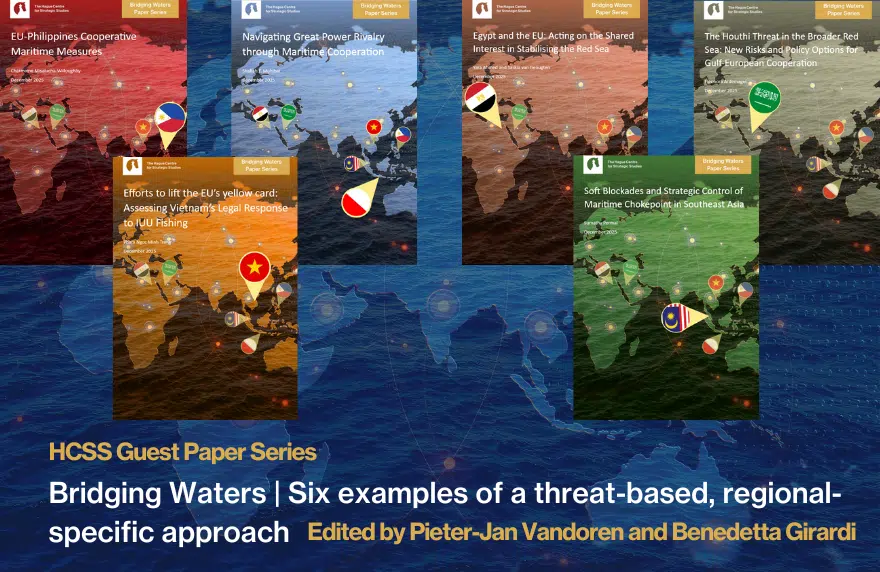
For a new paper series, six guest authors explore key aspects of maritime security cooperation between Europe and rising middle powers. Each author presents the perspective of a different littoral state, specifically Egypt and Saudi Arabia in the Red Sea region, and Indonesia, Malaysia, the Philippines and Vietnam in the South China Sea. The series builds on insights from the report ‘Bridging Waters: Strengthening Europe’s Maritime Security Engagement Through Partnerships with Rising Middle Powers’ and the webinar Bridging Waters: Middle Powers’ Cooperation on Maritime Security, held on 18 November, which brought together maritime experts from both regions to discuss avenues for further collaboration. The discussion highlighted the need for strengthened partnerships to address growing instability and to safeguard maritime routes that are vital for international trade.
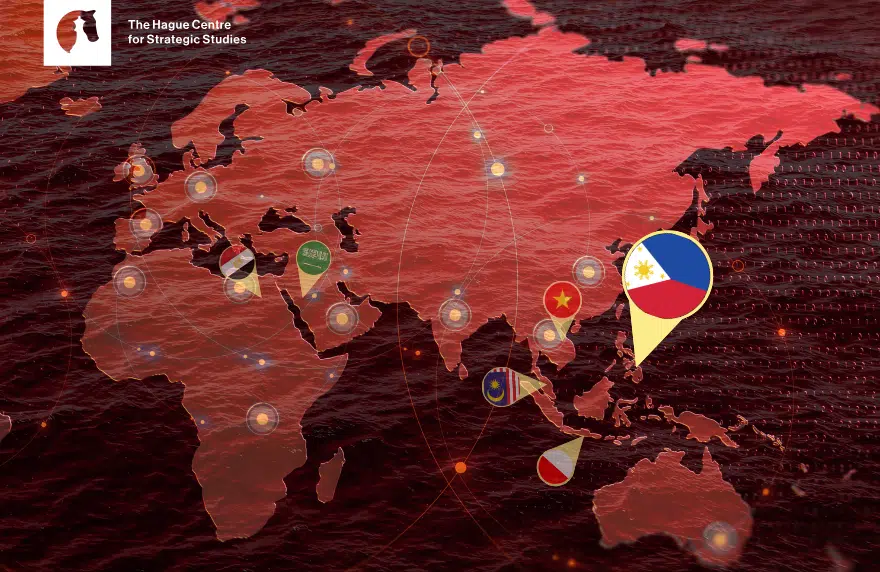
The South China Sea is already a highly contested maritime space. As geopolitical tensions rise and environmental pressures deepen, modern maritime security has become increasingly complex, with economic, ecological, and strategic risks converging. For the Philippines, these challenges are acute, ranging from territorial incidents and destructive dredging to overexploited fisheries and growing pressure on coastal communities. Addressing them requires stronger partnerships and better tools for awareness and governance.
This HCSS guest paper by Charmaine Misalucha-Willoughby examines how Europe and the Philippines are expanding cooperation to manage these threats. As region-wide and bilateral mechanisms mature, the paper highlights progress in information sharing, capacity building, and maritime domain awareness. It identifies key challenges that still hinder effective action and shows how dual-use technologies, such as shared satellite monitoring and real-time vessel tracking, can help close the gap between existing commitments and operational needs.
Author: Dr. Charmaine Misalucha-Willoughby, Professor and Chair, De La Salle University
Editors: Pieter-Jan Vandoren and Benedetta Girardi
Quality Assurance: Paul Sinning
The research for and production of this report has been conducted within the PROGRESS research framework agreement. Responsibility for the contents and for the opinions expressed, rests solely with the authors and does not constitute, nor should be construed as, an endorsement by the Netherlands Ministries of Foreign Affairs and Defence.



Related Content